




For decades, psychiatric treatments for anxiety and depression have relied on medications developed in the 1950s, leaving roughly 30 percent of patients without effective relief from standard drugs like selective serotonin reuptake inhibitors [4]. To discover how mind-altering compounds reshape cognitive computations, neuroscientists at Boston University tested whether psychedelic decision making can break ingrained behavioral routines. Lead author C. Delgado-Sallent and senior investigators Benjamin Scott and Steve Ramirez trained laboratory mice on a visual discrimination task in the BU College of Arts & Sciences to see if psilocybin or ketamine altered choice strategy [1, 2]. By analyzing responses to blinking light pulses, the Boston University team found that treated mice made fewer mistakes by prioritizing environmental cues over stubborn habits, although the animals required more deliberation time to reach each decision [1, 3].
Sensory Choices in the Laboratory
Neuroscientists at Boston University designed an experiment to test how pharmacological agents alter perceptual choices in living subjects. Co-investigators Benjamin Scott, Steve Ramirez, S. A. Ahmed, and A. Khawaja-Lopez placed mice inside a testing chamber equipped with three nose-poke ports [1, 2]. Animals began each trial by poking their noses into the central port, an action that initiated blinking light pulses across two adjacent side ports where choosing the faster flash earned a sugar reward [3, 4]. Rodents had to learn which port delivered the sweet outcome through trial and error [3].
Untreated control mice learned the basic task rules moderately well, yet they frequently fell back on rigid habits when sensory cues grew ambiguous [2, 4]. Instead of inspecting the lights on every turn, many control animals developed a strong side bias, favoring the left or right port regardless of which stimulus was flashing. In natural environments, default routines help animals conserve mental effort during routine foraging, but here repetitive behavior produced frequent mistakes [1, 3]. Animals given small doses of psilocybin or ketamine acted differently. They stopped repeating fixed directional errors [1, 4]. By shifting attention away from ingrained habits and directly toward incoming visual cues, treated mice selected the rewarded port with substantially greater accuracy [1, 2].
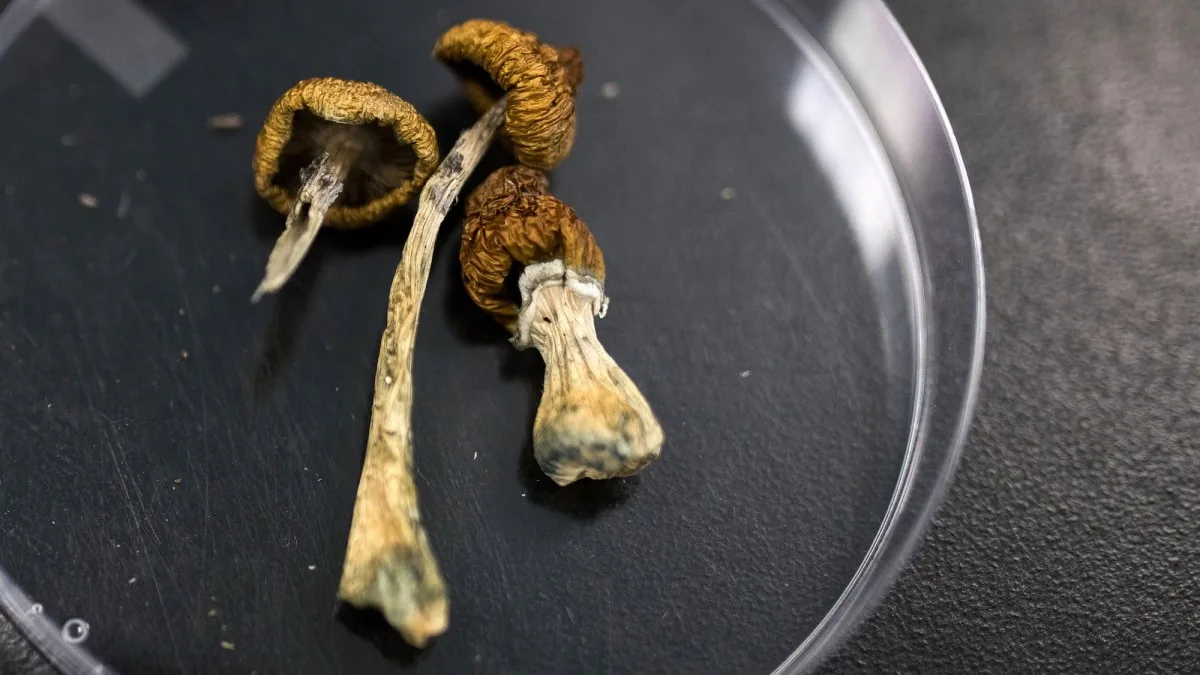
The Boston University researchers tested other psychoactive substances to confirm that improved accuracy did not stem from generic chemical stimulation. When co-authors B. S. Lee, U. Mishra, and R. A. Senne administered cocaine or diazepam to the rodents, the animals continued to commit habitual side errors without showing any improvement in task performance [1, 3]. The behavioral shift was unique to psilocybin and ketamine [3].
How Psychedelic Decision Making Alters Bias
To unpack how the animals processed visual information, the investigators built mathematical models combining drift diffusion algorithms with hidden Markov formulations. The researchers used these computational frameworks to track how rodents accumulated sensory evidence before committing to a nose poke. The modeling revealed that psilocybin and ketamine increased decision thresholds, prompting mice to linger in sensory-guided behavioral states instead of lapsing into bias-driven states. Under these pharmacological conditions, psychedelic decision making prioritized incoming sensory signals over repetitive motor loops [1, 2].
The observed cognitive shift fits into the REBUS framework, an acronym for relaxed beliefs under psychedelics. According to this neuroscientific model, psychedelic compounds temporarily soften rigid top-down expectations in the brain, allowing bottom-up sensory information to have a stronger influence on conscious thought and behavior [3]. “These findings reveal how psychedelics reduce the reliance on habits and repetitive choices, which may explain part of their therapeutic effect,” said Scott [2]. Control animals often guessed based on the site of their previous reward, sticking to old choices even when light signals changed [3]. In contrast, treated rodents showed greater behavioral flexibility, adjusting their actions to match real-time sensory inputs [1, 4].
“Both drugs strengthen the influence of sensory evidence on choices and reduce the effect of bias,” said Scott [2]. The compounds helped the animals look before leaping [1, 4]. Decisions became more accurate because sensory observations overrode reflexive habits [1, 2].
Shifting Dynamics in the Orbitofrontal Cortex
Whole-brain c-Fos mapping showed that psilocybin altered cellular activity across distributed neural circuits, but these changes were modest compared to the robust signals evoked by sensory cues and sugar rewards. Delgado-Sallent and the Boston University research team focused their imaging experiments on the orbitofrontal cortex, a prefrontal structure known to govern value computation, belief updating, and perceptual decision making [1, 2]. Neurons in the orbitofrontal cortex track environmental cues with high fidelity. Their firing patterns allow neuroscientists to predict when an animal will finalize its choice and whether that response will be correct [1, 2].
Using two-photon calcium imaging in behaving mice, the scientists recorded real-time calcium signals from neuronal populations in the orbitofrontal cortex. Individual cells retained their normal tuning to task events, but psilocybin reorganized the temporal structure of the population, shifting how groups of neurons coordinated their firing over time. Instead of scrambling brain activity, the compound sculpted ongoing functional circuits [1, 2]. Preserving underlying task coding allowed the animals to carry out structured choices while dampening the habitual bias that normally prompted impulsive reactions. The cortical network stayed stable enough to execute the discrimination task while shedding obsolete behavioral routines [1, 2].

The imaging observations correspond with the clinical importance of mindset and setting in psychedelic therapy. Because the drugs shape existing neural dynamics instead of overwriting them, surrounding environmental conditions remain central drivers of the overall experience [1, 2]. The brain engages with immediate sensory surroundings [1].


Speed and Accuracy in Cognitive Trade-Offs
Higher accuracy carried a distinct cognitive cost. Mice treated with psilocybin or ketamine took longer to make their choices than untreated control animals [1, 3]. In laboratory tasks where deliberation produces sweet rewards, moving deliberately is an advantage [1, 4]. In unpredictable environments where survival depends on instantaneous reactions, however, delayed choice times can create acute vulnerabilities [2, 3]. The experimental measurements confirmed a classic speed-accuracy trade-off [1].
“Extrapolating on this, you could imagine that in situations where processing speed or reaction time is critical, for example, while driving or playing sports, these drugs could negatively affect performance,” said Scott. The trade-off indicates that psychedelic decision making does not deliver universal enhancements across all cognitive domains [1, 3]. While the substances help subjects escape repetitive behavioral loops, they also lengthen the response latencies required for urgent motor execution [2, 3]. Operating heavy machinery, navigating fast highway traffic, or competing in high-speed athletic events all rely on rapid reflex loops that psychedelics impair. Cognitive loosening can hinder split-second performance [3].
A famous episode in Major League Baseball highlights this boundary between mental coordination and physical reflexes. On June 12, 1972, Pittsburgh Pirates pitcher Dock Ellis threw a no-hitter against the San Diego Padres while under the influence of LSD. Ellis completed nine scoreless innings to secure a 2-0 victory, but he went 0 for 3 at the plate as a batter. Pitching allowed deliberate rhythm, but hitting demanded instantaneous reactions [3].
Limits of Standard Psychiatric Care
The clinical interest in psychedelics stems from the shortcomings of conventional psychiatric medications [2, 4]. Roughly one in five Americans lives with a mental health condition, but pharmacological options have remained largely unchanged since the 1950s. Standard selective serotonin reuptake inhibitors take weeks of daily administration before delivering symptom relief, and approximately 30 percent of patients diagnosed with major depressive disorder do not respond to SSRI treatments at all [2, 4].
Psilocybin and ketamine interact with the nervous system through distinct molecular pathways before altering cognitive processing. Psilocybin targets serotonin receptors, specifically the 5-HT2A and 5-HT1A subtypes, which modifies gene expression and cellular communication across neural circuits. Ketamine acts as an antagonist at glutamate NMDA receptors, functioning as an atypical dissociative psychedelic. Despite these different starting points, both compounds produced matching pro-cognitive effects in the mouse trials by giving sensory evidence more weight than habitual biases [1, 2]. The experimental outcome demonstrates that divergent receptor mechanisms can converge on shared prefrontal circuits to reshape how decisions are formed [1].
Human clinical trials indicate that a single dose of psilocybin can produce long-lasting improvements in mood and outlook for patients suffering from treatment-resistant depression [2, 4]. The Food and Drug Administration has already approved ketamine formulations for clinical depression, whereas psilocybin is moving through late-stage clinical evaluations. Both substances offer alternative avenues for psychiatric medicine [2, 4].
Psychedelic Decision Making in Future Drug Design
The Boston University team led by Benjamin Scott and Steve Ramirez plans to map the exact brain circuits that govern bias reduction during perceptual choices. Their wider goal is to uncover methods to activate these neural pathways without administering psilocybin or ketamine directly. Using pharmacologically active molecules as discovery engines has a rich scientific heritage, having previously illuminated the existence of neurotransmitter receptors and the mechanics of synaptic transmission. By applying that same framework to cognitive neuroscience, investigators hope to design non-hallucinogenic therapeutics that help patients overcome rigid thought cycles in depression, addiction, and post-traumatic stress disorder [2].
Ongoing safety monitoring stays necessary as clinical applications move forward, since unanticipated reactions can appear in diverse patient groups. By clarifying how psychedelic decision making shifts cognitive processing toward sensory evidence, basic animal models provide a reliable empirical foundation for next-generation mental health treatments [1, 2].
- ACADEMIC JOURNAL Delgado-Sallent, C., Ahmed, S. A., Khawaja-Lopez, A., Lee, B. S., Mishra, U., Senne, R. A., Ramirez, S., & Scott, B. B. (2026). Psychedelics shift decision strategies and reconfigure orbitofrontal dynamics. Science Advances, 12(47). [Article Link]
- ONLINE NEWS Boston University. (2026, November 20). Can psychedelics improve decision-making? Medical Xpress. [Article Link]
- ONLINE NEWS Currie, J. (2026, November 20). Can psychedelics improve decision-making? Nautilus. [Article Link]
- ONLINE NEWS Paul, A. (2026, November 20). Psychedelic therapies may improve decision making. Popular Science. [Article Link]
APA 7: PerEXP Teamworks. (2026, November 21). Boston University Links Psychedelic Decision Making to Sensory Cues. PerEXP Teamworks. https://perexpteamworks.com/en/psychedelic-decision-making-improves-accuracy/


