



Northern Ireland has launched a long-term plan to halt the loss of native wildlife. Agriculture and Environment Minister Andrew Muir unveiled the nature recovery strategy on the Belfast Hills, setting conservation goals through 2032 [5]. Official assessments show that 12% of species across the island face extinction [2]. The framework sets science-based targets to protect remaining wild spaces, restore damaged blanket bogs, and support economic resilience by safeguarding clean drinking water and local air quality [4].
Nature Recovery Strategy Targets
The Department of Agriculture, Environment and Rural Affairs published the plan under the Wildlife and Natural Environment Act (Northern Ireland) 2011 [4]. Ministers have a statutory duty to protect biodiversity. Minister Andrew Muir said supporting nature was “not just a nice thing to do” but “a moral obligation to future generations”. He said nature must sit at the heart of public planning so local people can flourish [1]. Officials built the framework around five core goals: speeding up habitat repair, reducing pollution, adopting green farming policies, putting nature into all government choices, and gathering sound scientific evidence to track recovery across rural lands [4].
The policy aligns Northern Ireland with the global 30 by 30 goal to protect 30% of land and seas by 2030. Muir said healthy habitats supply food, water, and clean air [2]. He stated: “With so much of our natural world lost, we must protect what remains, restore what has been damaged and create new habitats at scale” [5].
The strategy runs to 2032 so future updates can link with Northern Ireland’s third Climate Action Plan set for 2033 to 2037. It brings together departmental goals with newly identified restoration projects to build a single unified timetable for civil servants, municipal councils, and rural land managers [4]. Legal analyst Maria O’Loan said the document contains around 30 actions for Stormont departments. These tasks include planting trees, fixing peatlands, and tightening public land rules [6].
Protected Sites in Decline
Northern Ireland holds hundreds of protected sites. Official records show that designated land covers about 9.9% of the territory and 38% of coastal waters [5]. These reserves include Areas of Special Scientific Interest (ASSIs), Special Protection Areas (SPAs), Ramsar wetlands, and Marine Conservation Zones (MCZs). European rules also created Special Areas of Conservation (SACs) to protect habitats of international importance [1]. Yet legal status has not stopped steady decline. Minister Muir told lawmakers that drawing lines on a map achieves very little unless departments actively manage grounds to deliver measurable long-term gains for local wildlife [5].
Surveys show poor conditions inside these protected boundaries. About 40% of plant and animal species in designated sites fail to meet favourable condition standards [1]. Claudia Savage reported in Belfast Live that 36% of all recorded features inside protected reserves are in unfavourable condition [2]. Only one single habitat among 49 priority types, including ancient woods, blanket bogs, and species-rich grasslands, currently maintains favourable status [1].
Government records show site quality falling for years. The Office for Environmental Protection found that protected sites in favourable health dropped from 61.7% in 2008 to 51.5% in 2024. Inspectors opened an official inquiry into how the Department of Agriculture, Environment and Rural Affairs (DAERA) manages public land. The watchdog found that department staff repeatedly failed to meet statutory duties, letting fragile wildlife reserves decay over two decades without sufficient field intervention or regular inspections [1].

Six Pressures on Local Wildlife
Northern Ireland is among the most nature-depleted places on Earth [1]. The 2023 State of Nature Report showed that 12% of species across the island of Ireland face extinction [2]. Flowering plants fell by 14% since 1970. Decades of habitat loss left birds stranded in small, scattered green patches [1].
Scientists identified six main pressures that damage native wildlife. These threats include invasive species, shifting weather patterns, bad building projects, changes in land and sea use, intensive farming methods, and chemical pollution [1, 4]. Each pressure worsens the others. For instance, poorly planned housing cuts off wildlife routes, while farm runoff poisons clean streams. Muir said public efforts must address all six threats at once through joint policies [1].
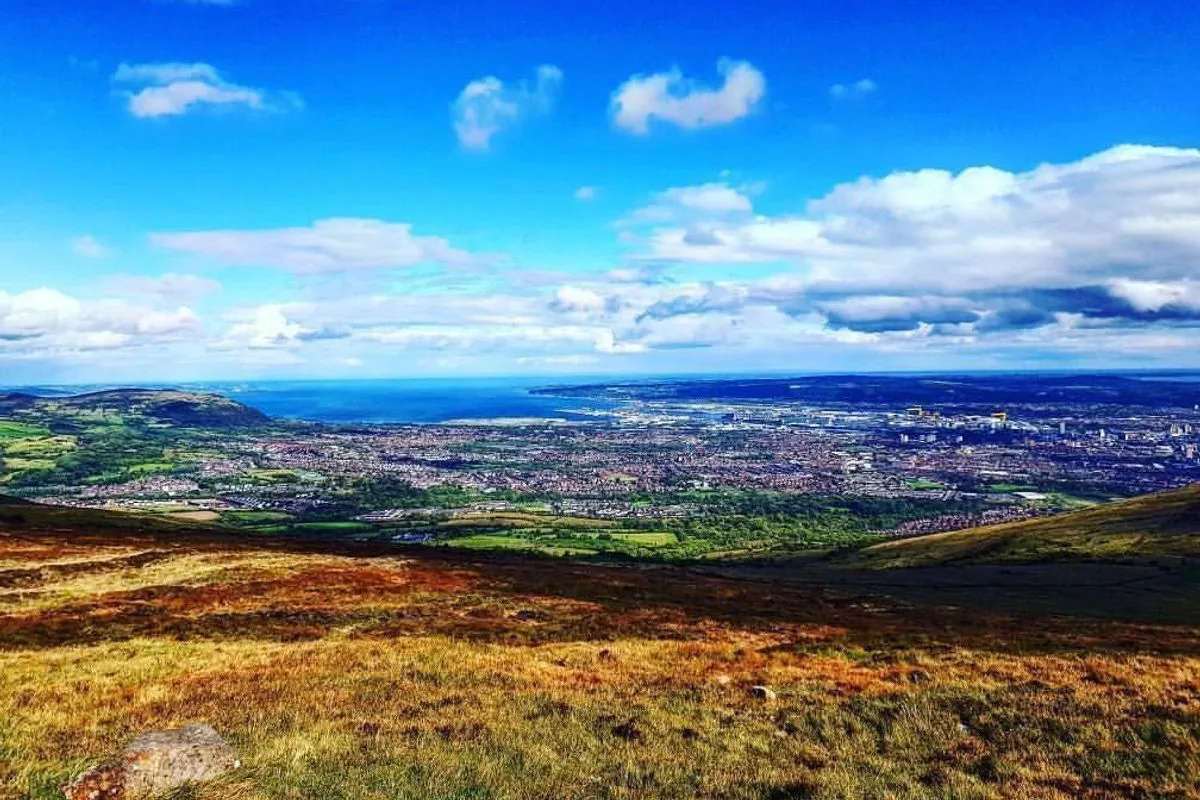
Fixing bogs protects wildlife and helps cities survive bad storms. On Black Mountain above Belfast, National Trust teams spent 15 years on the Divis uplands repairing damaged blanket bogs. National Trust Director Heather McLachlan said healthy peat stores huge amounts of water during storms, shielding Belfast City from floods while trapping carbon in wet moss. Restoring rivers and woods brings the same benefits for people and wildlife [2].


Farmer Concerns and Funding
Farmland covers most of the countryside, making farmers central to any habitat recovery plan. Agricultural leaders greeted the strategy with caution. Glenn Cuddy, deputy president of the Ulster Farmers’ Union, described his members as “still a bit skeptical” about the policy. He said: “There’s always a concern that nature will be more thought of than the farming and farmers have been walking along with nature for a long time, even before some of these projects have started”. Cuddy added that farmers have long served as countryside guardians [1].
Conservation leaders welcomed the scientific focus of the framework, but they warned that paper promises will fail without guaranteed funding and rapid delivery on the ground. Heather McLachlan from the National Trust stressed that ministers must establish clear priorities for action before launching new projects. Speaking on Black Mountain, McLachlan asked: “How do we get this action going, who’s going to do it and most importantly where’s the money going to come from to get it done?”. Joanne Sherwood from RSPB Ireland agreed that publishing a strategy is only a starting point. She said: “Species are really in decline so what it means for us is this charts out the strategy and the way forward. But of course a strategy isn’t everything – we need now to act and take urgent action” [1].
Minister Muir acknowledged that tight public budgets make funding difficult. Cross-border funding from Peace Plus and the Shared Island fund already supports large habitat repairs, but meeting long-term targets will require substantial private investment [2, 5]. Muir said DAERA will write a green finance plan to attract private capital to support government grants [5].

Planning Rules and Public Duties
Public bodies must protect local wildlife under law. The Wildlife and Natural Environment Act places a Biodiversity Duty on every public authority to further conservation during daily operations. Environmental groups recently sued departments over poor enforcement. Legal analyst Maria O’Loan said at least one 2026 court case examines duties to protect designated ASSI lands. Under proposed reforms, mandatory reporting and civil fines would make public bodies legally answerable if official neglect or poor planning harms protected wildlife sites across Northern Ireland [6].
Planning reform offers another way to save wild spaces. DAERA plans to test a biodiversity net gain rule for builders. Under this proposed system, property developers must improve nearby wildlife habitats or buy statutory credits before receiving final construction approval. Officials must work with the Department for Infrastructure (DfI), which controls planning rules [6]. Muir also promised to introduce legal restoration targets in the next Assembly mandate [5].
Local officials are looking at lessons from England. English planning rules require developers to deliver a 10% biodiversity lift or purchase conservation units, but high compliance costs on small brownfield plots created severe construction delays. The UK government recently moved to exempt sites under 0.2 hectares to protect housing plans. O’Loan noted that Northern Ireland still lacks solid baseline data showing how development harms wild habitats. Without good maps, councils cannot enforce net gain rules [6].
Ten-Year Roadmap for the Nature Recovery Strategy
Putting the nature recovery strategy into action requires finishing about 30 policy projects over the next ten years [4, 6]. The framework, titled Bigger, Better Managed And More Connected Nature, lists clear targets for each sector [5]. DAERA will publish a Tree Planting Action Plan by late 2026 to grow native woods. Officials plan to follow that release with a Land Use Framework in 2027, an All Ireland Pollinator Plan, a Protected Sites Delivery Plan, and a Clean Air Strategy [6]. These plans aim to stop wildlife loss and link fragmented patches of countryside [4].
To keep teams working together, Minister Muir set up a Nature Recovery Forum for farmers, scientists, businesses, and local groups. Muir said conservation needs practical work. He stated: “Our task is not simply to draw lines on a map. Protected areas must be properly managed and genuinely delivering for nature” [5].
Long-term success depends on steady political backing, fair budgets, and trust between farmers and conservationists [2, 5]. Joanne Sherwood of RSPB Ireland said planning gives direction, but urgent field action must follow to stop species loss [1]. By connecting habitat repairs with climate protection and drinking water security, Northern Ireland has built a scientific plan to heal its natural world before 2032 [4].
- ONLINE NEWS Cullen, L. (2026, October 27). Nature: New strategy to restore protection for nature in Northern Ireland launched. BBC News. [Article Link]
- ONLINE NEWS Savage, C. (2026, October 27). Nature recovery plan launched amid Northern Ireland biodiversity decline. Belfast Live. [Article Link]
- ONLINE NEWS News Feed Editor. (2026, October 27). Nature: New strategy to restore protection for nature in Northern Ireland launched. RocketNews. [Article Link]
- REPORT Department of Agriculture, Environment and Rural Affairs. (2026, April 15). Nature Recovery Strategy for Northern Ireland to 2032: A Proposed Strategy for Halting and Reversing the Loss of Biodiversity. Northern Ireland Civil Service. [Article Link]
- ONLINE NEWS Parliament Today. (2026, October 27). Muir launches strategy to restore nature for Northern Ireland. Parliament Today. [Article Link]
- WEBSITE O’Loan, M. (2026, January 21). Northern Ireland’s Nature Recovery Strategy: The Future of Biodiversity Net Gain and the Biodiversity Duty. LinkedIn. [Article Link]
APA 7: PerEXP Teamworks. (2026, October 28). Northern Ireland Nature Recovery Strategy Sets 2032 Targets. PerEXP Teamworks. https://perexpteamworks.com/en/nature-recovery-strategy-northern-ireland/


