






Private yards encompass 4.6% of the British landmass, creating a combined conservation footprint three times larger than government nature reserves managed across the entire country [1]. As cold weather approaches, customary tidy-up routines strip away dead plant material that wild birds, ground insects, and small mammals depend on to survive harsh conditions through the winter [2]. British researcher Kat Hamill argued that thoughtful autumn gardening practices can safeguard urban biodiversity without increasing household chores. This organic litter provides durable insulation against sudden winter freezes [1].
The Scale of Residential Gardens
Private green spaces constitute a major ecological network in Great Britain, covering more total ground than statutory conservation reserves [1]. In Biodiversity and Conservation, a synthesis by Delahay, Sherman, Soyalan, and Gaston evaluated 408 published studies from European and North American gardens between 1981 and 2022. Garden size and habitat complexity drove overall species richness. Botanic variety and intact plant cover support higher numbers of garden animals than lawns subjected to regular chemical treatment, with non-native plants contributing functional resources for urban fauna [4].
Surveys show that British property owners often replace living plant cover with artificial materials. Almost half, specifically 42% of residential gardens in the United Kingdom, are paved over, while other households install plastic artificial grass to avoid lawn upkeep [1]. In People and Nature, a survey by Hitchcock, Moss, Yarnell, Counsell, Williams, and Tollington evaluated 231 householders in Great Britain using a behaviour framework to measure willingness to implement wildlife conservation. The team recorded a modest 37.5% engagement probability. Physical opportunity limits, reported by 67.9% of participants, proved the biggest obstacle [3].
Wildflower patches were the only feature that householders rated as more likely than unlikely to add, whereas pond building and compost heaps proved the least popular options. Ponds faced strong resistance [3]. Relaxed garden care aligns with domestic routines far better than demanding expensive construction projects [1].

How Autumn Gardening Protects Local Ecosystems
Urban sprawl isolates wild habitats, making private plots essential stepping stones for displaced animal species [3]. Researcher Kat Hamill said that reducing seasonal cleanup tasks protects wildlife refuges without adding financial or effort burdens. In The Conversation, Hamill explained that “wildlife-friendly gardening can involve less effort” if householders leave autumn debris alone rather than spending cold weekends tidying up borders. Undisturbed ground shelter protects dormant insects through cold spells [1].
A multi-layered garden floor mimics the structure of natural British woodland clearings. Delahay and colleagues reported that overall animal abundance connects to vegetation cover, whereas frequent lawn mowing, herbicide applications, and chemical pest treatments suppress local invertebrates [4]. When householders adopt autumn gardening by leaving dead vegetation standing, small creatures find food and thermal protection through months of volatile weather. Intact dead vegetation moderates freezing soil temperatures [2].
Autumn border cleanups remove the protective leaf canopy that ground-dwelling invertebrates need to survive [4]. Hamill said that domestic yards in Great Britain occupy over three times the acreage of National Nature Reserves, meaning private decisions shape regional biodiversity [1]. Property choices alter habitat connections for insects and small mammals in British towns [3].
Leaf Litter as Winter Shelter and Food
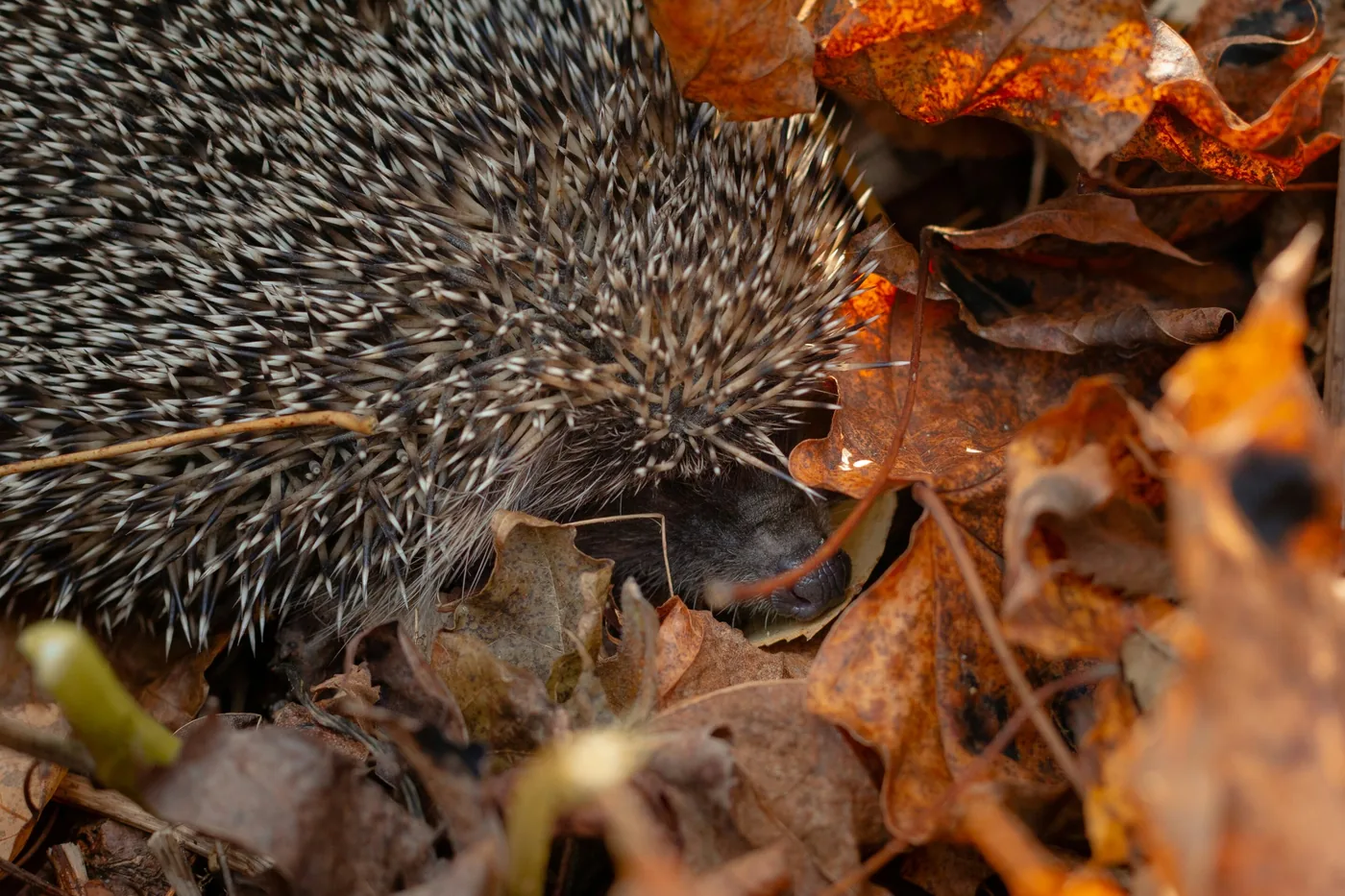
Fallen leaves raked into quiet corners supply insulation for European hedgehogs building hibernation nests [1]. Ground beetles, spiders, and other invertebrates also shelter beneath moist leaf litter, feeding foraging birds such as European robins and blackbirds [2]. Earlier reporting detailed how fallen leaves shield garden soil and overwintering insects by stabilizing underground temperatures during severe seasonal freezes that threaten dormant species.
Fallen foliage also feeds soil detritivores that maintain underground nutrient cycling. Woodlice and millipedes consume rotting plant matter, transforming tough cellulose into mineral humus [1]. In Functional Ecology, Lam, Slade, and Wardle reviewed 456 standardized feeding measures from 56 research papers, assessing how leaf traits affect consumption, assimilation, and growth rates in terrestrial isopods and millipedes [5].
Lam, Slade, and Wardle found that consumption rates vary among invertebrate species and leaf types, meaning that mixed plant litter supports a wider group of detritivores than uniform lawns [5]. Municipal collection routines deprive detritivores of nourishment and stall natural decomposition [1]. Undisturbed shrub borders allow microbial breakdown to proceed without disruption [5].


Microclimates from Fallen Wood
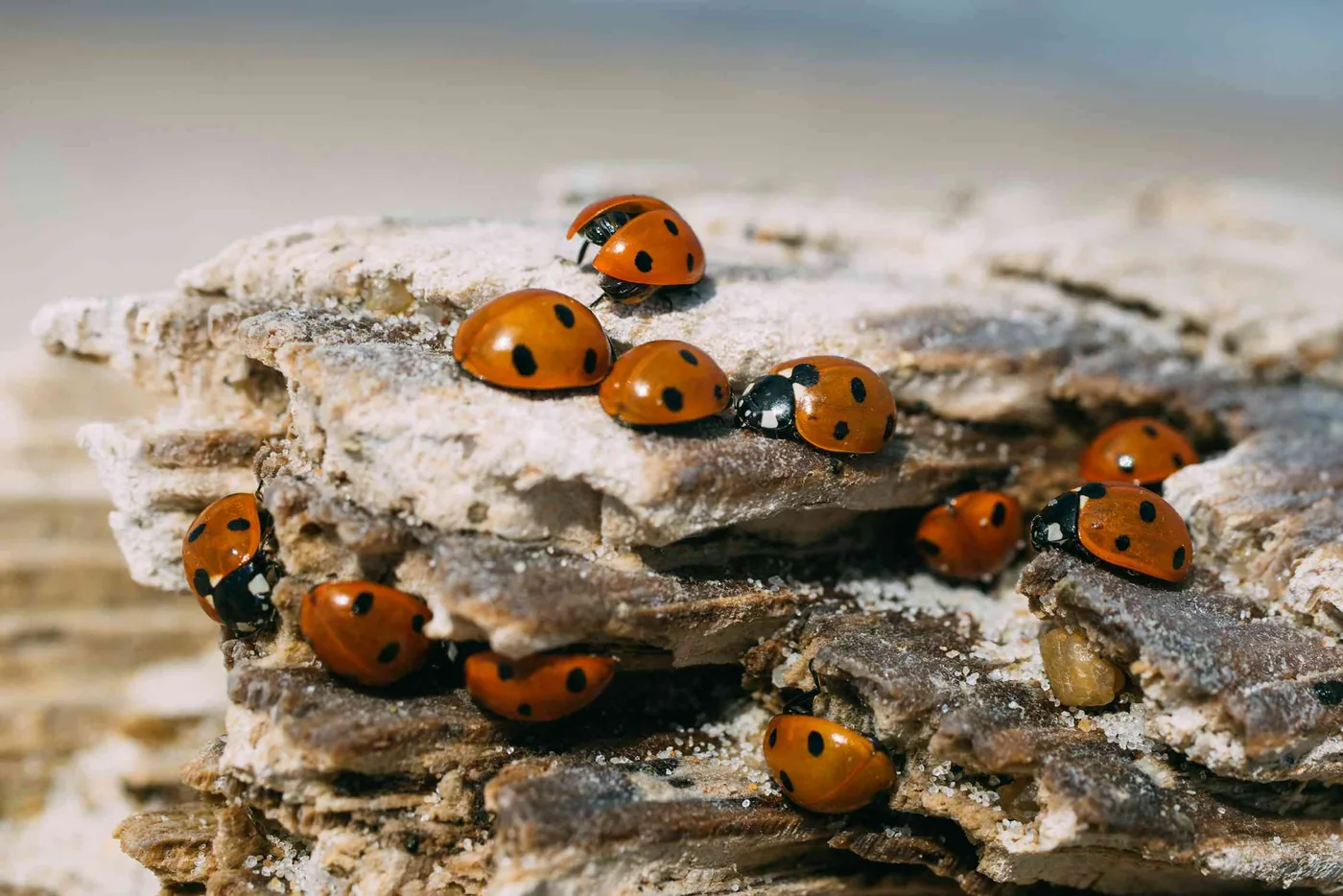
Wood piles and fallen branches stacked in garden corners build multi-layered microhabitats for cold-stressed animals. The interior and bottom of a log pile stay damp and decompose steadily, while exterior timber dries out under autumn winds to provide a contrasting shelter for different insect groups [1]. Ground beetles and woodlice occupy damp lower logs, whereas ladybirds and adult butterflies shelter in upper crevices [2]. Invertebrates feeding in dead wood sustain wintering birds and small mammals [1].
Decaying wood nurtures Britain’s largest beetle, the stag beetle, whose larvae feed on rotting subterranean wood for several years before pupating into adults. Ectothermic animals rely on stable microclimates under timber stacks to regulate body temperatures. Common frogs, toads, newts, and lizards hide beneath rotting logs and stones, entering a dormant state termed brumation to conserve their metabolic energy until warmer weather returns in spring [1]. In Ecology and Evolution, researchers Turner and Maclean analyzed microclimates used by European adders (Vipera berus) in Cornwall, showing that subterranean refuges protect dormant reptiles from lethal subzero air temperatures. Subterranean shelters buffer reptiles against fatal frosts [6].

Turner and Maclean reported that premature spring warming can cause a microclimate trap if early heat draws ectotherms out before ground frost risks end. Undisturbed log piles and ground cover buffer these temperature spikes, keeping dormant animals from rousing during brief mid-winter warm spells [6]. Heavy timber structures provide dependable insulation throughout volatile British winters [1].
Winter Seed Heads and Stems
In Phys.org, Hamill advised gardeners to hold off on cutting perennial stems [2], while in The Conversation she suggested that householders “hang fire” on deadheading spent blooms until the following spring. Standing seed heads supply fat and carbohydrates for goldfinches, sparrows, field mice, and voles during cold winter weeks [1]. In Bird Study, Hancock and Wilson surveyed 2885 fields over 100 square kilometres in Scotland, finding that seed-eating passerines gathered heavily in weedy patches and cereal stubbles. The authors reported bird densities averaging 12 birds per hectare in weedy crops compared to 3.3 in clean stubble [7]. Hollow stems shelter solitary bees [1].
Hancock and Wilson found that declining farmland birds preferred fields with weed patches containing plants from the Chenopodiaceae family [7]. While agricultural stubble has declined in rural Britain, residential gardens with unpruned flower heads replicate these winter seed reserves in urban neighborhoods [1]. Perennial flower heads on plants such as sunflowers retain thousands of seeds into mid-winter [2]. Uncut borders sustain hungry birds through freezing spells [1].
Windfall apples and pears left under fruit trees offer another valuable cold-weather feeding station. Fallen orchard fruit provides fruit sugars for overwintering thrushes, tits, badgers, and small rodents, while feeding late-flying butterflies and ants [1]. Early fruit clearance removes an accessible sugar supply before winter freezes take hold [2].
Simple Steps for Wildlife-Friendly Gardening
Hamill cautioned against tidying garden borders on the first sunny morning of March, explaining that premature clearing exposes overwintering creatures to sudden late frosts before seasonal temperatures stabilize [1]. Postponing lawn mowing allows dandelions and white clover to bloom freely, supplying early nectar flushes for emerging queen bumblebees and solitary pollinators [2]. Wildflower patches proved uniquely popular in Great Britain, emerging as the only intervention in the COM-B survey that householders viewed as more likely than unlikely to adopt. Compost heaps ranked lowest [3].
Broader ecological assessments show that protecting endangered species needs rural community aid, and private residential gardens supply matching habitat corridors across towns and suburban areas. Hamill recommended that homeowners embrace a “messy” garden as a standard social practice that protects local wildlife. A relaxed autumn gardening schedule helps private yards serve as safe wintering sanctuaries for British wildlife until spring warmth returns [1].
Gardeners who leave autumn leaves in borders, pile fallen branches, and delay stem pruning spend far less time on maintenance than those doing weekly mowing or chemical weeding [1]. These low-effort habits turn ordinary yards into durable winter refuges for native British fauna [2]. Relaxed yard care allows householders to halt biodiversity losses right outside their back doors [1].
- ONLINE NEWS Hamill, K. (2026). Embrace lazy autumn gardening to protect wildlife. The Conversation. [Article Link]
- ONLINE NEWS Hamill, K. (2026). Embrace lazy fall gardening to protect wildlife. Phys.org. [Article Link]
- ACADEMIC JOURNAL Hitchcock, K., Moss, A., Yarnell, R. W., Counsell, G., Williams, L. J., Hamill, K., & Tollington, S. (2026). Barriers and opportunities for further enhancing urban garden biodiversity: Insights from a behaviour change model for the United Kingdom. People and Nature, 8(10), 3552-3568. [Article Link]
- ACADEMIC JOURNAL Delahay, R. J., Sherman, D., Soyalan, B., & Gaston, K. J. (2023). Biodiversity in residential gardens: a review of the evidence base. Biodiversity and Conservation, 32(13), 4155-4179. [Article Link]
- ACADEMIC JOURNAL Lam, W. N., Slade, E. M., & Wardle, D. A. (2024). Effects of leaf litter traits on terrestrial isopod and millipede consumption, assimilation and growth. Functional Ecology, 38(5), 1018-1031. [Article Link]
- ACADEMIC JOURNAL Turner, R. K., & Maclean, I. M. D. (2022). Microclimate‐driven trends in spring‐emergence phenology in a temperate reptile (Vipera berus): Evidence for a potential “climate trap”?. Ecology and Evolution, 12(2). [Article Link]
- ACADEMIC JOURNAL Hancock, M. H., & Wilson, J. D. (2003). Winter habitat associations of seed-eating passerines on Scottish farmland. Bird Study, 50(2), 116-130. [Article Link]
APA 7: PerEXP Teamworks. (2026, October 28). Autumn Gardening Sustains Overwintering Wildlife in Britain. PerEXP Teamworks. https://perexpteamworks.com/en/autumn-gardening-protects-winter-wildlife/


