






Caregivers at Save the Chimps used an aerial drone to deliver meals to an ape cut off by floodwater after heavy rain swamped parts of southeast and central Florida. The storm submerged ground pathways at the 150-acre facility near Fort Pierce, leaving staff to find new ways to supply animals isolated by rising canals. Floodwaters covered several outdoor areas, but shelter buildings on higher ground kept the resident population safe during the bad weather [1].
Save the Chimps Faces Rising Floodwaters
A stalled weather pattern brought record downpours across the Space Coast, leaving southeast and central Florida drenched under persistent rain between Sunday and Tuesday [2]. Nearby canals overflowed and submerged the ground routes quickly. CEO Ana Paula Tavares said in a statement that the care houses were secure on high ground. Several veterinarians and other employees stayed overnight on the Fort Pierce property to ensure that the animals received regular care and medical supervision during the flooding [1].
The sanctuary provides shelter for 200 apes on a 150-acre (61-hectare) property located near Fort Pierce. Staff members normally drive golf carts to distribute about 3,000 pounds (1,361 kilograms) of food each day, but rising floodwaters halted those trips completely when canals spilled over the roads. Facilities director Mark Yohannan said by phone that submerged service roads blocked normal daily delivery routes across the property [1].
Drone Delivery for a Stranded Ape
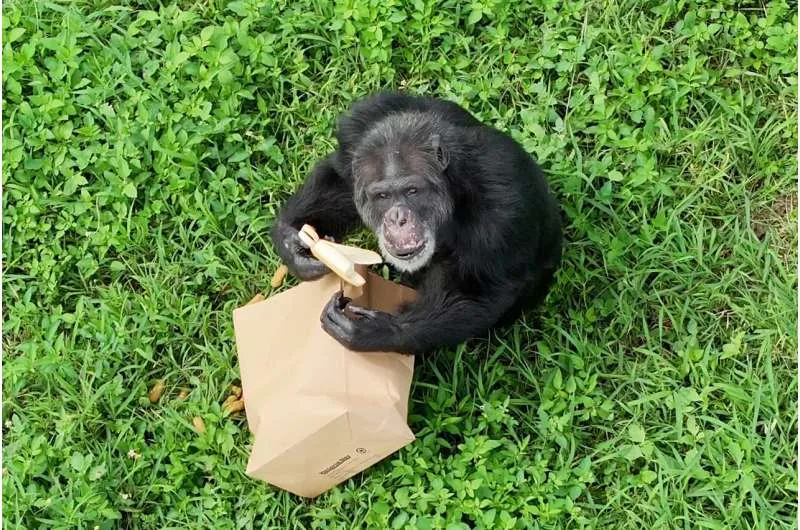
Most of the animals stayed inside dry shelters, but a 38-year-old chimpanzee named Kaleb remained in an outdoor area cut off by standing water. Caregivers could not reach him on foot because deep water blocked the pathways. To prepare for emergencies, sanctuary administrators had previously purchased an aerial craft specifically for situations when floodwaters cut off land access, Yohannan explained by phone [1]. Staff prepared paper bags packed with food and blankets for the flight [2].
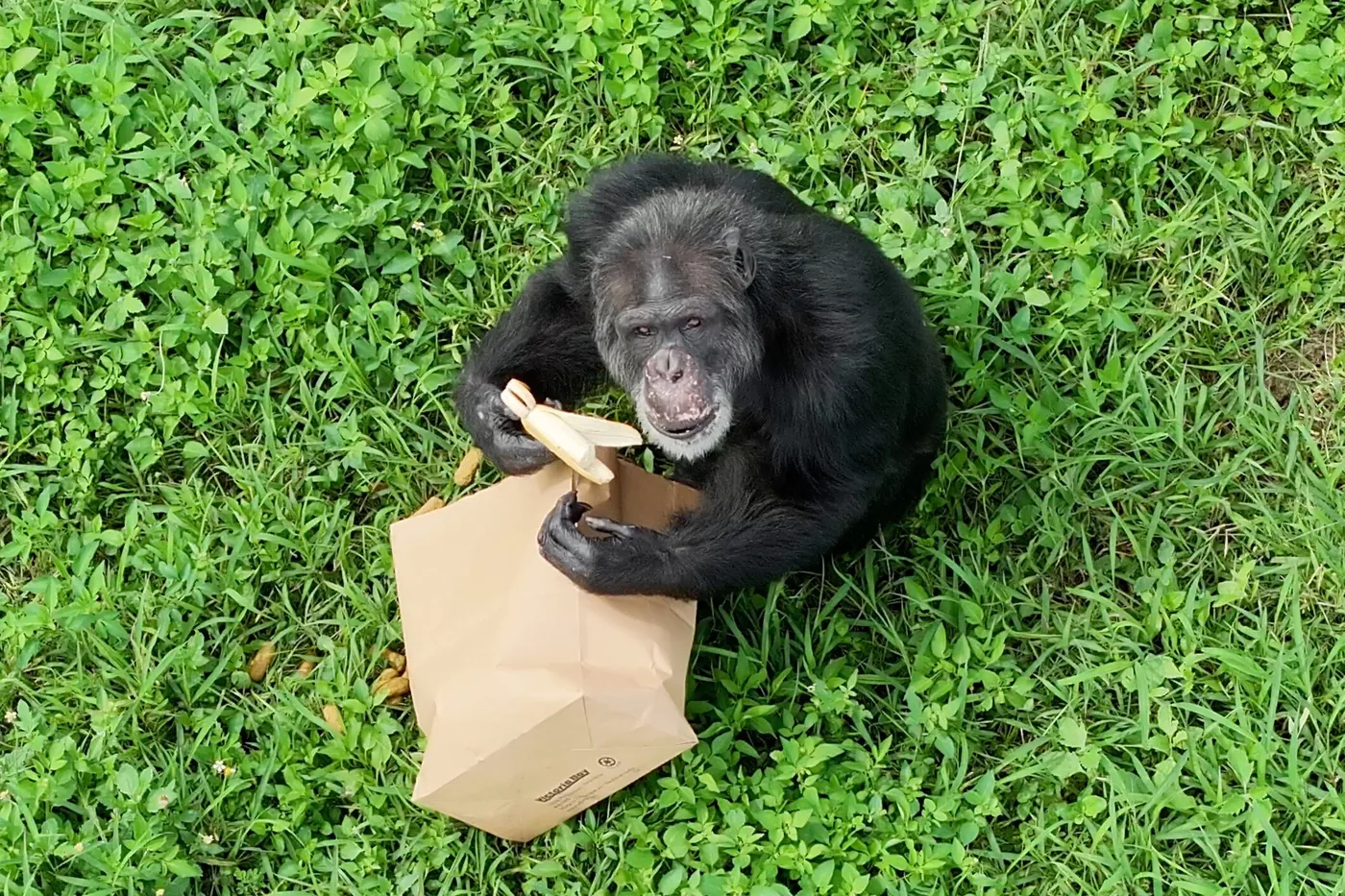
A video recorded by Save the Chimps showed Kaleb opening a drone-dropped paper bag and calmly munching a banana that he plucked from the parcel as he sat safely above the standing water. Caregivers continued using the aircraft to supply him with fresh fruit and dry blankets as caretakers waited for the ape to move toward an accessible dry area. He later picked his way along a rope bridging the water before reaching dry land on his own. The aerial drops protected him without forcing staff into dangerous water. According to reporting in Phys.org, the flights gave the team a reliable method to monitor the ape as high water kept human caregivers on the opposite side of the canal [1].
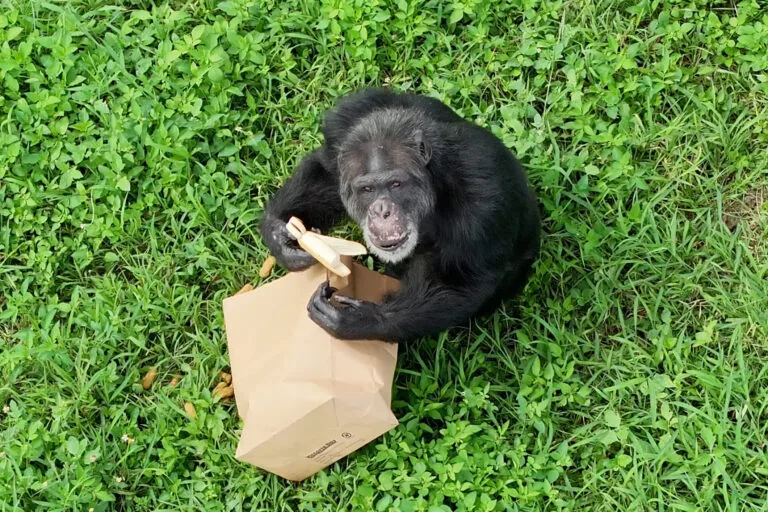
The delivery flights showed how small unmanned aircraft can solve urgent animal care problems when road networks fail during heavy storms [2]. Yohannan said that the device proved its value by reaching areas cut off from all land vehicles. The chimpanzee ate his fruit and rested with the dropped blankets until he chose to cross the rope bridge on his own [1].
Overland Transport and Vehicle Losses
Supplying the rest of the apes required heavier ground equipment after golf carts could no longer navigate flooded roads. The sanctuary first relied on a high-clearance swamp buggy to carry workers and crates through standing water, but the machine soon broke down under the difficult wet conditions on the property [1]. Workers then deployed a tractor and several pickup trucks to haul supplies [2]. One maintenance worker even offered a personal truck to keep deliveries moving so that no care house went without necessary items during the worst days of the flooding event at Fort Pierce [1]. Crews hauled food crates continuously to keep each colony fed on time.
The loss of the swamp buggy showed how difficult overland hauling becomes when floodwater covers unpaved property roads and isolates different sections of the 150-acre Save the Chimps facility. Caregivers loaded heavy crates of fresh fruit onto tractor trailers by hand under difficult conditions. Drivers steered through the shallowest paths to deliver needed medical goods and daily rations to every chimp group on site [1].
Daily Nutrition for Two Hundred Primates
Feeding two hundred chimpanzees at Save the Chimps demands an uninterrupted flow of fresh food even during heavy storms. The facility prepares about 3,000 pounds (1,361 kilograms) of provisions each day, centered on fresh fruit such as bananas and oranges [1]. Despite the standing water and broken equipment, caregivers kept the apes on their regular feeding schedule without missing a single meal [2]. “Chimps are getting all their food, bananas and oranges on time,” Yohannan said. “They’re good. They haven’t missed a beat.” [1]
Maintaining steady feeding routines helps keep chimpanzee groups calm during severe storms because loud thunder and unusual disruptions can trigger anxiety unless caregivers provide familiar fruit rations at predictable hours each morning. Workers delivered fruit boxes and medical supplies to each shelter house using heavy tractors and utility trucks. The animals remained peaceful inside their dry care houses throughout the entire morning feeding process [1].
How Save the Chimps Managed Wildlife Risks
High floodwaters around the Save the Chimps property also prompted unexpected wildlife encounters when rising water connected isolated drainage canals with normally dry areas near the main care buildings [1]. On Friday, workers found a small alligator resting close to the sanctuary kitchen [2]. Yohannan said the alligator used the deep floodwaters to reach terrain where the reptiles do not normally travel during typical dry weather in Florida. Staff monitored pathways for other hidden hazards around the standing water [1].
Florida wetlands often experience shifts in native wildlife activity whenever heavy rainstorms cause waterways to spill beyond their banks and submerge low-lying ground around Fort Pierce [2]. Crews exercised extra caution when wading through shallow water or driving tractors near flooded canals. Employees secured the kitchen perimeter promptly after spotting the reptile to prevent further surprises and maintain care routines for the chimpanzees at Save the Chimps [1].
Drainage Progress and Facility Repairs
Water levels dropped noticeably overnight on Friday, giving caregivers their first chance to see the full scope of property damage caused by heavy rain across the Save the Chimps grounds. By Saturday, about 20% of the property’s roads were clear of standing water, which allowed utility trucks to reach several isolated buildings more quickly and safely [1]. Local road flooding in the surrounding area had made it difficult for relief workers to travel to the facility and replace exhausted colleagues who had stayed on site for multiple days [2]. Yohannan said that “everyone’s in excellent spirits, tired as they are.” Replacement staff arrived gradually as regional highway conditions improved [1]. The improved road conditions allowed caretakers to begin assessing damaged animal enclosures.
Founded in 1997, Save the Chimps has cared for nearly 350 chimpanzees retired from research laboratories, the pet trade, and the entertainment industry [1]. The sanctuary is now appealing to the public for help to fund repairs [2]. One donor has agreed to match incoming public contributions to help fix damaged buildings, replace broken machinery, and rebuild washed-out service paths across the Fort Pierce facility [1]. News reports carried by outlets such as VINnews and the Associated Press helped share the sanctuary’s appeal nationwide [2].
- ONLINE NEWS Peltz, J. (2026, November 8). Chimp sanctuary delivers an ape’s food by drone amid Florida floods. Phys.org. [Article Link]
- ONLINE NEWS Feldman, J. (2026, November 7). Chimp Sanctuary Delivers An Ape’s Food By Drone Amid Florida Floods. VINnews. [Article Link]
APA 7: PerEXP Teamworks. (2026, November 9). Save the Chimps Delivers Food by Drone Amid Florida Floods. PerEXP Teamworks. https://perexpteamworks.com/en/save-the-chimps-drone-food-delivery/


