



SpaceX Chief Executive Elon Musk announced on Monday that he plans to distribute one of his SpaceX shares to every minor in the United States, making a public pledge that could total billions of dollars [1], [2]. The pledge arrived hours after Anthropic PBC and CEO Dario Amodei announced plans to set aside 5% of Anthropic equity for a new public benefit fund [1], [3]. While Musk shared few details about distribution logistics, the promise sparked debate in Washington and on Wall Street about billionaire giving and political timing [1], [3].
Terms of the SpaceX Shares Offer
Musk shared the offer on X early Monday morning, proposing to gift SpaceX equity to American youth [2]. Writing at 4 a.m., he claimed that he would “give one of my SpaceX shares to every kid in America” next year, adding that “this will be the first of many” [1], [2].
Reporters at Axios and SiliconANGLE said that with roughly 72 million legal minors in the United States and SpaceX stock priced at $146.03 at Friday’s close, the gift would equal about $10.5 billion in equity [1],. That sum equals only about 0.01% of Musk’s personal net worth [2]. SpaceX joined Wall Street as a publicly traded company in June, an arrival that made Musk the world’s first trillionaire [3]. Earlier this month on X, Musk said he sees a path for SpaceX to be worth orders of magnitude more than the entire Earth economy [2]. He views a multibillion-dollar stock grant as a manageable step [1], [2].
A brief social media message isn’t a binding contract. As Webb Wright reported for Gizmodo, it’s still unclear whether the offer covers every legal minor or only younger children, and whether non-citizen residents qualify for SpaceX stock. Musk didn’t share an operational schedule beyond naming next year, leaving market observers to ask why Elon Musk net worth totals fluctuate so much between major Wall Street announcements [2], [3].
Anthropic’s Public Benefit Fund
Anthropic announced its initiative on Sunday. The AI provider plans to transfer 5% of its equity into a new Anthropic Public Benefit Fund created for the public good [1], [2]. CEO Dario Amodei and five other co-founders structured Anthropic as a public benefit corporation to balance financial goals with social impact [3].
Anthropic said in a company blog post that the Anthropic Public Benefit Fund will operate as a wholly owned LLC subsidiary rather than a standalone charity, allowing it to make large donations to non-profit groups or distribute assets to selected populations [1],. Stockholders must vote to approve the first 5% stake before any transfer takes place [2]. Under the plan, Anthropic will add another 2% in stock every time its valuation grows by 50% above a set baseline. When added to equity already pledged by Anthropic employees, about 20% of Anthropic stock will go toward public benefit goals, an amount that could reach $400 billion if the firm reaches its public valuation targets [1].
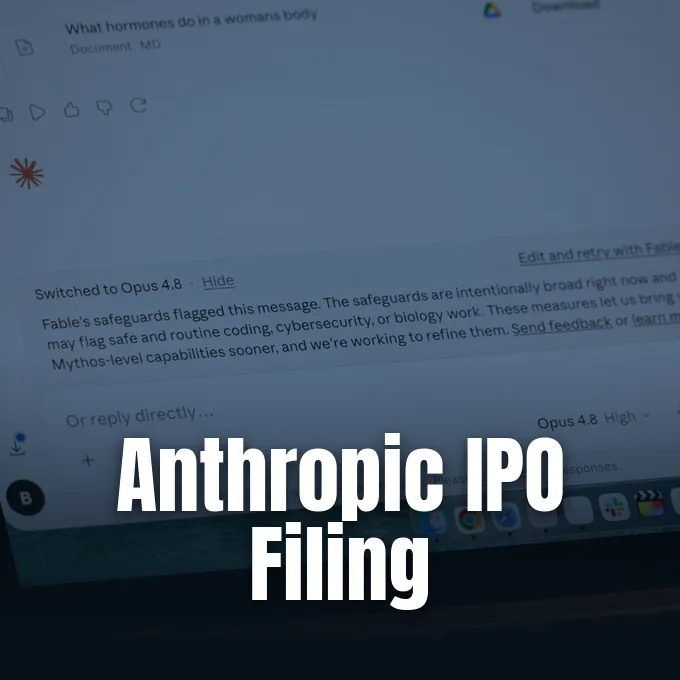
Anthropic plans to complete an initial public offering on Wall Street as early as November, following a confidential filing sent to the U.S. Securities and Exchange Commission in June [3]. Michelle Chapman reported for Tech Xplore that the debut could value Anthropic at about $1.5 trillion after next month’s midterm vote [2], [3]. Company disclosures show this planned debut follows heavy development costs, as an earlier Anthropic IPO filing revealed an $8 billion loss paired with swift sales growth [1], [3]. Anthropic also promised that none of the fund’s assets will go to lobbying or political campaigns [2].

How the SpaceX Shares Would Be Distributed
Musk rejected Anthropic’s fund structure on Sunday. Writing in an X reply to Anthropic, he argued that founders should give equity straight to citizens: “I recommend giving the shares directly to the public” [3]. He didn’t explain how American families would receive or store private SpaceX stock without public brokerage access [1], [2].
One possible distribution path relies on federal investment programs created for children. Musk thanked investor Brad Gerstner on X for helping enable the arrangement after Gerstner helped build Trump Accounts earlier this year. Those White House investment accounts offer an official structure where private holdings could land. SpaceX Chief Operating Officer Gwynne Shotwell set a precedent in July when she pledged over $320 million of her SpaceX stock to the Trump Accounts program. Expanding that framework could let Musk distribute equity without building an independent custodial network from scratch for millions of young recipients in the United States [1].
Distributing SpaceX shares to 72 million children poses an unusual legal puzzle for SpaceX and Wall Street regulators. Minors can’t trade private securities easily, and private businesses face clear caps on shareholder numbers under U.S. Securities and Exchange Commission rules [1], [2].
Musk’s Philanthropic Track Record
Musk’s past philanthropy faces scrutiny. Tax records reviewed by Maria Deutscher of SiliconANGLE showed that his private foundation held more than $14 billion in assets as of December yet failed to meet minimum legal donation requirements over the past four years. Filings revealed that disbursements flowed mainly to non-profit groups aligned with Musk and his own companies [1].
Controversy also followed Musk’s past involvement with artificial intelligence research. When OpenAI Group PBC launched in 2015, Musk pledged $1 billion to fund its work as an open laboratory. He donated only $38 million before proposing to take majority control of OpenAI. Co-founders rejected that takeover bid, and OpenAI later modified its structure to build products like ChatGPT. Researchers remember that OpenAI dispute whenever new funding promises emerge without signed contracts [1].
Skeptics remain cautious [1]. Writers at Gizmodo said that a 4 a.m. social media post carries no binding legal weight, meaning American families shouldn’t expect SpaceX shares to arrive in mailboxes anytime soon [2]. Musk often shares bold concepts on X that take years to develop or quietly fade away [1], [2].
Political Scrutiny and Market Reactions
The competing announcements arrive during an election season where technology policy has become a central voter issue in Washington and within the United States Congress. An NBC survey published last month found that 70% of American adults worry about artificial intelligence impacts rather than welcoming them. Both Musk and Dario Amodei have warned that advanced software models could disrupt workforces [2].
Anthropic sought to address labor market worries earlier this year by committing $200 million to outside research on workforce shifts [1]. Concerns about safety also prompted debate within the industry, as seen when Jacob Coxon quit Anthropic and warned of a superintelligence race among frontier developers. Lawmakers from both major political parties in the United States House and Senate have answered those public anxieties by introducing proposals to regulate computing infrastructure and curb the heavy power consumption of large data centers. In that political environment, large equity donations look like an effort to build goodwill before the U.S. Congress considers new rules on autonomous systems [2].
Webb Wright of Gizmodo compared the billionaire promises to campaign pledges like Donald Trump’s proposed $5,000 dividend for American adults if Republicans keep Congress next month. Economists estimated that the Trump dividend would cost taxpayers over $1 trillion and face serious legal obstacles. While Musk doesn’t need voter approval to run SpaceX, tech leaders still need public trust to avoid regulatory backlash as their political influence grows [2].
- ONLINE NEWS Deutscher, M. (2026, October 19). Elon Musk, Anthropic pledge to give away billions of dollars in shares. SiliconANGLE. [Article Link]
- ONLINE NEWS Wright, W. (2026, October 19). Elon Musk (Kinda) Promises to Give SpaceX Shares to ‘Every Kid In America’. Gizmodo. [Article Link]
- ONLINE NEWS Chapman, M. (2026, October 19). Musk says he’ll give some SpaceX shares to public after Anthropic announces ‘public benefit’ fund. Tech Xplore. [Article Link]


