





Steer-by-wire technology replaces the traditional mechanical linkage between the steering wheel and the road wheels with digital sensors, electronic control units, and electric actuators [13]. In a conventional setup, a metal steering column transfers torque down to a rack, but a steer-by-wire vehicle cuts that physical bond entirely [6]. When a driver turns the hand control, sensors detect the steering angle and send data packets across a vehicle network to command an actuator on the steering rack [5]. The design removes heavy intermediate shafts, simplifies packaging across electric platforms, and lets software control how the front wheels respond at different road speeds [11].
What Is Steer by Wire?
Steer-by-wire represents a major shift in how cars turn, moving steering into the family of drive-by-wire technologies that control acceleration and braking through computer networks. As automotive publication Lifewire explained, “Instead of using cables or hydraulic pressure to control a vehicle, drive-by-wire technology uses electronic systems to activate brakes, control steering, and fuel the engine” [3]. The setup treats the steering wheel strictly as an electronic input console while chassis computers calculate wheel movements [6].
Conventional road cars rely on steering gears to provide mechanical leverage across asphalt. For example, when a 15-inch steering wheel turns four full rotations, its outer rim moves roughly 15.7 feet while a front tire point moves only about 12 inches [8].
By removing that mechanical gear set, steer-by-wire preserves mechanical advantage through electric motors while eliminating the heavy intermediate shafts and steering columns that traditionally crowd engine bays. Automakers can replace the entire mechanical column with lightweight wires, creating more foot room for drivers while eliminating the acoustic path that channels chassis vibrations into the interior. Furthermore, without a rigid metal shaft aimed at the driver’s chest during frontal collisions, crash energy management improves significantly. Vehicle designers also gain packaging freedom: the steering wheel can be positioned in flexible cabin locations or easily swapped between left-hand and right-hand drive layouts without re-engineering the steering rack [11, 12]. The hand interface can even adopt a compact yoke shape rather than a circular wheel [7].

How Digital Actuators Turn Wheels
A steer-by-wire system operates across four clear stages: input detection, signal transmission, signal processing, and output action. Sensors measure driver input, convert that movement into electrical signals, send data to the control unit, and activate motor hardware [5].
During the input stage, angle and torque sensors mounted inside the steering wheel hub measure how far and how quickly the driver turns the control [6]. Those physical motions convert into digital data packets that travel over automotive network buses to an electronic control unit (ECU). Once the ECU receives the sensor data, specialized chassis software calculates the exact road-wheel angle required for the vehicle’s current velocity [5]. The computer evaluates sensor inputs together with data from wheel speed sensors and stability modules [11]. In academic research published in Vehicle System Dynamics, engineers demonstrated that integrated chassis controllers can calculate individual wheel angles to balance tire workloads during emergency maneuvers. The controller then dispatches power commands to rack actuators on the front steering assembly [6].
At the road wheels, heavy-duty brushless electric motors turn electronic instructions into physical movement [6]. These rack actuators rotate precision ball screws that push and pull the tie rods sideways, pivoting the steering knuckles so the inside tire follows a tighter radius than the outside tire in accordance with Ackermann geometry [8]. In experimental validation published in Sensors, an autonomous electric vehicle using a drive-by-wire architecture operated successfully over 812 hours of driving without losing communication with its steering actuators [14].
Differences from Electric Power Steering
Many drivers confuse steer-by-wire with electric power steering (EPS), but their mechanical layouts differ completely. EPS keeps a continuous steel column between the hand wheel and the steering rack, using an electric assist motor only to reduce the physical effort needed from the driver [6, 8].
Because an EPS system maintains an unbroken mechanical linkage, a driver can still steer the car if the electric assist motor fails, blows a fuse, or loses software communication. Turning the wheel becomes heavy without power assist, but mechanical control remains intact [6, 8]. Steer-by-wire discards that physical backup column completely. If the electronics cut out while traveling at high speed, there is no mechanical shaft for driver muscle to turn. For this reason, automotive safety regulators classify steer-by-wire under ASIL D, the highest functional safety category under the ISO 26262 standard. That classification places steer-by-wire in the same rigorous safety tier as electronic braking circuits, requiring comprehensive redundancy across sensors, controllers, and wiring [6, 11].
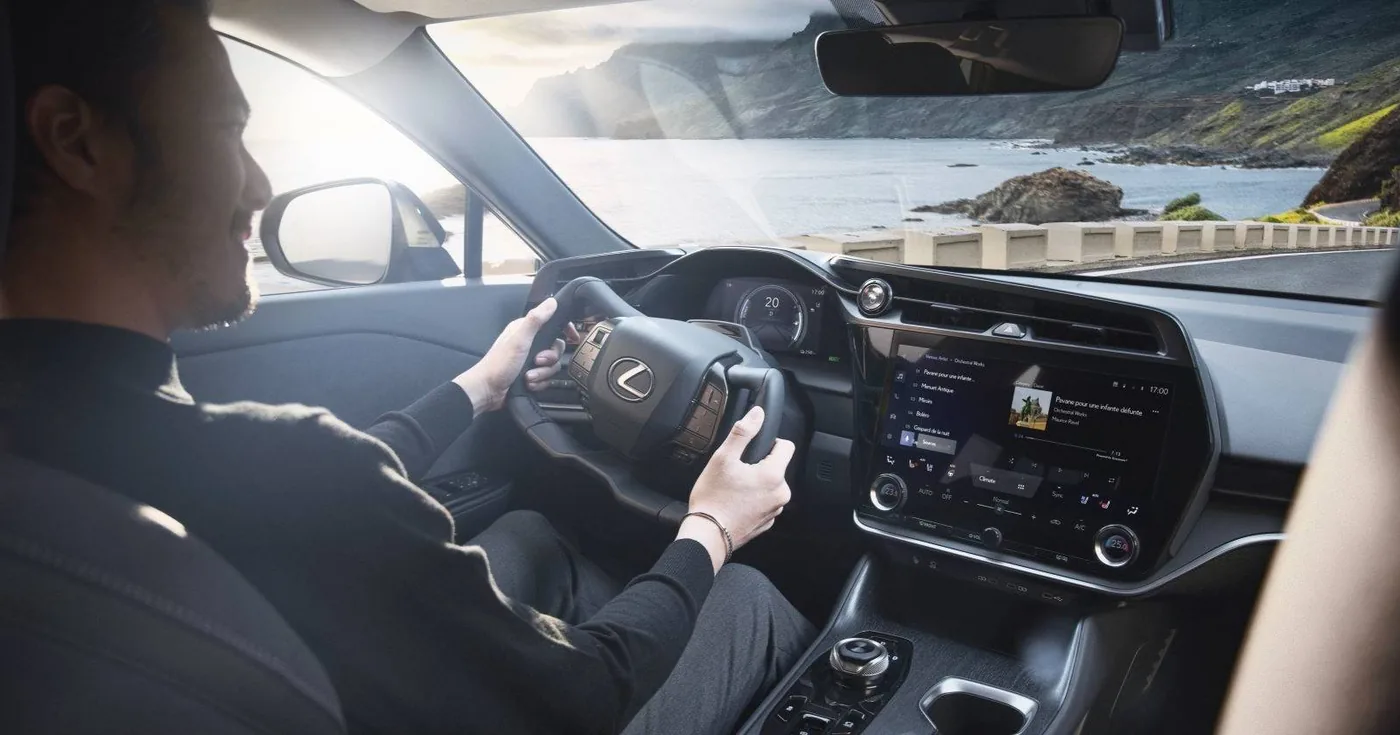
The physical disconnect also alters how the vehicle communicates road texture to the driver’s hands [6]. In an EPS car, surface ruts, tire drag, and curb impacts travel mechanically up the column into the steering rim [8]. Steer-by-wire completely filters out those physical jolts, requiring chassis engineers to recreate road feel artificially through computer algorithms and dedicated feedback motors. While EPS merely assists a mechanical gear set, steer-by-wire replaces the mechanical link with software commands [6].
Why Steer by Wire Needs Redundancy
Building a steering system without a mechanical shaft requires fail-operational safety across every component [6]. Early production attempts approached this challenge cautiously. When Nissan introduced electronic steering on the Infiniti Q50 in 2013, it installed three electronic control units paired with a mechanical backup column separated by an electromagnetic clutch. During normal operation, the car held the clutch open so digital signals could steer. If all three control units failed, the clutch snapped shut to restore mechanical steering [1].
Modern steer-by-wire architectures eliminate that heavy backup clutch, achieving ASIL D safety through full hardware duplication. Contemporary production systems use dual power supplies, isolated communication channels, dual motor windings on the steering rack, and lockstep processors that constantly compare calculations [6, 11]. If one sensor or microcontroller experiences a voltage drop or processing fault, the backup circuit assumes steering control in milliseconds without interrupting the vehicle’s path [6]. Similar redundancy has proven reliable in electronic throttle controls, where dual pedal sensors continuously cross-check voltage signals so the engine computer can trigger reduced power mode if readings diverge [2, 4]. On GM trucks, for instance, software updates like TSB 18-NA-037 corrected false throttle sensor codes, showing how diagnostic calibration protects drive-by-wire reliability [2].
Field data confirms that electronic steering can deliver high reliability when shielded against weather extremes. Technical data from EDN showed that out of 38,000 Nissan vehicles equipped with electronic steering, NHTSA recorded only 23 recalls, primarily caused by harsh freezing climates affecting early sensors [7].


Simulating Road Feel Through Software
Removing the steering column breaks the physical path that carries tire resistance into the cabin [1, 7]. A car driving over cracked pavement or road ruts transfers zero mechanical vibration into the hand wheel [7].
To restore tactile communication, engineers install a brushless force-feedback motor on the steering wheel assembly. As the car travels, chassis software tracks vehicle speed, lateral acceleration, and road-wheel torque resistance, commanding the feedback motor to resist driver inputs with calibrated synthetic torque [6, 11]. This software-defined feedback lets automakers customize steering characteristics across selectable drive modes without changing a single mechanical part. Drivers can select lightweight steering for tight city parking maneuvers or heavier on-center weighting for high-speed motorway cruising [1, 6]. Variable steering ratios also become possible: turning the wheel just 270 degrees from lock to lock can pivot the road wheels fully at low speeds, eliminating the hand-over-hand turning motions that make steering yokes awkward in parking lots [6, 7].
Synthesized steering dynamics also aid vehicle accessibility and driver safety research. A study from the Swarthmore College Department of Engineering noted that filtering harsh road vibrations makes driving easier for elderly drivers and individuals with physical disabilities [7]. At Aachen University, the Institute for Motor Vehicles (ika) studied these feedback characteristics on its experimental SpeedE drive-by-wire concept car, evaluating how drivers react when digital steering torque simulates traction loss [11].

Motorsport and Concept Precursors
Before series production vehicles adopted column-free steering, engineers refined steer-by-wire principles through concept cars and aerospace technology [12]. The concept originally matured in aviation, where commercial aircraft like the Boeing 777 adopted fly-by-wire flight controls in the mid-1990s [4]. In the automotive sector, early concept vehicles explored joystick and yoke interfaces without steering columns: the Saab Prometheus in the early 1990s, the Mercedes F200 in 1996, the SKF Filo based on an Opel Zafira in 2001, and the General Motors Hy-wire in 2003. Delphi also tested commercial consumer interest with Quadrasteer rear-axle steer-by-wire on GM trucks in 2002, though high option pricing limited sales penetration to 17 percent before its cancellation in 2005 [12].
To prove that electronic steering could survive extreme heat and vibration, supplier Schaeffler Paravan Technologie introduced its Space Drive steer-by-wire system to endurance racing. Space Drive originated from mobility equipment designed for disabled drivers before engineers adapted the hardware for high-performance motorsport competition [10].
Track validation reached a major milestone at the 2020 Nürburgring 24 Hours. The W&S Motorsport team entered a Porsche Cayman 718 GT4 MR using Space Drive steering, completing the grueling 24-hour race in torrential rain without a mechanical column to finish second in the SP7 class. In 2021, Schaeffler Paravan entered a Mercedes-AMG GT3 driven by Tim Scheerbarth, Darren Turner, and Dominik Farnbacher in the SPX class. The technology also competed in DTM racing with Rowe Racing’s BMW M6 GT3 piloted by Timo Glock and Mücke Motorsport’s Mercedes-AMG GT3 driven by Gary Paffett [10].
Production Models and Supply Chains
Moving steer-by-wire from race tracks into series road cars required regulatory frameworks and validated Tier 1 supplier hardware. Nexteer launched a series-production ASIL D steer-by-wire system in 2026 on a Chinese new-energy vehicle, marketing it within its Motion-by-Wire chassis portfolio. Germany’s DAkkS accreditation body evaluated Nexteer’s multi-year test campaign to certify its dual-controller, dual-power architecture under European safety guidelines. European regulation UNECE R79 was updated in 2017 and 2022 to govern column-free vehicles, while American regulators at NHTSA established early approval pathways under federal safety standards [6].
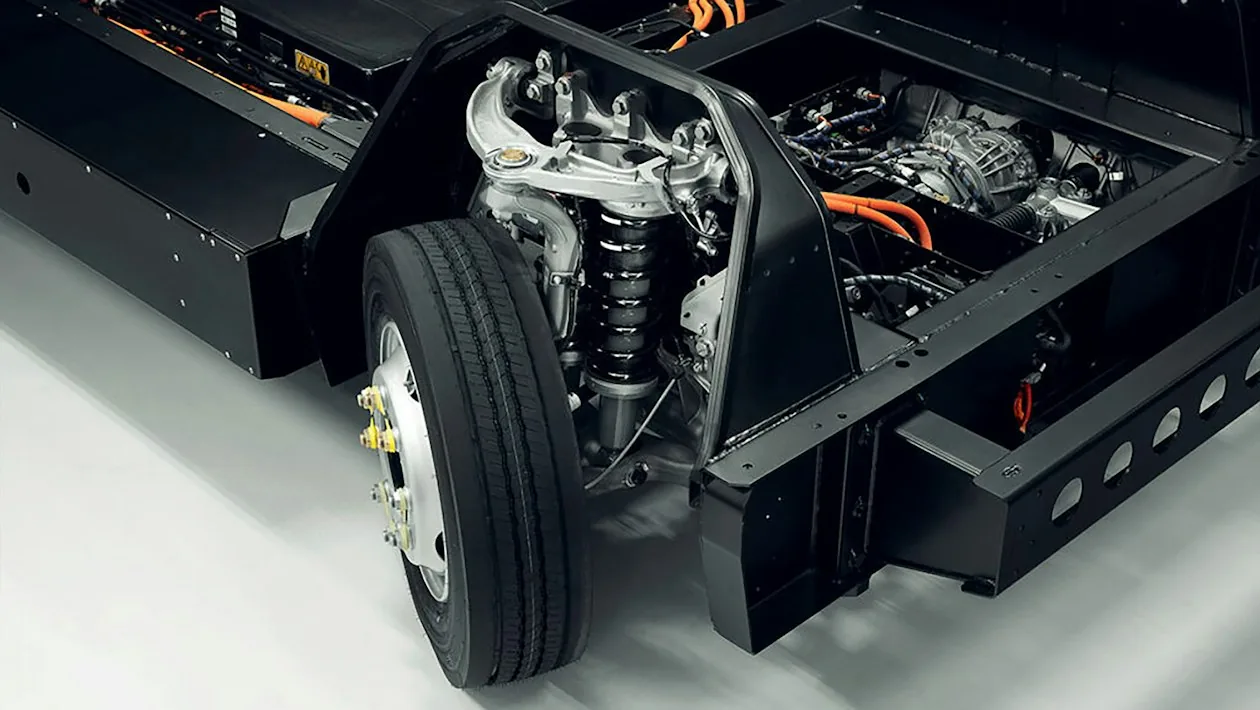
Commercial delivery vehicles have pushed column-free engineering even further across the chassis. The REE P7-C electric truck manufactured by REE Automotive uses four identical REEcorner modules at each wheel, housing independent steering, braking, suspension, and powertrain components tested at the Mira Technology Park in Warwickshire to create a completely flat cargo platform [9].

Passenger car manufacturers are expanding their steer-by-wire offerings as well [6, 12]. Mercedes-Benz previewed steer-by-wire for the EQS luxury electric saloon using hardware supplied by ZF, while ZF prepares broader production rollouts for other global automakers from 2027. Other Tier 1 suppliers, including JTEKT, Schaeffler, and Bosch, have targeted series production launches for customer platforms between 2027 and 2028 [6]. In luxury segments, Rolls-Royce models on the Architecture of Luxury platform use rear-axle steer-by-wire to turn the rear wheels opposite the fronts at low speeds for tighter turns, while production electric vehicles like the Tesla Cybertruck have introduced full column-free steering to retail consumers. Upcoming production rollouts include the Lexus RZ450e, Toyota bZ4X, and Nio ET9 [12].
Steer by Wire in Driver Assistance
The main industrial driver behind steer-by-wire is its seamless compatibility with advanced driver assistance systems (ADAS) [4, 6]. In traditional vehicles, automated lane-keeping features must mechanically turn the steering column or pulse brakes to steer, creating an unsettling physical resistance against the driver’s hands [1, 4].
Steer-by-wire eliminates that mechanical tug-of-war by arbitrating driver inputs and automated steering commands through software arbitration. Camera and radar sensors feed lane-tracking coordinates directly to the chassis controller, which applies subtle steering angle corrections at the rack actuators without vibrating or jerking the hand wheel [1, 6]. If the driver turns the wheel to swerve around unexpected road debris, the controller dynamically blends the human input with automated collision avoidance paths. This software coordination makes features like automated lane centering, adaptive cruise control adjustments, and intelligent parking assist far smoother and more accurate than mechanically coupled systems [4, 6].
As automated driving systems reach higher levels of vehicle autonomy, cabin design can evolve beyond traditional layout constraints [4, 11]. Because the hand controller is no longer physically connected to an axle shaft passing through the firewall, future autonomous vehicles can retract the steering wheel into the dashboard when automated mode is active. The absence of the steering column frees up cabin space, enabling reconfigurable seating and quieter travel [4, 11]. By transforming steering into an intelligent digital system, steer-by-wire establishes the foundation for the future of automated transportation [4, 6].
- ONLINE NEWS Jancer, M. (2013, May 13). Take a Look Inside the First Steer-by-Wire Car. WIRED. [Article Link]
- WEBSITE Kevin. (2026, July 16). How Drive-By-Wire Throttle Works (and its 6 Common Problems). Oards Automotive Hub. [Article Link]
- ONLINE NEWS Keaton, S. (2022, August 21). What Is Drive-by-Wire? MotorBiscuit.com. [Article Link]
- ONLINE NEWS Brown, J. (2024, July 1). Here’s How Drive-By-Wire Works And Why It’s Safe. TopSpeed. [Article Link]
- WEBSITE How Engineering Works. (2025, November 18). What is drive-by-wire system? How Engineering Works. [Article Link]
- ONLINE NEWS ATN Editorial Team. (2026, May 14). Steer-By-Wire Explained: Architecture and ASIL D Safety. Auto Tech News. [Article Link]
- ONLINE NEWS Dolan, J. (2022, August 1). What Is Steer-by-Wire Technology? MakeUseOf. [Article Link]
- WEBSITE Reed, A. (2026, September 11). Every Car Steering System Explained: Hydraulic, Electric And Steer-by-Wire. SellySell. [Article Link]
- ONLINE NEWS Rosamond, C. (2024, January 12). World first ‘everything-by-wire’ vehicle breaks all mechanical links to driver. Auto Express. [Article Link]
- ONLINE NEWS Bosch, M. (2021, May 6). Schaeffler Paravan brings steer-by-wire system to GT3 with Mercedes-AMG entry in Nürburgring 24 Hours. GT REPORT. [Article Link]
- WEBSITE Wikipedia. Drive by wire. Wikipedia. [Article Link]
- WEBSITE Wikipedia. Steer-by-wire. Wikipedia. [Article Link]
- WEBSITE Wikipedia. By-wire. Wikipedia. [Article Link]
- ACADEMIC JOURNAL Arango, J. F., Bergasa, L. M., Revenga, P. A., Barea, R., López-Guillén, E., Gómez-Huélamo, C., Araluce, J., & Gutiérrez, R. (2020). Drive-By-Wire Development Process Based on ROS for an Autonomous Electric Vehicle. Sensors, 20(21), 6121. [Article Link]


