






A reverse proxy server sits between public clients and private backend web servers, intercepting incoming network traffic before forwarding requests to appropriate destinations. A standard forward proxy helps internal clients access the outside internet anonymously, but a reverse proxy works in the opposite direction by protecting origin servers and managing how incoming web traffic reaches them. At the network perimeter, this architecture conceals backend server topologies, optimizes web performance through caching, and distributes computing workloads across server pools to keep web applications reliable.
The Reverse Proxy Server Concept
In computer networking, a reverse proxy server acts as an edge gateway that appears to outside clients as an ordinary web server. In early computing documentation, engineers described this setup as a surrogate server because it answers public web requests on behalf of origin systems while hiding internal host topologies from outside observers. It accepts incoming socket links, inspects HTTP request headers, and selects the best node before returning replies to visitors [2].
Why put extra hardware in front of running apps? Network boundaries explain the choice. A forward proxy acts for clients to mask workstation identities during public web browsing, but a reverse proxy acts for server pools by sitting in front of web apps to shield private IP coordinates from the open internet [1]. Readers studying traffic boundaries can examine the differences between reverse and forward proxies to see how client anonymity shifts. At the network edge, the proxy keeps backend nodes safely insulated behind private firewalls, keeping full control over incoming connections. Outside users only communicate with the proxy IP address, which ensures that backend server infrastructure stays invisible to potential attackers on the public web.
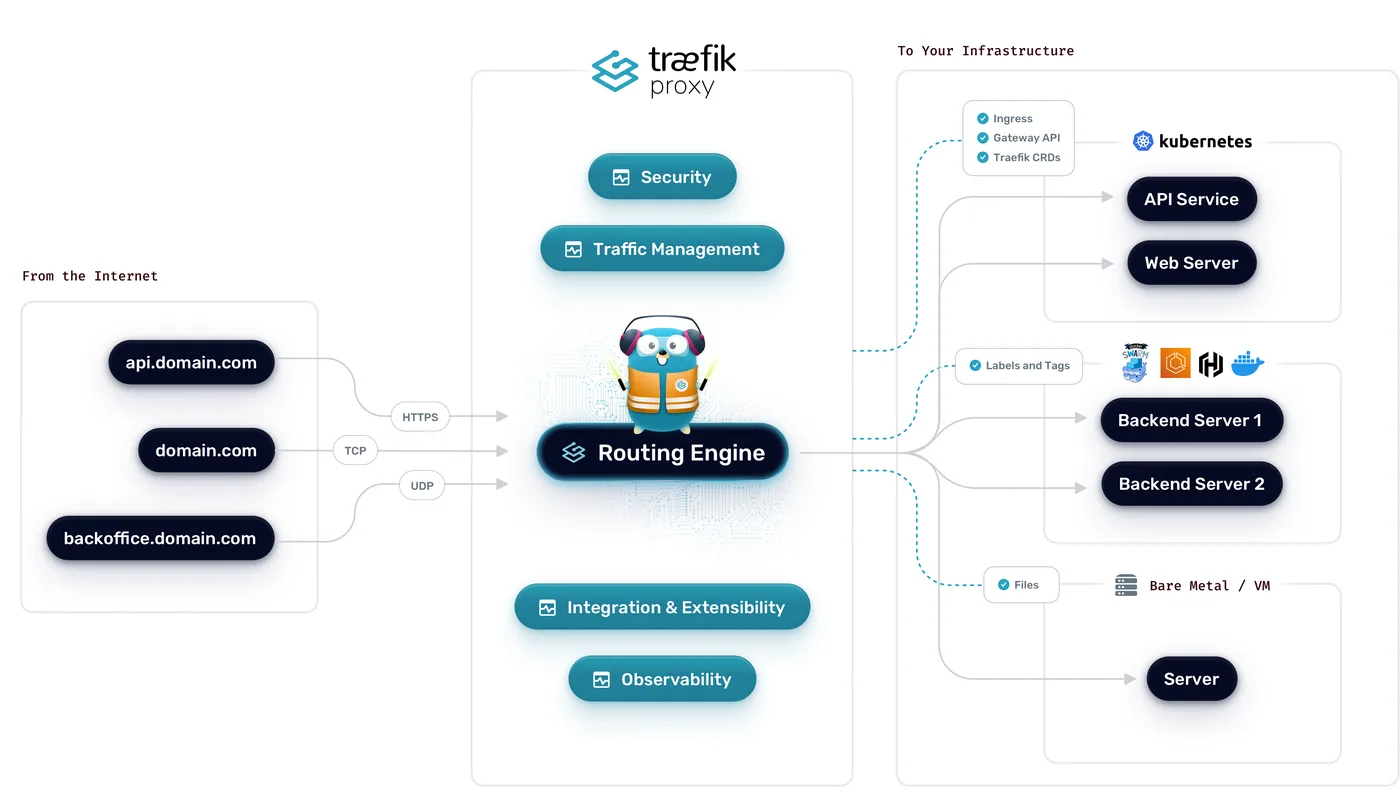
Large platforms split workloads among independent services. One cluster handles logins, another renders user profiles, and a separate store serves media files. The edge proxy inspects incoming HTTP request headers and URL paths to route each transaction, sending dynamic queries to specialized container clusters and delivering static media from dedicated storage pools. Public visitors only see a single domain, unaware of the complex server fleet working behind it [2].
Traffic Routing and Caching
A reverse proxy server does far more than forward raw packets. It caches static assets like pictures, stylesheets, and scripts in local memory so repeat requests never touch origin servers. The proxy also compresses text payloads with gzip or Brotli before sending data over public networks, cutting bandwidth consumption and speeding up page render times for mobile clients [2].
Resource bottlenecks also shrink through a technique called spoon-feeding. When an app generates a large dynamic web page, streaming that data over a slow cellular link can keep backend worker threads busy for seconds. When the backend hands the complete page response to the edge proxy in one quick transfer, the worker finishes its task at once, allowing the proxy to buffer the output and trickle bytes to slow clients without tying up database threads [2].
In data centers, edge routing solves public IPv4 address shortages while boosting system defense. Bukhari and Iqbal studied public IP efficiency and server shielding in a 2024 paper in JOSEIT. They pointed out that IPv4 relies on 32-bit addressing, restricting the world to roughly 4 billion unique numbers at a time when national cyber traffic anomalies hit 976,429,996 incidents in 2022. The team configured an NGINX reverse proxy in front of multiple application servers, running all backend nodes through one public IPv4 address. Live tests with DNSChecker and whatismyipaddress proved that outside users could only detect the proxy IP address, keeping private backend hosts completely invisible to scanning tools on the public internet [3]. This consolidation saves scarce network addresses and shields origin nodes from external scans.
How a Reverse Proxy Server Distributes Workloads
Sudden spikes in web visitors can exhaust origin server memory within seconds. A reverse proxy server monitors incoming volume and applies distribution algorithms to prevent any single machine from exhausting its compute budget during peak hours. Traffic algorithms pick healthy targets based on round-robin queues, lowest latency, or fewest active connections [2].
State tracking complicates load balancing during multi-step web transactions. In 2013, researchers He, Wang, Linlin, and Qin tackled this problem by designing P2PRPIPS, a distributed web intrusion defense system combining peer-to-peer coordination with dynamic reverse proxy nodes. Firewall nodes swapped roles between flow allocation and deep packet inspection based on real-time traffic volume. The software delivered session keeping and balanced traffic loads through modular plugins and an expert rule set, protecting backend web applications from application-layer exploits far more reliably than single-node firewalls [6]. Node flexibility allowed the cluster to respond to shifting traffic conditions without dropping client sessions.
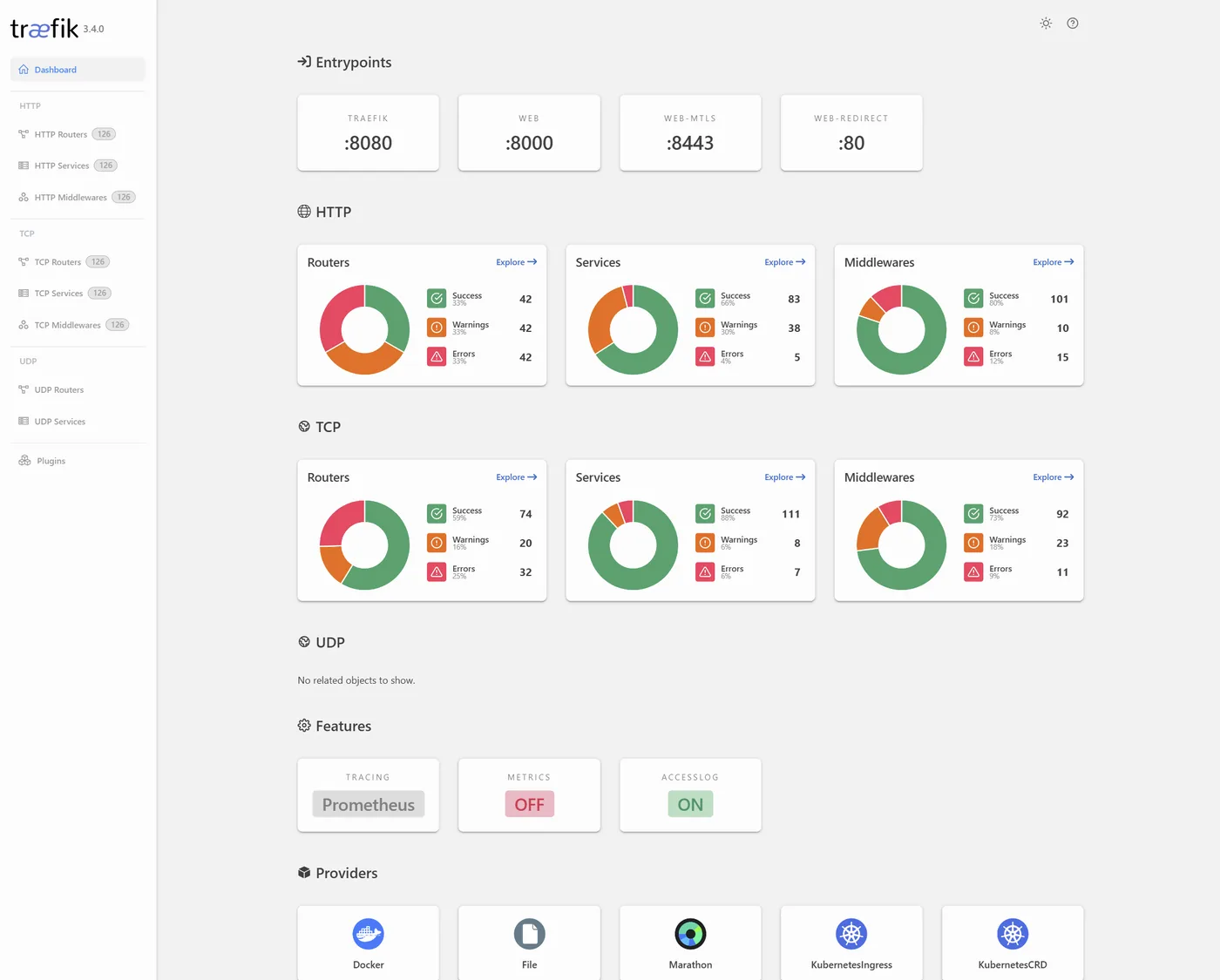
Health checks protect clusters from routing data to dead hosts. The proxy sends background pings to each service, tracking response times and HTTP codes. If a worker fails, the balancer removes it from the pool and shifts new visitors to healthy instances. Modern reverse proxies like Traefik also incorporate circuit breakers and automatic retries, isolating failing microservices so intermittent network timeouts do not cascade into broader cluster failures [12].
Perimeter Security Defenses
Security serves as a primary motive for placing proxies at the perimeter. The proxy filters traffic before requests touch private code, absorbing volumetric denial-of-service floods. In a 2024 study in JTIP, researcher Pardosi showed that deploying an Nginx reverse proxy server on a public host provides a practical, low-cost defense against DDoS threats. Lab tests across Layer 3 and Layer 4 confirmed that the proxy absorbed heavy attack floods, shielding office servers from downtime and costly business interruptions [4].
Reverse proxies also defend networks against deceptive flooding schemes. In 2022, researchers Godinho, Rosado, Sá, Caldeira, and Cardoso analyzed torrent index poisoning attacks targeting a higher education institution in Electronics. In these incidents, attackers alter BitTorrent tracker indexes to trick thousands of innocent file-sharing clients into sending legitimate HTTP requests directly toward target web servers, rapidly consuming available bandwidth and socket pools. Because the flood originates from clean PCs running standard BitTorrent software, common antivirus tools detect no malware. The researchers proved that reverse proxy filters intercept and drop these poisoned requests before they hit origin web servers, neutralizing the disruptive assault [5].
Application-tier defenses also block script theft on checkout pages. In Computers & Security, Rus, El-Hajj, and Sarmah tackled MageCart code skimmers that steal credit card data. Hackers hide skimmer scripts inside HTML script, iframe, and image tags using image steganography. To halt this threat, the researchers built NAISS, an edge proxy system that validates image digital signatures before serving media to online shoppers, stopping payment theft cold [7].

TLS Termination Proxy Design
Encrypted traffic adds computing overhead to backend servers. Decrypting HTTPS traffic over port 443 requires heavy CPU cycles during SSL handshakes. A reverse proxy server placed at the perimeter offloads this cryptographic work. The proxy answers incoming connections on port 443, completes cryptographic handshakes with client browsers, decrypts payloads, and forwards plain HTTP traffic to backend servers over private network links [1, 2].
A central TLS setup streamlines certificate management and hardware efficiency. Instead of installing SSL keys on dozens of backend machines, engineers load credentials solely on the edge proxy. This unified point of control prevents accidental cert expirations and eases security audits. Edge proxies can also pair with custom cryptographic hardware accelerators to process thousands of handshakes per second, reaching speeds that standard backend application servers cannot achieve on their own. Offloading encryption frees up CPU resources, allowing backend microservices to focus their memory and threads on core business logic [2].
Automated cert tools simplify HTTPS operations. Software like Traefik connects to Let’s Encrypt through the ACME protocol, obtaining wildcard certificates without manual intervention. The proxy monitors expiration dates and renews certificates quietly in the background, maintaining uninterrupted HTTPS encryption across all subdomains without requiring server reboots or manual administrator edits [11, 12].

Client Identity in HTTP Headers
Terminating connections at the proxy breaks direct IP visibility. Because the backend only sees packets coming from the proxy’s IP, original client network coordinates disappear. Apps need visitor IP data for fraud checks, geo-routing, and security logs. Edge proxies solve this visibility gap by appending descriptive HTTP headers to each request, preserving original client IP addresses and protocol details for backend security analysis and access auditing [1].
RFC specifications define the standardized Forwarded header, while web servers widely implement de-facto header conventions. The most popular header is X-Forwarded-For, which appends the client IP to a list of hops, and X-Forwarded-Host preserves the original domain, and X-Forwarded-Proto identifies whether the browser connected over HTTP or HTTPS. Proxies can also add a Via header to track every intermediary hop along the request path, providing complete audit records for debugging and compliance. Without these forwarded headers, web applications would generate incorrect geographic content and fail security audits [1].
Headers also allow authentication offloading at the network edge. In Caddy, the forward_auth directive clones incoming requests and queries an auth gateway like Authelia on port 9091. If the gateway approves the request with a 2xx HTTP status, Caddy injects identity headers like Remote-User, Remote-Groups, and Remote-Email before routing traffic to backend code. If the gateway rejects the request, Caddy redirects the browser to a login screen, keeping unauthorized requests away from backend apps [13].
Reverse Proxy Server Setups in Cloud Clusters
Container platforms like Docker and Kubernetes create dynamic environments where microservices scale up and change IP addresses repeatedly during daily operations. Wahanani, Idhom, and Kiki tested these dynamics in a 2021 Docker virtualization study in IJCONSIST JOURNALS. A reverse proxy server deployed across Docker compose environments cut capital costs, reduced required storage footprints, and streamlined domain routing while isolating WordPress containers on local networks [8].
In 2015, DevOps engineer Emile Vauge managed thousands of microservices after roles at Lyra Network, Airbus, Thales Communications, and Nortel. Vauge created Traefik Proxy, branded as The Cloud Native Application Proxy and built by Containous (later renamed Traefik Labs). The tool integrates with Docker, Swarm mode, Kubernetes, Consul, Etcd, Rancher v2, and Amazon ECS. Engineers point Traefik at an orchestrator API to generate routes automatically on the fly. Administrators run Traefik, which continuously updates routing rules without restarts. The project released versions 1.1, 1.2, and 1.3 under the MIT License, leading to version 3.0 docs. Docker deployments bind port 80 and port 8080 for web traffic. By 2020, Traefik reached 2 billion downloads and 30,000 stars, backed by Balderton Capital in a $10 million round and deployed by Conde Nast, eBay Classifieds, and Mailchimp [9, 10, 11].

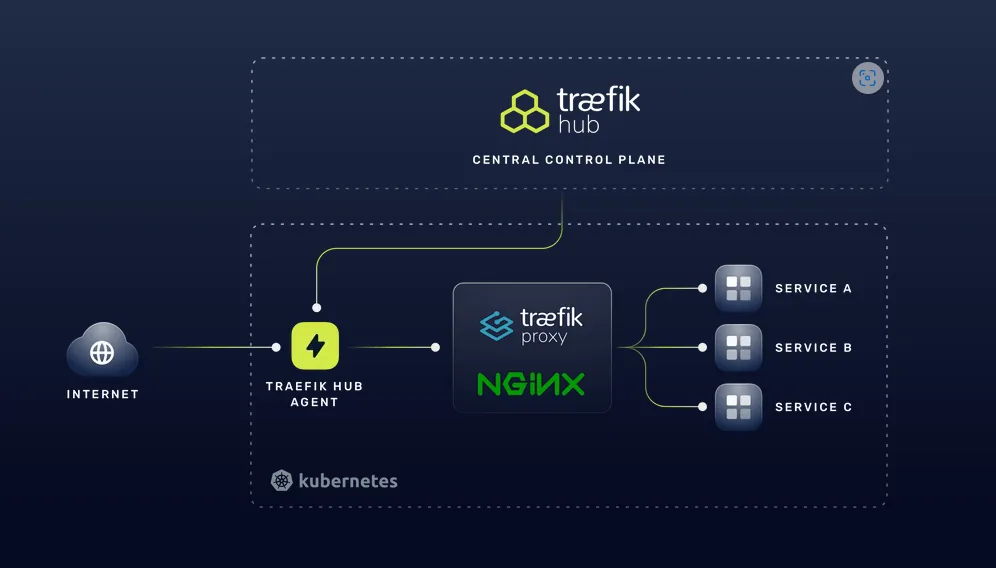
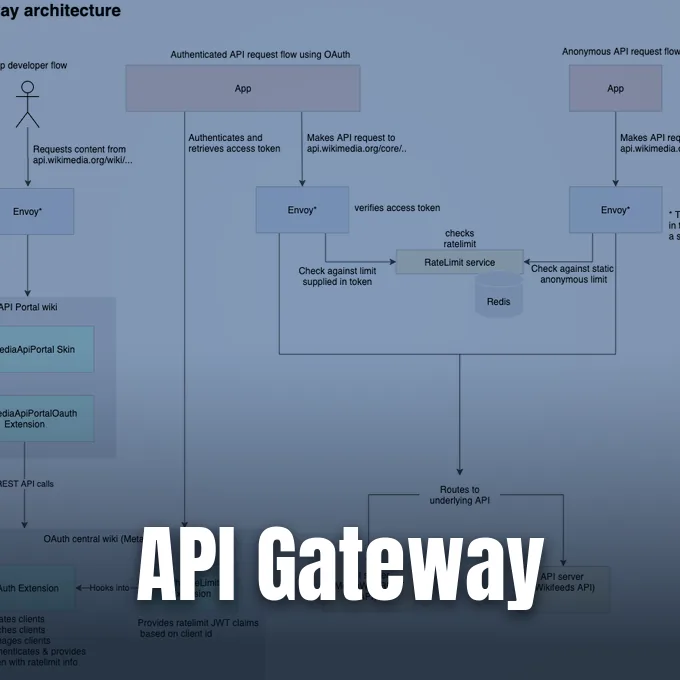
Modern edge systems also bridge into API gateways. Teams managing microservice fleets consult API gateway traffic routing architecture to coordinate auth, metrics, and rate limits. In May 2023, Traefik Labs launched Traefik Hub at KubeCon Amsterdam, adding Kubernetes-native API management with OAuth 2.0 and JSON Web Tokens. Vauge noted that older monolithic API gateways were built before the cloud revolution and proved too heavy, whereas modern proxies provide lightweight routing that fits containerized microservices [10].
Failure Scenarios and System Risks
Centralized routing creates design vulnerabilities that network teams must address. Because all public web traffic converges on the proxy tier, the gateway becomes a single point of failure, where an edge outage or configuration error can render healthy backend systems unreachable to visitors. A prominent example occurred in 2020 when a brief Cloudflare outage disrupted top global platforms like Discord [2].
Security risks also multiply when proxies handle decrypted data. To inspect, filter, or cache content, the proxy must hold TLS private keys. Concentrating private keys on public-facing servers creates a high-value target for hackers, who can exploit compromised proxies to pivot into private networks and attack unhardened internal apps that lack robust security controls. Once inside the perimeter, an intruder can compromise sensitive databases and corporate resources [2]. These attack paths show why edge proxies require strict access hardening.
Neglected maintenance deepens system exposure. If administrators fail to apply security patches and update attack signature databases promptly, zero-day exploits can slip through unfiltered to compromise backend systems. Reliance on third-party vendors also places data confidentiality in outside hands, requiring engineering teams to enforce strict monitoring, automated failover, and regular configuration reviews [2].
- WEBSITE MDN Web Docs. (2025, November 9). Proxy servers and tunneling. [Article Link]
- WEBSITE Wikipedia. (n.d.). Reverse proxy. [Article Link]
- ACADEMIC JOURNAL Bukhari, A. S., & Iqbal, M. (2024). Public IP Efficiency and Data Center Security Enhancement with Reverse Proxy Implementation. Journal of Systems Engineering and Information Technology (JOSEIT), 3(2), 37-42. [Article Link]
- ACADEMIC JOURNAL Pardosi, V. B. A. (2024). Cost-Effective DDoS Mitigation: Leveraging Nginx Reverse Proxy for Enhanced Server Protection. Jurnal Teknologi Informasi dan Pendidikan, 17(2), 371-382. [Article Link]
- ACADEMIC JOURNAL Godinho, A., Rosado, J., Sá, F., Caldeira, F., & Cardoso, F. (2022). Torrent Poisoning Protection with a Reverse Proxy Server. Electronics, 12(1), 165. [Article Link]
- ACADEMIC JOURNAL He, Q., Wang, Y., Linlin, Y., & Qin, K. (2013). P2PRPIPS: A P2P and Reverse Proxy Based Web Intrusion Protection System. Research Journal of Applied Sciences Engineering and Technology, 5(7), 2439-2444. [Article Link]
- ACADEMIC JOURNAL Rus, A., El-Hajj, M. I., & Sarmah, D. K. (2024). NAISS: A reverse proxy approach to mitigate MageCart’s e-skimmers in e-commerce. Computers & Security, 140, 103797. [Article Link]
- ACADEMIC JOURNAL Wahanani, H. E., Idhom, M., & Kiki, K. Y. K. (2021). Implementation Of Docker Container On Local Network By Applying Reverse Proxy. IJCONSIST JOURNALS, 3(1), 34-39. [Article Link]
- ONLINE NEWS Miller, R. (2020, September 23). Five years after creating Traefik application proxy, open-source project hits 2B downloads. TechCrunch. [Article Link]
- ONLINE NEWS Lardinois, F. (2023, May 17). Traefik Labs launches Traefik Hub, a Kubernetes-native API management service. TechCrunch. [Article Link]
- WEBSITE Wikipedia. (n.d.). Traefik Proxy. [Article Link]
- WEBSITE Traefik Labs. (2019, December 4). Traefik, The Cloud Native Application Proxy. [Article Link]
- WEBSITE Caddy Web Server. (2026, January 1). forward_auth (Caddyfile directive). Caddy Documentation. [Article Link]


