






Project Kuiper is Amazon’s initiative to build a low Earth orbit constellation of 3,236 broadband satellites designed to provide high-speed, low-latency internet connectivity to unserved communities around the world [2]. Backed by an investment exceeding $10 billion, the network combines phased-array customer antennas, optical inter-satellite links, and direct integration with Amazon Web Services cloud facilities [4]. While the company rebranded the consumer service as Amazon Leo in late 2025, the underlying satellite fleet maintains its original engineering architecture to provide global broadband coverage [3].
- What Is Project Kuiper?
- Why Amazon Chose the Kuiper Belt Name
- Architecture of the Low Earth Orbit Constellation
- User Terminal Hardware and Customer Speeds
- Regulatory Hurdles and the FCC Approval Process
- How Project Kuiper Procured Heavy-Lift Rockets
- Satellite Production Facilities from Washington to Florida
- Amazon Leo in the Global Broadband Market
What Is Project Kuiper?
Amazon began Project Kuiper in 2019 to construct an off-Earth telecommunications network capable of delivering reliable data to areas where conventional fiber cables remain impractical [2]. The venture operates under Kuiper Systems, a wholly owned subsidiary led by Rajeev Badyal, who previously served as a vice president for SpaceX’s Starlink program before joining Amazon with several aerospace engineers [11]. The main objective centers on closing the digital divide for tens of millions of people living in remote rural regions, islands, and developing territories [2]. Amazon committed more than $10 billion to fund satellite manufacturing, ground stations, and heavy rocket launches [4].
Beyond serving individual households, the satellite network was designed from its inception to support enterprise customers, government agencies, and disaster relief operations. Wireless telecommunications carriers can also use the satellite constellation for cellular backhaul, letting them extend fourth-generation LTE and fifth-generation mobile coverage into isolated regions without building expensive ground towers [9]. The project represents Amazon’s largest capital venture outside online retail [11].
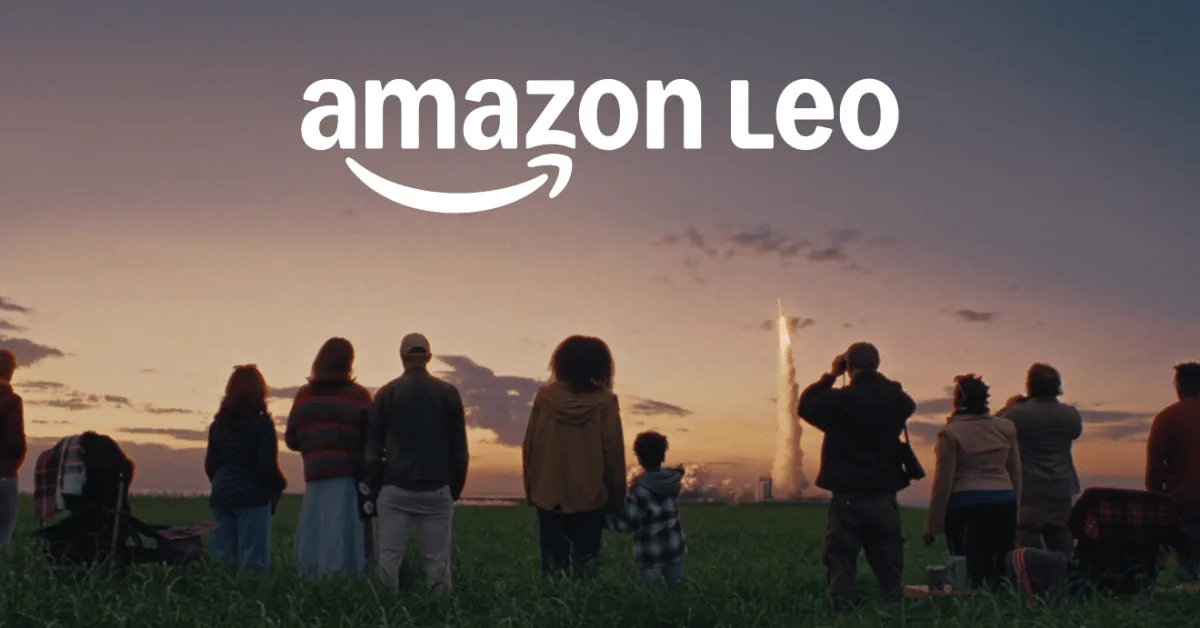
In November 2025, Amazon announced that the consumer broadband service would officially adopt the brand name Amazon Leo, drawing inspiration from the low Earth orbit terminology that defines its flight zone below 1,200 miles altitude [3]. By July 2026, the company had placed 396 production satellites into orbit to validate network routing protocols ahead of full commercial activation [11].
Why Amazon Chose the Kuiper Belt Name
When Amazon first filed paperwork with federal regulators in 2019, engineers selected Project Kuiper as a code name honoring the outer solar system [2]. The moniker refers to the Kuiper Belt, a vast disc of icy debris, comets, and dwarf planets that encircles the sun beyond the orbit of Neptune [3]. The region bears the name of Dutch-American astronomer Gerard Kuiper, who published theoretical work in 1951 predicting the existence of minor bodies in that distant orbital plane [2].
Astronomers continue to study the Kuiper Belt using deep surveys like the Dark Energy Camera Ecliptic Exploration Project to catalog faint celestial bodies [1]. In contrast to those natural planetesimals billions of miles from Earth, Amazon’s satellites orbit mere hundreds of miles above the ground. The cosmic name offered an imaginative identity during early development, but the vast distance of the planetary belt stood apart from the low altitudes where the communications fleet actually flies [3].
The decision to rebrand the network as Amazon Leo in late 2025 aligned consumer marketing with the practical reality of low Earth orbit. Customers benefit from a clear name that describes where the network operates [3]. Technical patents and launch contracts still preserve the Project Kuiper foundation [11].
Architecture of the Low Earth Orbit Constellation
The complete constellation architecture encompasses 3,236 satellites organized across 98 orbital planes to provide continuous coverage for user terminals on the ground. Amazon distributed the spacecraft across three orbital shells at altitudes of 590 kilometers (370 miles), 610 kilometers (380 miles), and 630 kilometers (390 miles) [11]. The initial deployment phase concentrates 578 satellites at the 630-kilometer shell with an inclination angle of 51.9 degrees, providing coverage for densely populated latitudes between 56 degrees north and 56 degrees south [5]. Directional antennas focus beams on ground cells, minimizing radio interference [9].
Each satellite uses electric propulsion powered by Hall-effect thrusters to perform orbital insertion, station-keeping maneuvers, and eventual deorbit burns. To move customer data through space without relying on intermediate ground relay stations, the satellites feature optical inter-satellite links equipped with infrared lasers. In-orbit testing confirmed that these laser transceivers can transmit data at throughput speeds of 100 Gbps over distances reaching 1,000 kilometers while two spacecraft travel at orbital velocities near 25,000 kilometers per hour, with the operational design capable of linking over 2,600 kilometers [11].
Space safety guidelines shaped the constellation design, leading Amazon to adopt firm orbital disposal targets. Every satellite carries sufficient propellant to lower its orbit at the end of its useful lifespan, completing atmospheric re-entry within 355 days of mission completion. That timeframe substantially improves upon older international guidelines, which historically allowed derelict spacecraft to drift in low orbits for up to twenty-five years before decaying [4]. Ground data routing links directly into 12 AWS Ground Station installations to transfer space traffic into terrestrial fiber networks [11].
User Terminal Hardware and Customer Speeds
Connecting to the constellation needs customer terminals that use flat-panel phased-array antennas to track fast-moving satellites across the sky [5]. In December 2020, Amazon revealed an antenna measuring approximately 30 centimeters (12 inches) across that combines transmit and receive elements on a single aperture. The phased-array architecture operates electronically without noisy mechanical motors, driving manufacturing costs to less than 20% of older flat-panel dishes while supporting bandwidth speeds up to 400 megabits per second [11].
To meet diverse market needs, Amazon engineered three terminal tiers. The smallest device, named the Leo Nano, measures seven inches square, weighs 2.2 pounds, and delivers download speeds up to 100 megabits per second for portable and residential use. The standard model, Leo Pro, measures eleven inches square, weighs 5.3 pounds, and supports download speeds up to 400 megabits per second, providing a balance of size and performance for residential homes and small business offices. Both terminals connect to standard home routers to distribute internet access [11].
For government agencies, hospitals, and enterprise facilities that demand higher throughput, Amazon developed the larger Leo Ultra terminal. Measuring 20 by 30 inches, the Ultra model delivers download speeds of up to 1 gigabit per second and upload speeds of 400 megabits per second [11]. Multiple Ultra units can link together to support bandwidth-heavy operations [9].

Regulatory Hurdles and the FCC Approval Process
Before launching satellites, Amazon had to secure spectrum rights from the Federal Communications Commission to transmit signals over Ka-band radio frequencies. However, the regulatory agency had closed its official Ka-band processing round in November 2016 after granting orbital licenses to nine initial applicants. When Amazon submitted its application in July 2019, it requested a waiver to join the spectrum sharing process on an equal footing with earlier licensees, arguing that modern software would prevent radio frequency conflicts [8].
Established competitors objected strongly to Amazon’s waiver petition, warning that adding thousands of new spacecraft would create spectrum congestion. SpaceX officials met with FCC Chairman Ajit Pai and commission staff at least three times to formally protest the application, while OneWeb, Telesat, and Iridium Communications submitted petitions urging the agency to dismiss the request. SpaceX argued that granting a late waiver would undermine regulatory predictability and complicate coordinated frequency sharing agreements in orbit [8].
Despite industry opposition, the FCC voted unanimously 5-0 on July 30, 2020, to grant Project Kuiper its operational license under an authorization order signed by commission secretary Marlene Dortch [4]. “We’re off to the races,” Dave Limp, Amazon senior vice president of devices and services, said following the vote [9]. The approval required Amazon to coordinate with prior licensees, implement debris removal plans, and deploy half its constellation (or 1,618 satellites) by July 30, 2026, with the remaining half finished by July 30, 2029 [5]. In June 2026, the commission waived the July 2026 deadline to prevent regulatory cliff effects, but cautioned that satellites launched after that date would face temporary demotion in spectral priority until deployment pace quickened [11].

How Project Kuiper Procured Heavy-Lift Rockets
Deploying thousands of satellites required an immense volume of launch capacity, prompting Amazon to assemble the largest commercial launch procurement in aerospace history [6]. In April 2022, the company revealed agreements for up to 83 rocket launches over a ten-year span. The procurement distributed flights across three providers: 38 missions on ULA’s Vulcan Centaur, 18 on Arianespace’s Ariane 6, and 12 aboard Blue Origin’s New Glenn, with options for 15 more [11].
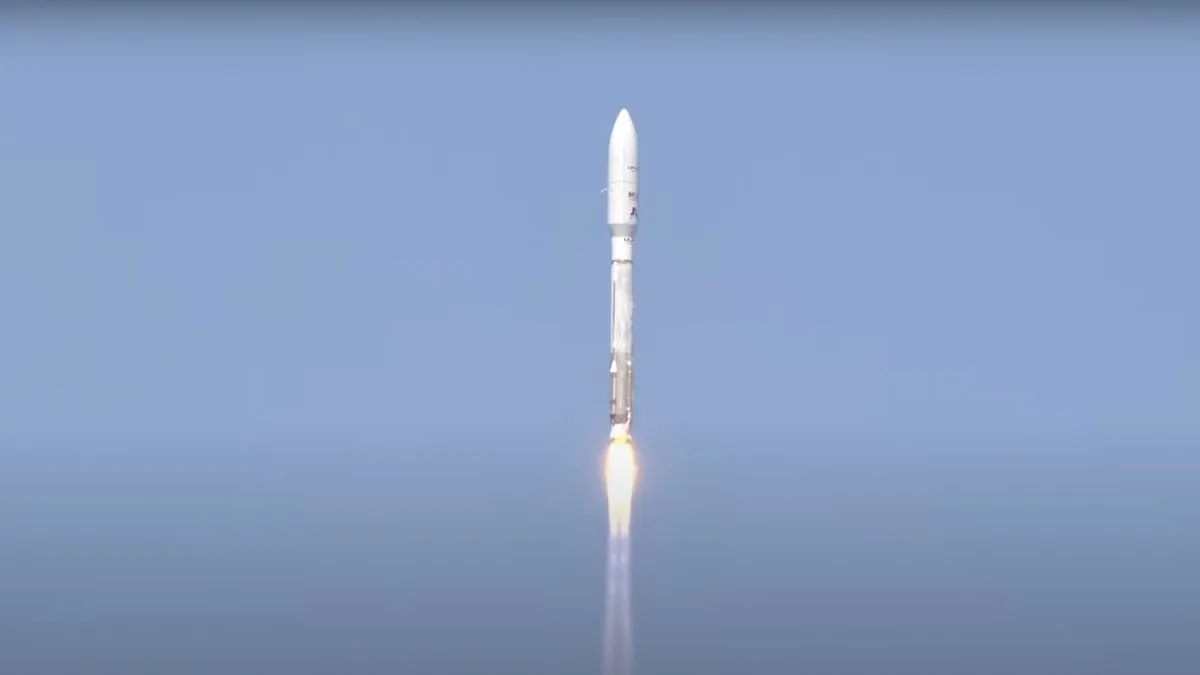
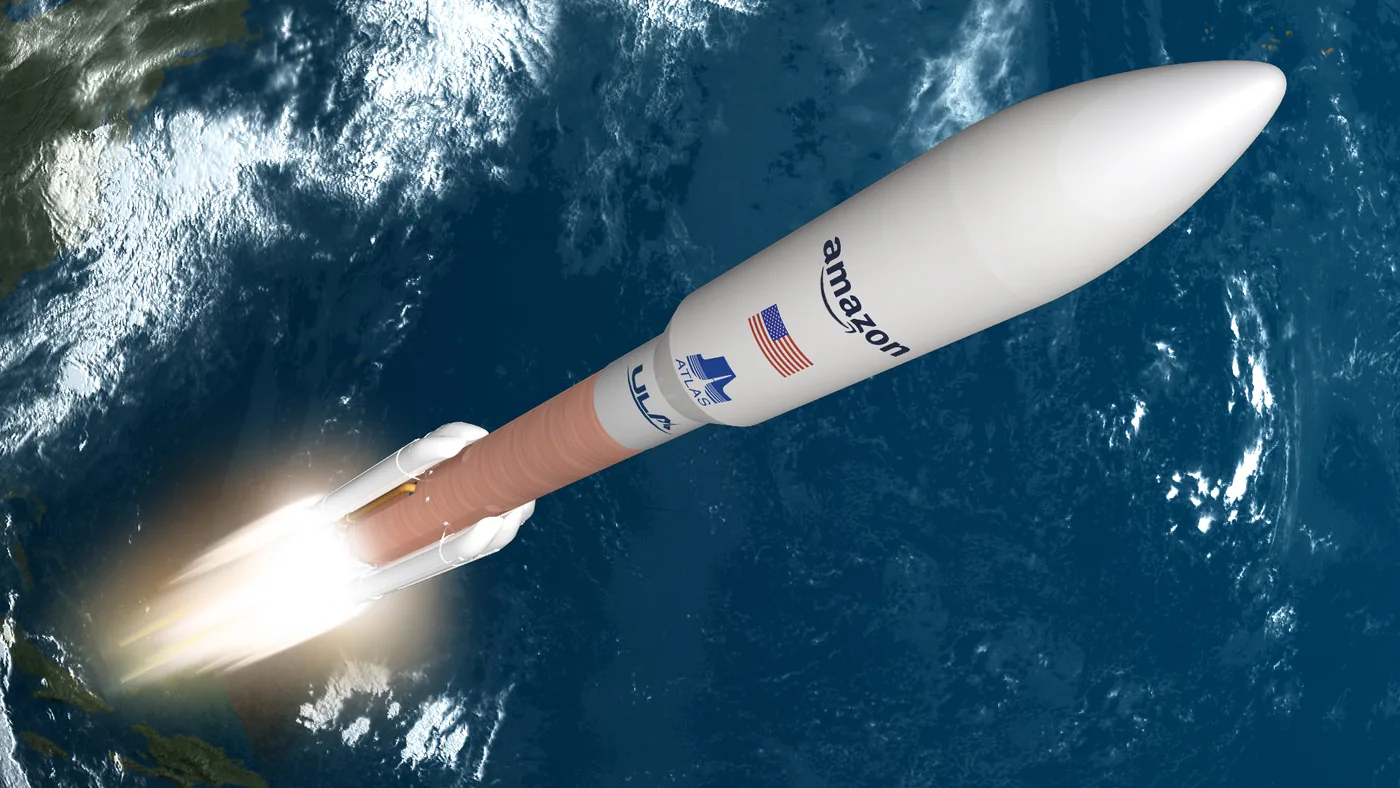
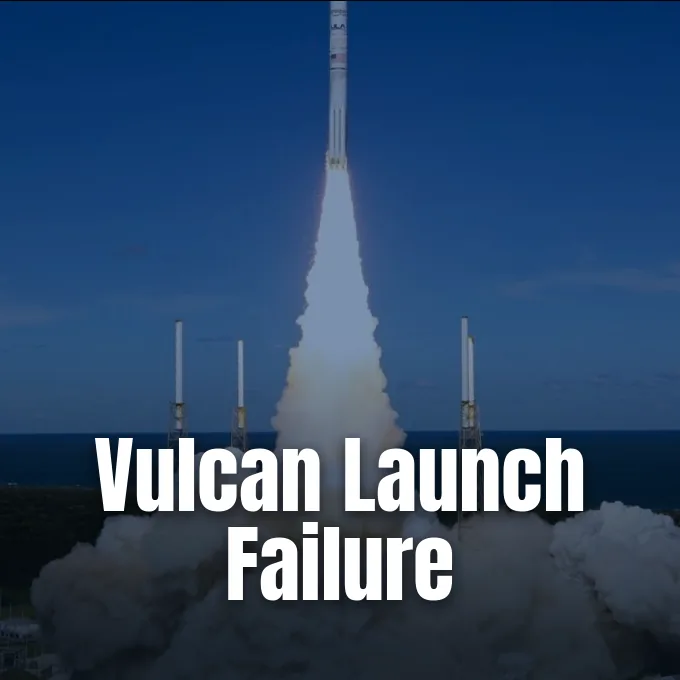
To bridge developmental delays affecting new launch vehicles, Amazon also contracted nine flights on ULA’s proven Atlas V rocket [5]. The two initial prototypes, Kuipersat-1 and Kuipersat-2, lifted off atop an Atlas V on October 6, 2023, from Space Launch Complex-41 at Cape Canaveral Space Force Station, reaching a 311-mile-high orbit eighteen minutes after liftoff [7]. Gary Wentz, ULA vice president, said the launch marked an important first step in deploying Amazon’s broadband initiative [10]. After validating communications links, Amazon safely deorbited both prototypes to clear the orbital path [11]. However, launch operations faced hurdles when Amazon Leo Satellites Destroyed in Vulcan Rocket Launch Failure disrupted deployment schedules.
The launch procurement strategy triggered corporate controversy in August 2023, when a shareholder pension fund sued Amazon’s board of directors for awarding contracts worth billions of dollars to Jeff Bezos’s space venture Blue Origin without evaluating cheaper alternatives like SpaceX. To alleviate launch bottlenecks and diversify flight manifests, Amazon subsequently contracted three flights aboard SpaceX’s Falcon 9 in late 2023, which carried 72 satellites into orbit during 2025. In early 2026, Amazon added ten more Falcon 9 launches and twelve New Glenn missions, alongside six extra Ariane 6 flights booked in September 2026 [11].
Satellite Production Facilities from Washington to Florida
Building thousands of satellites compelled Amazon to invest heavily in manufacturing infrastructure [4]. The company set up its central research and development headquarters in Redmond, Washington, in 2020 to design flight hardware and refine production methods [9]. Satellite assembly occurs inside a 172,000-square-foot facility in nearby Kirkland, Washington, which opened in April 2024 to support serial production. At full manufacturing capacity, the Kirkland factory is designed to produce five finished satellites each day [11].
The manufacturing ecosystem relies on a supply pipeline that begins at a logistics center in Everett, Washington. Technicians in Everett assemble raw components into integrated kits before transporting them to Kirkland for cleanroom assembly and testing [11]. Finished spacecraft then undergo thermal vacuum and vibration testing before shipping to Florida for launch integration [1].
Final launch preparations take place at NASA’s Kennedy Space Center in Florida, where Amazon invested $120 million to construct a 9,300-square-meter satellite processing facility at the Launch and Landing Facility. Completed in 2024, the facility allows aerospace teams to perform final fueling, checkout, and encapsulation of satellite payloads into rocket fairings before transfer to launch pads at Cape Canaveral. The Florida hub generated 50 engineering jobs on the Space Coast, joining a national Project Kuiper workforce of more than 1,400 employees [1].
Amazon Leo in the Global Broadband Market
As commercial deployment advances, Amazon enters a competitive satellite communications market led by established operators [3]. The dominant incumbent remains SpaceX’s Starlink constellation, as detailed in analysis examining how Starlink Satellites Deliver Broadband from Low Earth Orbit with thousands of operational spacecraft already serving millions of subscribers [7]. Other operators, including OneWeb and Telesat Lightspeed, also target enterprise and rural communications niches, but Amazon brings massive cloud infrastructure and global retail reach to the table [5].
Financial analysts at Morgan Stanley estimated that high-speed space internet represents a potential $100 billion market opportunity for Amazon over the long term [4]. To secure global subscribers, Amazon began establishing regional partnerships around the world. In July 2026, the company signed a distribution agreement with South African telecom provider Herotel to offer residential broadband under the brand name evry beginning in 2027 [11]. This international expansion accelerated as covered when Amazon Builds 1,000th Satellite as Leo Space Internet Nears Debut.
By combining low Earth orbit broadband with Amazon Web Services, the company provides cloud computing and edge processing directly to remote industrial facilities, maritime fleets, and agricultural enterprises. “We are doing an incredible amount of invention to deliver fast, reliable broadband at a price that makes sense for customers,” Rajeev Badyal said when describing the engineering effort. The integration allows remote businesses to run secure cloud workloads without relying on sluggish legacy satellite links or erratic ground towers [9]. As production scales and launch cadence accelerates, Amazon Leo aims to transform digital access for underserved communities worldwide while anchoring Amazon’s presence in space [3].
- ONLINE NEWS Rainbow, J. (2023, July 21). Amazon picks Kennedy Space Center for Project Kuiper processing facility. SpaceNews. [Article Link]
- ONLINE NEWS Sheetz, M. (2019, April 4). Amazon wants to launch thousands of satellites so it can offer broadband internet from space. CNBC. [Article Link]
- ONLINE NEWS Bonifield, S. (2025, November 13). Starlink rival ‘Project Kuiper’ rebrands to Amazon Leo. The Verge. [Article Link]
- ONLINE NEWS Sheetz, M. (2020, July 30). Amazon will invest over $10 billion in its satellite internet network after receiving FCC authorization. CNBC. [Article Link]
- ONLINE NEWS Rainbow, J. (2021, April 19). Amazon contracts nine Atlas 5 missions for Kuiper broadband satellites. SpaceNews. [Article Link]
- ONLINE NEWS Marks, P. (2022, April 6). Amazon: Will Project Kuiper satellite plan dominate the global launch market? New Scientist. [Article Link]
- ONLINE NEWS Wall, M. (2023, October 6). Atlas V rocket launches Amazon’s 1st 2 internet satellites to orbit. Space.com. [Article Link]
- ONLINE NEWS Feathers, T. (2019, December 19). SpaceX is lobbying against Amazon’s internet-beaming satellites. VICE. [Article Link]
- ONLINE NEWS Boyle, A. (2020, July 30). Amazon vows to invest $10B in Kuiper satellites after getting FCC’s go-ahead. GeekWire. [Article Link]
- PRESS RELEASE United Launch Alliance. (2023, October 6). United Launch Alliance successfully launches first mission in partnership with Amazon. ULA Launch. [Article Link]
- WEBSITE Wikipedia contributors. (2026). Amazon Leo. Wikipedia, The Free Encyclopedia. [Article Link]


