






Producer Tatsuya Matsubara and scenario writer Naotaka Hayashi shared new details about Steins;Gate Reboot during recent interviews with Anime News Network and Game8. The creators discussed the development choices behind remaking the 2009 visual novel, which now includes an additional route branching from the main storyline and rebuilt assets for the entire production. While the original game and its animated adaptation established the franchise over seventeen years, the upcoming edition updates character banter and expands the narrative for modern players [1].
Origins of Steins;Gate Reboot
Matsubara said the team began work on Steins;Gate Reboot while preparing to develop new text adventure games. Both the 2009 original and the 2018 visual novel adaptation STEINS;GATE ELITE remain easily available on digital storefronts. The staff wanted to modernize the experience by rebuilding all visual and audio assets from scratch to engage new players and longtime fans [1].
The script uses STEINS;GATE ELITE as its baseline, yet the team returned to a traditional text adventure format to restore narrative depth. That shift required substantial script changes. Because the 2018 anime-based adaptation condensed dialogue, fan calculations showed that it contained roughly 33 to 36 percent fewer lines than the 2009 original [4]. Hayashi said certain explanations felt insufficient on the page without the full internal monologues. The developers restored deleted passages from the original 2009 release, while introducing subtle speech pattern changes that grew out of seventeen years of spin-offs, sequels, and collaborations. New text was also written to adapt scenes from the anime, including conversations between Okabe Rintaro and Kurisu Makise in the laundromat and on the lab rooftop [1].

Much of the tuning centered on dialogue rhythms and early chapter pacing. Hayashi said the team trimmed some of Okabe Rintaro’s chuunibyō dialogue because his long tangents could test the patience of modern readers. However, the writers kept the 2009 internet slang to preserve period atmosphere, adding new TIPS entries to explain dated expressions. Matsubara also rejected suggestions to simplify the phone email triggers. A simpler branching mechanic would weaken the direct emotional bond between Okabe Rintaro and the player who guides him [3].
The Moeka Ending
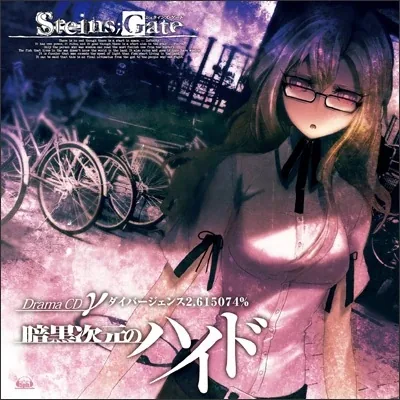
The most notable addition to the remake is a seventh ending focusing on Moeka Kiryu. In the original 2009 visual novel, Moeka acted primarily as an antagonist, and Hayashi initially felt that giving her a personal route was unnecessary. Strong fan feedback after launch challenged that view and led to the production of a 2010 audio drama titled STEINS;GATE Drama CD γ: Hyde of the Dark Dimension Divergence 2.615074%. That drama CD explored an alternate timeline centered on her character, establishing a narrative thread that fans spent years asking to experience in a playable game. The remake finally incorporates that storyline into the official game structure [1].
The adaptation of that audio drama required a fundamental restructuring of its plot. While the drama CD was written as a self-contained story, the new scenario branches directly from the end of Chapter 9. Hayashi said the team made the narrative even harsher so Okabe’s decision to live with Moeka felt earned [3]. The writers chose to omit Suzuha Amane from this branch. They felt her appearance here would weaken the emotional punch of her dramatic return in Chapter 11 [1].
To trigger the jump into the Gamma Worldline, the writers had a future version of Nae Tennoji send a mysterious D-Mail. The team felt that explaining the email’s detailed logic on screen would have dragged down pacing and spoiled the confusion Okabe experiences upon arrival. The message content remains hidden. Matsubara said Nae’s determination altered history back to the founding of the Future Gadget Lab, with Hayashi joking it must have disturbed the Y2K problem. The developers also discarded a joke harem ending because it clashed with the story’s serious tone [1].


Visual Changes in Steins;Gate Reboot
Beyond script additions, the visual presentation of Steins;Gate Reboot has been rebuilt with modern animation tools. Character designer huke created brand-new character sprites and refined outfits with extra accessories. During the WePlay Expo 2025 presentation in Shanghai, the staff showed Kurisu Makise’s new sprite as a benchmark. The asset was drawn at an ultra-wide canvas resolution of 2743 by 9605 pixels, even though its active in-game display height stands at 1000 pixels [4].
Background artists took a similar archival approach when reconstructing the setting. The art team used reference photographs and historical materials from 2010 to recreate Akihabara as it appeared when the original story took place. Several real-world locations that were absent from the 2009 release have been illustrated and added to flesh out the neighborhood. These detailed backgrounds provide a grounded sense of place as Okabe runs between the lab, the train station, and local shops. The artists aimed to evoke the distinct visual atmosphere of early 2010 Akihabara for both new and returning players [5].
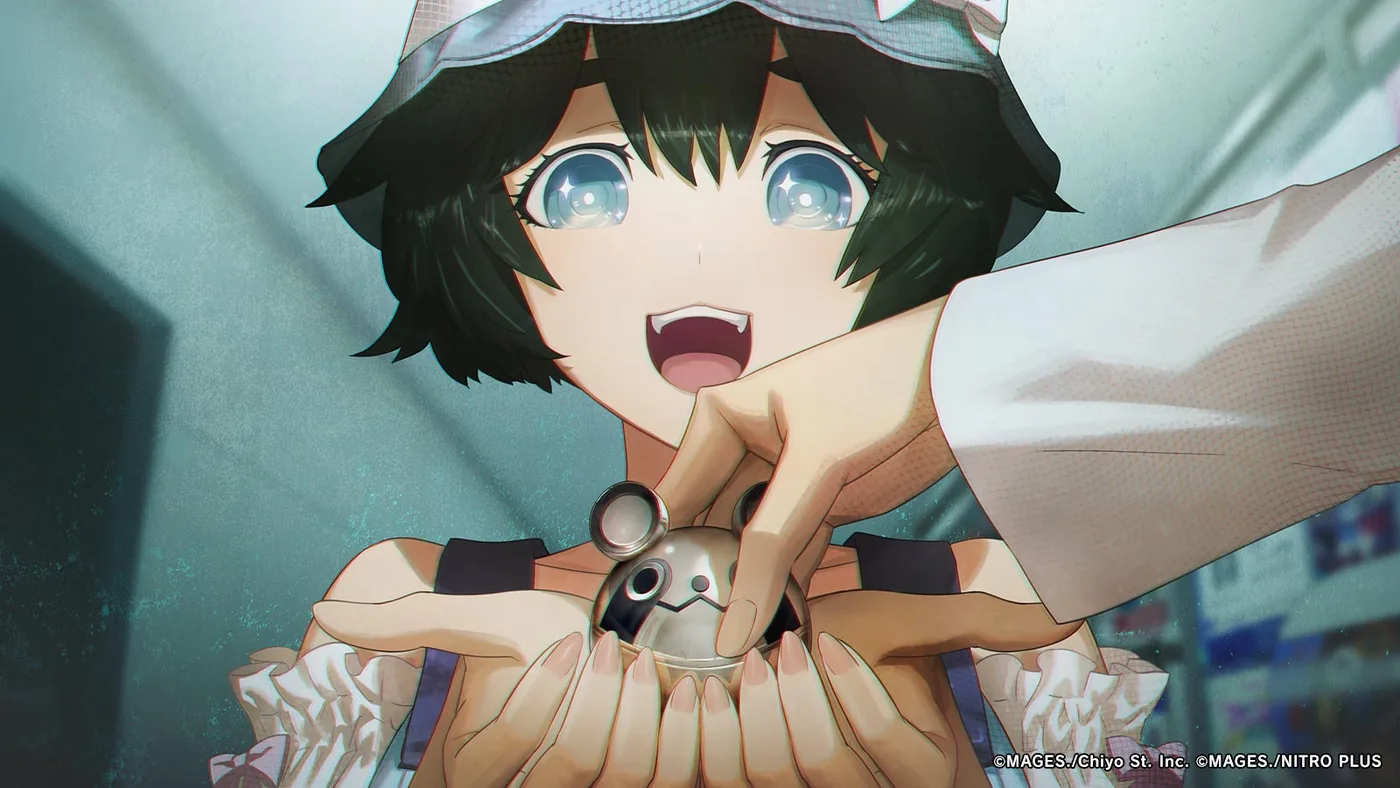
Audio production also received significant expansion. Series vocalist Kanako Itou recorded a brand-new ending theme specifically for the Moeka route, joining classic franchise tracks like “Skyclad Observer” and “Hacking to the Gate.” The entire voice cast re-recorded their lines for the game, and the soundtrack underwent a complete acoustic overhaul. Matsubara estimated that completing the expanded story, with its seven routes and extensive voice work, will take players between 30 and 50 hours [2].
Release Date and Console Editions
The expanded scope of the overhaul explains why the release slipped past its original target. MAGES. initially planned to launch the visual novel in 2025, but the team took on extra tasks as development gained momentum. In an interview with IGN China, Matsubara said the staff chose to delay the launch to 2026 rather than cut corners on the voice re-recordings, updated music, and sprite animations. Matsubara said taking more time was necessary to deliver a fully polished final product [6].
During the Shanghai showcase, Hayashi shared a lighthearted memory that contrasted the current production scale with the series’ humble beginnings. Near the end of development on the 2009 original, MAGES. moved to a new corporate headquarters, but the visual novel staff stayed behind in the old office to finish the game. The team worked long nights from makeshift desks made of cardboard boxes. Hayashi recalled that this frantic, late-night atmosphere mirrored the fictional members of the Future Gadget Lab laboring over the Time Leap Machine. That shared creative struggle forged lasting bonds among the developers as they worked toward release [4].

The game debuted first on PC through Steam and will arrive on consoles on October 29, 2026. The console rollout covers PlayStation 5, Nintendo Switch, Nintendo Switch 2, and Xbox Series X|S. Spike Chunsoft is managing the English localization for Western territories. Matsubara suggested that new players should try to enter the story knowing as little about the plot twists as possible to get the strongest emotional impact from the time-travel narrative [3].
The Next Science Adventure Project
While wrapping up the remake, MAGES. has already shifted focus toward the future of the Science Adventure series. Hayashi and Matsubara said they are actively collaborating with franchise creator Chiyomaru Shikura on a brand-new title. “We are currently developing a new title in collaboration with the original creator, Chiyomaru Shikura,” Hayashi said, adding that the team is holding daily discussions to shape the upcoming story. The developers have not yet revealed the official name, release window, or target platforms for this new title [3].
The upcoming project traces back to an announcement made during the MAGES. business strategy presentation in October 2020. Fans commonly refer to the game as “STEINS;???”. At the time, Shikura said its relationship to STEINS;GATE would mirror how CHAOS;CHILD built upon the foundational story of CHAOS;HEAD. It will stand as an independent work where familiar characters appear in a fresh narrative context. Matsubara previously said he is working to translate Shikura’s overarching concepts into the working scenario. The creators have kept specific story details strictly confidential while pre-production continues [7].
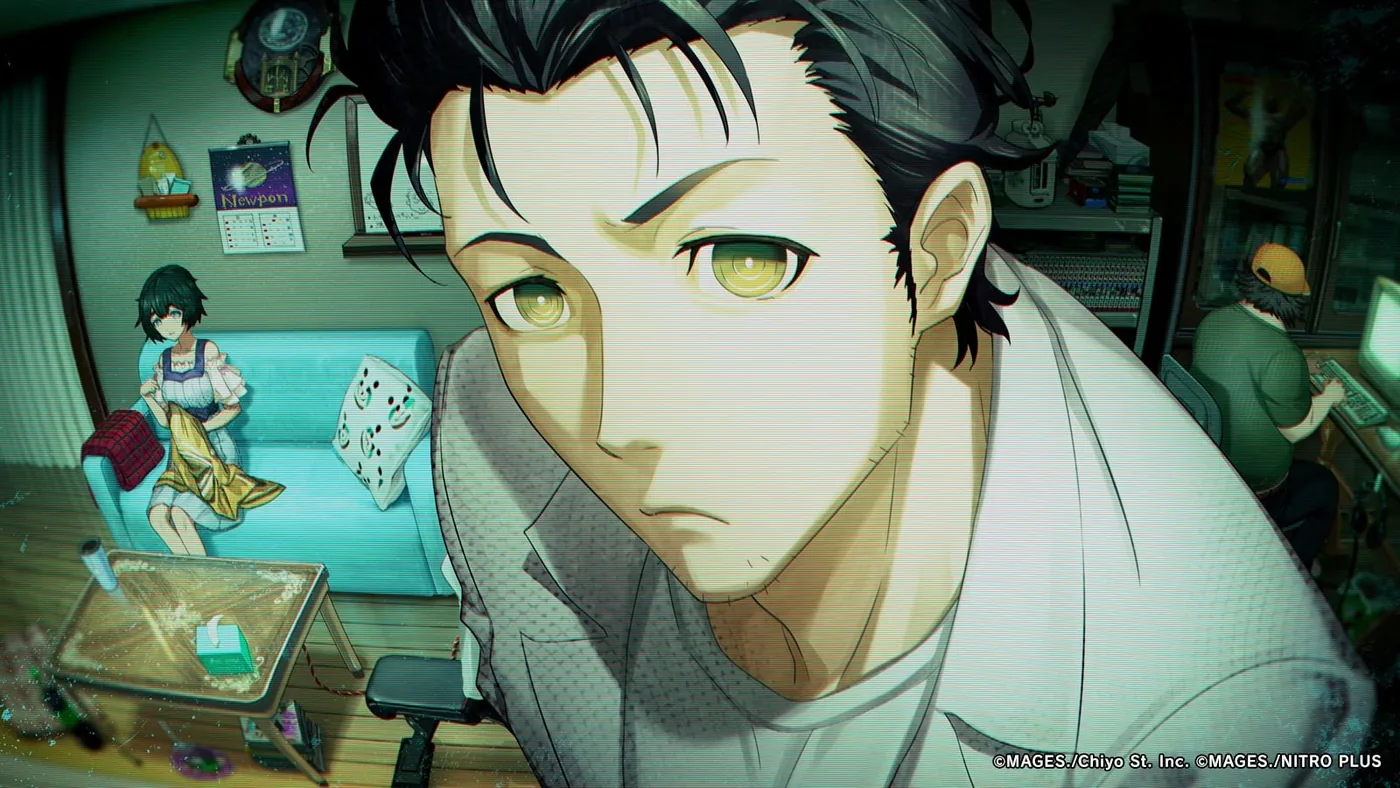
When asked whether a late-game scene in the remake connects to this unannounced project, Matsubara declined to confirm details, teasing only that the game’s direction carries deliberate meaning. When discussing future dream projects, both creators expressed strong enthusiasm for remaking CHAOS;HEAD, the first entry in the Science Adventure series. Matsubara said modern visual technology would let the team depict its psychological depth far more vividly, though Hayashi said he has no immediate plans to revise its core scenario [1].
- ONLINE NEWS Eisenbeis, R. (2026, October 21). Interview: Adding a New Ending to STEINS;GATE. Anime News Network. [Article Link]
- ONLINE NEWS Carlos. (2025, November 25). Steins;Gate Re:Boot to have a brand new ending, producer reveals. AUTOMATON WEST. [Article Link]
- ONLINE NEWS Opalec, L. A. R. (2026, October 21). [INTERVIEW] STEINS;GATE RE:BOOT Devs Tease “We’re Pouring Our Hearts” Into the Series’ Next Game. Game8. [Article Link]
- ONLINE NEWS Fasty. (2025, November 23). Steins;Gate RE:BOOT script to be based on Elite; one new ending planned. Kiri Kiri Basara. [Article Link]
- ONLINE NEWS Kiwami, S. (2025, November 23). STEINS;GATE RE:BOOT Story is Based on Elite’s Script, Includes a New Ending. Final Weapon. [Article Link]
- ONLINE NEWS Joshua, O. (2025, December 1). Steins;Gate Re:Boot Shares New Details And Teases Potential Plans In Latest Interview. Noisy Pixel. [Article Link]
- PRESS RELEASE MAGES. Inc. (2020, October 26). MAGES. Business Strategy Presentation Announcement. MAGES. Inc. [Article Link]


