






Hypertension patients who completed a course of baxdrostat saw lasting relief from primary aldosteronism, keeping lower blood pressure for two years after discontinuing the daily tablets. Global health estimates indicate that over one billion individuals live with hypertension, with the UK counting more than 12 million affected citizens. Small benign nodules situated on adrenal tissue account for roughly 5% to 10% of these cases by releasing excess aldosterone, a hormone instructing kidneys to hold extra salt [1]. The findings, published by Queen Mary University of London investigators in the New England Journal of Medicine, indicate that suppressing this pathway can achieve remission without lifelong therapy [3].
Mechanism Behind Primary Aldosteronism
When adrenal nodules release excessive aldosterone into the bloodstream, renal tissues retain fluid and sodium rather than filtering them away. Continual salt accumulation drives vascular pressure higher each day, creating resistant hypertension that damages cardiovascular organs over time. Standard medical protocols have traditionally addressed this hormonal imbalance by surgically excising the affected adrenal gland to cut off the supply of aldosterone [1].
Surgical adrenalectomy does not always resolve the problem because structural changes inside arterial walls can keep readings high even after an affected gland has been removed. Under standard care, individuals who can’t undergo surgery or who have nodules on both adrenal glands take lifelong daily pills to block aldosterone receptors. Receptor antagonist pills lower blood pressure readings, but they fail to halt ongoing hormonal generation inside adrenal tissues. When patients stop taking those daily tablets, blood pressure climbs right back up within days [2]. Medical teams wanted a way to stop hormone synthesis at the cellular source. Queen Mary University of London researchers focused on an aldosterone synthase inhibitor, known as an ASI, to block the enzyme responsible for creating the hormone [1].
Queen Mary scientists termed this experimental approach extended aldosterone synthase inhibition, abbreviated as EASI. Instead of dampening downstream receptor activity, EASI blocks hormone synthesis inside adrenal cells throughout a six- to twelve-month treatment window. Investigators wanted to discover whether a finite course of daily pills could alter nodular tissue permanently [2].
Results from the First Human Follow-Up
The new evidence comes from a follow-up investigation of 14 patients treated at eight medical centers across the United States [2]. Each participant had previously enrolled in an earlier three-month clinical trial of baxdrostat for hard-to-treat hypertension, later continuing daily pill therapy for six to 12 months [1]. When the treatment window finished, clinicians discontinued the medication and tracked the volunteers through regular hospital evaluations for up to two years. Unlike earlier drug trials that only monitored patients while they were taking pills, this Queen Mary-led study measured how human physiology behaved long after baxdrostat had cleared from the system. Routine hospital visits compared blood pressure readings and aldosterone-to-renin ratios against baseline values documented before treatment [2].
Laboratory evaluations demonstrated that the primary biochemical marker of excess aldosterone production stayed 99% lower than pre-treatment levels. Systolic blood pressure fell by an average of 25 points among participants. Circulating hormone concentrations remained as low as values documented during active baxdrostat dosing, confirming prolonged biological control after drug cessation [2].

Almost a quarter of the trial participants achieved completely normal blood pressure without taking any further antihypertensive medications [2]. Lead investigator Prof Morris Brown, an endocrine hypertension specialist at Queen Mary University of London, expressed excitement regarding the durable patient response. “It’s very exciting to see,” Brown said. “Just under a quarter of the patients came off all treatment and had completely normal blood pressure” [1]. In comments shared with Medical Xpress, Brown stated that although researchers maintain caution due to the pragmatic trial structure, longer clinical monitoring may support the hypothesis that a finite medication course induces permanent cure [2].
How Aldosterone Synthase Inhibitors Target Cells
The biological concept underpinning baxdrostat dates back to a 2005 experiment in mice conducted more than twenty years ago. Rodent geneticists discovered that deleting the gene responsible for aldosterone synthase caused aldosterone-producing adrenal cells to wither and disappear. Queen Mary University of London researchers predicted that pharmacologically blocking the identical enzyme in human patients might induce an analogous cellular elimination [2].
The molecular mechanism proposed by Brown centers on reactive oxygen species (oxygen radicals) produced during enzyme inhibition. When baxdrostat inhibits aldosterone synthase, unfinished precursor molecules accumulate inside overactive nodular cells. Accumulating oxygen radicals selectively damage abnormal cells while leaving surrounding healthy adrenal tissue intact. “Those oxygen radicals are killing the cells and they disappear,” Brown said. “That’s what I think the mechanism is and it’s testable, it’s something we’re doing now in the laboratory”. Queen Mary laboratory teams are currently conducting cell culture experiments to test whether oxidative cell death accounts for the enduring hormone drop [1].
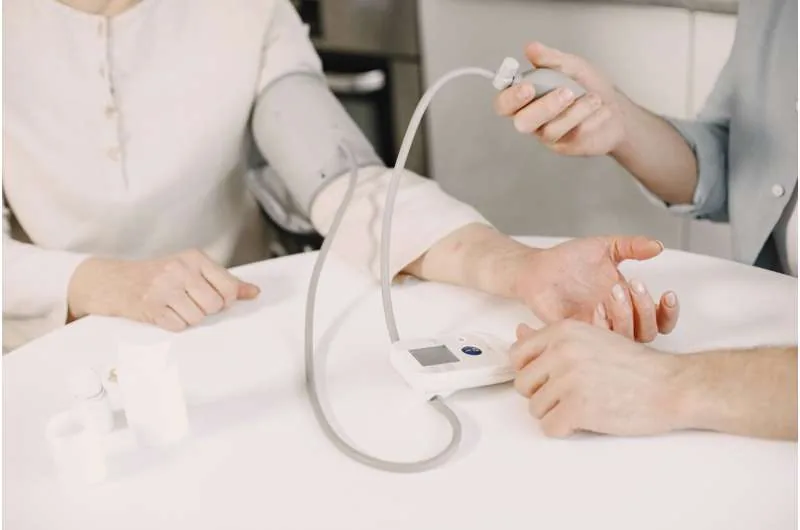
Earlier clinical trials of aldosterone synthase inhibitors evaluated hypertensive volunteers for only six to twelve weeks during active medication. Shorter dosage protocols proved that daily pills lowered blood pressure, but early investigators never tracked whether hormonal suppression survived treatment termination [2].
Outcomes Two Years After Pill Course
Two years after stopping baxdrostat, participants maintained blood pressure readings that averaged 25 points lower than their pre-treatment baseline [2]. For patients who previously relied on several daily prescriptions, this sustained drop provided meaningful protection against chronic vascular strain [1]. Biochemical findings in the New England Journal of Medicine confirmed that the aldosterone-to-renin ratio (a key diagnostic marker used by endocrinologists) stayed low long after the pills had stopped [3]. Extended remission across both hormone levels and arterial pressure shows that a finite course of therapy can produce durable physiological changes in patients with primary aldosteronism. Hormone concentrations stayed comparable to values recorded during active pill therapy throughout the two-year observation period [2].
Harvard Medical School faculty member Mason Freeman helped launch the original research when serving as medical director for Cincor. Freeman commented that the data provide a compelling alternative for patients who currently face invasive adrenal gland surgery [2].
Freeman explained the clinical implications of the trial findings in Medical Xpress: “The sustained remission in the biochemical markers of the hyperaldosterone state, combined with much improved blood pressure levels, offers the very exciting possibility that many patients with primary aldosteronism may be able to be treated with a once-a-day pill, perhaps for a limited period of time, and obtain similar benefits to what we now achieve only after invasive diagnostic testing and major adrenal surgery”. Even so, Queen Mary and Harvard investigators caution that baxdrostat will not resolve hypertension arising from unrelated cardiovascular causes [2]. Because primary aldosteronism accounts for 5% to 10% of global cases, roughly nine out of ten individuals with high blood pressure will still require standard medications [1].
Can a Pill Replace Adrenal Surgery?
Standard care for primary aldosteronism currently needs invasive venous catheterization to measure hormone concentrations emerging from both adrenal glands. Science editor Ian Sample reported in The Guardian that specialized diagnostic barriers currently restrict patient access to curative adrenal surgery across the UK. Many community medical facilities cannot offer venous sampling, leaving eligible patients dependent on lifelong prescription regimens [1]. Can an oral medication eliminate the need for such complex surgical evaluations?
Freeman emphasized to journalists that an effective pharmaceutical treatment could fundamentally restructure clinical practice for endocrinologists and general physicians alike. “If this effect is common and very persistent then the approach to diagnosing and treating these patients is likely to dramatically change,” Freeman said. “Everyone could be treated with the ASI in initial suspicion of the condition and if they responded well they could avoid the invasive diagnostic procedures and the surgery”. Surgical gland removal carries risks of procedural complications, tissue loss, and persistent hypertension caused by vascular stiffening [1]. Achieving a surgical-grade cure through oral tablets has long represented a holy grail for clinicians managing primary aldosteronism [2].
United States regulatory agencies approved baxdrostat earlier this year for patients whose blood pressure remains uncontrolled by standard prescription regimens. In the UK, the National Institute for Health and Care Excellence (Nice) is evaluating the treatment for potential public availability through the NHS next year [1].
Primary Aldosteronism Research Moving to ELIXIR Trial
Because this initial follow-up cohort tracked only 14 patients, clinical investigators emphasize that broader verification remains necessary before declaring baxdrostat a definitive cure. Freeman observed that while the sustained biological remission is encouraging, larger prospective trials must confirm whether similar recovery rates occur among diverse patient populations [1]. To resolve that uncertainty, clinician-scientists from Queen Mary University of London and partner institutions have launched a large international trial called ELIXIR. The ELIXIR clinical trial will evaluate whether extended enzyme suppression provides permanent biochemical resolution for primary aldosteronism. Trial participants will complete structured dosing regimens lasting between six and twelve months before entering long-term post-treatment surveillance [2].
A central methodological innovation within the ELIXIR study involves molecular imaging of participant adrenal glands before and after treatment. By visualizing cellular metabolism through specialized scans, Queen Mary and Harvard investigators plan to observe whether extended aldosterone synthase inhibition truly causes nodule cells to wither away [2]. If molecular scans demonstrate that hyperactive cells have vanished, medical teams will possess verifiable biological proof supporting the mechanistic model Brown proposed [1]. Queen Mary University of London researchers and collaborators at Harvard Medical School continue laboratory investigations while recruitment advances [2]. For millions of individuals worldwide diagnosed with primary aldosteronism, an effective daily tablet could transform how endocrine hypertension is managed across modern medicine [1].
- ONLINE NEWS Sample, I. (2026). New drug could be cure for common cause of high blood pressure. The Guardian. [Article Link]
- ONLINE NEWS Medical Xpress. (2026). New treatment may cure common hormonal cause of high blood pressure. [Article Link]
- ACADEMIC JOURNAL Brown, M. J., Turcu, A. F., Sam, R., Kirschner, L. S., Hamidi, O., Eren, A., Ben-Shlomo, A., Huang, W., Bancos, I., Hamrahian, A. H., & Freeman, M. W. (2026). Hyperaldosteronism Remission after Extended Aldosterone Synthase Inhibition. New England Journal of Medicine. [Article Link]
APA 7: PerEXP Teamworks. (2026, November 9). Baxdrostat Pill Offers Remission for Primary Aldosteronism. PerEXP Teamworks. https://perexpteamworks.com/en/primary-aldosteronism-baxdrostat-remission/


