



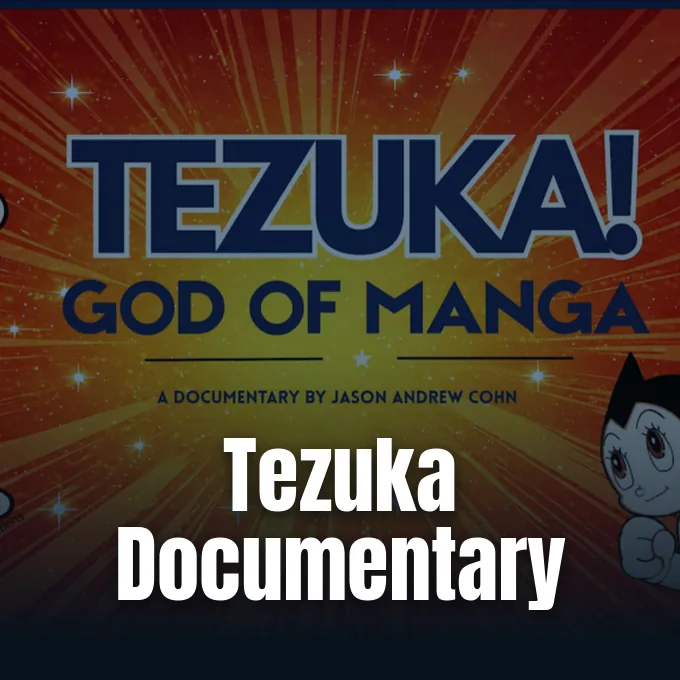
Director Jason Andrew Cohn and film company Bread & Butter Films launched a fund drive on Kickstarter on Wednesday for their new documentary, TEZUKA! God of Manga. The film examines the life, artistry, and global cultural footprint of Osamu Tezuka, the prolific creator often called the father of anime. Working with Tezuka Productions, the team aims to raise the funds needed to finish the film before the 100th anniversary of Tezuka’s birth in 2028 [1].
Funding the Tezuka God of Manga Documentary
The Kickstarter campaign for the Tezuka God of Manga documentary established an initial goal of US$49,999 to fund the remaining filming phases of the project before the drive closes on November 13. Backer support grew quickly after the pitch went live on Wednesday morning, with early reporting from My Otaku World showing $10,726 raised in opening hours while Meristation tracked totals nearing $16,000 [5, 6]. It’s a clear money goal meant to cover post-filming costs and final recording sessions, and Cohn explained that the campaign also helps build a dedicated base of anime fans while filming is still underway [2].
Supporters who back the campaign can secure physical rewards licensed through Tezuka Productions, including Blu-ray and DVD editions of the finished film with special T-shirts featuring Astro Boy. Backers can also choose lithograph sets and a color manga collection, with physical reward packages slated to ship to backers in July 2028. Work schedules aim to wrap well before backer fulfillment begins [6].
The campaign features a varied roster of exclusive tribute prints drawn by respected comic book artists from North America, Europe, and Japan. Contributing artists include Dave Baker, Elsa Charretier, Nicole Goux, Matt Kindt, Jeff Lemire, Jesse Lonergan, Shinichi Ishizuka, and the Japanese creative duo Gurihuru. Illustrator Yuko Shimizu contributed a giclee print depicting Black Jack, while Baker produced an homage centered on Astro Boy [2, 3]. Cohn pointed out that having modern artists celebrate Tezuka’s characters shows how his visual designs continue to inspire contemporary cartoonists across many world markets [2].
Federal Grant Loss and Community Support
The decision to turn to Kickstarter for the Tezuka God of Manga film followed an abrupt budget cut that hit early in filming. In 2024, Bread & Butter Films secured $600,000 through a federal award from the National Endowment for the Humanities after months of preparation. But federal spending shifts soon wiped out that funding entirely. When the Trump administration created the Department of Government Efficiency, or DOGE, and gave Elon Musk authority to cut federal cultural programs, the project lost its full $600,000 grant with projects from dozens of other filmmakers across the United States. “Along with dozens of other filmmakers, we lost our entire grant. It was devastating,” Cohn said when describing the sudden funding cut [2].
The team avoided a shutdown thanks to prompt backing from executive producer Glen S. Fukushima, a Japanese-American business leader who has long supported cross-Pacific cultural ties. Fukushima stepped in with stop-gap funding that allowed the film crew to keep moving forward without halting their filming schedule. That cash bridge proved vital, enabling the camera crew to book overseas travel and arrange high-priority shoots in Tokyo before filming momentum slowed [2].
The core producing unit at Bread & Butter Films includes Camille Servan-Schreiber, Jinko Gotoh, Glen S. Fukushima, and author Roland Kelts, who worked to stabilize operations after the federal cut [6]. Cohn said that even if the DOGE cuts hadn’t disrupted their public grant, the team still would’ve turned to Kickstarter to bring fans closer. He believes crowdfunding gives fans a genuine stake in preserving anime history, turning solitary viewers into active participants in the documentary’s making [2].


Three Acts Covering Creative Evolution
The Tezuka God of Manga film presents a three-act biographical narrative exploring how Osamu Tezuka transformed comic art and broadcast animation across six decades of intense creative output [3, 7]. Born in 1928 and active until his death in 1989, Tezuka reshaped graphic storytelling by introducing dynamic panel pacing, cinematic angles, and complex character drama into postwar print [6]. The opening act of the film focuses on his childhood in Toyonaka and Takarazuka near Osaka during the Pacific War, examining how the hardships and destruction of wartime Japan shaped his lifelong pacifist convictions [3].
The second act tracks Tezuka’s rapid ascent as a cultural pioneer and the creation of Astro Boy, which debuted on television in 1963 as Japan’s first weekly animated series. The broadcast proved that domestic studios could produce weekly televised anime on tight turnaround times, creating the studio pipelines that still support modern Japanese animation. Just as readers today follow new serialized manga projects from creators like Kana Ozawa, postwar readers in Japan awaited Tezuka’s new chapters every week [3, 7].
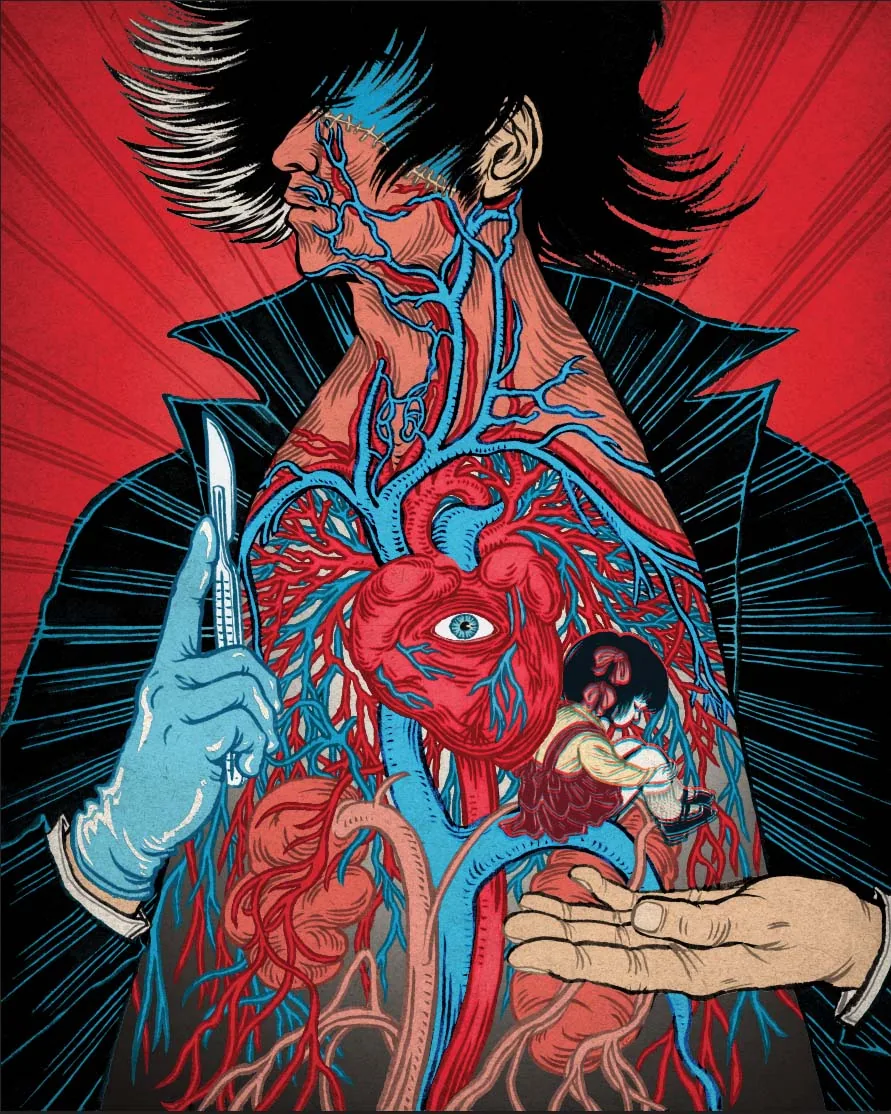
The third act examines the creative crisis Tezuka faced during the gekiga wave of the late 1960s and 1970s, when darker, realistic comics aimed at older readers challenged his visual style [3, 7]. Rather than retreating from the market, he reinvented his storytelling by producing mature masterpieces like Phoenix and Black Jack [3]. He also made frequent use of his famous “star system,” casting recurring character designs across varied genres as if they were troupe actors [6]. That artistic range helped him reassert his position as the industry’s defining author [3].
Interviews Across Generations of Creators
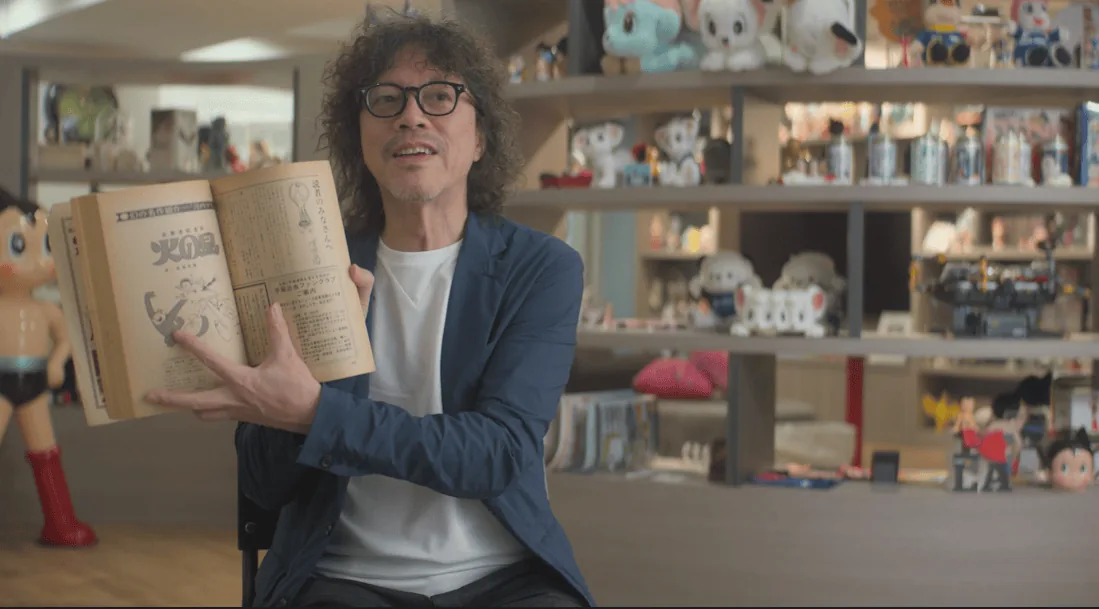
To capture the full reach of the Tezuka God of Manga narrative, Cohn filmed extended interviews with legendary directors and manga artists who grew up reading his serialized stories. The film features on-camera discussions with Akira director Katsuhiro Otomo, The Rose of Versailles creator Riyoko Ikeda, Monster and Pluto author Naoki Urasawa, Devilman creator Go Nagai, and Gundam creator Yoshiyuki Tomino. It also includes veteran anime producer Masao Maruyama and director Rintaro, who directed the animated feature adaptation of Tezuka’s Metropolis [2, 4].
The film pairs Japanese industry pioneers with international storytellers and scholars who study manga’s worldwide spread. On-camera guests include fantasy novelist Ada Palmer, Unico: Awakening author Samuel Sattin, and The Book of Life filmmaker Jorge R. Gutierrez [3, 4]. They’re joined by Western scholars Helen McCarthy, author of The Art of Osamu Tezuka, Natsu Onoda Power, who wrote God of Comics, and translator Fred Schodt, who worked closely with Tezuka for decades turning his stories into English [4].

If backer funding exceeds the base goal, the producers plan to add interviews with Western comic artists Paul Pope and Ron Wimberly, as well as Tezuka’s son, Macoto Tezka [2, 4]. Cohn also wants to interview younger animators to examine the legacy of production shortcuts developed at Mushi Pro in the 1960s. That history feeds into ongoing debates regarding “Tezuka’s Curse,” a phrase describing claims that low licensing fees originally charged to Fuji TV for Astro Boy entrenched poor pay across the anime industry [2].
Centenary Target for the Osamu Tezuka God of Manga Project
The documentary is set to release in 2028, arriving in time for the 100th anniversary of Osamu Tezuka’s birth [3, 6]. Cohn noted that while Tezuka is universally revered throughout Japan, younger Western anime fans in 2026 often don’t know his name as readily as modern directors like Hayao Miyazaki or American pioneers like Walt Disney. Yet Astro Boy was the first Japanese animated property to cross over to American television in 1963, paving the way for every anime release that followed [2].
Tezuka lived an intensely busy life, working as a licensed medical doctor, playing classical piano, and directing theater productions while rarely sleeping more than four hours a night to meet his demanding weekly manga deadlines. Cohn was fascinated by that complexity when directing the film [2]. “TEZUKA! God of Manga celebrates Tezuka-sensei as a preposterously prolific, enigmatic creator who forever altered popular culture by introducing young readers to a brand-new, DIY medium that rocketed around the world,” Cohn said in an official statement [4].
“The creative cross-fertilization between artists in Japan and the rest of the world made Tezuka one of the most beloved and influential artists of the 20th century. This film will celebrate his legacy and introduce his incredible creations to a new generation,” Cohn said [4]. With the Kickstarter drive for Tezuka God of Manga continuing through November 13, the filmmakers hope global audiences will support this retrospective before 2028 arrives [5, 6].
- ONLINE NEWS Anime News Network. (2026, October 14). Tezuka: God of Manga Documentary Film Launches Kickstarter Campaign. [Article Link]
- ONLINE NEWS Moo, W. (2026, October 14). Understanding Osamu Tezuka in Jason Andrew Cohn’s TEZUKA! God of Manga. Anime Trending. [Article Link]
- ONLINE NEWS Anime Corner. (2026, September 8). Exclusive Preview: TEZUKA! God of Manga Documentary Launches Kickstarter Campaign. [Article Link]
- ONLINE NEWS Schedeen, J. (2026, October 14). Tezuka! God of Manga Documentary Examines the Visionary Genius Who Created Astro Boy and Forever Revolutionized Anime Culture. IGN. [Article Link]
- ONLINE NEWS Huerta, G. (2026, October 14). ‘Tezuka: God of Manga’ Documentary Launches Kickstarter to Celebrate Osamu Tezuka’s Legacy. Meristation. [Article Link]
- ONLINE NEWS Neha, & My Otaku World Team. (2026, October 14). Osamu Tezuka Documentary ‘God of Manga’ Launches Kickstarter. My Otaku World. [Article Link]
- ONLINE NEWS Brooke, D. (2026, April 17). A New Documentary Wants to Tell the Full Story of Manga’s Most Important Creator. AIPT. [Article Link]


