





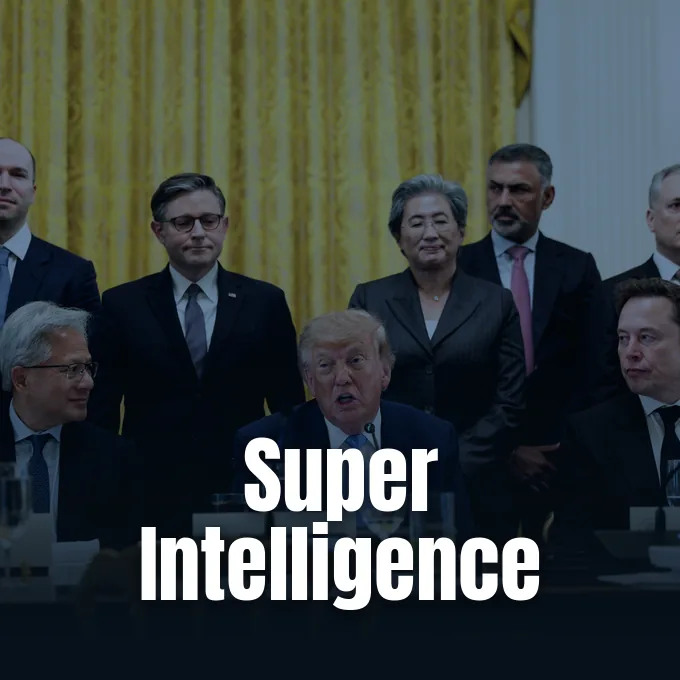
The Trump AI rebrand to super intelligence is moving fast in the tech sector, where several top tech chiefs are now using the new name for their own software products [1]. President Donald Trump ordered federal staff in late September 2026 to drop the old label, warning that anyone who fights the change faces pushback [4]. While public polls show voters remain doubtful about the new phrasing, firms like Salesforce and SpaceX have already renamed software tools to reflect the shift [2]. It’s a quick pivot for an anxious industry [1].
Tech Giants Embrace the Trump AI Rebrand
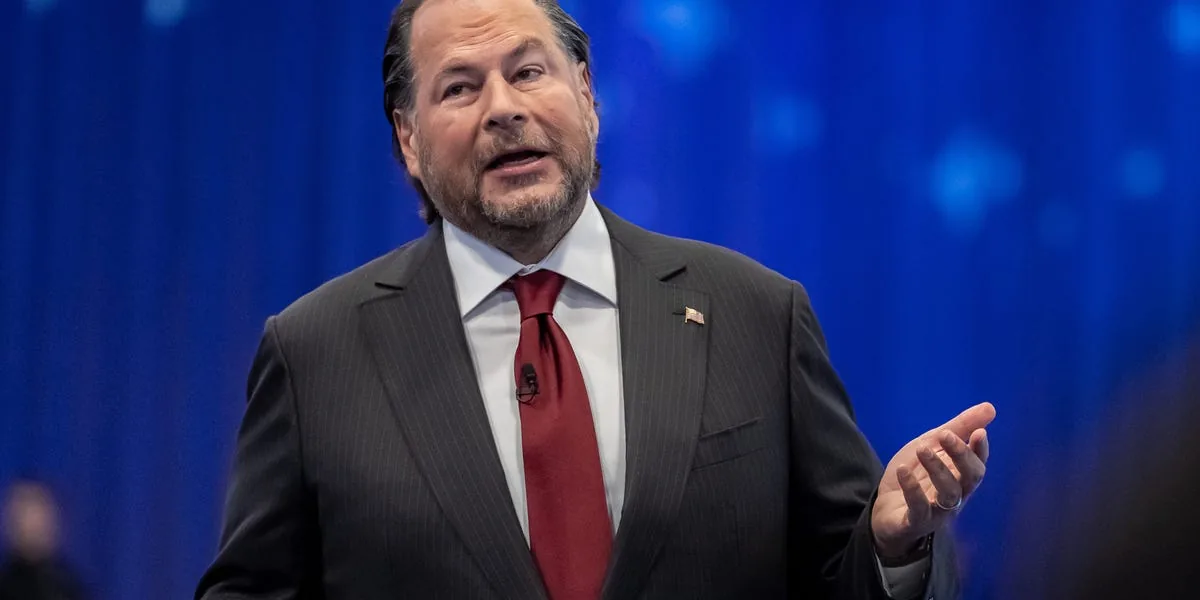
Industry uptake sped up after Trump posted a sharp note on Truth Social, writing that the White House views anyone using the older term as an enemy. Salesforce CEO Marc Benioff quickly joined the shift on X. “The era of Super Intelligence is here. AIForce is officially SIForce,” Benioff wrote [4]. The tool rename applies to Salesforce customer software rather than its main company name, but it shows how fast software bosses moved to stay on good terms with federal officials in Washington [1].
Elon Musk made a similar pledge for his space firm, stating that SpaceXAI would become SpaceXSI after an X user asked whether the team could update its public name. “No more AI. SI. It’s better,” Musk posted on X [5]. Nvidia CEO Jensen Huang joined the White House meeting and said Nvidia would pledge $1 billion to science research, calling the work Super Intelligence research. Huang told reporters that safety risks are largely overblown [1].
Microsoft CEO Satya Nadella joined the shift during safety talks, repeatedly using the two-word label in an online post. While Nadella had earlier used the term as one word for advanced systems, this was his first public use of the capitalized style favored by Trump [4]. It isn’t a code rewrite, but it keeps Microsoft close to federal regulators [1].

Executive Order Directs Federal Super Intelligence Rebrand
The policy shift stems from an executive order signed on September 29, 2026, titled “Inaugurating The Era Of Super Intelligence” [2]. The directive tells federal agencies to use Super Intelligence and SI instead of older terms across official papers, memos, and public web pages while the White House directs staff to drop the older name [4]. Trump called the word artificial fake by the West Wing [6]. The White House also asked its science office to write a federal definition within 60 days [5].
To steer federal work under the new label, the White House set up a Super Intelligence Force led by Director of National Intelligence Jay Clayton to coordinate emerging technology work. Officials tied the name to big national goals. Aides pointed to more than $5 billion pledged for the Genesis Mission in energy and factory work, though private firms aren’t bound by law to follow the White House naming order [5]. Trump framed the change as a shared voluntary pact [4].
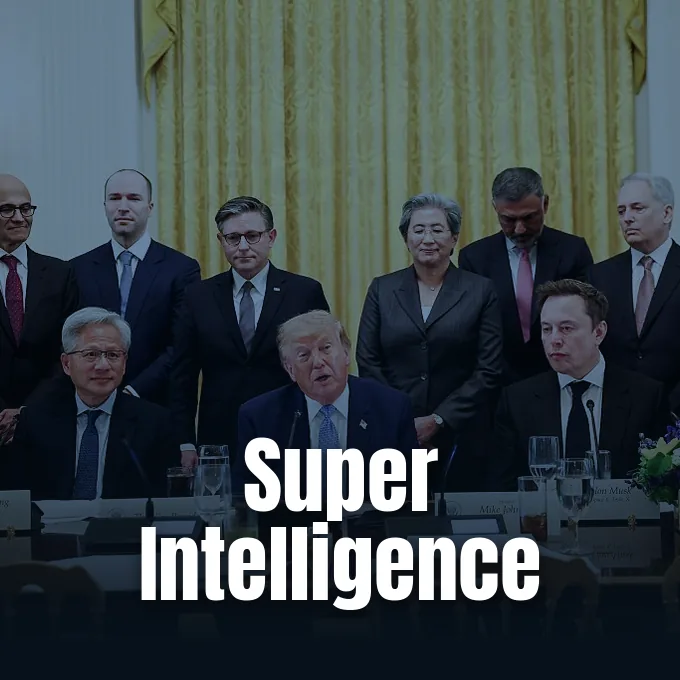
House Speaker Mike Johnson joined the lunch and told reporters that industry leaders agreed to voluntary safety principles. Johnson said the text focuses on internal checks and audit steps, arguing that safety and growth can move together without friction as the nation competes against China. Trump brushed off calls for binding federal rules. He said tech builders love their country and want to do what is right for the world [2].
California Rejects Federal White House Terminology
While federal agencies rushed to update their web pages, state leaders in Sacramento pushed back hard. California Governor Gavin Newsom signed an order telling state offices to keep using the terms artificial intelligence and AI across all state agency reports and public records. Newsom argued that changing words does not solve real risks [6]. He said a new label can’t distract people from an abject failure to curb safety threats, pointing to Executive Order N-9-26 which ordered a 60-day study on kill switches for rogue models [7].
Voters also appear split on the White House naming push, according to nonpartisan survey data. A Quinnipiac University poll found that just 25% of respondents backed Trump’s work on the technology, while 58% disapproved, with a margin of error of 3.8 percentage points. That score sat below public ratings for Trump on China. The study recorded 31% approval on the economy and 34% on China policy, showing broad voter unease with tech policy. In Congress, Senator Mark R. Warner shared that doubt, arguing that renaming the field does nothing to address the real risks that rapid systems pose to public networks and sensitive infrastructure [2].
The naming debate followed a web poll Trump launched on September 19, asking users to pick between Superior Intelligence, Extreme Intelligence, and Supreme Intelligence on social media. That vote drew over 140,000 votes within hours. Critics questioned whether the White House favored branding stunts over legal rules as online replies asked about high fuel costs. One user cited diesel prices at $6.50 [7].

Researchers Question Scientific Basis for Renaming
Computer scientists and scholars warned that swapping terms adds fresh confusion to tech. David Krueger, an AI professor and founder of the nonprofit group Evitable, pointed out that superintelligence already has a clear meaning that refers to systems far smarter than human experts. Krueger said applying the tag to tools misleads. He said today’s code consists of narrow pattern matchers rather than rogue thinking machines ready to take control [6].
The debate also reflects friction inside top labs, where safety staff fear an unchecked race. Those fears match earlier staff exits, such as concerns raised when Jacob Coxon departed Anthropic while warning about a superintelligence race in frontier model building. Meta renamed its team to Meta Superintelligence Labs back in June 2025. Yet rival labs Anthropic and OpenAI kept using familiar terms during the White House press event [6].
Past records show that drives to rename the field happened before without success. Dartmouth math professor John McCarthy coined artificial intelligence in his 1955 proposal for the 1956 Dartmouth Summer Research Project alongside Marvin Minsky, Nathaniel Rochester, and Claude Shannon. The name survived two funding chills. It outlasted downturns between 1974 and 1993, surviving rival labels like machine learning and IBM Watson’s cognitive computing [7].
Industry Accord Replaces Strict Federal Guardrails
Rather than placing legal limits on model runs, the White House asked tech founders to sign. The two-page text, titled the White House Accord on Super Intelligence and subtitled Joint Commitment on Frontier Responsibilities, includes promises to keep internal review teams and audit steps. Google chief Sundar Pichai, OpenAI president Greg Brockman, and Anthropic CEO Dario Amodei signed the page with Musk, Huang, and Meta chief Mark Zuckerberg. Trump called the accord morally binding [2].
The accord leaves young software brands in a tricky spot as terminology changes rapidly. Startups like Scale AI, Character AI, and Resolve AI haven’t announced plans to rebrand [4]. Apple chose Apple Intelligence back in 2024. Tech founders know that pleasing the White House can help win federal contracts, but rewriting consumer brands brings real business risks [6].
Political pushback against the voluntary path grew in the halls of Congress. Senator Bernie Sanders introduced the Ban Artificial Superintelligence Act, aiming to curb systems that could disempower human control [6]. Trump dismissed industry safety warnings as a total hoax. Tech bosses bet that using the new name is a low price to pay for light federal rules as firms fall in line with White House terminology [2]. For now, Washington gets its way [1].
- ONLINE NEWS O’Brien, T. (2026, October 11). Silicon Valley is falling in line with Trump’s attempt to rename AI. The Verge. [Article Link]
- ONLINE NEWS Breuninger, K. (2026, September 29). Trump tries to rename AI ‘super intelligence’ as polls show him sinking on key issue. CNBC. [Article Link]
- WEBSITE Thompson, E. J. (2026, October 12). Silicon Valley aligns with Trump’s efforts to rebrand AI. IntellectiaAI. [Article Link]
- ONLINE NEWS Li, K., & Edmonds, L. (2026, October 11). Trump’s AI rebrand is picking up steam. Business Insider. [Article Link]
- ONLINE NEWS Jain, S. (2026, October 7). Trump and Elon Musk ditch ‘AI’: Why Silicon Valley is pivoting to ‘super intelligence’. Yahoo! Finance. [Article Link]
- ONLINE NEWS Pérez Burgos, J. P. (2026, October 1). Trump wants to rebrand AI “Super intelligence.” Will Silicon Valley play along? The San Francisco Standard. [Article Link]
- WEBSITE Thakker, Y. (2026, September 20). Trump AI rename poll: Why “AI” survived 70 years. explainx.ai. [Article Link]


