





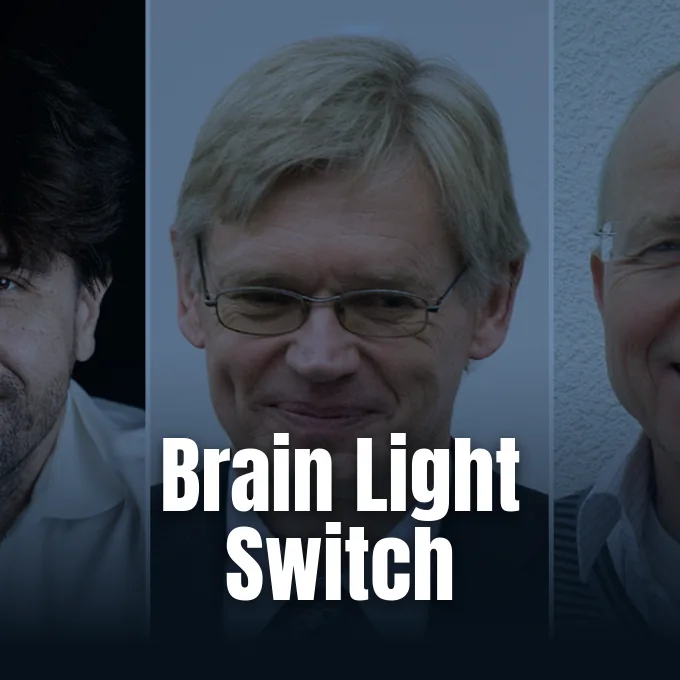
The Nobel Assembly at Karolinska Institutet in Stockholm awarded the 2026 optogenetics Nobel Prize to Karl Deisseroth, Peter Hegemann, and Georg Nagel on Monday. The trio will share the 12 million Swedish kronor award for creating optogenetics, a tool that uses light to turn brain cells on and off. Their work showed how specific brain circuits steer human actions and feelings, turning an old dream into reality [1].
Single-Celled Algae Inspired the Optogenetics Nobel
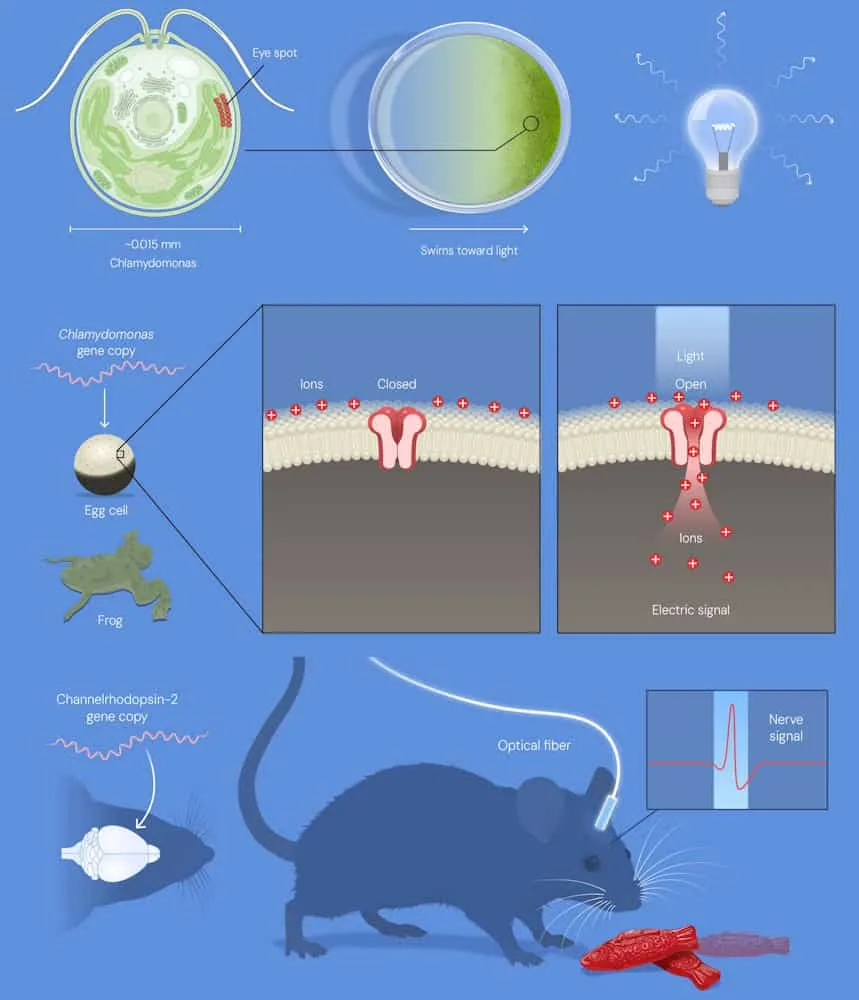
The path to the prize began with an early idea from Francis Crick. Crick, who won a 1962 Nobel Prize for solving the shape of DNA, asked whether light could turn specific cells on and off without harming nearby brain circuits. At the time, testing that idea seemed hard because brain cells don’t answer to flashes of light. The first real clue came from a tiny pond alga named Chlamydomonas that swims toward light using an eyespot sensor [2].
Peter Hegemann, born in 1954, set out to learn how this simple green alga moves while working at the Max Planck Institute for Biochemistry in Martinsried. He tested electric currents in the organism and found that the eyespot held a protein that turned blue light into an electric signal. Hegemann then joined Georg Nagel, born in 1953, who tested the algal gene inside frog egg cells at the Max Planck Institute for Biophysics in Frankfurt. When the pair placed channelrhodopsin into frog egg cells and illuminated them with blue light, they proved that the molecule opened up to allow positive ions inside, triggering a measurable electric current, and they named it channelrhodopsin [4].
Nagel and Hegemann saw that any cell holding this protein would answer to light. Alexander Gottschalk, an expert at Goethe University Frankfurt who worked with the winners, said Nagel stayed modest while building tools that reshaped biology [5]. Nagel didn’t boast.

Channelrhodopsin Provided a Millisecond Neural Switch
While Hegemann and Nagel studied algal channels in Germany, Karl Deisseroth was looking for ways to map brain circuits at Stanford University. Born in 1971 and trained as a doctor in psychiatry, Deisseroth saw that brain diseases eluded good care because doctors couldn’t steer single cells without hitting nearby tissue. The early steps toward the optogenetics Nobel Prize began when Nagel sent Deisseroth the DNA for channelrhodopsin, which Deisseroth put into rat nerve cells in 2005. Nagel supplied the gene. When his team shone blue light on the cells, the neurons fired on cue with millisecond speed [3]. The blue light worked.
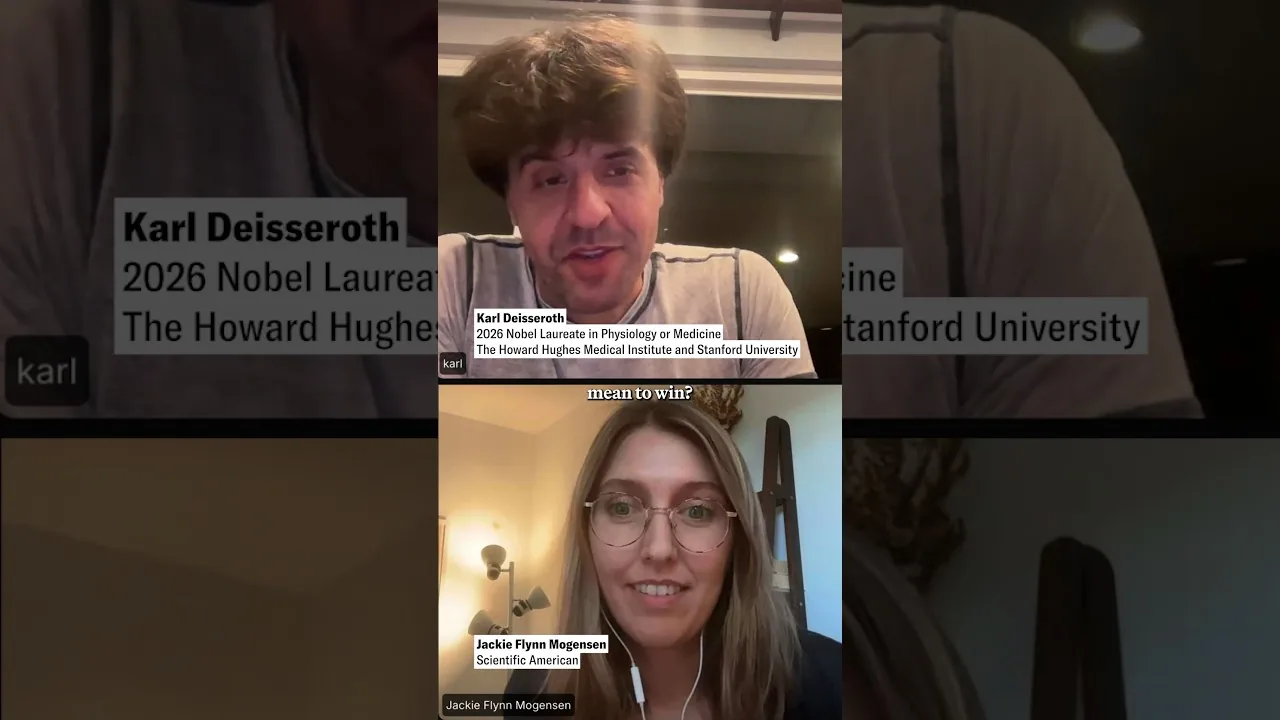
That quick response gave brain experts the switch they had wanted for decades. In earlier research, teams looked at light-induced cellular movements to see how living cells change their shape, but optogenetics brought direct electric control over active neurons. In a 2010 piece for Scientific American, Deisseroth said that “neuroscientists lack a deep grasp of what the brain is really doing” without tools that prove cause and effect [2].
Instead of merely watching brain activity with scans and guessing at links, teams could now test ideas in real time. Rui Costa, who heads the Allen Institute in Seattle, said Deisseroth shared tools and genetic reagents with other labs so the method could spread fast [5]. It wasn’t kept private.


Living Rodents Proved Causal Brain Circuit Control
The real test came two years later when Deisseroth moved optogenetics into living mice. His lab put the light-sensitive protein into rodent brain cells, delivering flashes deep inside brain tissue through thin glass fibers. When blue light lit the cells, the mice altered their actions right away. The cells fired. For the first time, experts proved a direct causal link between a chosen brain circuit and animal behavior [4].
Over the next fifteen years, labs used optogenetics to map circuits for hunger, thirst, fear, sleep, reward, and pain. Geneva neurobiologist Christian Lüscher, who previously coauthored papers with each winner, explained why the feat mattered. Lüscher said that picking out the right cells among the 86 billion neurons in the human brain is “one of the biggest challenges in science, and optogenetics has helped us advance significantly in this quest” [3].
These animal tests also showed how brain circuits fail during brain illness like epilepsy, depression, schizophrenia, and Parkinson disease. Newer lab setups are now swapping glass cables for tiny wireless light diodes that let mice run freely [3].

Why the Optogenetics Nobel Prize Matters for Medicine
The Nobel Assembly said that optogenetics has changed how experts study brain illness. Abdel El Manira, an expert at Karolinska Institute and member of the Nobel Committee, said the method has shown how brain circuits break down in addiction, dementia, and loss of sight. The optogenetics Nobel Prize honors this shift from passive watching to causal control, giving doctors a solid base for new treatments [2].
Per Svenningsson, chair of the Nobel Committee for Physiology or Medicine, said the method offers chances to map the brain that peers once could only dream of. The Nobel committee first handed out the medicine award in 1901, celebrating 235 individual laureates in 117 presentations. It’s an old honor. Recent awards went to mRNA shots for COVID-19 in 2023, microRNA in 2024, and immune tolerance in 2025 [2].
Looking ahead, committee members said optogenetics could help guide future brain-computer links by mapping which paths run specific body tasks. Teams like Precision Neuroscience already place brain implants in patients, and optogenetic maps help engineers see where to listen. But Thomas Perlmann, secretary-general of the Nobel Assembly, warned that links between human brains and artificial intelligence should not be overplayed [1].
Clinical Trials Advance Light Therapies for Vision
While optogenetics is still mostly a lab tool, medical teams are testing it as a direct treatment for vision loss. In people with retinitis pigmentosa, an inherited disease that causes blindness, light-sensing cells in the eye die off while other retinal nerve cells stay alive. Doctors inject DNA for light-gated channels into those surviving cells, turning them into fresh light sensors [2].
Treated patients wear custom goggles that read the visual scene and beam pulses of light onto the retina. Svenningsson explained that stimulating the remaining healthy cells allows the optic nerve to send visual information to the brain, producing partial recovery of sight in patients who had lost their vision. Several clinical trials are underway, and teams are also testing whether light can calm spinal cord circuits, control bladder tasks in animals, or stop chronic nerve pain [4].
For Deisseroth, Hegemann, and Nagel, who will share 12 million Swedish kronor (about $1.2 million) equally, the call from Stockholm crowned decades of teamwork. Perlmann said all three winners were surprised and called each other friends. Deisseroth, who had been up late sending ideas to students before going to sleep, said he had trouble forming words for thirty seconds when the early morning phone call arrived from Stockholm. The phone rang. He still planned to make school lunches for his kids before heading back to his lab [1].
- ONLINE NEWS Stan, A. M. (2026, October 5). Nobel Prize in medicine goes to the light switch for brain cells. The Next Web. [Article Link]
- ONLINE NEWS Mogensen, J. F. (2026, October 5). 2026 Nobel Prize in Physiology or Medicine awarded to scientists behind optogenetics. Scientific American. [Article Link]
- ACADEMIC JOURNAL Braner, S., & Barnhart, M. (2026, October 5). Optogenetics researchers win Nobel Prize in Physiology or Medicine. Chemical & Engineering News. [Article Link]
- ONLINE NEWS Freeman, T. (2026, October 5). Inventors of optogenetics win Nobel Prize in Physiology or Medicine. Physics World. [Article Link]
- ACADEMIC JOURNAL Naddaf, M., & Callaway, E. (2026, October 5). Medicine Nobel awarded for brain ‘switch’ that controls neurons with light. Nature. [Article Link]


