





NASA’s robotic explorer on Mars has passed an enduring distance mark in planetary exploration. On Sol 2006, corresponding to October 11, 2026, the six-wheeled robot logged 45.22 kilometers (28.10 miles) on its odometer, surpassing the previous record set by an earlier explorer [1]. This feat establishes a new Perseverance driving record as the greatest distance covered by any wheeled vehicle on another world. Engineers at the Jet Propulsion Laboratory celebrated the turn of the wheels after weeks of careful work along steep slopes.
A Benchmark Beyond Opportunity
The previous world record belonged to NASA’s Opportunity rover, which logged 28.06 miles between 2004 and 2018 during its fifteen years on the Martian plains [6]. Opportunity touched down in early 2004. In contrast, Perseverance arrived at Jezero Crater in February 2021 and surpassed that lifetime distance in less than six years, showing how quickly ground mobility has evolved. Steven Lee, project manager for Curiosity and Perseverance at the Jet Propulsion Laboratory, said the rover easily beat the 12.4 miles first expected from it. He said in an agency release that drives like these have become routine work for the operations team after years of steady software upgrades.
Back on Earth, engineers gathered at the California laboratory to mark the rover’s achievement. A representative from Guinness World Records presented a commemorative plaque to the rover’s full-scale engineering twin, recognizing the longest journey ever completed across another celestial body [1]. Vandi Verma, chief engineer for robotic operations at the laboratory, confirmed the reading. The robot was running without trouble.
Science Stops on Ancient Outcrops
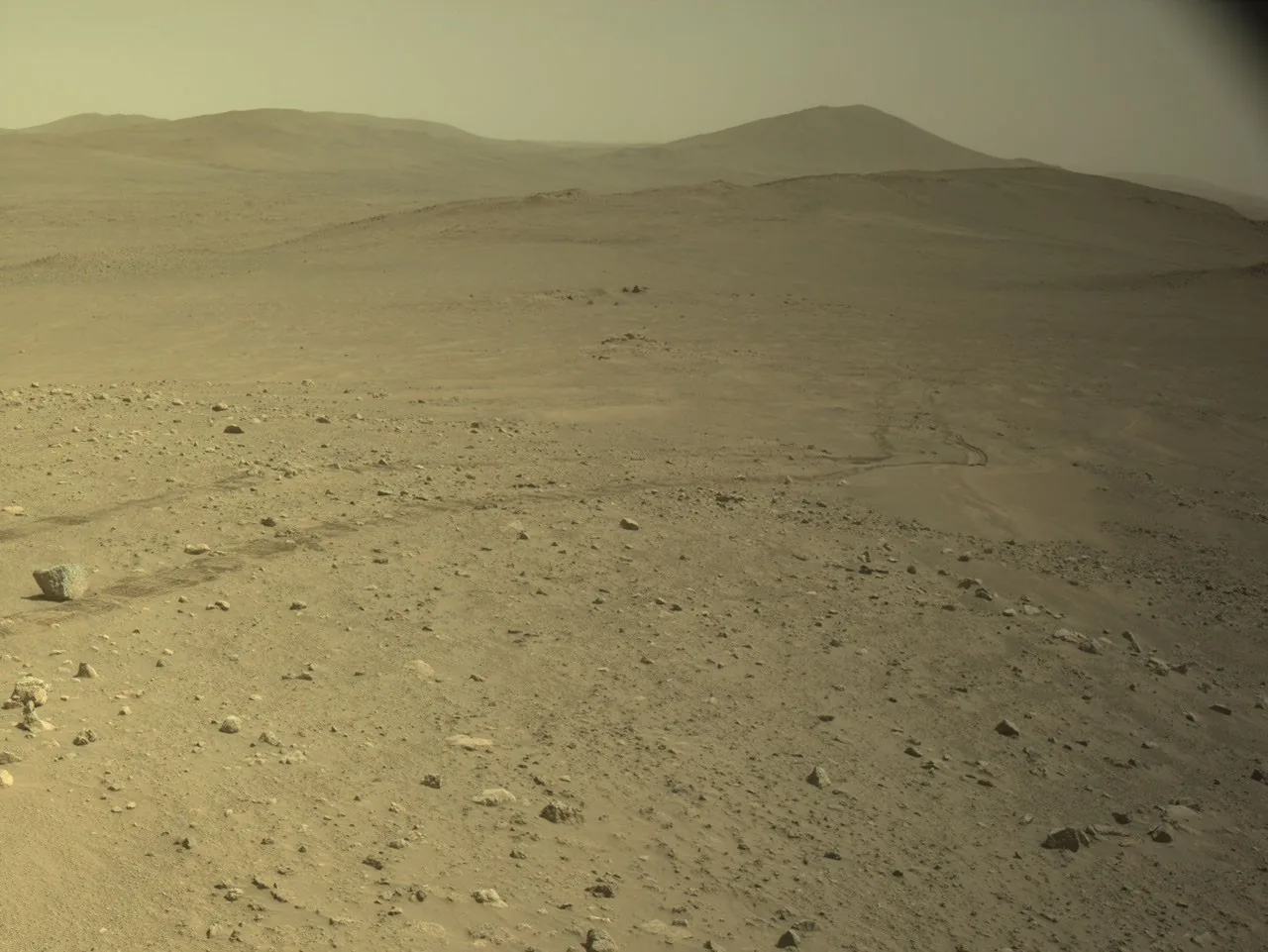
Two months before passing the mark, the rover stood within reach of the title. On Sol 1947, its odometer sat just 200 meters away from passing Opportunity’s mark [1]. That gap was remarkably small. A single afternoon drive with the onboard autonomous navigation software could have cleared that distance in an hour, but the science team chose to stop the wheels instead. Scientists spotted layered rock outcrops that held clues to ancient water flows, and they refused to skip valuable ground science just to claim a speed record early. The robot stayed parked for weeks while science instruments inspected the rocky ground in front of its chassis.
Why did the team pause so close to the record? The priority on Mars is always discovery, not speed. The science team commanded short drives to grind shallow patches into the rocks, placing spectrometer sensors directly against the freshly exposed surfaces to read their mineral makeup [1]. These tests took several weeks. Only when those proximity tests wrapped up did mission planners clear the rover to roll into new territory.
Once the abrasion science finished, the rover moved forward with ease. Space Launch Schedule reported that the rover transitioned back to long-distance travel once science tasks at the outcrop reached a clean stopping point for the team [5]. The vehicle covered the remaining meters in a single planned drive, sailing smoothly past the old distance record. The team cheered from Pasadena.

Software Tweaks for the Perseverance Driving Record
Reaching this point required major changes to how the rover moves over rough Martian ground. Driving along the crater slopes meant facing dense boulder fields and patches of loose sand. After running thousands of computer simulations, the navigation team raised the rover’s tilt limit to 24 degrees and reduced the required clearance under its belly pan to 20 centimeters (about 7.9 inches) [1]. These adjustments allowed the vehicle to tackle steeper hills and pass over taller rocks without stopping for help. The wheels kept steady traction. By letting the rover lean farther on hillsides, planners unlocked faster routes that avoided long detours around rocky obstacles that once would have blocked its forward path.
Engineers also revamped the control software to protect wheels from hidden hazards. They updated braking routines so the rover could halt before sliding into sharp rock edges, and they nearly doubled the steer motor current limits to free wheels caught in deep dirt [1]. The team also uploaded flight software containing “dynamic slip tables” to help the rover predict how its wheels would slide on loose dust. When facing slippery banks, drivers used cross-slope angles to anchor the metal wheels onto exposed slabs of bedrock. Bedrock provided firm footing.
Reports from Mirage News showed that these adjustments allowed the rover to maintain steady forward speed through terrain that would have stopped earlier Mars exploration missions [2]. With smarter slip models and higher tilt allowances, the rover avoided waiting for daily drive commands from Earth. These software changes formed the foundation of the Perseverance driving record, showing that robotic explorers can adapt long after launch. Smart code saved valuable sols.



Repurposing Helicopter Hardware for Surface Navigation
One of the smartest updates on the rover made use of spare parts onboard. The team introduced a tool called onboard Global Localization (GBLC), which repurposed the high-speed processor inside the Ingenuity Helicopter Base Station [1]. That processor was much faster than the rover’s radiation-shielded main flight computer. By comparing ground pictures taken by the rover’s cameras with orbital maps sent from Mars orbiters, GBLC pinpoints the vehicle’s exact position on the surface at the end of every drive. It works like orbital GPS. Having an accurate position fix without waiting for Earth-based analysis allows the rover to plan its next driving leg immediately after finishing its current run across the sand.
Running an off-the-shelf processor on Mars introduces serious radiation hazards for the mission. Mars has a thin atmosphere and no global magnetic field, leaving delicate electronics exposed to cosmic rays and solar radiation [1]. High-energy radiation can trigger “transient bit flips” in memory cells that corrupt running navigation software. Hardware shielding was not possible. To solve this problem without adding heavy metal shields, the JPL team designed software routines that detect and fix memory errors on the fly.
Coverage from LaunchToCosmos reported that this software-based approach opened the door to much greater independence for future missions in deep space [4]. Freed from waiting for daily ground fixes from California, the rover can plan longer travel legs on its own. Looking ahead, JPL engineers are exploring generative artificial intelligence tools to propose efficient driving paths through fields of large rocks. Autonomy will only grow.
Climbing the Rim of Jezero Crater
The main engine behind these long runs is AutoNav, the autonomous navigation system that lets Perseverance map routes in real time. Engineers describe this capability as “thinking while driving,” because the robot snaps stereo pictures, marks steep slopes or rocks, and adjusts its steering while rolling forward without stopping [6]. Thanks to these fast onboard calculations, the machine can travel at top speed and cover up to 1,351 feet over a single sol. Older rovers had to pause every few yards to take pictures, send data to Earth, and wait for human drivers to plan each step. Perseverance moves with far less hesitation.
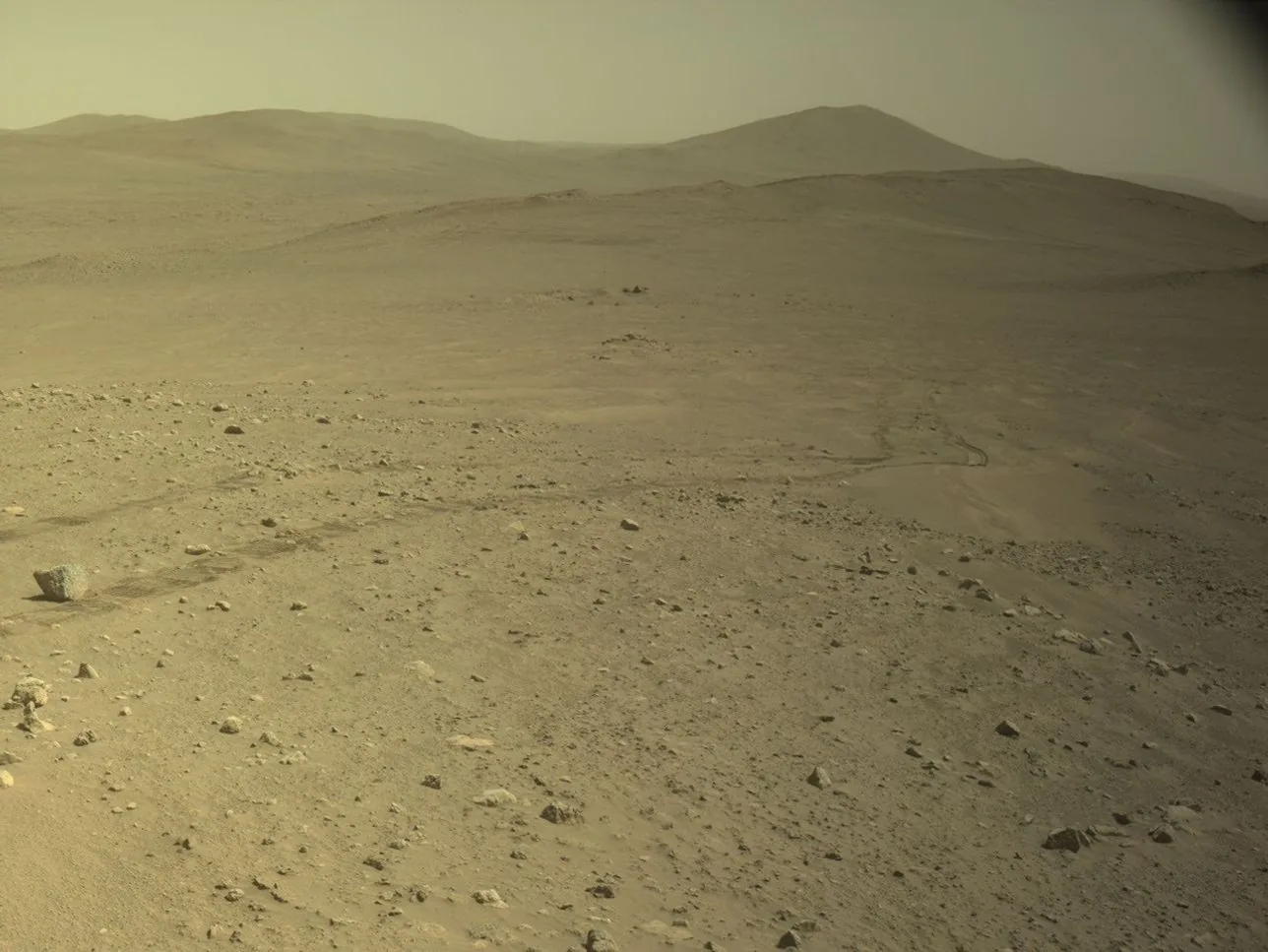
Perseverance is climbing the western rim of Jezero Crater to inspect what scientists believe is among the oldest ground in the solar system. CBS News reported that researchers hope to find traces of ancient hydrothermal systems, where underground networks of hot water once flowed [6]. Earlier findings allowed scientists to divide the crater’s watery history into “three major periods” after water first entered. In 2023, NASA stated that microscopic life could have once found a habitable home in these lake sediments. Ancient water left rich mineral deposits.
Cosmos Week pointed out that while institutional updates from NASA provide helpful operational records, broader scientific conclusions require ongoing analysis from multiple instruments and research teams [3]. Data gathered along the crater rim must undergo scrutiny before geochemists can confirm whether ancient water altered these high rocks. Triangulating readings across rover sensors and orbital cameras helps turn early measurements into dependable planetary science. Independent confirmation takes time.
Extending the Mars Driving Record Toward 2028
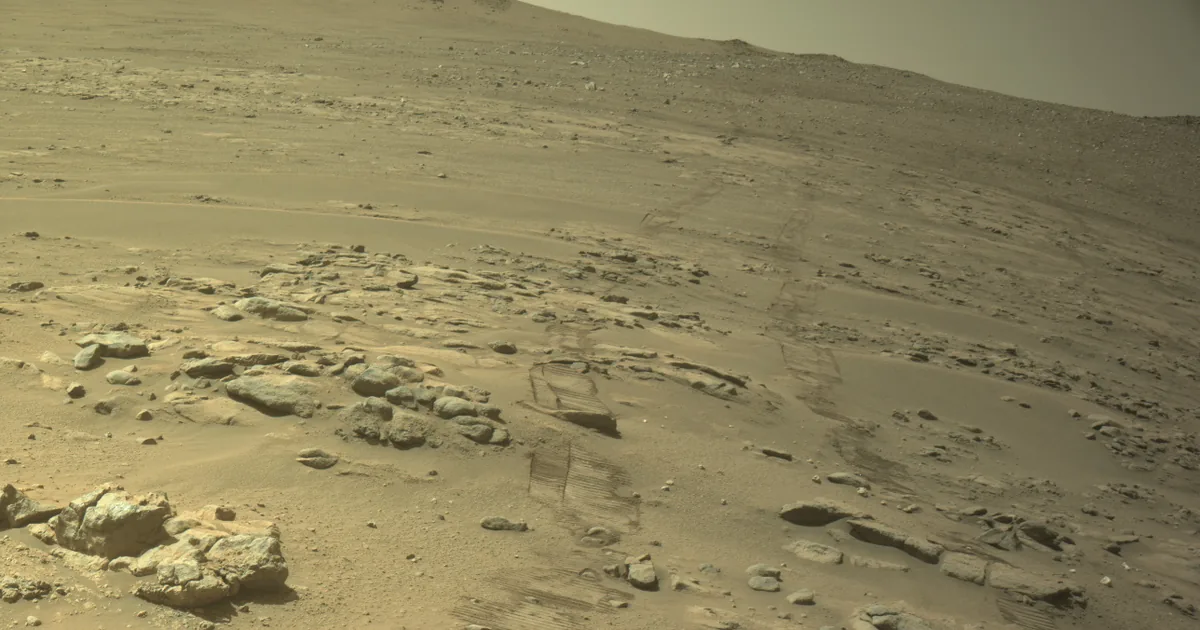
The odometer reading on Sol 2006 will not stand as the final distance mark. NASA recently extended the mission to allow exploration of the Jezero Crater rim until the end of 2028 [6]. Steven Lee remarked on the steady progress of the rover fleet: “It is an honor to be working on Perseverance at a moment when the technology has evolved to the point that drives like these are routine.” Lee added that the rover has blown well past expectations and will likely “keep adding to this record for many years to come.” With years of planned funding ahead, the vehicle has time to push deeper into unexplored ground along the crater rim. The mission is far from finished.
As Perseverance climbs toward the crest of the crater rim, the team is applying hard-won lessons from 45 kilometers of driving to reinvent how machines travel on other worlds [1]. Each boulder field crossed and each software patch uploaded builds the foundation for future expeditions to Mars and beyond. The new Mars driving record serves as more than a simple number on an odometer; it shows how autonomous systems can steadily expand human reach across the solar system. Smarter rovers will lead the way.
- WEBSITE Verma, V. (2026, October 12). Tracks along the longest drive on another world. NASA Science. [Article Link]
- ONLINE NEWS Mirage News. (2026, October 21). Tracks along longest drive on another world. Mirage News. [Article Link]
- ONLINE NEWS Cosmos Week Editorial Desk. (2026, October 21). Tracks along the longest drive on another world. Cosmos Week. [Article Link]
- ONLINE NEWS LaunchToCosmos. (2026, October 21). Tracks along the longest drive on another world. LaunchToCosmos. [Article Link]
- WEBSITE Space Launch Schedule. (2026, October 21). Tracks along the longest drive on another world. Space Launch Schedule. [Article Link]
- ONLINE NEWS Czachor, E. M. (2026, October 13). Perseverance Mars rover sets new driving record on surface of another world. CBS News. [Article Link]
APA 7: PerEXP Teamworks. (2026, October 22). Perseverance Breaks Martian Distance Record at 28 Miles. PerEXP Teamworks. https://perexpteamworks.com/en/perseverance-driving-record-jezero-crater/


