





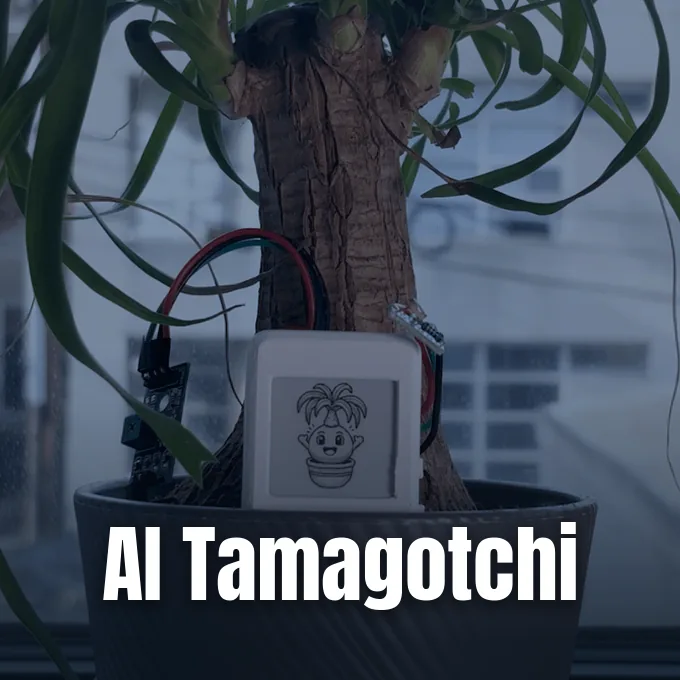
Researchers at Carnegie Mellon University built an AI Tamagotchi pet system that gives everyday household items expressive digital faces to nudge people into better habits. The project, called Object-Agent Twins or OATs, attaches small electronic paper displays and environmental sensors to mundane belongings like houseplants, coffee makers, skateboards, and exercise dumbbells. Wired reporter Julian Chokkattu reported that instead of sending push notifications to an already crowded smartphone, the gadgets display animated pixel-art characters that react directly to their real-world surroundings [1]. Chore tracking becomes pet care [5].
The AI Tamagotchi Pet Concept
Daehwa Kim, a fifth-year doctoral student in Carnegie Mellon’s Future Interfaces Group, created the AI Tamagotchi pet prototype with group director Chris Harrison [2]. Kim noticed that digital assistants trap attention behind phone glass. “We bring this joy of caring from virtual to physical objects,” Kim said to Wired reporter Julian Chokkattu. Instead of building another wearable pin or standalone speaker, Kim wanted to explore whether familiar belongings could become expressive companions through simple visual cues [1].
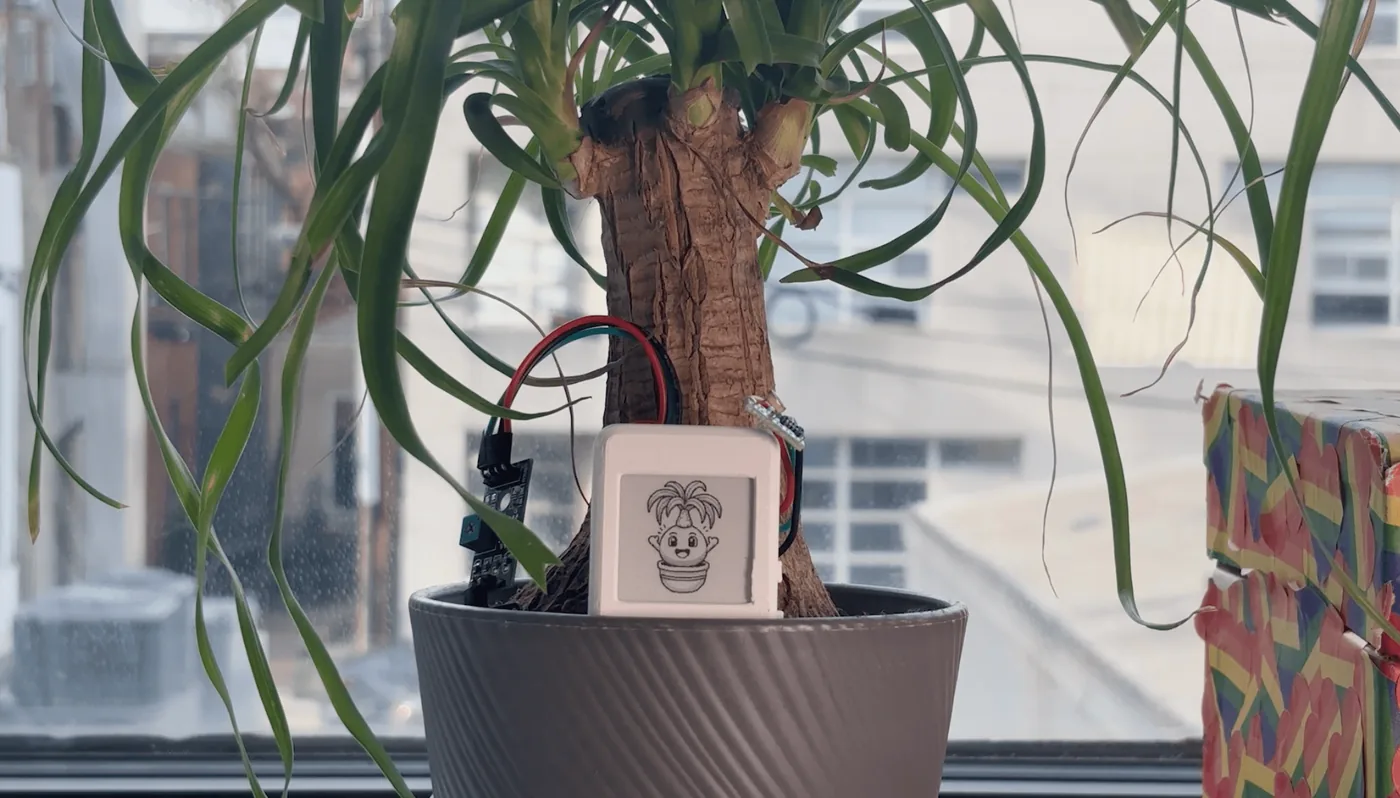
Kim presented the prototype at the ACM Symposium on User Interface Software and Technology in Detroit in early November, where the project earned two Honorable Mention awards from judges. The hardware takes inspiration from the handheld Tamagotchi virtual pets that became popular during the 1990s by demanding constant feeding, cleaning, and attention from young owners [1]. Instead of trapping that care dynamic inside a plastic egg, OATs link animated avatars to the actual state of everyday items [4]. When a potted houseplant sits in parched soil for several days, an attached screen shows a downcast face to nudge its owner to fetch water before leaves begin to turn yellow. The avatar cheers up once water reaches the roots [1].
The Detroit demonstration led Kim to run an informal design competition, gathering suggestions on what items people wanted to equip with screens. Submissions featured an animated conference badge and a custom panda face created for an Owala water bottle. Kim has not decided whether to sell DIY kits as a business [1].
Hardware and Sensors
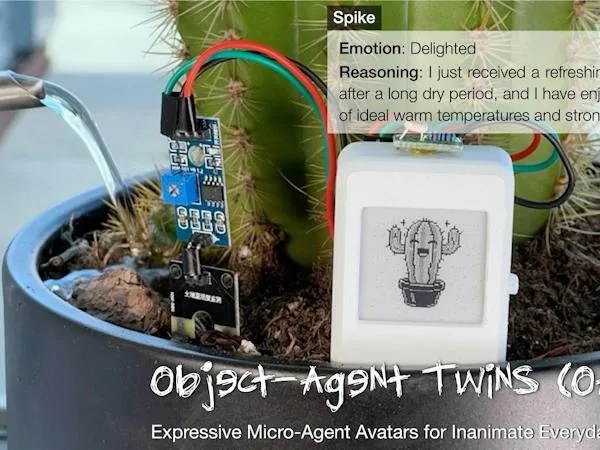
Each OAT unit relies on a Waveshare ESP32-S3 microcontroller board featuring a dual-color electronic ink screen measuring 1.54 inches diagonally that sips power only while refreshing images. An onboard SHTC3 sensor measures temperature and humidity. A built-in microphone monitors ambient sound levels. As reported by Nick Bild for Hackster.io, the Carnegie Mellon engineering team also built a custom expansion board that accepts plug-in modules for motion, room occupancy, light intensity, and soil moisture. The electronics slide into a 3D-printed enclosure [2].
Assembly costs stay below $20 for the core module, while optional plug-in sensor boards cost less than $5 each, powered by an 1,100 mAh lithium-polymer battery that recharges through a USB-C port. Nick Bild reported that complete hardware packages remain affordable for hobbyists [2].
Battery endurance shifts depending on active sensors. In basic configurations, the battery lasts three to four days, and simple setups can run for roughly one week [2]. Turning on the microphone cuts runtime to about a single day. Kim identified this short battery window as the main engineering limit facing the prototype, explaining that the current system serves mainly as a research proof of concept [1].


Software and Emotional Rules
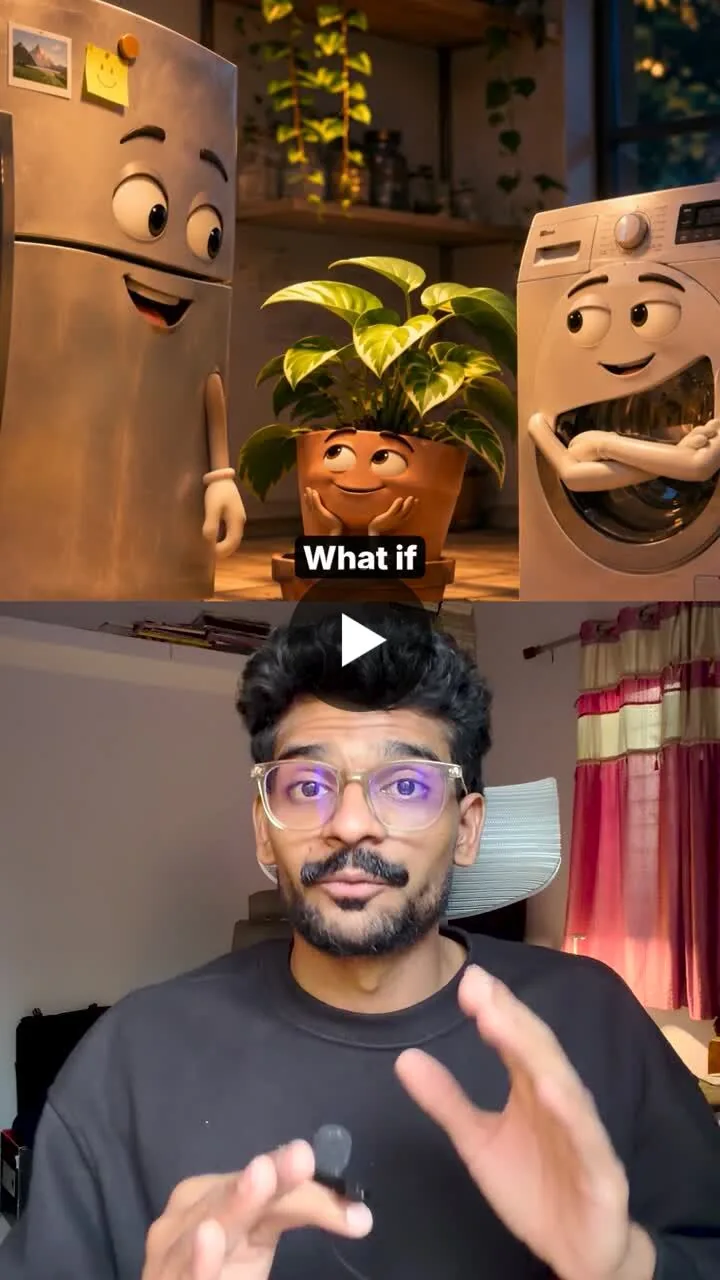
Configuring an OAT takes about 15 minutes through a web browser. Users name their pet, write a short description of the host object, and select which attached sensors to monitor. Google Gemini models then generate a custom avatar and set up 12 emotional expressions, ranging from joy and excitement to boredom, frustration, and sadness [2].
The software creates rules for what makes an object happy or sad based on text descriptions provided during setup [2]. An OAT attached to a skateboard looks bored and lonely when motion sensors detect no rides for several days, but it flashes enthusiastic faces when someone steps on the deck. On a houseplant, steady temperatures and moist soil trigger positive reactions, though owners can adjust thresholds for species that prefer dry environments. Gemini’s Nano Banana service creates the sprite graphics, giving each object a visual personality tailored to its role [1]. Users do not need programming knowledge to adjust these rules, because the web portal handles behavior mapping automatically [2].
During regular use, the ESP32-S3 wakes up every two seconds to take readings. Local anomaly detection checks whether conditions changed enough to justify an update. If readings shift, the board sends sensor data to a cloud server, where Gemini picks a matching emotion and returns the animation to the screen [2].
Results From the Seven-Day Study
To evaluate how digital companions affect daily habits, researchers Daehwa Kim and Chris Harrison recruited 12 participants who deployed OAT prototypes in their homes for a seven-day study. Volunteers attached units to refrigerators, houseplants, dumbbells, a coffee machine, and a 3D printer. Average setup took 15 minutes [2]. LinkedIn contributor Purvesh Shende noted that one participant added ten minutes of daily strength training to keep their dumbbell pet happy, while another rearranged refrigerator shelves to prevent the screen from flashing warning faces [3]. The study showed that interacting with an AI Tamagotchi pet created an immediate sense of personal accountability [2].
Other test cases served practical safety and monitoring roles. On a coffee maker, the avatar cheered when grinding began, answering the basic question of whether the machine was in use. On a 3D printer, the screen warned bystanders that the machine was running and releasing fumes [1].
The trial also revealed human tendencies to cheat the system. Some users admitted to tricking the sensors (such as shining a phone flashlight on a light detector) just to make their avatar smile without completing the actual chore. Other participants felt guilty when screens looked sad, showing how easily people project feelings onto software. Kim acknowledged that some facial graphics caused confusion, pointing to the challenge of making 12 pixel emotions easily recognizable [2].
AI Tamagotchi Pet Ethics and Screen Limits
Kim designed the AI Tamagotchi pet experiment as tech firms race to bring artificial intelligence into everyday hardware [4]. Companies are developing hardware companions, including Meta’s planned Muse Charm featuring its Muse AI agent and OpenAI’s hardware project led by former Apple designer Jony Ive. Many of these consumer initiatives lean heavily on cuteness to encourage adoption, hoping friendly personas will make automated tools feel approachable. Kim pointed out that people routinely name cars and bicycles but rarely feel sentimental toward smartphones [1].
Giving software human traits raises ethical questions that extend beyond academic laboratories [1]. In an essay published in AI and Ethics, philosopher A. Placani analyzed anthropomorphism as both hype and fallacy. Placani argued that treating algorithmic systems like living beings exaggerates their actual capabilities while distorting human judgments concerning moral character, trust, and accountability. When a digital avatar expresses distress or affection, people may place unwarranted confidence in automated tools or feel emotionally manipulated into changing their daily routines [6]. In industry settings, tech firms often adopt anthropomorphic terms, describing conversational chatbots as hallucinating or referring to background memory cleanup as dreaming, as seen in Anthropic announcements [1]. Those framing choices can blur the line between automated software and genuine consciousness [6].
Kim said that OATs keep interactions limited to simple pixel emotions on E Ink screens. The gadgets do not hold spoken conversations or claim consciousness. “Anthropomorphism can be very useful in certain ways, like helping people to change their behaviors,” Kim said. “I feel like in the future of computing we will have more of a relationship with AI, but we should definitely be careful not to abuse this [1].”
- ONLINE NEWS Chokkattu, J. (2026, November 15). This AI Tamagotchi turns everyday objects into needy virtual pets. Wired. [Article Link]
- WEBSITE Bild, N. (2026, October 20). Turn anything into a Tamagotchi. Hackster.io. [Article Link]
- WEBSITE Shende, P. (2026, November 3). This little screen turns everyday objects into virtual pets. LinkedIn. [Article Link]
- WEBSITE Artimouse Prime. (2026, November 15). From needy plant pets to algae robots, AI is getting physical. Artiverse. [Article Link]
- ONLINE NEWS Kids News App. (2026, November 15). AI Tamagotchi turns objects into virtual pets. Kids News App. [Article Link]
- ACADEMIC JOURNAL Placani, A. (2024). Anthropomorphism in AI: hype and fallacy. AI and Ethics, 4(3), 691-698. [Article Link]


