





Do billions of birds migrating at night navigate across illuminated metropolitan areas without suffering catastrophic disruptions? Each autumn, massive avian populations travel southward across North America under cover of darkness, relying on cooler nighttime air layers, reduced atmospheric turbulence, and celestial star navigation. Artificial illumination alters flight paths [1]. Disoriented travelers veer directly toward brightly lit downtown towers, where transparent windows and reflective architectural glass create severe strike risks. In response, municipal coalitions and wildlife agencies urge building operators to extinguish nonessential lights.
Tracking Millions of Birds in Flight
Weather surveillance radar now makes nocturnal animal movements measurable at continental scales. In an interview broadcast by EarthSky, ornithologist Andrew Farnsworth of the Cornell Lab of Ornithology explained that scientists track nocturnal journeys using the same radar network that powers daily meteorological forecasts. This system relies on the US NEXRAD weather surveillance radar network (a coordinated array of atmospheric sensors). Radar pulses detect biological targets in midair. Automated computer models, trained on 23 years of atmospheric observations, generate regional migration forecasts three hours after local sunset [1].
Unlike aquatic species that coordinate daytime movements across floating polar platforms, as explored in how Adélie penguins use sea ice to optimize their migration journeys, nocturnal songbirds depend entirely on atmospheric stability and unpolluted skies. Atmospheric conditions occasionally concentrate enormous flocks into extraordinary flight events known as billion bird nights. Project data collected by the BirdCast Program documented two historic autumn peaks on September 25, 2025, and October 8, 2025. On each of those record evenings, radar networks recorded more than 1.2 billion birds moving southward simultaneously across the United States after twilight, representing approximately 10% of the entire avian population of North America in active transit [1].
Forecast maps offer immediate predictive value. Regional observatories deploy these atmospheric radar projections to identify upcoming migratory corridors before flights begin [1].

Why Birds Migrating at Night Move After Sunset
Why do migratory species travel during nocturnal hours instead of daylight? Nocturnal flight provides cooler atmospheric temperatures, reduced turbulence, and relative safety from visual daytime predators. Millions of birds migrating at night take advantage of stable air layers that conserve metabolic energy over long continental journeys [1]. Night skies offer smoother air currents. By climbing into stable nighttime winds, traveling passerines maintain steady headings while avoiding the thermal updrafts that buffet daytime skies.
Mid-September weather conditions frequently trigger synchronized mass movements. Reporting on regional migration surges, NBC Chicago noted that cool, dry conditions encouraged more than 825 million birds to travel across the United States overnight. During the early morning hours of Tuesday, September 8, 2026, at approximately 2:20 a.m., BirdCast sensors recorded more than 68 million birds traversing regional airspace simultaneously [3]. Alerts remained active across the region.
Major geographical corridors funnel immense concentrations of southbound travelers into narrow flight channels before encountering sprawling metropolitan centers. A landmark study published in Frontiers in Ecology and the Environment revealed that Chicago ranks as the single most dangerous metropolitan area in the United States for migrating birds due to its geographic position and light intensity [4]. Dense skylines intersect directly with primary transit routes. Flight paths converge over urban borders.
How Urban Lighting Disorients Migrating Flocks
Artificial light scattered across urban landscapes disrupts the sensory cues that guide nocturnal migration. According to findings compiled by the U.S. Fish and Wildlife Service, birds migrating at night become confused, exhausted, and severely disoriented when drawn toward luminous city centers, particularly during inclement weather events [2]. Light pollution disrupts natural biological rhythms across diverse animal taxa, where researchers have documented systemic cellular consequences such as the physiological strain linked to nighttime light exposure. Trapped individuals circle brightly illuminated buildings for hours, exhausting vital energy stores required to complete journeys southward [5].
Reports from the U.S. Fish and Wildlife Service indicate that migratory flocks show acute vulnerability to steady-burning red and white lights [5]. Non-flashing illumination continuously captures avian attention, blinding birds to physical structures and pulling them off course. Turning off or modifying these non-flashing fixtures substantially reduces structure collisions. Shielded fixtures mitigate this hazard.
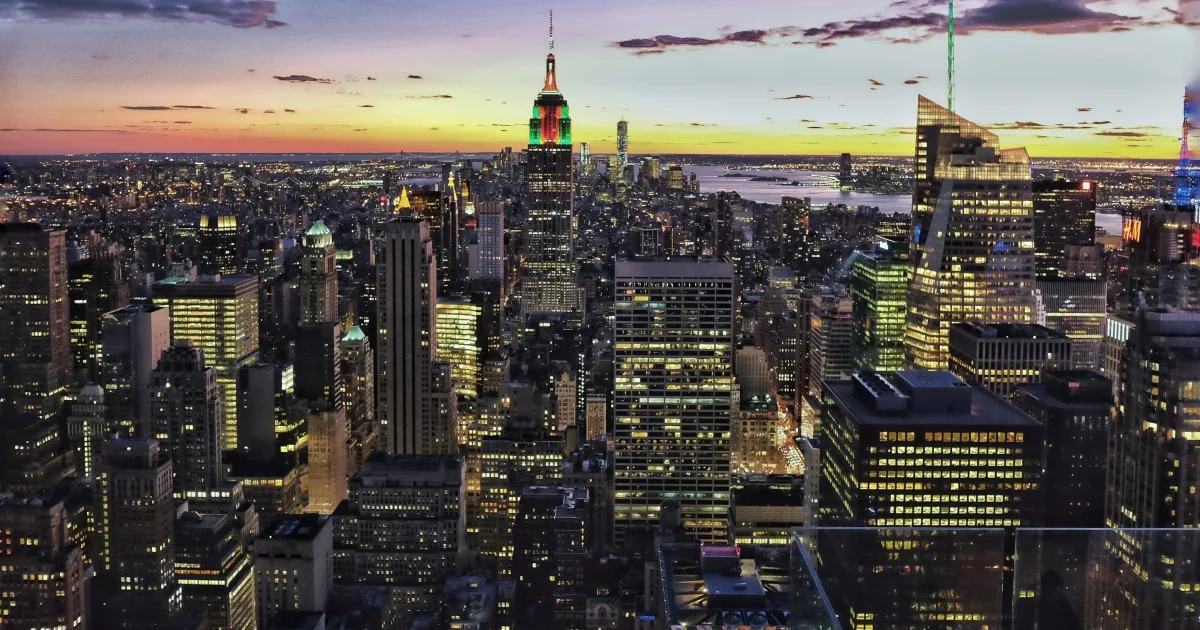
Field observations in New York City by Project Safe Flight confirmed these dangers during peak migration alerts, warning that bright nocturnal lights create fatal structural collision hazards [5]. When disoriented birds descend into unfamiliar streetscapes, they encounter glass facades, vehicular traffic, and predatory domestic pets. Ground-level obstacles multiply after dawn. Dimming external lights prevents vulnerable songbirds from landing in dense urban environments [3].


Glass Collisions and Low-Rise Building Hazards
Urban glass surfaces pose lethal obstacles because birds cannot perceive transparent panes as physical barriers. Data compiled by the American Bird Conservancy and the U.S. Fish and Wildlife Service estimate that up to one billion birds die annually from collisions across the United States. Remarkably, the vast majority of these fatal strikes do not occur at iconic skyscrapers, but at residential homes and commercial properties shorter than four stories tall (structures under four stories) [2]. Transit shelters also cause collisions.
Reflective architectural surfaces mimic natural flyways by mirroring open sky, clouds, and surrounding vegetation. Birds flying at full cruising speed steer directly toward these deceptive reflections. Writers Ines Nedelcovic and Katherine Wychulis of the Fairfax County Park Authority noted that priority species like the Wood Thrush and Ruby-throated Hummingbird regularly suffer window strikes [7]. Even when a bird flies away after striking glass, wildlife biologists note that many victims succumb later to internal trauma [2].
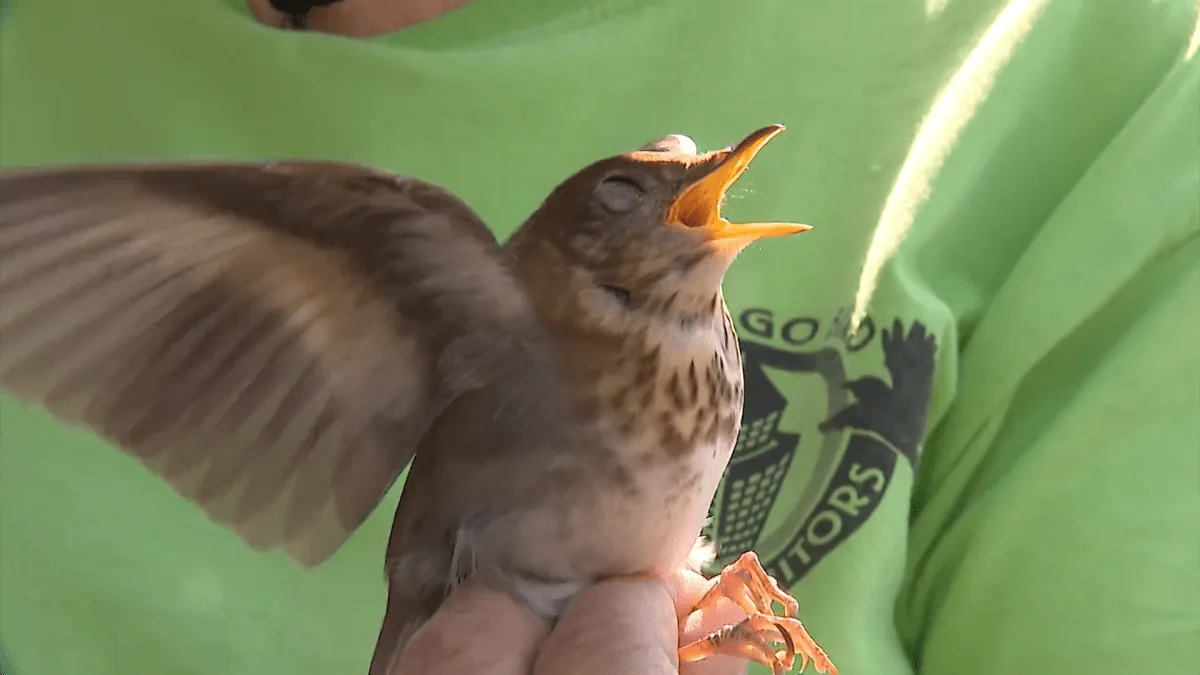
Simple architectural modifications substantially reduce window collisions. Installing bird-friendly window decals, drawing internal shades, and spacing visual markers two inches apart protect passing wildlife [7]. Property owners conserve valuable energy by extinguishing decorative lighting during critical seasonal windows.
Regional Alerts and Municipal Lights Out Programs
Coordinated civic initiatives across the United States now translate migration forecasts into immediate municipal action to protect birds migrating at night. Dozens of municipalities participate in conservation campaigns affiliated through the Urban Bird Treaty Cities network [2]. Regional programs such as the Audubon Lights Out Program, Lights Out Heartland in the Midwest, and FLAP Canada organize building owners to minimize light emissions [1]. Collaborative campaigns protect shared airspace.
Writing for intoBirds, Renee Hewitt documented how floodlights on commercial towers accelerate fatal collisions among migratory warblers [6]. Voluntary programs encourage commercial landlords to extinguish decorative roofline fixtures, logos, and atrium illumination throughout spring and autumn flight corridors. Conservation groups coordinate with the DesignLights Consortium and the International Dark Sky Association to promote energy-efficient shielding standards [5].
Scientific modeling guides these seasonal management schedules. The U.S. Fish and Wildlife Service collaborates with the Cornell Lab to target critical seasonal flight corridors [2]. Because autumn migration extends across broader calendars and variable geographic routes to southern wintering grounds, scientists urge commercial property managers to maintain dimmed exterior fixtures across consecutive nights.
Practical Measures to Shield Nocturnal Skies
Homeowners and facility managers can take direct, measurable steps to safeguard birds migrating at night during peak autumn travel. Experts at BirdCast and the Audubon Society recommend extinguishing nonessential exterior lighting between 11:00 p.m. and 6:00 a.m. nightly [1]. Security fixtures should be aimed downward and shielded to prevent light from scattering into the upper atmosphere [5]. Simple adjustments conserve power.
Interior management proves equally critical for commercial structures and private residences. Dimming lobby lights, turning off garden lamps, and drawing window blinds prevent beams from escaping into migratory corridors [6]. Installing automated motion sensors ensures that exterior illumination activates only when human pedestrians are physically present [5]. Sensors save energy.
Protecting southbound migrants also requires reducing ground-level hazards once birds alight in residential neighborhoods. Wildlife groups urge homeowners to avoid illuminating ornamental fountains or shrubs that lure tired fliers toward glass facades [7]. Pet owners are also advised to keep domestic cats indoors during overnight hours when grounded birds rest in yards [3]. By combining dimmed night skies with attentive ground-level hazard management, urban communities provide safer passage for the millions of avian travelers journeying southward across North America toward their traditional wintering grounds.
- ONLINE NEWS Whitt, K. K. (2026, September 9). Will fall migration 2026 bring a billion bird night? EarthSky. [Article Link]
- WEBSITE U.S. Fish and Wildlife Service. (2022, April 28). Dim the lights for birds at night! U.S. Fish & Wildlife Service. [Article Link]
- ONLINE NEWS Stroobandt, I., & NBC Chicago Staff. (2026, September 12). ‘High’ bird migration alert continues as millions fly over Chicago area. NBC Chicago. [Article Link]
- ACADEMIC JOURNAL Horton, K. G., Nilsson, C., Van Doren, B. M., La Sorte, F. A., Elmore, J. A., Dokter, A. M., & Farnsworth, A. (2019). Bright lights in the big cities: Migratory birds’ exposure to artificial light. Frontiers in Ecology and the Environment, 17(4), 209–214. [Article Link]
- WEBSITE U.S. Fish and Wildlife Service. (2023, April 5). Threats to birds: Collisions (nighttime lighting). U.S. Fish & Wildlife Service. [Article Link]
- ONLINE NEWS Hewitt, R. (2022, September 16). Go lights out for migrating birds. intoBirds. [Article Link]
- WEBSITE Nedelcovic, I., & Wychulis, K. (2022, June 3). Dim the lights for birds at night. Our Stories and Perspectives. [Article Link]
APA 7: Editor. (2026, September 13). As birds migrating at night cross skies, cities dim lights. PerEXP. https://perexpteamworks.com/en/birds-migrating-at-night-lights/


