





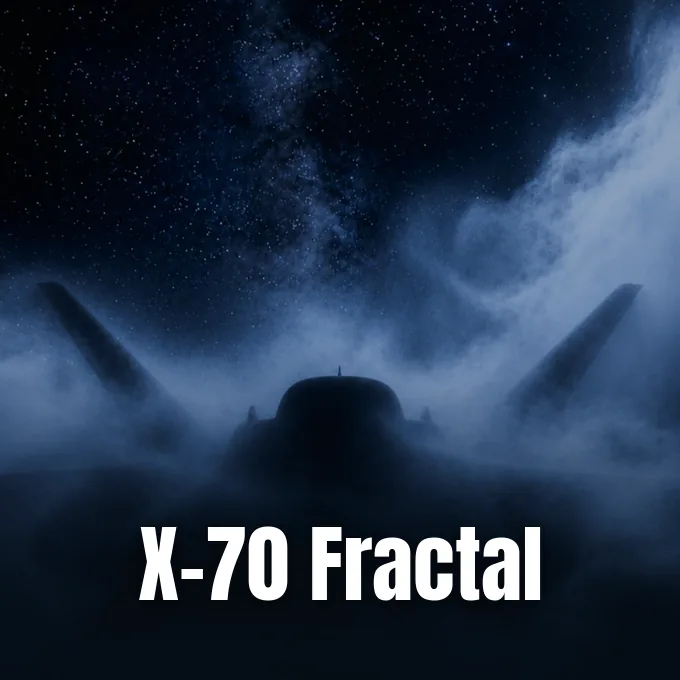
NASA unveiled its newest crewed flight research platform, the X-70 Fractal, during the UP.Summit conference at Kennedy Space Center in Cape Canaveral, Florida on November 4, 2026. George Alderman and Cheryl Warner at NASA Headquarters confirmed the aircraft will evaluate reconfigurable flight controls and examine maneuverability in ways never demonstrated before in piloted flight [1]. Agency Administrator Jared Isaacman presented the concept as an agile research asset capable of swapping modular sensor packages between flight campaigns, shortening the engineering cycle for experimental aviation systems [2]. By enabling rapid hardware changes on a flying testbed, NASA aims to test emerging control technologies under authentic flight conditions rather than relying solely on computer simulations [1].
The X-70 Fractal Debut at Kennedy Space Center
The public debut took place near the Shuttle Landing Facility in Cape Canaveral days before the Max Power Airshow, where NASA gathered aerospace researchers to discuss future flight initiatives [3]. Laurie Grindle, director of the Aeronautics Division within NASA’s Research and Technology Mission Directorate, said that X-planes have driven American aviation for decades. She added, “It’s exciting to bring on another X-plane to accelerate and drive aeronautics research” [1]. Speaking at the UP.Summit, Isaacman said NASA maintains national assets, including wind tunnels and propulsion laboratories, that should support industry partners on challenges commercial firms cannot resolve alone [3].
Aviation observers anticipated an announcement after remarks Isaacman shared on the NASASpaceflight podcast The Flame Trench. During that interview, Isaacman hinted that NASA would announce a new X-plane while addressing persistent rumors about an SR-71A Blackbird stationed at Armstrong Flight Research Center. Observers had noticed aircraft NASA 844 moving at the desert facility, triggering speculation about a return to flight for the retired supersonic platform. Isaacman dispelled those rumors by stating the crew was simply cleaning the plane after years of desert dust buildup, promising instead that the upcoming announcement would reveal a different airframe [4].

Tyler Rogoway reported in TWZ that Isaacman, who flies a personal MiG-29, has made expanding the agency’s X-plane portfolio a central priority. Isaacman said, “Know that X-70 is just one part of this new beginning for aeronautics. I promise you, there will be more” [3]. Flight testing begins within two years [1].
Flight Specifications and Modular Capacity
Official figures released by NASA show the jet has a maximum takeoff weight of 10,000 pounds, or roughly 4,536 kilograms [1, 8]. The jet cruises at Mach 0.75. Brett Tingley reported in Space.com that this speed matches a commercial Boeing 737 Classic passenger airliner, while the airframe reaches a ceiling of 45,000 feet (about 13,700 meters) with an operational flight range exceeding 1,500 nautical miles, or roughly 2,778 kilometers [1, 2, 5]. These parameters allow researchers to evaluate flight maneuvers over longer test windows without frequent refueling stops [3].
Instead of pursuing extreme supersonic speed, the aircraft operates as a flying laboratory that carries up to 2,000 pounds (roughly 907 kilograms) of instruments split between fuselage bays and wing mounting hardpoints [1, 5]. Technicians can swap payloads between test flights. Ricardo Meier reported in Air Data News that this modular approach lets engineers evaluate experimental avionics packages without altering the primary airframe structure or commissioning costly custom testbeds [5, 6].

NASA designed the modular layout to ensure test teams can install new antennas, sensor arrays, or control pods as research priorities evolve. By supporting payload bays inside the fuselage and on wing hardpoints, the X-70 Fractal allows simultaneous testing of flight control software and aerodynamic instruments. Isaacman said that this flexibility keeps engineering groups flying and learning from one campaign to the next [1].
Reconfigurable Controls in Piloted Flight
The flight program investigates reconfigurable flight controls that alter software control laws during flight [1]. Stefano D’Urso reported in The Aviationist that research teams explore pneumatic air pulses to maneuver lifting surfaces without standard mechanical flaps. In related aerodynamic research, engineers used pressure sensitive paint to map dynamic wing airflow during high-angle maneuvers. Installing optical sensors on an adaptable jet lets flight teams examine how boundary layer separation changes when adaptive software shifts aerodynamic loads across lifting surfaces [4].
Testing advanced control systems in a crewed cockpit offers advantages that subscale uncrewed drones cannot deliver [1, 2]. A test pilot provides direct evaluations of stick feel, control response delay, and pilot-induced oscillations during complex flight maneuvers [2]. Isaacman said in the agency release, “The X-70 Fractal gives NASA a crewed, high-performance platform to test advanced flight-control, maneuverability, and other cutting-edge technologies in real flight”. He added, “This is why people come to NASA: to build, to learn, and most importantly, to fly” [1].

Pilots can disconnect experimental flight algorithms and restore manual backup control if aerodynamic instability occurs [2, 6]. Cockpit override protects the aircraft [5]. By pairing pilot observations with telemetry streams, researchers gather data on how reconfigurable flight controls perform under atmospheric turbulence, while Aditya Kumar wrote in The Defense News that flight testing provides fidelity simulations cannot match [1, 6].


X-70 Fractal Roots in American Flight History
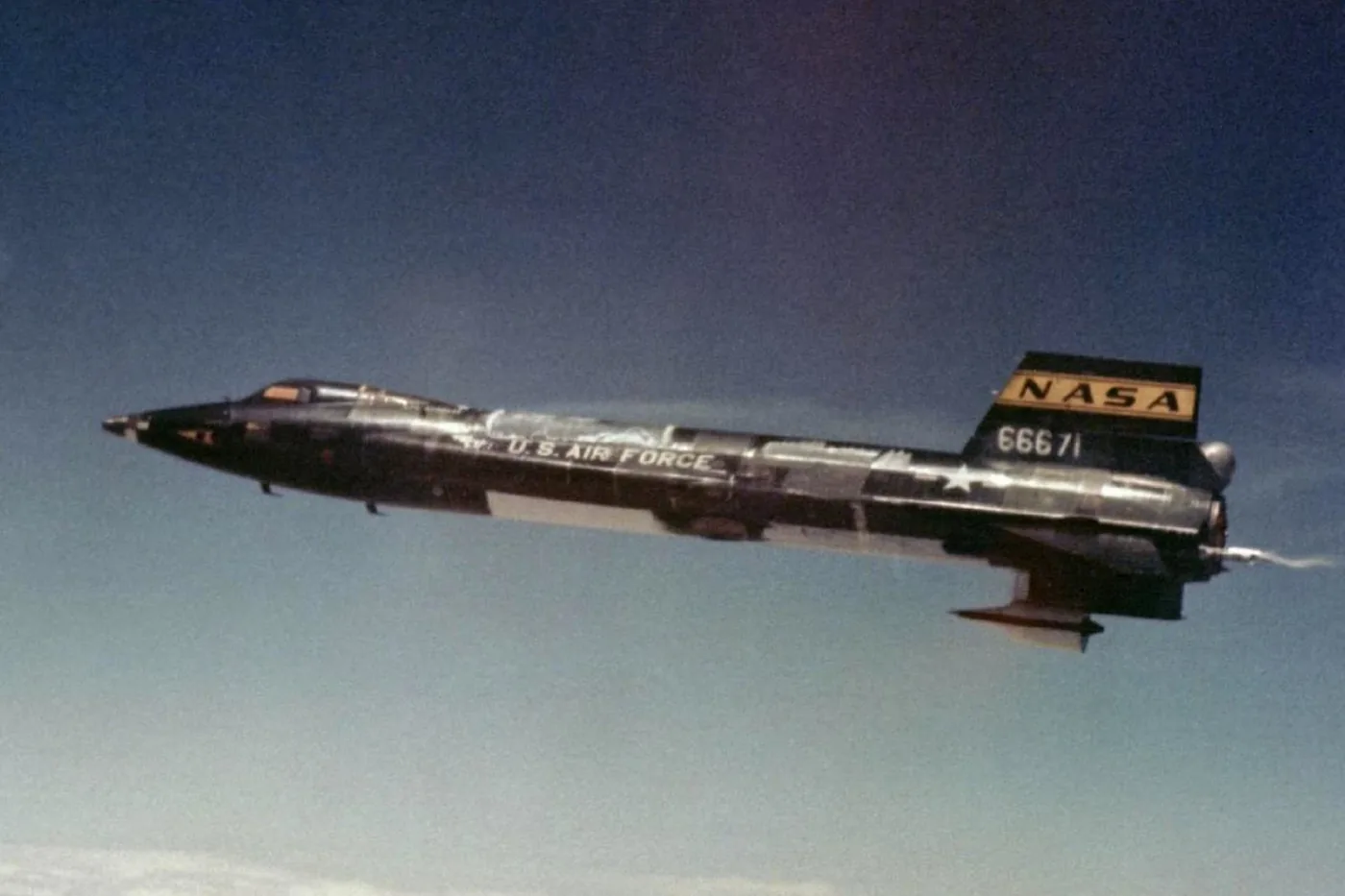
The X-70 Fractal joins an established lineage of experimental aircraft that pioneered American aviation. In 1947, the rocket-powered Bell X-1 became the first crewed airplane to exceed Mach 1 in level flight. During the 1960s, the hypersonic North American X-15 gathered high-altitude flight data. NASA pushed flight boundaries through experimental platforms, extending from piloted atmospheric jets to how NASA tested Mars helicopter designs to prove rotorcraft flight in thin planetary atmospheres [1].
Wing manipulation concepts connect directly to early flight history. On December 17, 1903, Wilber and Orville Wright achieved powered flight at Kitty Hawk, North Carolina, using wing-warping cables to twist wooden wings for lateral control. Nearly a century later, NASA revived that concept through the X-53 Active Aeroelastic Wing program at Armstrong Flight Research Center. The X-53, a modified Boeing F/A-18 fighter, completed its first flight on November 15, 2002, demonstrating that aerodynamic forces could twist a flexible wing to produce roll control (such as differential wing twist) without heavy mechanical hinges [4].
Modern research programs built upon those aerodynamic principles through new demonstrator projects [2, 4]. DARPA is developing the uncrewed X-65 CRANE aircraft to evaluate active flow control actuators that maneuver an airframe without external moving surfaces. Meanwhile, NASA flew the supersonic X-59 QueSST from Armstrong Flight Research Center to Kennedy Space Center to test airframe shaping that softens sonic booms [2, 4]. The X-70 program complements these focused demonstrators by providing an adaptable testbed that can evaluate both physical control surfaces and adaptive flight software across varied flight regimes [1, 6].
Unanswered Questions on Contractor Origins
Aditya Kumar reported in The Defense News that NASA has not disclosed which aerospace contractor built the airframe, nor has the agency confirmed its propulsion system [6]. Concept imagery released alongside the announcement featured a computer-generated label and showed the jet partially concealed within clouds [3, 4]. Despite the obscured rendering, aviation writers described distinct airframe characteristics, including splayed canted vertical tail fins, a bubble canopy, and a slight negative wing dihedral (a downward angle of a few degrees). Brett Tingley reported in Space.com that the layout shares visible similarities with the Scaled Composites and Northrop Grumman Model 437 Vanguard experimental jet, as well as tail cues reminiscent of the Lockheed Martin F-22 Raptor [2, 4].
Writing in TWZ, Tyler Rogoway suggested that the X-70 Fractal airframe might originate from a classified defense development effort transferred into civil agency operations, especially given Isaacman’s phrasing regarding flight “under the NASA banner” within two years. The open architecture resembles the Scaled Composites Beacon testbed. Furthermore, Steve Trimble of Aviation Week shared video showing Isaacman calling for radical airframe and engine designs to fly faster and higher than recent decades [3].

Upcoming Flight Milestones and Fleet Plans
NASA expects the X-70 Fractal to conduct its initial test flight within two years [1]. Early flight trials will concentrate on envelope expansion, validating engine performance, landing gear retraction, and basic handling qualities before test pilots evaluate adaptive flight software and reconfigurable control laws across varied atmospheric conditions [6, 7]. Administrator Jared Isaacman stated at the UP.Summit that another X-plane announcement would follow, confirming that NASA plans to expand its flight test fleet [3].
The addition of the aircraft reflects a strategic shift toward reusable flight testbeds capable of hosting consecutive research programs over many years. Rather than designing single-purpose demonstrators that face retirement after completing one study, a modular testbed supports continuous technology iteration [5]. The data collected from crewed flight experiments will help aerospace engineers refine digital control laws for future commercial transports and high-performance military jets [1, 6]. NASA aims to shorten the timeline required to transition emerging flight technologies into operational aircraft [1].
- PRESS RELEASE NASA. (2026, November 5). NASA Announces X-70 Experimental Aircraft to Advance Flight Research. [Article Link]
- ONLINE NEWS Tingley, B. (2026, November 5). NASA announces experimental X-70 Fractal aircraft: A ‘new beginning for aeronautics’. Space.com. [Article Link]
- ONLINE NEWS Rogoway, T. (2026, November 4). NASA Announces X-70 ‘Fractal’ Experimental Aircraft (Updated). TWZ. [Article Link]
- ONLINE NEWS D’Urso, S. (2026, November 5). NASA Announces X-70 Fractal, its Latest Experimental Aircraft. The Aviationist. [Article Link]
- ONLINE NEWS Meier, R. (2026, November 5). NASA reveals X-70 Fractal experimental aircraft. Air Data News. [Article Link]
- ONLINE NEWS Kumar, A. (2026, November 5). NASA Unveils X-70 Fractal Experimental Aircraft to Test Advanced Flight Controls. The Defense News. [Article Link]
- ONLINE NEWS Space and Defense Editorial Team. (2026, November 5). NASA announces X-70 experimental aircraft to advance flight research. [Article Link]
- WEBSITE Wikimedia Foundation. (2026, November 5). NASA X-70 Fractal. Wikipedia. [Article Link]
APA 7: PerEXP Teamworks. (2026, November 6). NASA Reveals X-70 Fractal to Advance Flight Control Research. PerEXP Teamworks. https://perexpteamworks.com/en/x-70-fractal-flight-research-platform/


