





Public talks in Australia have raised questions about whether stimulants trigger mental breaks in at-risk people. While alarming headlines often link drug therapies to false beliefs and hallucinations, large clinical registries show that therapeutic ADHD medication carries a rare psychosis risk when taken under medical care. Psychosis is not a single diagnosis, but a mental health symptom where people struggle to separate reality from false beliefs. In Australia, Adam Guastella, Kelsie Boulton, and Timothy Chen note that roughly one in 200 people lives with psychotic illness such as schizophrenia. For most patients taking doctor-ordered doses, mental complications never emerge [1].
Prescription Stimulant Use in Clinical Care
Stimulants serve as first-line tools for attention deficit hyperactivity disorder, raising dopamine and noradrenaline levels in the brain to help neural circuits manage focus, impulse control, and working memory. Doctors commonly prescribe methylphenidate, sold under brand names like Ritalin and Concerta, or amphetamine compounds including dexamfetamine, lisdexamfetamine sold as Vyvanse, Dexedrine, Focalin, and Adderall. Non-stimulant options such as atomoxetine sold as Strattera, and guanfacine sold as Intuniv, are available for patients who cannot take standard stimulants. Specialists compare focus troubles to having fifty open browser windows. Stimulants quiet background tabs so people focus on main daily tasks. In clinical care, these drugs help patients organize daily tasks, finish schooling, and keep steady jobs without troubling side effects [1].
Rising diagnosis rates have increased prescription numbers in many countries over the last two decades. In Australia, government-funded dispensing climbed from two in every 1,000 citizens in 2004–05 to twenty-two in 1,000 by 2023–24, reaching nearly 600,000 individuals. Stimulants accounted for 87% of them [1]. In the United States, prescription rates rose more than 50% across a decade, while 4.3 million people reported misusing prescription stimulants in 2022 [4, 5]. Supervised medical care carries far lower risk than unguided street misuse [4].
Evidence on ADHD Medication and Treatment Benefits
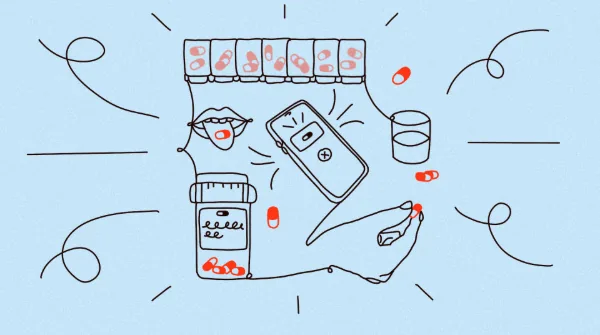
Clinical consensus supporting ADHD medication rests on broad trial literature confirming symptom control and real-world safety. Systematic reviews combining results from more than one hundred clinical trials show that stimulants reliably cut distraction and impulse issues in patient groups [1]. In The Lancet Psychiatry, Cortese and colleagues found that licensed medications provide reliable symptom relief compared to placebo in pediatric and adult cohorts [8]. In BMJ, Zhang and colleagues evaluated Swedish health records, confirming that starting pharmacotherapy lowered later risks of transport crashes, bodily injuries, substance misuse, suicidal acts, and crime [9]. These broad social protections explain why health groups recommend drugs as a leading clinical choice. Patients receiving proper care visit emergency rooms less often and see better school outcomes. Early medical support often stabilizes daily routines before school setbacks turn into deep personal distress [1].
Understanding these documented benefits helps put rare side effects into perspective. Harold Robert Meyer, who founded The ADD Resource Center in 1993, observed that unaddressed focus problems cause deep emotional distress. Meyer said: “The goal is not to label quickly. It is to understand fully — because the wrong name leads to the wrong help.” When families avoid care out of fear, children suffer avoidable setbacks [3].
What Is the True Rate of Psychotic Symptoms?
Do standard stimulant prescriptions trigger acute mental breaks in ordinary patients? When patients receive thorough checkups and ongoing medical care, the measured rate of medication-induced psychosis sits between 0.2% to 3%. A large United States study following over 220,000 young patients and teens who began stimulant pills found that about one in 660 patients developed psychosis during early months of care. A meta-analysis combining sixteen studies covering 390,000 people recorded an overall symptom rate of 2.8%, with symptoms rarely turning into a lasting disorder. Adam Guastella, Kelsie Boulton, and Timothy Chen explained that this risk is similar to, or even lower than, the risk from oral glucocorticoid pills used for asthma flare-ups. Most patients who feel fleeting symptoms recover fully once clinic staff adjust or stop their pills [1].
In the Journal of Addiction Medicine, Jangra and colleagues examined psychosis outcomes between therapeutic and non-therapeutic stimulant users. Among more than 220,000 people taking doctor-ordered doses under medical care, psychotic events occurred in roughly one in five hundred patients. By contrast, among over 8,000 non-therapeutic users taking high doses of methamphetamine or illicit stimulants, nearly one in three suffered acute psychotic episodes with false beliefs and visions. Unprescribed street drugs carry vastly higher mental risks [10].

Why High Dosages Alter Brain Chemistry
Brain biology explains why oral doses stay safe. Prescribed oral doses release medicinal compounds into the bloodstream gradually, producing steady dopamine increases that support focus pathways in frontal brain structures without triggering receptor overload. In contrast, non-therapeutic use often involves smoking, snorting, or injecting large amounts, causing sudden dopamine surges that trigger paranoid beliefs and voices. Surveys indicate that about one in four stimulant users misuses their supply, while roughly one in eleven fulfills diagnostic benchmarks for Prescription Stimulant Use Disorder. Most people with this issue misuse their own prescribed pills rather than street drugs. Taking huge daily amounts without medical advice creates dangerous chemical instability [4].
Dose levels play a key role in psychiatric risk, as shown by McLean Hospital records in The American Journal of Psychiatry. Dr. Lauren Moran studied records at McLean Hospital between 2005 and 2019, comparing 1,374 patients hospitalized for psychosis against 2,748 controls hospitalized for depression. Patients taking more than thirty milligrams of dextroamphetamine equivalents (or forty milligrams of Adderall) faced a five-fold increased risk of psychosis. Dr. Lauren Moran cautioned: “This is a rare but serious side effect that should be monitored by both patients and their doctors whenever these medications are prescribed.” Methylphenidate did not show this surge [7].
Methylphenidate Studies in Large Population Registries
National health registries provide the most rigorous perspective on long-term stimulant exposure because complete single-payer tracking eliminates patient reporting bias. In a nationwide cohort study in JAMA Psychiatry, Colm Healy, Kirstie O’Hare, Ian Kelleher, and co-authors analyzed health records in Finland covering nearly 700,000 individuals diagnosed with attention disorders. The authors adjusted for sex, parental school levels, family history of psychosis, and the number of clinic visits prior to diagnosis. After balancing these factors through statistical matching, the researchers found no link between methylphenidate care and later non-affective psychosis or schizophrenia. Patients who stayed on ongoing methylphenidate therapy for four or more years displayed no increased risk compared to unmedicated peers. These findings reassure families that long-term methylphenidate therapy does not harm mental health when taken as prescribed [6].
Similar safety findings emerged from Hong Kong health systems published by Man and colleagues in Translational Psychiatry, where self-controlled case designs showed no elevated psychosis risk during methylphenidate care periods [11]. Instead, evidence suggests people with attention deficits carry higher baseline psychosis risks whether or not they take medication [1]. In schizophrenia cohorts, childhood ADHD prevalence ranges between 17% and 57%, while adult prevalence spans 10% to 47%. Shared genetic factors and early life adversity link both conditions [3].

Clinical Monitoring and Guidance for ADHD Medication Patients
Careful clinical checkups before starting ADHD medication protect at-risk patients from misdiagnosis and poor treatment plans. Adam Guastella, Kelsie Boulton, and Timothy Chen warned that brief internet surveys based entirely on self-completed checklists cannot replace full face-to-face evaluations done by skilled health workers. Doctors need to take detailed life histories, interview family members, and rule out competing mental health concerns in multiple clinic visits before prescribing stimulants [1]. Harold Meyer pointed out that psychosis often erases patient insight through anosognosia, erasing illness recognition in 50% to 98% of schizophrenia cases. In contrast, people with attention deficits feel daily friction, though positive illusory bias can lead them to mistake clinical symptoms for personal character flaws [3].
Ongoing communication between patients and doctors keeps treatment safe and responsive [1]. Psychiatrist Dr. Will Cronenwett advised: “I would counsel patients who have a personal or family psychiatric history of serious mental illness, including things like bipolar disorder with mania or schizophrenia … if these sorts of illnesses are in the family tree, then that’s somebody who might want to be very careful about how much of these medicines they use and in what doses.” Patients should take pills exactly as directed, limit caffeine intake, and contact emergency staff if false beliefs or voices appear [5]. Routine checkups help doctors catch warning signs early [1].
- ONLINE NEWS Guastella, A., Boulton, K., & Chen, T. (2026). What’s the link between ADHD medication and psychosis? The Conversation. [Article Link]
- ONLINE NEWS Guastella, A., Boulton, K., & Chen, T. (2026). What’s the link between ADHD medication and psychosis? Yahoo News Australia. [Article Link]
- WEBSITE Meyer, H. R. (2026). ADHD and psychosis: what the research actually shows. The ADD Resource Center. [Article Link]
- WEBSITE ADHD Evidence Project. (2021). Psychosis Risk and ADHD Medications: What the Latest Research Tells Us. ADHD Evidence. [Article Link]
- WEBSITE Recovered. (2022). Risk of Psychosis from High-Dose ADHD Medications. Recovered. [Article Link]
- ACADEMIC JOURNAL Healy, C., O’Hare, K., Lång, U., Metsälä, J., Pulakka, A., McGrath, J., Migone, M., Keating, D., Romaniuk, L., Gyllenberg, D., Kajantie, E., Perrett, G., Hill, J., Elwert, F., & Kelleher, I. (2026). Methylphenidate Treatment and Risk of Psychotic Disorder. JAMA Psychiatry, 83(6), 611. [Article Link]
- ACADEMIC JOURNAL Moran, L. V., Skinner, J. P., Shinn, A. K., Nielsen, K., Rao, V., Taylor, S. T., Cohen, T. R., Erkol, C., Merchant, J., Mujica, C. A., Perlis, R. H., & Ongur, D. (2024). Risk of Incident Psychosis and Mania With Prescription Amphetamines. American Journal of Psychiatry, 181(10), 901-909. [Article Link]
- ACADEMIC JOURNAL Cortese, S., Adamo, N., Del Giovane, C., Mohr-Jensen, C., Hayes, A. J., Carucci, S., Atkinson, L. Z., Tessari, L., Banaschewski, T., Coghill, D., Hollis, C., Simonoff, E., Zuddas, A., Barbui, C., Purgato, M., Steinhausen, H., Shokraneh, F., Xia, J., & Cipriani, A. (2018). Comparative efficacy and tolerability of medications for attention-deficit hyperactivity disorder in children, adolescents, and adults: a systematic review and network meta-analysis. The Lancet Psychiatry, 5(9), 727-738. [Article Link]
- ACADEMIC JOURNAL Zhang, L., Zhu, N., Sjölander, A., Nourredine, M., Li, L., Garcia-Argibay, M., Kuja-Halkola, R., Brikell, I., Lichtenstein, P., D’Onofrio, B. M., Larsson, H., Cortese, S., & Chang, Z. (2025). ADHD drug treatment and risk of suicidal behaviours, substance misuse, accidental injuries, transport accidents, and criminality: emulation of target trials. BMJ, 390, e083658. [Article Link]
- ACADEMIC JOURNAL Jangra, D., Tejwani, R., Ahluwalia, Y., Sarkar, S., & Balhara, Y. P. S. (2026). Stimulant-induced Psychosis. Journal of Addiction Medicine, 20(6), 642-653. [Article Link]
- ACADEMIC JOURNAL Man, K. K. C., Coghill, D., Chan, E. W., Lau, W. C. Y., Hollis, C., Liddle, E., Banaschewski, T., McCarthy, S., Neubert, A., Sayal, K., Ip, P., & Wong, I. C. K. (2016). Methylphenidate and the risk of psychotic disorders and hallucinations in children and adolescents in a large health system. Translational Psychiatry, 6(11), e956-e956. [Article Link]
APA 7: PerEXP Teamworks. (2026, November 16). ADHD Medication Carries Rare Psychosis Risk in Clinical Studies. PerEXP Teamworks. https://perexpteamworks.com/en/adhd-medication-psychosis-risk-evidence/


