




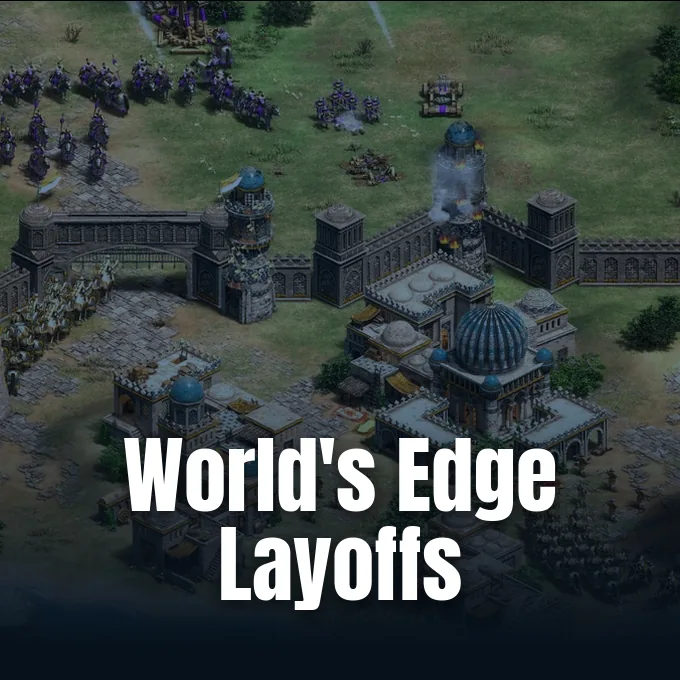
Microsoft eliminated 268 gaming positions in its latest corporate reorganization, cutting nearly half the staff at Age of Empires developer World’s Edge as the team transitions under the Activision Blizzard publishing label [2]. Studio creative director Adam Isgreen confirmed the reductions on social platforms, describing the sudden departure of veteran colleagues who had shaped the real-time strategy franchise for years [1]. The move leaves the historical strategy group facing an abrupt structural transformation under new corporate leadership [3].
Staff Reductions Hit Age of Empires Developer
The internal cuts surfaced when Isgreen posted on the ResetEra forum under his verified username Tempus Chaoti [3]. He wrote that World’s Edge was not spared from the cuts, revealing that just under half the studio had been dismissed as the Age of Empires developer faced severe structural downsizing [1]. Strategy enthusiasts voiced deep concern [4]. In a subsequent statement on LinkedIn, Isgreen expressed his disappointment regarding how his tenure with the team concluded [2]. He noted that departing staff had formulated ambitious plans for upcoming releases, voicing hope that remaining personnel could rise to future challenges [1].
The redundancies formed part of a 268-job reduction round across first-party Xbox teams [2]. These cuts occurred while Microsoft plans new Xbox layoffs amid studio consolidation to reach 3,200 total workforce reductions across fiscal 2027 [5]. Senior leadership had already cut approximately 1,600 workers in July [4]. Matt Booty, head of Xbox game studios, noted in an internal memo that the broader reduction initiative was roughly 75% complete [5]. The downsizing swept across several internal organizations simultaneously [2].
World’s Edge was not alone in absorbing heavy losses during this restructuring wave [3]. Microsoft set Hellblade developer Ninja Theory for impending closure and transitioned Undead Labs into an independent studio following significant staff redundancies on the State of Decay series [2]. Halo Studios surrendered direct control over future mainline Halo projects [5]. The strategy community reacted swiftly [4].
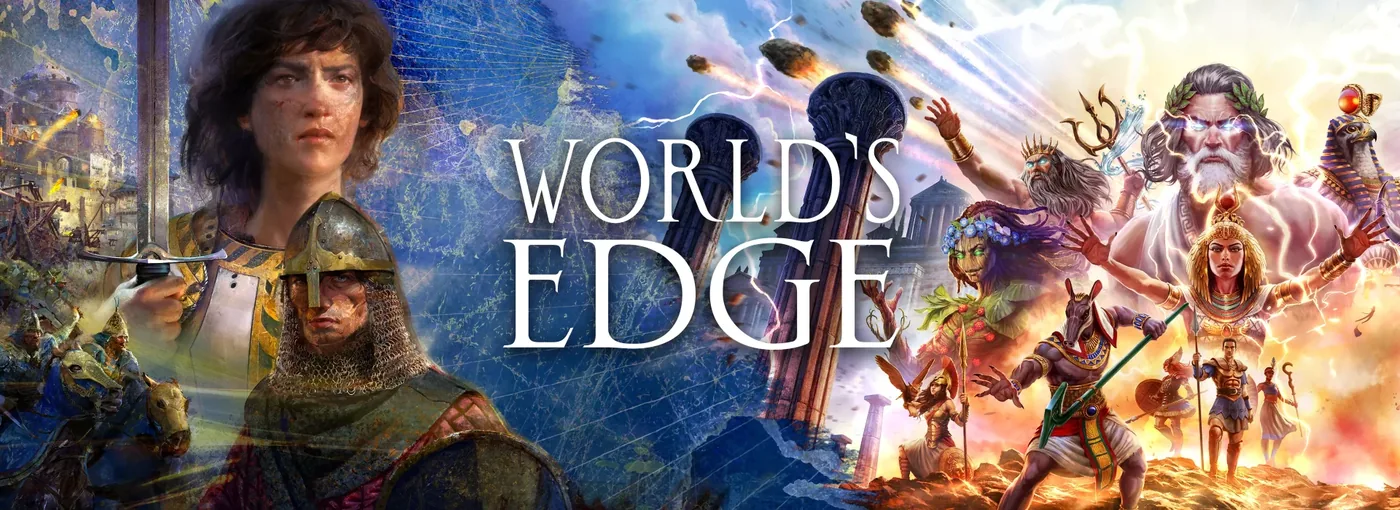
Leadership Departures and Canceled Projects
Isgreen departed after spending 16 years building game franchises at Microsoft, leading the Age of Empires developer through a decade-long revival of its flagship strategy series. His design career began at Westwood Studios, where he worked from 1995 through 2003 on Command & Conquer: Red Alert. He later contributed to Star Wars: Empire at War at Petroglyph before joining Microsoft in 2010. During his tenure, he directed creative output on diverse projects including Killer Instinct, Crimson Dragon, D4: Dark Dreams Don’t Die, and ReCore [1]. He also contributed to publishing efforts across Windows Phone, Xbox Live Arcade, Minecraft, Ori, Trials HD, and Insanely Twisted Shadow Planet [3].
The personnel cuts eliminated unannounced software development alongside executive positions [4]. Senior software engineer Andrew Martz announced his departure on LinkedIn, confirming that the studio’s next project had been canceled outright because of the corporate realignment [5]. Martz had contributed technical engineering to the strategic catalog [4]. Isgreen mused openly about his uncertain future path, writing: ‘What’s next? No idea. Maybe games? Maybe not? Pinball machines? Always loved the combination of design + art + engineering they represent’ [1]. Veteran game creators found their future production roadmaps erased overnight [4].
Earnest Yuen, a 30-year veteran developer on the series who retired from Microsoft in June 2026, published a heartfelt message honoring his former colleagues. ‘I keep thinking about the people behind the work: the artists, designers, engineers, producers, testers, and community folks who poured years of their lives into these games,’ Yuen stated, urging affected workers to remember that what they built mattered to millions of players worldwide. His statement highlighted the intense human toll behind corporate organizational charts [4].
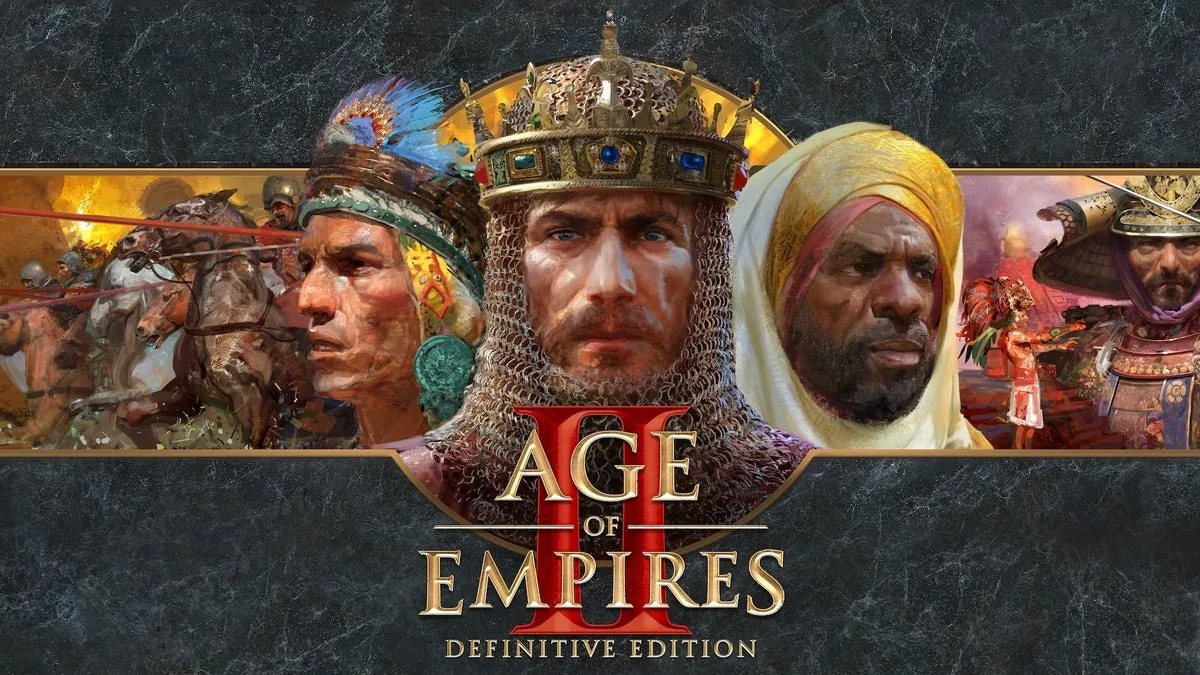


Restructuring Moves Age of Empires Studio to Activision
Under the executive direction of Xbox CEO appointee Asha Sharma, Microsoft reallocated its creative assets to streamline production pipelines, placing the Age of Empires developer under Activision Blizzard supervision [5]. The transition occurred concurrently with news that Activision takes over the next Halo game in massive Xbox restructuring, absorbing both the legendary science-fiction universe and Sea of Thieves creator Rare under the same publishing umbrella [2].
Activision leadership welcomed the incoming development groups publicly. Activision president Rob Kostich issued a statement acknowledging the historical significance of the newly acquired properties: ‘We’re thrilled to welcome Halo, Rare, and World’s Edge to Activision. It’s an honour and a responsibility that we do not take lightly. These teams and their games have inspired fans around the world for decades’ [2]. Despite those welcoming remarks, World’s Edge suffered severe staffing reductions on day one of the handover [3]. The cuts revealed immediate friction in the integration [1].
The broader Xbox division underwent substantial geographic and organizational consolidation. Microsoft merged Turn 10 Studios into Playground Games and relocated Obsidian Entertainment under Bethesda Softworks management [3]. Those structural shifts left Xbox Game Studios with a reduced core footprint consisting of Playground, The Coalition, inXile Entertainment, and an external publishing division overseeing partnerships like Hideo Kojima’s upcoming action title PHYSINT. Corporate consolidation drastically reshuffled studio reporting hierarchies across every major franchise [5].
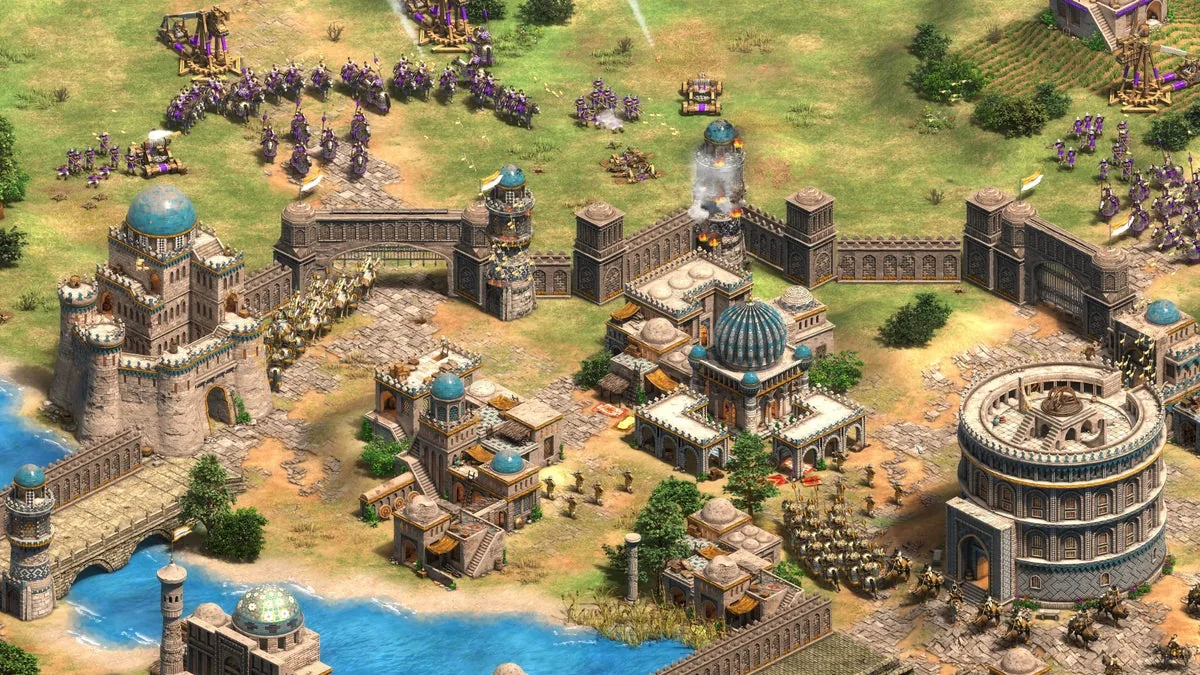
External Partnership Model Behind Franchise Resurgence
Microsoft established World’s Edge in Redmond during 2019 to resolve a decade of creative instability following the closure of original series creator Ensemble Studios in 2009. Rather than functioning as a traditional internal software studio with hundreds of programmers, the team operated as a dedicated franchise custodian. Operating as an Age of Empires developer, the Redmond studio set overarching artistic goals while directing trusted external co-developers. Forgotten Empires modernized the classics through the Definitive Editions, Relic Entertainment engineered Age of Empires IV, and Tantalus Media collaborated on Age of Mythology: Retold. CaptureAge contributed specialized technical tools including spectator modes and expansion content [5].
That collaborative framework produced an unexpected renaissance for classic strategy gaming [3]. The team released Age of Empires II: Definitive Edition in 2019, Age of Empires III: Definitive Edition in 2020, and launched Age of Empires IV in 2021 as the first brand-new mainline entry in sixteen years. In September 2024, the studio delivered Age of Mythology: Retold to favorable critical reception [5]. Isgreen reflected proudly on that run: ‘I didn’t think I’d be working on RTS games again years after their first ‘heyday’, but am I ever proud of what our studio team and partners were able to do with the series and juice the genre’s return’. Players responded with enthusiasm [3].
Beyond desktop computers, World’s Edge pushed the real-time strategy genre onto modern living room hardware. The studio adapted complex keyboard-and-mouse interfaces for controller play on Xbox consoles in 2023. It followed with PlayStation 5 ports of both Age of Empires II and Age of Empires IV, and delivered a native macOS release in May. Console expansion broadened global accessibility [5].

Uncertain Future for Real-Time Strategy Commitments
Can external studios maintain ongoing live-service updates without core leadership in Redmond? Forgotten Empires and CaptureAge still possess the codebases, but overarching franchise governance remains fractured under Activision [5].
Because World’s Edge relied heavily on external production partners, the active catalog faces less immediate operational peril than studios responsible for single-player engine technology. Ongoing competitive seasons, ranked matchmaking, and planned downloadable content for Age of Empires II: Definitive Edition remain technically intact at independent contracting firms [5]. However, the loss of nearly half the oversight team removes crucial institutional memory. For the Age of Empires developer, the internal Redmond group had served as the conceptual compass for the entire intellectual property [1].
The broader strategy gaming community now watches how Activision Blizzard balances historical real-time strategy archives against massive commercial shooters like Call of Duty [2]. Microsoft leadership has pushed forward with severe cost reductions across its gaming division, prioritizing immediate financial margins over sustained studio stability [4]. Determining whether the Age of Empires developer can sustain its multi-platform publishing cadence under new corporate ownership will shape the longevity of the entire franchise [1].
- ONLINE NEWS Bailey, D. (2026, September 23). RTS legend laid off after 16 years at Microsoft as Xbox guts Age of Empires studio World’s Edge: “We had some great plans for what’s next.” GamesRadar+. [Article Link]
- ONLINE NEWS McEvoy, S. (2026, September 23). Age of Empires developer World’s Edge hit with layoffs following move to Activision. GamesIndustry.biz. [Article Link]
- ONLINE NEWS Saed, S. (2026, September 23). Age of Empires studio World’s Edge reportedly lost “nearly half” of its staff during yesterday’s Xbox cuts and move to Activision. Eurogamer. [Article Link]
- ONLINE NEWS Archer, J. (2026, September 23). Age of Empires studio World’s Edge reportedly lose nearly half their staff and a new game project in mass Xbox layoffs. Rock Paper Shotgun. [Article Link]
- ONLINE NEWS Palumbo, A. (2026, September 22). Xbox restructuring guts Age of Empires custodian World’s Edge, cutting half the team as Activision takes over. Wccftech. [Article Link]


