




Why do introduced animals and plants inflict far more ecological harm in Oceania than in other regions? Invasive species in Australia rank among the heaviest conservation challenges on Earth, driving steep declines in native wildlife and vegetation. More than 4,000 alien species have entered the continent, and researchers find that 3,000 are sufficiently out of control to be classified as pests. The resulting damage drains roughly 1.25% of the national gross domestic product each year [1].
- Why Do Invasive Species in Australia Cause More Harm?
- How Are Invasive Species Harmful?
- Which Feral Species in Australia Inflict the Heaviest Toll?
- How Ecological Isolation Left Native Marsupials Unprepared
- Economic Burden of Invasive Alien Species in Australia
- Strengthening Biosecurity Defenses Against Further Invasions
Why Do Invasive Species in Australia Cause More Harm?
Invasive species in Australia cause disproportionate damage primarily because millions of years of geographic isolation left native animals without evolutionary defenses against placental predators [1]. Australia separated 50 million years ago [3]. The landmass broke away from Gondwana near the South Pole, drifting northward until colliding with Asia during the Miocene epoch 5.3 million years ago [1], [3]. This produced one of the world’s 17 megadiverse nations. Yet isolation left native marsupials vulnerable because they evolved without encountering placental carnivores or fast-breeding mammalian herbivores [1].
Evolutionary biologist Mike Lee outlined this dilemma in a recent study, which appeared as a preprint that has not yet undergone formal peer review. Lee pointed to island biogeography, a scientific field pioneered by Alfred Russel Wallace, who formulated evolutionary theories at the same time as Charles Darwin. Wallace studied island evolution. He discovered that isolated landmasses foster unique species, yet those animals prove fragile when competitors arrive from larger continents with richer evolutionary histories. Because Australia has fewer major mammalian lineages, its communities possess unfilled ecological niches that foreign invaders exploit with ease [1].
Global data confirms that island biotas suffer the brunt of biological invasions. Andy Sheppard from CSIRO Health and Biosecurity contributed to a global assessment produced by the Intergovernmental Science-Policy Platform on Biodiversity and Ecosystem Services (IPBES), an agency representing almost 140 member states. Over four years, 86 expert authors from 49 countries analyzed more than 13,000 scientific references to measure global damage. Their report revealed that invasive alien species contributed to 60% of recorded global extinctions and served as the sole driver in 16% of cases. Australia and Aotearoa New Zealand suffer among the highest modern extinction rates on Earth [2].
How Are Invasive Species Harmful?
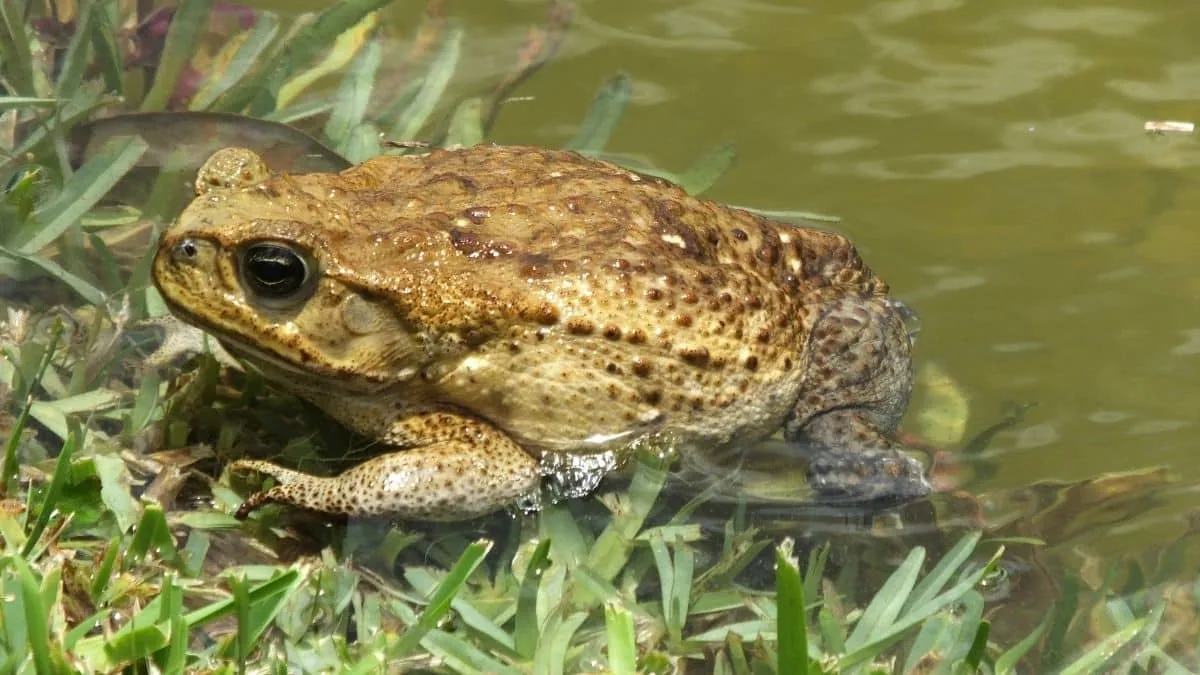
Invasive species harm ecosystems by hunting defenseless native prey, destroying plant cover, poisoning predators, and spreading lethal diseases [4]. In northern Australia, the cane toad (Rhinella marina) provides a clear example of toxic disruption. Sugarcane farmers introduced the species in 1935 to eat destructive cane beetles, but the amphibians quickly multiplied past 200 million individuals because native wildlife possessed zero resistance to their lethal bufotoxin [3]. Native monitor lizards, quolls, and freshwater crocodiles die within minutes of biting a toad, fracturing local food webs across northern river catchments [4].
Plant invasions compound this damage by reshaping natural soil chemistry and altering fire behavior. Fast-growing pasture weeds like gamba grass and prickly pear form dense thickets that crowd out native eucalyptus seedlings [2], [4]. These infestations fuel bushfires that burn far hotter than natural bushland can endure, killing mature eucalyptus trees and destroying nesting hollows for rare birds [2]. In southern woodlands, invasive weeds such as lantana prevent native grasses from regenerating, starving ground-dwelling herbivores that depend on tender shoots [4].
Ecosystem changes also trace back to prehistoric times when Australia lost its ancient giants. The first human populations settled Australia between 80,000 and 45,000 years in the past. Indigenous ancestors shared territory with giant beasts for over 20,000 years before those browsing herbivores disappeared. Research examining how ancient prehistoric megafauna shaped terrestrial environments reveals that their loss left large ecological niches vacant. Introduced livestock, horses, and feral deer moved into these open niches following European arrival in 1788, destabilizing creek banks and accelerating soil erosion [3].
Which Feral Species in Australia Inflict the Heaviest Toll?
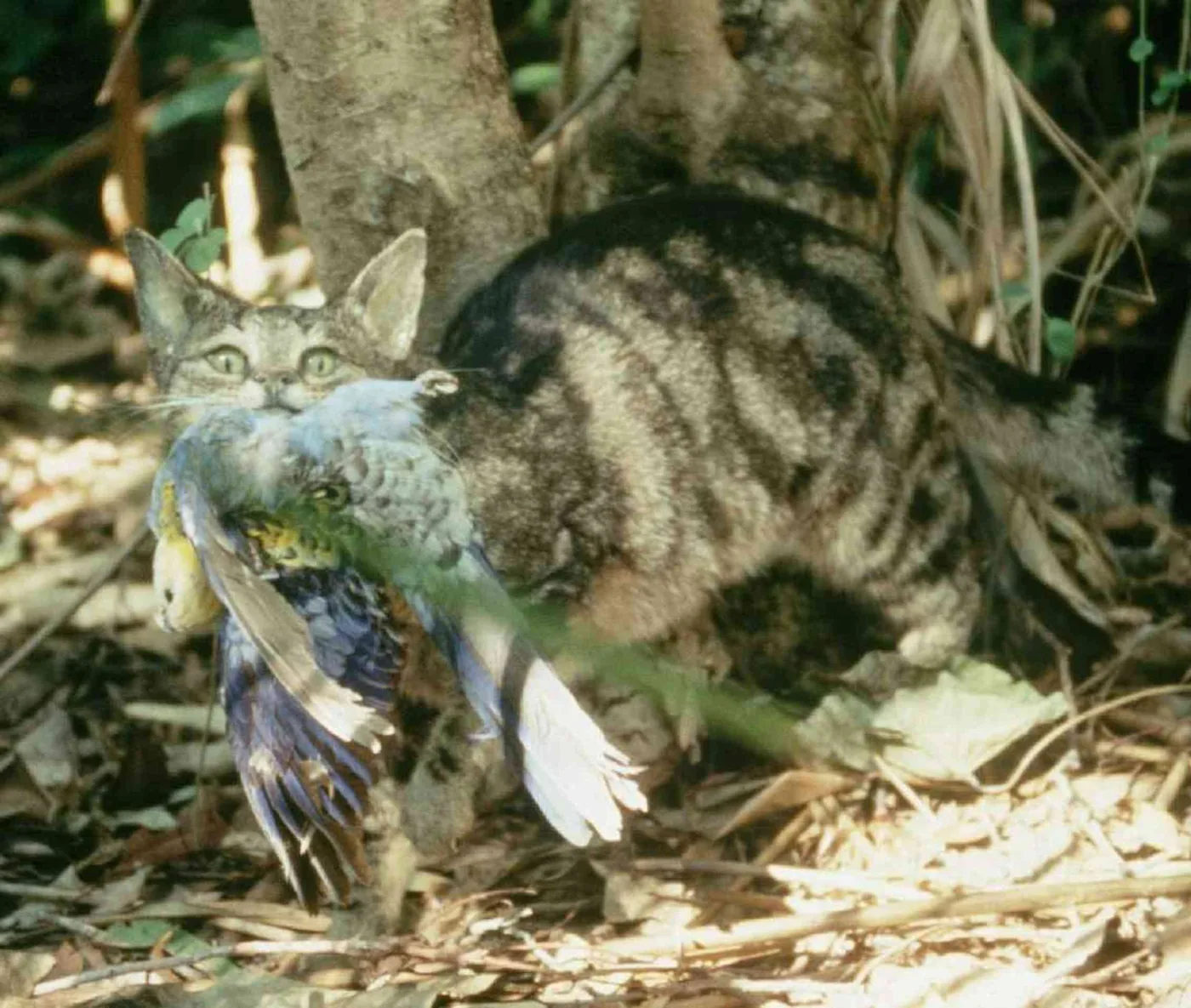
Among 56 introduced vertebrate pests, feral species in Australia like feral cats and European rabbits cause the heaviest ecological and economic damage [1],. Domestic cats arrived in 1849. Released pets spread into every mainland habitat except tropical rainforests, growing into a feral population of 2.1 million to 6.3 million animals. Today, feral cats (Felis catus) kill more than one billion native animals each year [3],. Their nocturnal hunting pushes more than 100 native species toward extinction because marsupial prey never developed predator avoidance behaviors against placental felines [4].
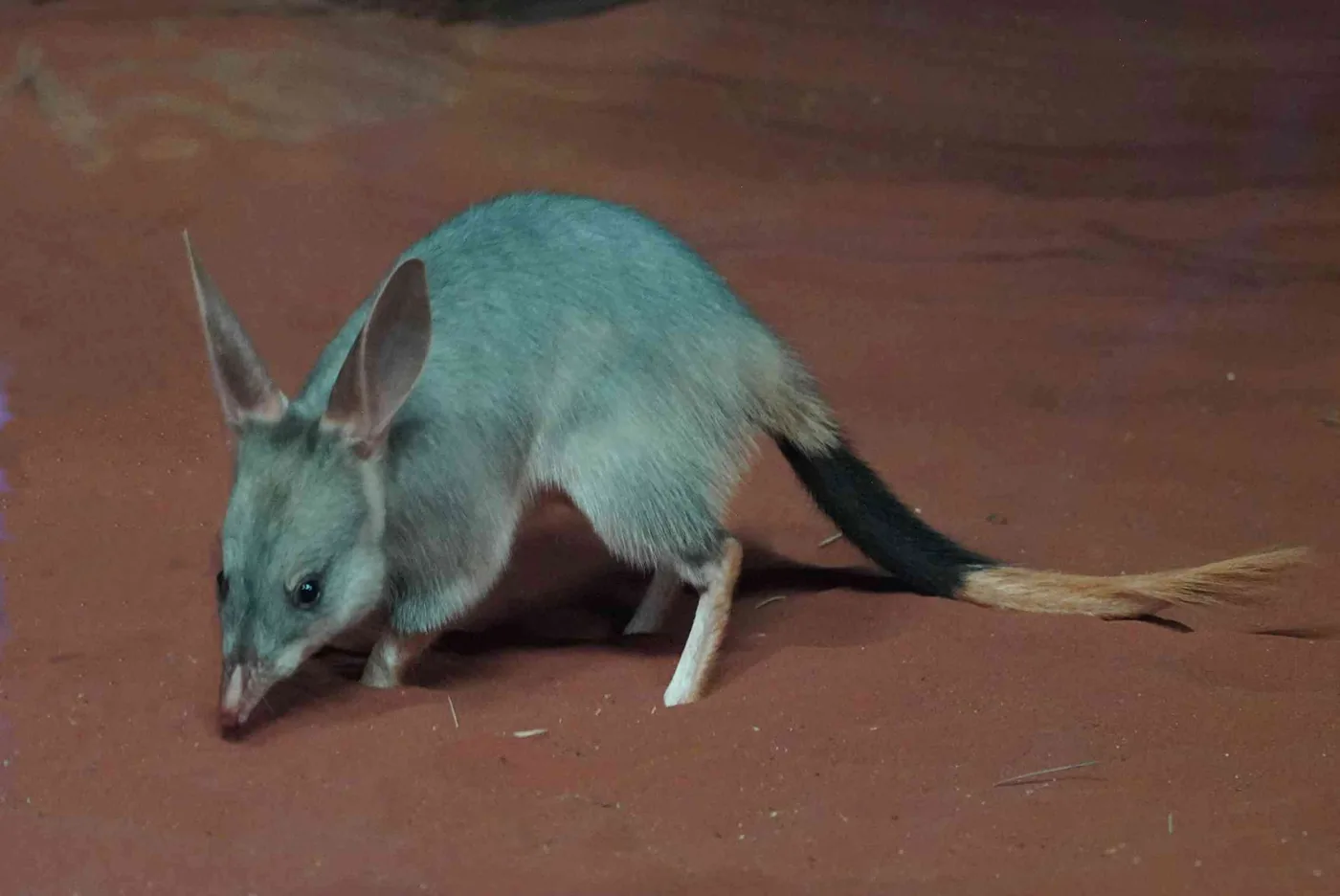
European rabbits (Oryctolagus cuniculus) represent Australia’s worst agricultural and botanical pest. Settlers released them for sport hunting in 1857, triggering a population explosion that surpassed 200 million animals [3]. Rabbits devour native seedlings, strip bark from young shrubs, and compete directly with native burrowing marsupials like bilbies and bettongs for scarce desert forage. Bettongs prefer fungi and roots. Unlike bettongs, which consume truffles and roots, or omnivorous bilbies that reproduce slowly, rabbits multiply with great speed and can strip landscapes bare [1].
Hunters introduced red foxes (Vulpes vulpes) in 1855, and the predator now numbers over 7.2 million across the mainland, hunting small ground-dwelling bandicoots and native rodents. Foxes kill vulnerable bandicoots. Feral pigs reached 23.5 million by 2011, rooting up sensitive wetlands and damaging crops. In arid inland regions, roughly 300,000 feral dromedary camels and 150,000 water buffalo foul waterholes and trample desert vegetation [3].


How Ecological Isolation Left Native Marsupials Unprepared
The vulnerability of native marsupials stems from an evolutionary mismatch between species that developed on large continents and those that evolved on isolated islands. Eurasia spans vast territory. Across that immense landmass, predators and prey spent tens of millions of years competing against varied competitors, honing survival traits like broad diets and rapid reproduction. Domestic cats trace back to Middle Eastern wildcats, while European rabbits originated in south-western Europe. Marsupials lived in Eurasia until roughly 14 million years ago, but in Australia, marsupials developed in complete separation from placental predators [1].
Before human arrival, the main mammalian predators hunting small Australian animals were quolls, which are smaller, slower, and hunt over smaller home ranges than placental cats. Quolls are smaller predators. In addition, land-based placental mammals did not inhabit Australia prior to Asian rodents colonizing the landmass roughly eight million years back [1]. Dingoes arrived much later, between 5,400 and 4,600 years ago, contributing to the extinction of the thylacine and Tasmanian devil on the mainland [3]. Consequently, native animals like bilbies had never encountered placental stalkers and possessed no instinctive wariness against stealthy hunters [1].
This island dynamic appears even more starkly across the Tasman Sea in Aotearoa New Zealand. Because New Zealand had no native land-dwelling mammals whatsoever, introduced species had an even easier path to domination. When Australian brush-tailed possums and wallabies were brought to New Zealand, they stripped native forests bare and devastated flightless bird populations [1],. Today New Zealand hosts almost 900 introduced alien species, while a deadly dieback disease threatens ancient kauri trees [2]. Naive island ecosystems crumble when foreign competitors arrive [1].
Economic Burden of Invasive Alien Species in Australia
Beyond the ecological disaster, invasive alien species in Australia impose a heavy financial burden on primary industries and government budgets [1], [2]. The damage inflicted on agriculture, infrastructure, and native habitats costs the country approximately 1.25% of national GDP, which nearly equals Australia’s annual expenditure on aged care [1]. In monetary terms, biological invasions cost Australia A$24.5 billion each year, forming a notable share of the US$423 billion lost annually on a global scale. Trade costs quadruple each decade [2].
Agricultural losses account for a major share of this annual bill. Invasive weeds alone demand A$1.5 billion in annual management and weed control, in addition to A$2.5 billion in lost crop production. Pastoralists struggle to maintain cattle pastures as thorny shrubs replace nutritious grasses and degrade soil moisture [3]. Similar financial and agricultural strains are documented in research on invasive species in Florida, where non-native reptiles and pest plants alter drainage canals and agricultural lands [2].
International trade and tourism inadvertently accelerate the introduction of new pests despite border inspection protocols. Roughly 200 new alien species are detected worldwide each year, and more than 10% produce negative environmental consequences. In addition, the illegal global pet trade generates A$23 billion annually, moving exotic reptiles and birds across international boundaries. Interceptions at maritime ports reveal that trade volumes outpace border inspection resources, allowing wood-boring insects and marine hitchhikers to slip through shipping hubs [2].
Strengthening Biosecurity Defenses Against Further Invasions
Past biosecurity records show that scientific intervention can successfully suppress pest populations when regular hunting culls fail. In the twentieth century, scientists released the myxoma virus and later rabbit calicivirus to control wild rabbit plagues, an approach that generated more than A$70 billion in economic benefits over 70 years [2],. Similarly, baiting programs using sodium fluoroacetate, known as compound 1080, target introduced foxes and wild dogs in Western Australia. Native plants in that region produce the same natural toxin, giving local marsupials natural evolutionary resistance while killing introduced placental predators [3].
Despite these successes, new biological threats continue to breach maritime borders and threaten agriculture. Recent incursions by the fall armyworm, myrtle rust fungus, and the destructive honeybee parasite varroa mite demonstrate that border defenses face steady pressure. Andy Sheppard said that biosecurity programs must adopt the One Biosecurity framework, which unites human health, agricultural production, and environmental monitoring into a single surveillance strategy. Coordinating Pacific island biosecurity is equally important, as porous borders across neighboring island states create stepping stones for pests heading toward Australia [2].
Achieving long-term conservation goals needs fulfilling international commitments like the Kunming-Montreal Global Biodiversity Framework, which aims to reduce the impacts of invasive alien species on native biodiversity [2]. Early detection, targeted biocontrol, and habitat restoration give native wildlife the breathing room needed to endure [4]. While total eradication of wild rabbits and feral cats is hard in vast desert landscapes, coordinated management protects relict populations of endangered marsupials from extinction [3], [4]. Sustained biosecurity investments offer the only viable path to safeguard Australia’s evolutionary heritage for future generations [2].
- PREPRINT Lee, M. (2026). Invasive species do much more damage in Australia and NZ than elsewhere. But why?. [Article Link]
- ONLINE NEWS Sheppard, A. (2023). The true damage of invasive alien species was just revealed in a landmark report. Here’s how we must act. The Times Australia. [Article Link]
- WEBSITE Wikimedia Foundation. (2024). Invasive species in Australia. Wikipedia. [Article Link]
- ONLINE NEWS Thorne, E. (2025). Invasive Species in Australia: How They Spread and Why It Matters. NatureBase. [Article Link]
APA 7: TWs Editor. (2026, October 12). Australia Faces Heavy Ecological Loss From Invasive Species. PerEXP Teamworks. https://perexpteamworks.com/en/invasive-species-in-australia-damage/


