





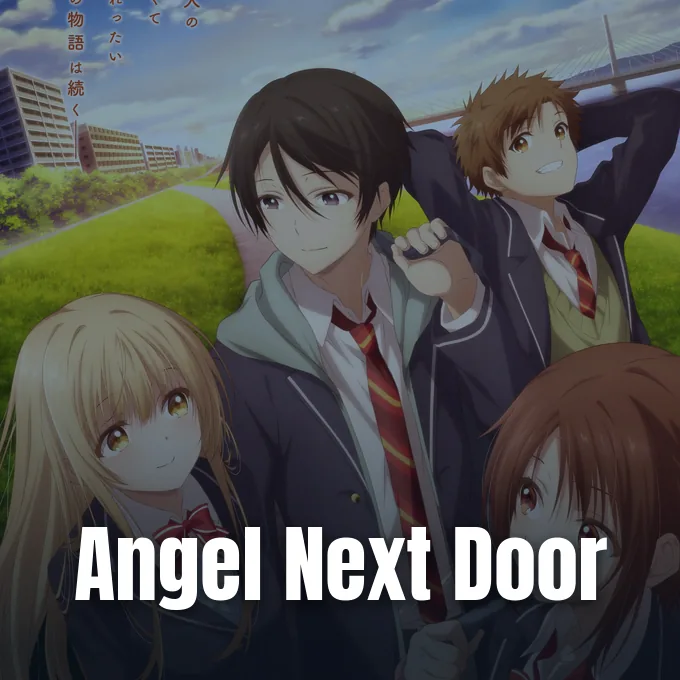
Anime News Network ran a series review of The Angel Next Door Spoils Me Rotten season 2 on November 21, 2026, giving the TV anime an overall failing grade. Reviewer Kennedy said that the second season of the Angel Next Door anime doubles down on unexamined character flaws instead of building a warm, healthy romantic bond. The story picks up with Mahiru and Amane living as an official couple getting to know each other more deeply through everyday dates, meeting parents, and thinking about their future together. While the setup promised sweet domestic growth, Kennedy called the weekly episodes boring, bogged down by sluggish pacing, repetitive talks, and uneasy personal boundaries [1].
How the Angel Next Door Anime Scored on ANN
ANN issued harsh marks across separate categories, ending with an overall F grade. Kennedy gave the story a D grade for slow pacing and repetitive scenes. Art and animation received C- marks, while music earned a D grade due to long silences during spoken scenes [1].
Kennedy said that the first season of the adaptation had already proved hard to enjoy because of snail-like pacing, uneven writing, and two unlikable romantic leads. Low expectations shaped Kennedy’s early view of the sequel, with the critic doubting that new episodes could sink below that baseline. That doubt vanished. In the review, Kennedy called the first season merely the “shaky preamble to the cacophonous chronicle of courtship that is its second season.” Kennedy labelled the new run as one of the worst romance anime ever made, writing that obvious red flags in the relationship between Mahiru and Amane were clear to every viewer except the series itself [1].
Physical intimacy between Mahiru and Amane drew sharp scrutiny in the ANN write-up. Both leads openly say they yearn for physical closeness, yet they avoid taking further steps through awkward hesitation. Mahiru worries about accidental pregnancy, but the dialogue never mentions safe sex practices or realistic health education [1].
Amane’s Possessive Behavior
Amane received the sharpest critique from Kennedy for possessive behavior framed as sweet romance. Every single time Amane and Mahiru share brief physical contact lasting more than 0.2 seconds, Amane praises himself out loud for being a good boyfriend who shows heroic restraint. He then warns Mahiru that if she keeps up innocent actions, he might not be able to hold back. The anime presents this restraint as noble, but Kennedy argued that Amane’s warnings bring a sinister edge to everyday chats. Instead of showing mutual trust, Amane turns normal physical contact into a recurring test of willpower where he constantly demands praise and credit from Mahiru for showing basic decency [1].
The review said that Amane displays extreme jealousy throughout the season. Older anime from the 1990s and 2000s often treated jealousy as proof of affection (a trope modern anime has mostly dropped). Kennedy said that Amane goes far beyond affection, slipping into rigid control over Mahiru [1].
Mahiru also shows occasional jealousy, but Amane’s overbearing attitude dominates their daily talks and controls how Mahiru acts around others. Kennedy pointed out that calling Amane’s actions simple jealousy downplays how toxic the bond feels to anyone watching closely. Amane scolds Mahiru for harmless deeds that he decides are flirty. Because the story ignores these red flags, Amane never faces pushback from friends. Instead, the story asks fans to suspend disbelief completely and accept Amane’s controlling habits as heartwarming proof that Mahiru and Amane are destined to be perfect soulmates for life [1].


Festival Outings Reveal Red Flags
Public outings bring Amane’s controlling habits into plain view during the summer festival episode. Amane tells Mahiru to tone herself down so other people will not see her. He explicitly says, “don’t let strangers see what a darling you are,” because he wants Mahiru “all to [him]self” [1].
Right after Amane makes those demanding remarks at the summer festival, his male friends praise his charm while several girls nearby whisper about how cute and attractive they find him. Kennedy pointed out that flawed or doomed couples can make fun TV when a story understands its own cast. Watching a rocky courtship unfold on screen works when viewers anticipate the drama of an honest reckoning. Here, however, the story presents Amane’s jealousy in total earnestness, unaware of how harsh his words sound. The subsequent school festival arc repeats this exact problem, showing Amane restricting Mahiru in front of peers without facing any social friction, classroom criticism, or private personal doubts [1].

Blindness in the writing removes tension and makes weekly pacing feel dull. Because the anime treats the romance as wholesome, Mahiru and Amane never talk through their problems. No arguments happen, no growth occurs, and neither lead outgrows their teenage fears [1].
Visual and Audio Polish in the Angel Next Door Anime Run
Technical work showed small gains over the first season, though art and sound direction still drew criticism. Kennedy said that the visual presentation in the Angel Next Door anime appears noticeably softer and cleaner, earning a C- mark for art and animation across its television broadcast run. Mahiru and Amane look more consistent during still dialogue shots than in the rougher season 1 drawings. However, movement remains visibly stiff during walking or crowd scenes, leaving plenty of room for better polish. Softer colors help apartment scenes feel cozy, but static camera setups and stiff movement keep the visual storytelling from building the deep emotional power this romance needs [1].
Audio direction drew sharp words for its awkward handling of silence during key scenes. Kennedy noted long pauses where background music cuts out completely, creating an uneasy, empty vibe. Composer Moe Hyūga provided the score, but flat sound editing undercuts the mood [1].
Voice actors did fine work, but stiff audio directing held back their readings. Kennedy said that the voice cast sounded trapped, matching the rigid directing style that hurt the first season. Dead air from missing background tracks left chats between Mahiru and Amane feeling flat and emotionally distant. Kennedy concluded that flat sound editing and limited animation joined with poor writing to create a broadcast experience that felt persistently tiring rather than warm or emotionally engaging. Kennedy graded music a D, saying that the bare audio setup and awkward silence failed to back the tender mood an intimate, character-driven romance requires from start to finish [1].
Staff Credits and Streaming Rights
Staff credits listed by ANN detail the anime team behind season 2. Director Chihiro Kumano directed the sequel and drew storyboards, while Keiichirō Ōchi handled series composition and wrote the scripts. Saekisan created the original light novel, which featured original character designs by Hanekoto [1].
Unit directors working across the seasonal broadcast run included Teru Ishii, Ryo Ishimaru, Chihiro Kumano, Mio Nishimura, Jun Taira, Kazusumi Taniyasu, and Yurina Utsugi. Takayuki Noguchi handled animation character designs, adapting Hanekoto’s art for TV. Ryōsuke Kawai worked as art director, building the detailed school and apartment background settings where Mahiru and Amane spend almost all of their shared screen time together. Tomoya Kamijō directed photography, managing lighting across each scene. Despite this experienced crew of anime artists, plain visual framing could not rescue the repetitive script [1].
Crunchyroll holds the streaming license for the second season, bringing the subtitled release to overseas anime fans. Outside new TV seasons, Darkroom added the Angel Densetsu OVA to its streaming catalog. For fans following modern romance anime, Kennedy’s failing score at ANN shows that soft visual art cannot rescue a story built around unexamined, controlling habits between its leads [1].
- ONLINE NEWS Kennedy. (2026, November 21). Angel Next Door Spoils Me Rotten Season 2 Anime Series Review. Anime News Network. [Article Link]


