





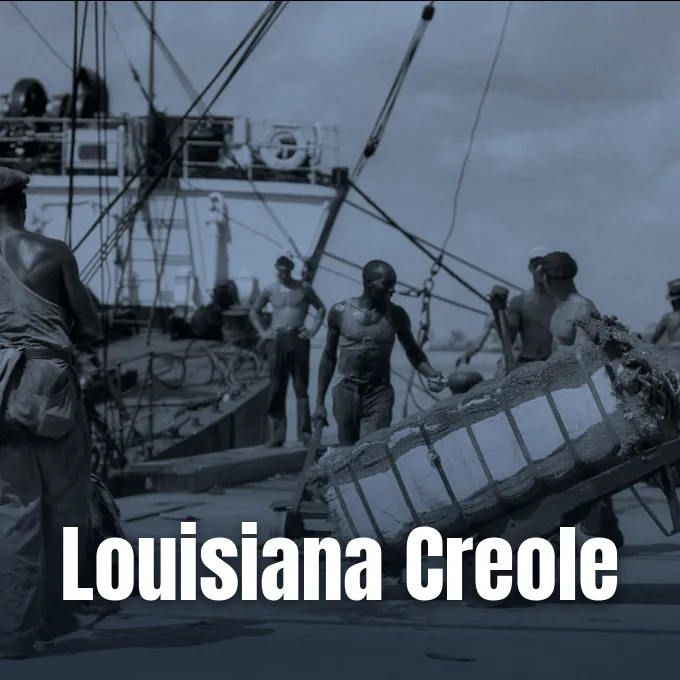
In 1935, linguist Lorenzo Dow Turner traveled to southern Louisiana to capture spoken interviews on aluminum discs. Turner understood that the speech was fading from everyday life, so he set out to gather first-hand speech before older community members passed away. His field recordings lay unpublished for decades, but researchers recently located them at Indiana University as the oldest known audio recordings of authentic Louisiana Creole [1].
What Is Louisiana Creole?
The language took root during the 18th century through the transatlantic slave trade on Louisiana plantations. Enslaved people from West Africa arrived with little shared language, yet they had to live and work on agricultural estates where French served as the official tongue of colonial rule. To speak with one another and survive under harsh plantation labor, workers borrowed French vocabulary and restructured it around West African speech systems, particularly those from the Senegambian region. Over several generations, this linguistic contact created a shared speech system with its own grammar rules, sentence structures, and everyday expressions. Both free Black families and enslaved laborers spoke the tongue at home, shaping a unique regional speech that diverged from European French [1].
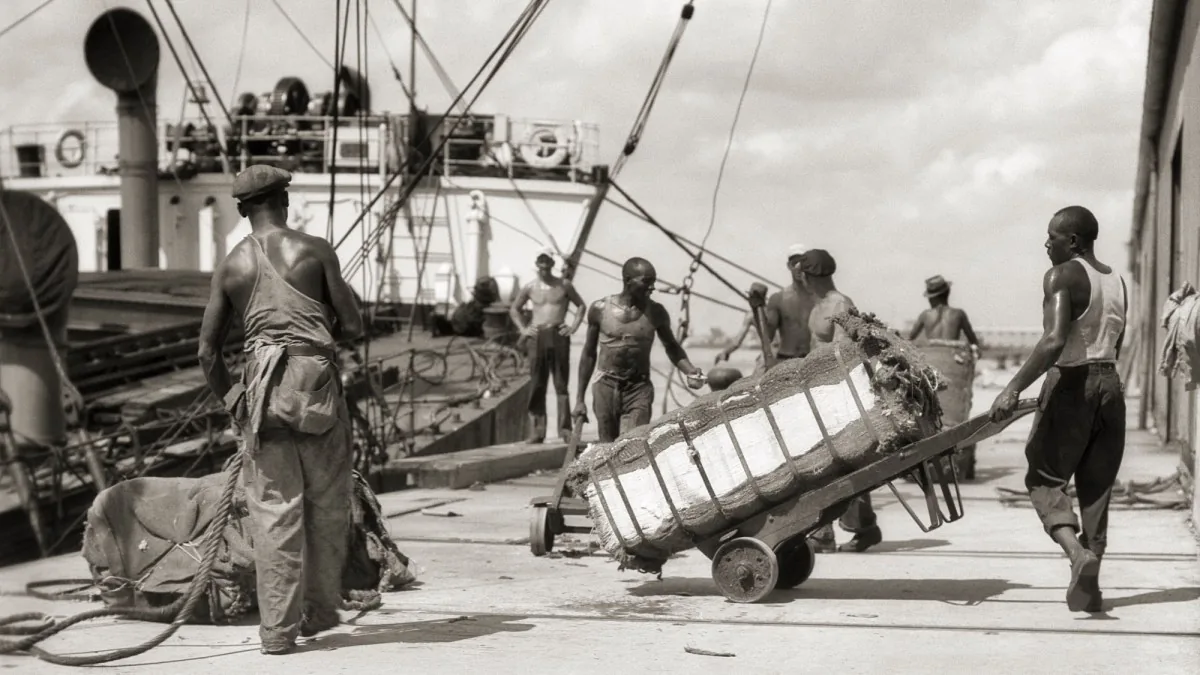
Oliver Mayeux, a linguist at the University of Cambridge, said this shared speech took shape on rural plantations. “Africans with little common language were forced onto plantations where French was the language of administration. Everybody is learning approximations of French and then approximations of approximations,” Mayeux said. “Quite quickly, a new language is born.” By the 19th century, this common tongue spread to dock workers in New Orleans as well as immigrants from Haiti and Canada, but today only a few thousand native speakers survive in rural areas [1].
Audio Equipment in the Field
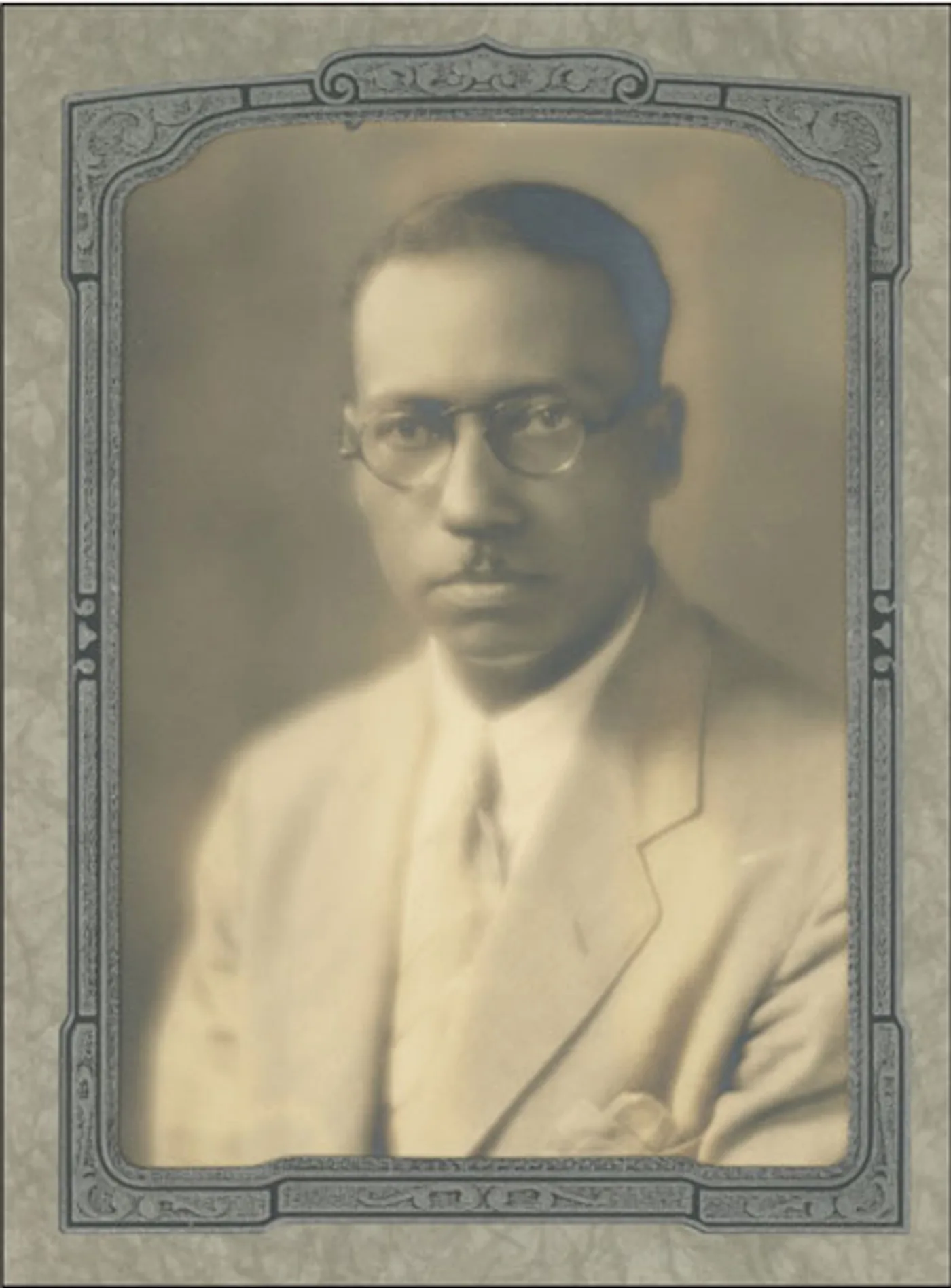
By the 1930s, scholars recognized that regional dialects in the American South were giving way to standard English. Lorenzo Dow Turner organized an independent research trip to southern Louisiana in 1935 because he realized that authentic Creole speech was disappearing as older generations passed away. His field recordings never secured financial backing from academic grant agencies. Because no university funded his travel, Turner paid for the expedition out of his own pocket. He traveled through rural bayous and urban neighborhoods to locate native speakers who still used the tongue in everyday conversation. Turner knew that written documents could never capture authentic pronunciation or vocal rhythm, so he set out to gather living spoken accounts that conventional histories routinely ignored [1].
Hauling audio recording machines in 1935 was difficult. Turner traveled with a hefty microphone and two cabinet-like recording consoles that weighed over 100 pounds collectively, which meant he had to transport cumbersome crates over rough Louisiana roads and haul them into temporary interview quarters by hand. In those quiet rooms, Turner etched audio grooves directly onto bare aluminum discs, operating unfamiliar electrical equipment that rural field hands had never seen before in their lives. The strange setup looked intimidating. “For these interviewees, the alien nature of the equipment alone would have made it a truly weird experience for them,” Mayeux said [1].
Interviews in Segregated Spaces
Conducting academic fieldwork as a Black scholar in the American South meant navigating the daily dangers of Jim Crow segregation. State laws enforced racial separation everywhere. Local authorities viewed traveling Black professionals with open suspicion, while Black farm laborers in rural Louisiana parishes faced severe social intimidation if they met with visiting intellectuals. Because of these racial tensions, Turner could not interview speakers out in the open or set up his bulky recording boxes on public street corners. He needed secure, private locations where participants felt protected from outside surveillance and police harassment. Any public confrontation could have ended the expedition immediately [1].
To overcome this barrier, Turner reached out to local Black physicians and college teachers who lived in Louisiana. These professionals offered their private clinics and offices as safe recording spaces. “These were trusted spaces for the participants during the era of Jim Crow segregation, and, crucially, were wired for electricity,” Mayeux said. Wall outlets powered the heavy recording consoles. Inside these quiet rooms, elderly sharecroppers and domestic workers spoke openly in their mother tongue without fear of outside listeners [1].


Personal Accounts on Aluminum Discs
The aluminum discs recorded lively personal stories that revealed the daily lives, humor, and folk beliefs of Louisiana Creole speakers. One notable participant, Odelia Edmond, shared a detailed childhood memory about swindling 30 cents from Zozo Labrique, a New Orleans street seller who peddled crushed red bricks for spiritual Voodou charms. Edmond proved to be a captivating storyteller. Mayeux said that she spoke about her romantic past with striking candor, recalling that her first husband had been murdered before she remarried. On the recording, she candidly declared that she felt glad when he was killed [1].
George Doyle also spoke with Turner. Doyle had worked as a police officer until municipal leaders segregated the New Orleans force near the turn of the 20th century. During his interview, Doyle recounted surviving a street attack by a white gang that he described as a “band of rats” in his spoken testimony. A New Orleans newspaper from 1893 confirmed his account of the brawl [1].
Rediscovery in Indiana Archives
Turner never published his Louisiana research, and his aluminum discs remained out of public view for decades after his death. The trail reopened when Mayeux read a biography of Turner that briefly mentioned the linguist’s 1935 fieldwork trip. Intrigued by the uncataloged recordings, Mayeux searched university archives to determine whether the physical media had survived. His search led him to the Archives of Traditional Music at Indiana University. Staff members at the archive had already preserved the aluminum discs by transferring the original analog grooves into clean digital sound files. This archival work protected the spoken testimonies against further physical decay and brought Turner’s forgotten recordings back into the scholarly spotlight after more than ninety years [1].
The clear audio surprised Mayeux when he first played the files. The sound captured the natural cadence, emotional expressions, and laughter of speakers who had lived through the late 19th century. Because Turner allowed participants to talk spontaneously about their lives, the discs offer genuine examples of everyday speech instead of rehearsed answers. These files now serve as verified acoustic data for modern linguistic analysis [1].
Revival of Louisiana Creole Speech
Today, the digitized recordings are available online for researchers and descendants. Younger generations in the Kouri-Vini revitalization movement listen to these recordings to recover ancestral pronunciation and conversational idioms. Hearing native speakers from 1935 provides learners with a direct auditory link to cultural traditions that had been marginalized under English assimilation. Mayeux said that access to authentic speech helps younger community members reclaim their heritage. “Young people are learning Creole to connect with the richness of their heritage, helping them discover a distinct identity in an increasingly homogenized world,” Mayeux said. These archival audio files provide a living classroom for students who want to speak the tongue with authentic confidence [1].
Linguists caution that mastering Louisiana Creole takes dedicated effort even for people fluent in French. The language evolved unique grammatical structures and idioms on plantation estates, making it incomprehensible to outside speakers. “Contemporary French speakers would simply not be able to comprehend this language,” Mayeux warned. Turner’s recovered 1935 audio confirms that the dialect flourished as an independent linguistic creation, giving future generations a solid foundation to keep the speech alive [1].
- ONLINE NEWS Paul, A. (2026, November 3). Oldest recordings of Louisiana Creole discovered in Indiana archive. Popular Science. [Article Link]
APA 7: PerEXP Teamworks. (2026, November 4). Lorenzo Dow Turner’s 1935 Discs Capture Louisiana Creole. PerEXP Teamworks. https://perexpteamworks.com/en/louisiana-creole-1935-audio-recordings/


