




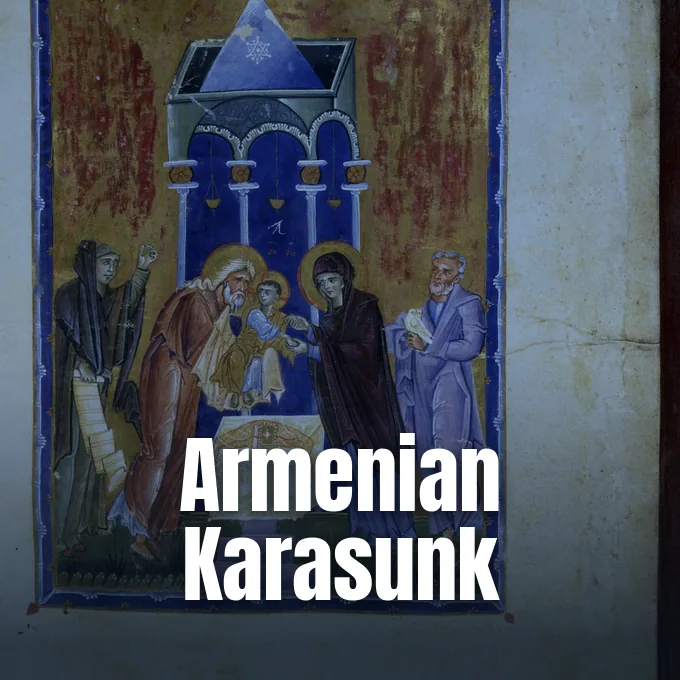
When a newborn infant enters an Armenian home, mother and baby retreat from outside visitors for forty days to gather strength and maintain seclusion. The ancient Armenian karasunk custom establishes a protective boundary around early infancy while similarly marking bereavement after a relative dies. Instead of treating birth and loss as instantaneous events, Armenian families frame both milestones through an identical rhythm of quiet retreat, communal vigilance, and spiritual recovery [1].
Armenian Karasunk in Early Infancy
During the first forty days after delivery, Armenian mothers and newborns remain secluded inside the home to safeguard the child from sickness and misfortune (an Armenian custom derived from the number forty). In traditional Armenian lore, supernatural forces posed dangers to mothers and babies during this fragile recovery window. Relatives slipped a prayer book under the sleeping mattress, tied an amulet bead to the infant’s garment, or positioned an iron needle nearby to repel malicious spirits [2].
Families participating in Armenian karasunk kept the home quiet and curtailed casual visits from neighbors in Armenia, as new mothers avoided demanding manual tasks while kin stepped in to cook meals and watch older siblings. Scholars at PerEXP Teamworks who examine family support structures observe parallels with how urban environments support older adult mobility and homebound care, noting that domestic life contracts around vulnerable individuals until physical resilience returns [1].
The word karasunk derives from karasun, the Armenian term for forty, setting aside a full, uninterrupted interval of shelter during which mother and child bonded safely away from public eyes in Armenian villages [3].

Cleansing Rites for the Newborn
When the fortieth day arrives, seclusion gives way to washing ceremonies and community welcoming events that celebrate the infant’s survival. Ethnographic fieldwork published in 2024 from northwest Armenia documented families bathing babies while reciting blessings and ancient protective prayers. Elders poured forty handfuls of warm water over the child, pairing every scoop with a spoken wish for health and fortune. Another documented custom involved pouring water forty separate times over the baby’s head through an eggshell, sometimes adding fresh rose petals and gold coins to the basin. Relatives gathered closely around the washing vessel to offer tokens of good health before the child was dried in fresh linens and presented to the extended household [2].
Emergence into public sight followed an orderly sequence recorded in late nineteenth-century field notes from Armenian villages. Household members carried the cradle out into the open courtyard first, followed by the baby, and lastly the mother stepping out into the sunlight after weeks of indoor seclusion. Thirteenth-century Armenian manuscript artist Toros Roslin depicted this infant presentation in church in vivid historical miniatures. Edita Pogosian documented families in church celebrating their baby’s karasunk forty days after birth. That ritual echoed Christ’s presentation at the Temple in Jerusalem, completing the transition from domestic shelter to full membership in the Armenian Apostolic Church parish community [3].
How Mourning Restructures Daily Life
When death takes an Armenian relative, communal mourning organizes the calendar around the very same forty-day measure. A framed photograph of the deceased sits in a prominent corner of the parlor, surrounded by memorial candles and prayer cards. In rural Armenian communities, men ceased shaving their beards, and grieving women set aside bright jewelry to wear dark attire as a quiet symbol of shared domestic sorrow. Families avoided music, public parties, and secular festivities during this period [1].
Older Armenian village customs maintained quiet domestic pauses inside the home of the deceased person after the funeral took place. Relatives refrained from cooking hot meals, washing garments, or bathing for several days. Kinfolk and neighbors stepped forward to cook warm stews, clean the home, and bring nourishment to the grieving family. Shared meal deliveries lifted domestic strain from the bereaved household, allowing immediate family members to sit in quiet remembrance without managing household chores [2].
How did early communities protect individuals when bereavement threatened emotional stability? Neighbors maintained a regular presence so that the grieving never sat in total isolation in Armenian villages. Ritual structure gave households a predictable framework to navigate shock without facing unrealistic expectations of cheerfulness. Arnold van Gennep noted that grief was held on a shared community timetable [3].


Departing Souls During Karasunk
In Armenian karasunk traditions, physical burial does not conclude a person’s departure from earthly existence, as folk belief held that the human soul lingered near familiar household rooms before undertaking its heavenly ascent. Relatives assembled for memorial prayers on the third day after death and gathered again on the seventh day to recite litanies, recognizing that emotional farewells require gradual pacing rather than an instant break with the past [1].
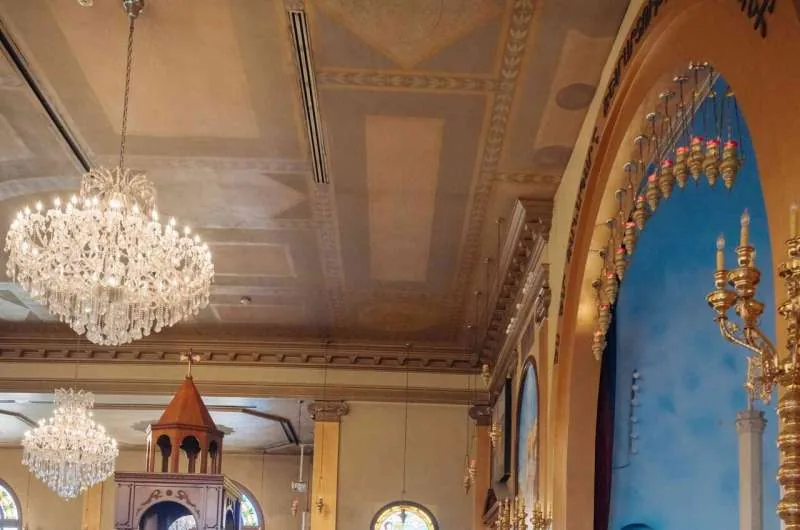
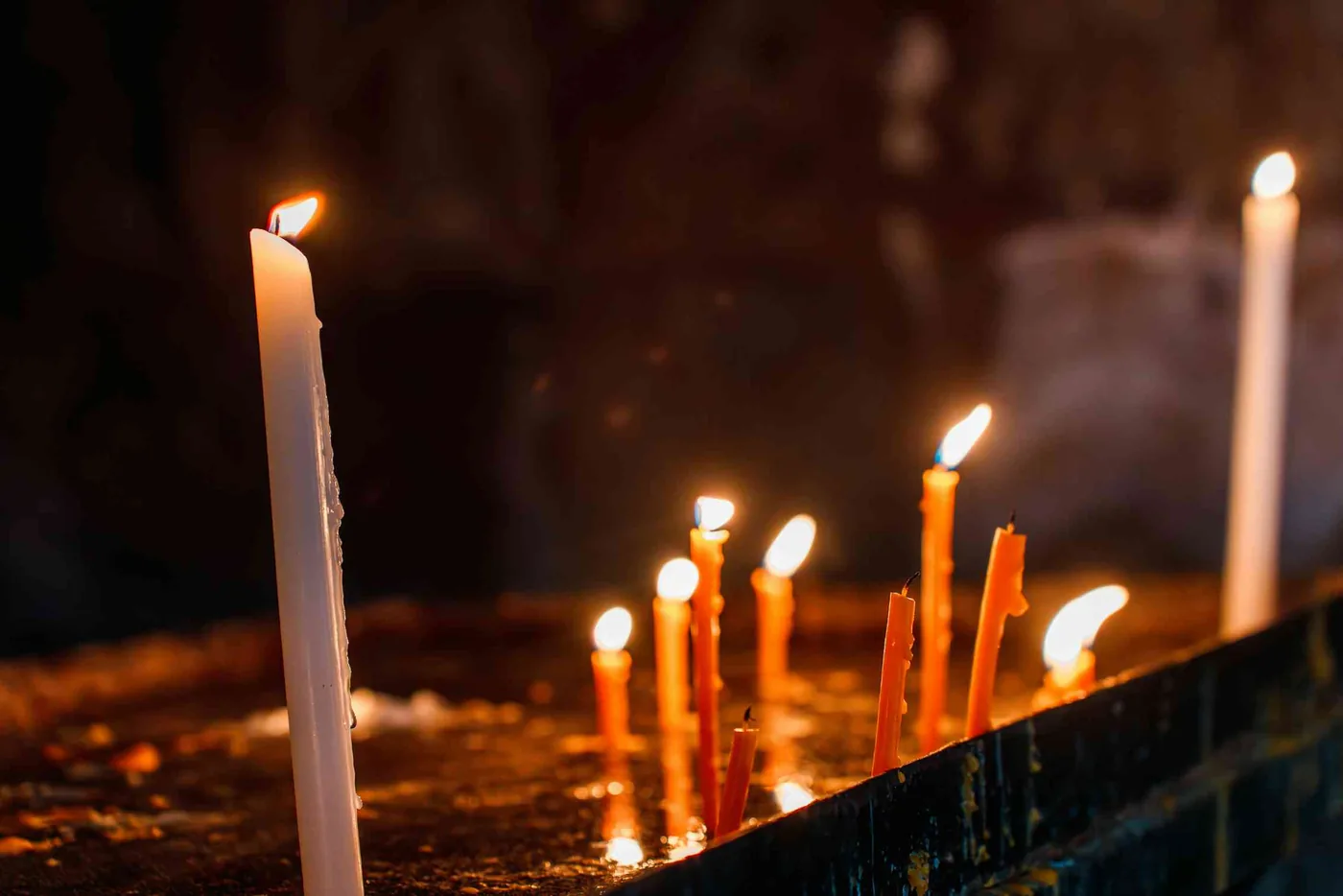
The forty-day mourning interval culminated in a formal church requiem service (known as a hokehankisd service in the Armenian liturgical tradition) attended by extended kin and village acquaintances. Photographer Kseniia Ivanova recorded church sanctuaries for iStock and Getty Images where slender candles flicker on metal trays during this solemn service. Afterward, the assembly walked to the cemetery to bless the gravesite and share blessed bread among attendees. Karen Minasyan photographed a traditional church wedding in Yerevan in 2014 for AFP and Getty Images, where a bride and groom wore silver crowns while pressing their foreheads together before a priest in an orange and gold robe. Although families offered memorial prayers again on the first anniversary of death, the intense forty-day cycle concluded at that cemetery service [2].
Arnold van Gennep on Liminality
Armenian culture acquired deep Christian foundations in 301, when Armenia declared Christianity its state religion and became the first Christian kingdom. The Armenian Apostolic Church developed into a distinct communion within the ancient Oriental Orthodox family, serving as a central pillar of Armenian communal identity across centuries. Armenian Christmas falls on January 6. Jesus fasted for forty days in the wilderness, Christ ascended into heaven forty days following Easter, and the church marks Christ’s Presentation at the Temple forty days after Christmas [3]. In keeping with Jewish tradition, Mary presented Jesus at the Temple in Jerusalem forty days after his birth, providing an enduring biblical blueprint for domestic churching rites.
Religious calendar scholars study similar patterns in how religious calendar traditions align sacred periods with communal life during recurring seasons of observance. In early twentieth-century scholarship, French ethnographer Arnold van Gennep identified this transitional status as liminality (the transitional state between separation and incorporation), where an old social role has ceased while a new role remains incomplete. Van Gennep identified three stages: separation, transition, and final incorporation into society [1].
Armenian life-cycle customs reflect Van Gennep’s model with precision, providing a sheltered buffer around events that happen physically in a fleeting moment. Historically, Armenian communities observed a forty-day period not only for births and deaths but also for newlywed couples and newly ordained clergy. The designated forty days represented the active duration while a major human transformation unfolded before the Armenian community welcomed individuals into altered social roles [2].
Preprint Findings and Academic Context
Armenian studies scholar Shushan Karapetian connected these cultural patterns to her own family life after giving birth to her fourth child. While sequestered in her postpartum Armenian karasunk, Karapetian learned that her close childhood friend Hrach Mkrtumyan had died of cancer. Because customary rules prohibited new mothers from attending funeral gatherings during their initial forty days, she grieved from home while Mkrtumyan entered his own departure rites. Karapetian dedicated her study to Mkrtumyan, noting that personal loss made the protective architecture of the tradition tangible [3].
Karapetian’s essay was released as an unreviewed preprint that has not undergone peer review, bearing registered digital identifier 10.64628/AAI.svf9aj6f4. Editorial coverage was prepared at Phys.org by scientific editor Gaby Clark and chief editor Andrew Zinin, who shared the work under an open Creative Commons republication arrangement from The Conversation. Readers exploring cultural anthropology can connect these heritage customs with research on strengthening cognitive reserve through new language acquisition across bilingual communities. Karapetian said that while biological birth and clinical death happen in an instant, human passage takes time [1].
- PREPRINT Karapetian, S. (2026). 40 days to arrive, 40 days to leave: How Armenian culture honors life’s most important moments. [Article Link]
- ONLINE NEWS Karapetian, S. (2026). 40 days to arrive, 40 days to leave: How Armenian culture honors life’s most important moments. Phys.org. [Article Link]
- ONLINE NEWS Karapetian, S. (2026). 40 days to arrive, 40 days to leave: How Armenian culture honors life’s most important moments. The Conversation. [Article Link]
APA 7: PerEXP Teamworks. (2026). Armenian Karasunk Traditions Guide Forty Days of Birth and Loss.


