



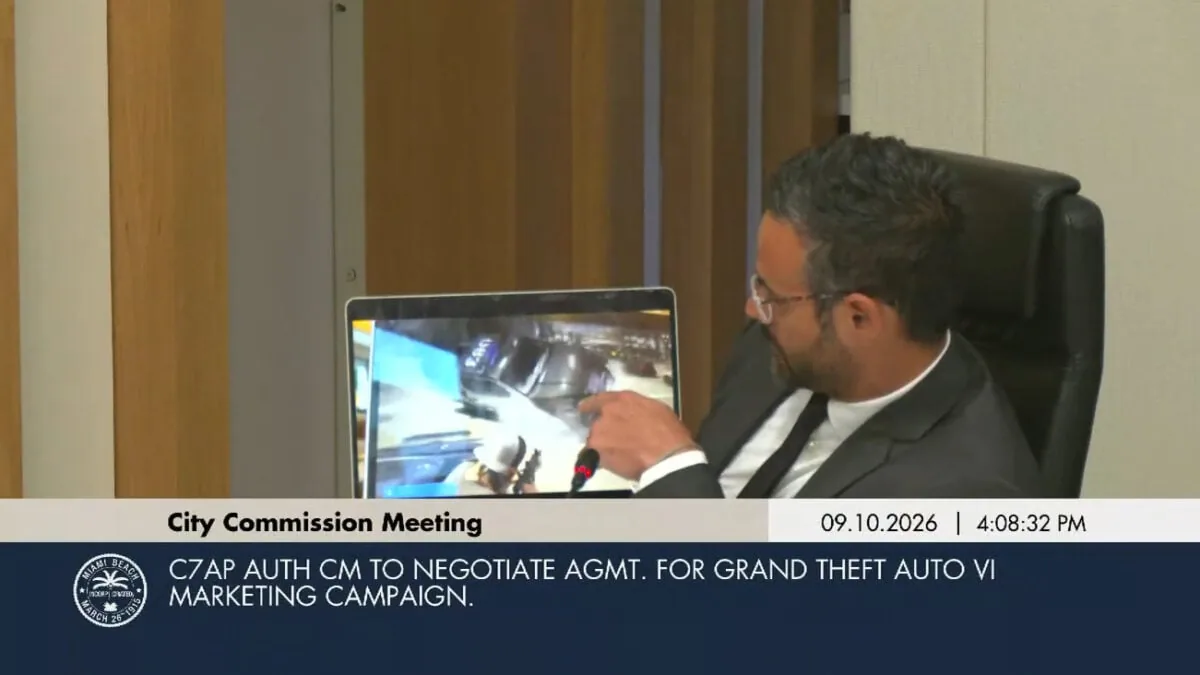
Commissioner David Suarez held up a laptop showing police cars crashing as Miami Beach debated GTA 6 advertising on September 10. Rockstar Games wants its fictional world on the city’s beach furniture, but Suarez argued that the association would damage the reputation Miami Beach had worked to rebuild. The commission voted 4–3, according to Kotaku. Its decision lets the city manager negotiate the proposed GTA 6 marketing deal with Rockstar. Final terms remain unresolved. [1]
GTA 6 Advertising Clears a Hurdle
Miami Beach commissioners weighed an offer to let Rockstar promote its upcoming game through local advertising, with supporters eyeing the money for improvements to parks and basketball courts. Kotaku counted four sponsors before discussion began. Opponents still pressed their case. Suarez brought footage from Grand Theft Auto V and the recent presentation of its sequel. His laptop put the series’ violence in front of the officials deciding whether to pursue the money. [1]
The commission granted authority to negotiate. Kotaku explicitly distinguishes that decision from accepting a completed marketing agreement, a distinction that matters when assessing what Rockstar has actually secured in Miami Beach. The city manager can pursue terms on the city’s behalf and seek more money for the proposed signage. A signed contract would answer different questions: what Rockstar pays, which placements it receives, and what conditions govern those placements. The reports describe proposals and expectations rather than a settled package of rights. Supporters pointed to improvements at local recreational facilities as a reason to pursue the money, while Meiner pressed for scrutiny of the approval process. [1]
Mayor Steven Meiner challenged the process. Agreements and RFPs (requests for proposals) normally return to commissioners for review before the final signature, he said, questioning why Rockstar’s proposal appeared to follow a different path. Kotaku reports his concerns. Four votes gave the city manager permission to proceed, but the debate exposed disagreement over how much oversight elected officials would retain as negotiations moved toward an agreement. [1]
Beach Chairs Carry the Pitch
Boucher Brothers supplies the beach equipment. Its chairs and umbrellas sit at the center of the reported GTA 6 advertising plan, carrying recognizable branding into the scenery that helped inspire Rockstar’s fictional setting. GamesRadar+ names the VI symbol (the Roman numeral for six). GameRant also mentions the words Vice City. Neither outlet gives a complete inventory of placements, leaving the exact reach of the campaign for negotiations to establish. [2, 3]
Why Miami Beach? Grand Theft Auto VI returns to Vice City, the series’ fictional counterpart to Miami, and GameRant describes references to locations across Miami and southern Florida. That gives Rockstar a direct connection between the game and the place hosting the proposed promotion. A beach chair carrying Vice City branding would bring that connection into an ordinary piece of beach equipment. The association also explains why Suarez objected so strongly: the real city’s identity is part of what makes the advertising attractive. [3]
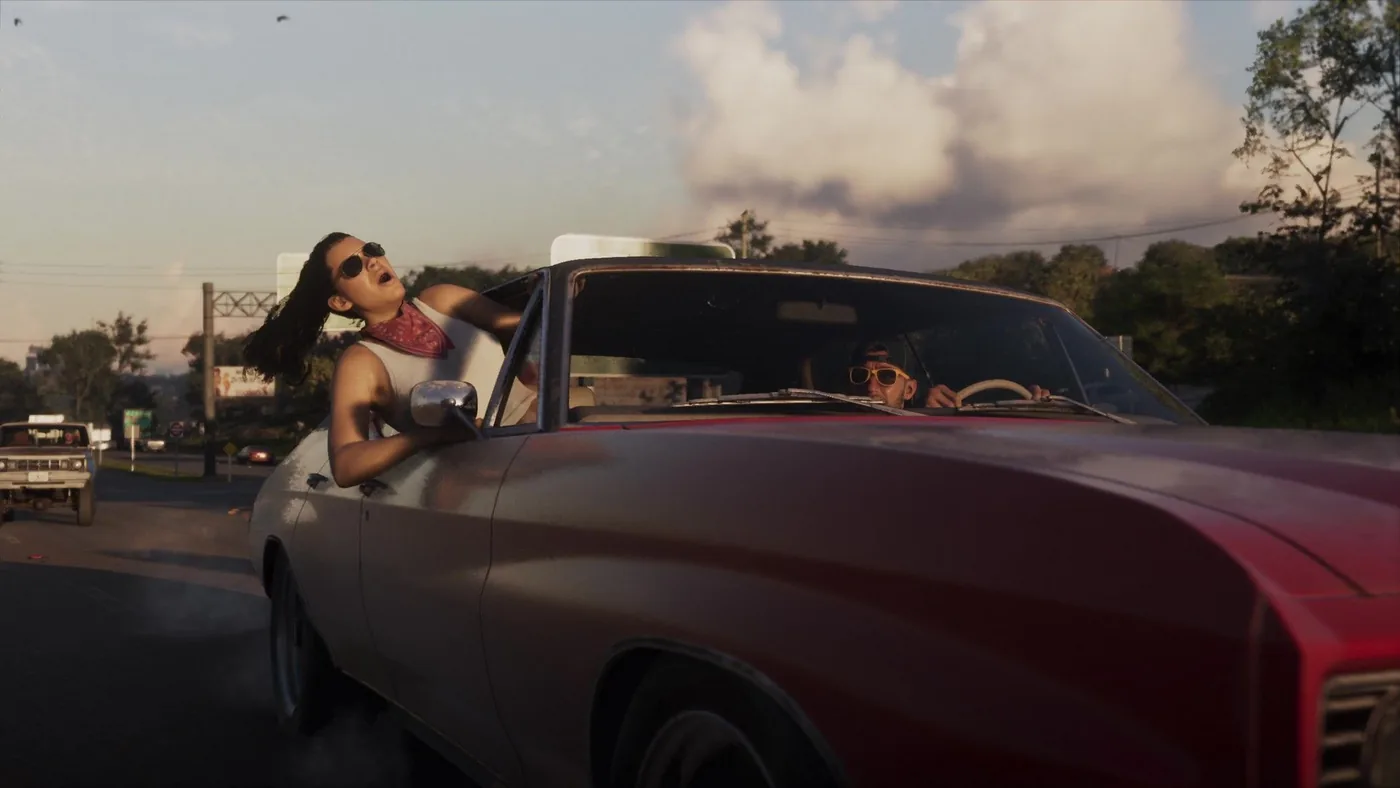
Rockstar’s proposed campaign excludes city property, according to GamesRadar+ and GameRant, while GamesRadar+ also says the advertising would stay separate from Art Basel Miami, the annual December art fair. Those limits narrow the available locations. The beach equipment remains central. Yet commissioners still disagreed over whether recognizable game imagery on that equipment would tie Miami Beach’s public image to the crimes depicted in Rockstar’s series. [2, 3]
A Gamer Answers the Objections
Suarez argued that Miami Beach had spent years trying to change its reputation, including through tough Spring Break restrictions, and that promoting Rockstar’s game would work against that effort. GamesRadar+ reports his objection to endorsing the image the city wanted to leave behind. Kotaku describes him pointing to a police car overturning and gunfire in the footage. His objection concerned what the association would say about Miami Beach, rather than the size of the proposed logos. [1, 2]
Commissioner Monica Matteo-Salinas answered as a player. She recalled playing the original Grand Theft Auto in 1997 and Vice City in 2002, and said she intended to play the new installment. “It’s a video game; it’s fake,” she said, according to GamesRadar+. She argued that Miami Beach could acknowledge the game without endorsing its conduct. Her response challenged Suarez’s premise that enjoying or promoting a fictional crime story compromises the values of the person or city involved. [2]
Matteo-Salinas had never owned a gun. She did own a gaming headset. [1]
GTA 6 advertising divided commissioners over endorsement: Suarez saw a damaging association, while Matteo-Salinas saw room for the city to recognize a game and retain its own identity. Public institutions have run into gaming controversies elsewhere, including the removal of a White House Tetris clone after company pushback. Here, Rockstar itself was pursuing the relationship, and the argument centered on whether Miami Beach should welcome it. [1, 2]
Millions Remain on the Table
GamesRadar+ puts Rockstar’s expected investment at $3 million. GameRant reports approximately $4 million. Neither amount represents a confirmed contract value, since the accounts differ and Kotaku describes permission to negotiate for as much money as the city can secure. The reports do not explain the discrepancy. They also provide no signed agreement reconciling the estimates or showing precisely how Rockstar’s advertising expenditure would translate into revenue for Miami Beach. [1–3]
Supporters raised parks and basketball courts. Kotaku identifies those improvements as reasons some people wanted the city to accept Rockstar’s money, but its report names no specific project or final allocation for either type of facility. No construction budget emerges from that account. The proposed local benefits helped sell the negotiations to supporters while leaving the eventual use of any payment unresolved. [1]
GamesRadar+ and GameRant describe a proposed campaign running from October 15 through the end of 2026, although neither supplies an official agreement confirming when the advertising would actually begin. The timetable remains conditional. For GTA 6 advertising, the next concrete step would be terms covering the payment and placements. Miami Beach’s vote alone does not establish that Boucher Brothers will put out branded umbrellas on the proposed opening date. [2, 3]
A Separate Fight Across Miami-Dade
Miami-Dade County also figures in Rockstar’s plans. GameRant attributes to freelance journalist Francisco Alvarado a report that Rockstar, the county, and Miami Heat affiliate Basketball Properties were finalizing a separate arrangement for a large Vice City sign on the Kaseya Center roof. That is a reported negotiation, not a confirmed installation. Miami Beach’s vote does not approve the county arrangement, and the beach furniture proposal should not be treated as authorization for the arena sign. [3]
Miami-Dade Sheriff Rosie Cordero-Stutz has criticized the collaboration. Kotaku reports that she objected to a franchise depicting crimes that her officers work to prevent, including robbery, carjacking, drug trafficking, and violence against law enforcement. Her remarks place another public official on the opposing side of Rockstar’s regional marketing push. They do not supply evidence that playing the game causes those crimes, or that the proposed advertisements would increase crime in Miami Beach. [1]
Rockstar still has separate negotiations to complete. Miami Beach’s city manager has a narrow majority behind talks over beach advertising, while the reported Kaseya Center arrangement involves Miami-Dade County and Basketball Properties instead. Neither negotiation establishes the other’s terms. In Miami Beach, the unresolved details include how much Rockstar will pay, which locations it will secure, and whether commissioners will review the final agreement before the city manager signs. [1–3]
- ONLINE NEWS Gach, E. (2026, September 11). Miami Beach has the most ridiculous debate about GTA 6: ‘We’re not giving away pistols and cocaine to people’. Kotaku. [Article Link]
- ONLINE NEWS McGlynn, A. (2026, September 11). Politicians dig up Grand Theft Auto’s ‘hot coffee’ incident and grill Rockstar for violence, but clear $3m in GTA 6 Miami Beach marketing anyway: ‘It’s a video game, it’s fake’. GamesRadar+. [Article Link]
- ONLINE NEWS Ratcliff, J. (2026, September 11). GTA 6 could be coming soon to Miami Beach. GameRant. [Article Link]


3 comments