



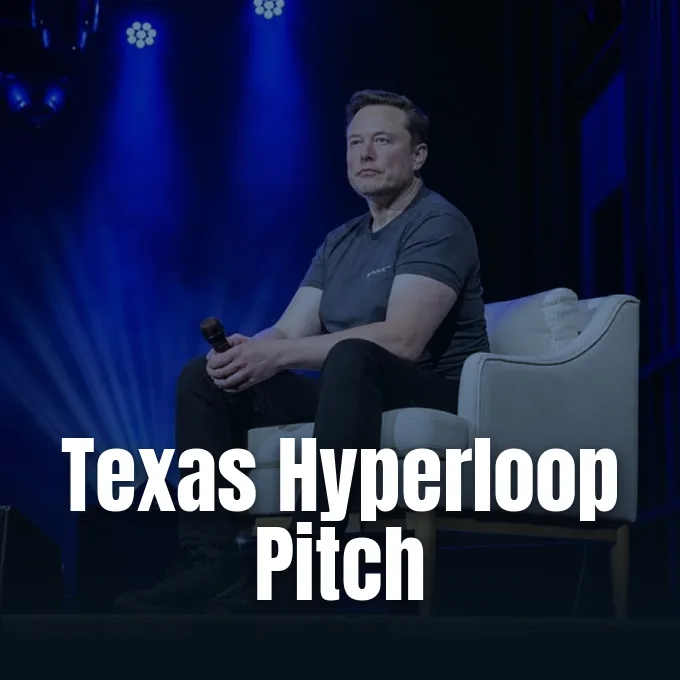
Can underground express tunnels finally conquer the notorious gridlock between Austin and San Antonio? Elon Musk announced on Sunday that The Boring Company is actively working on a precursor transit route designed to link the two Central Texas cities in less than 30 minutes. The proposed Boring Company Hyperloop project envisions autonomous electric vehicles bypassing Interstate 35 at speeds exceeding 200 mph. That ambitious timeline promises to transform a grueling two-hour commute into a rapid intercity sprint [1].
Musk Proposes Texas Precursor Line
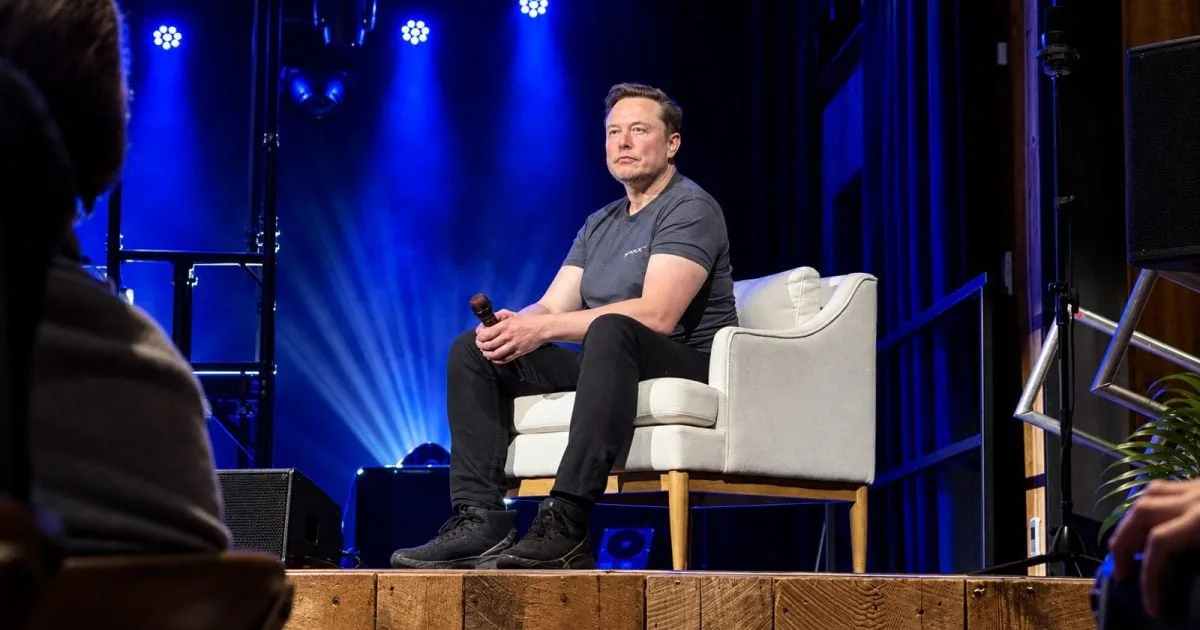
The announcement emerged unexpectedly on social media when Musk replied to an artificial intelligence animation showcasing a speculative science-fiction future. Musk reposted the digital footage with a declaration that his enterprise intended to bring such technological visions into physical reality. Musk stated that the tunneling firm is developing a precursor transit system capable of maintaining speeds above 200 mph between Austin and San Antonio. The official corporate account for The Boring Company shared the statement, adding that the organization would be excited and honored to construct the massive regional infrastructure project [1].
Company representatives clarified that the proposed corridor would operate as an express transit service (without intermediate stops) along the route. Under this operational concept, the Boring Company Hyperloop would allow passengers to board autonomous electric pods at surface stations before entering dedicated underground tunnels. Express travel eliminates intermediate stops. The Boring Company claimed this point-to-point architecture would allow travelers to journey from an Austin parking facility directly to a San Antonio dining destination in roughly 30 minutes. Highway drivers currently spend up to 2.5 hours navigating that same 80-mile stretch during peak commuter congestion [2].
Texas transportation officials characterized the proposal as an unsolicited private pitch rather than an approved public works project. Neither municipal leaders in Austin nor regional administrators in San Antonio have received formal engineering blueprints, route filings, or environmental impact assessments from the company. The concept remains in preliminary exploratory discussions as planners seek verifiable data regarding passenger capacity and station placement [5].
Congestion Challenges Along Interstate 35
Regional transportation planners face immense pressure as population growth rapidly accelerates across Central Texas. Interstate 35 serves as the primary ground arterial connecting the Austin and San Antonio metropolitan areas, which together represent more than 5 million residents. The Texas Department of Transportation (TxDOT) previously launched the Capital-Alamo Connections Study across 12 counties (including Travis, Bexar, Hays, Comal, and Williamson) to evaluate alternatives to conventional asphalt widening. State highway engineers determined that traditional lane additions cannot keep pace with surging commuter demand and freight movement between the two expanding urban centers [2].
Gridlock paralyzes the corridor daily. Commuters endure grueling delays while local economies lose valuable productive hours to recurring highway bottlenecks [5].
Tens of thousands of daily commuters travel between key regional hubs, including Austin-Bergstrom International Airport, San Antonio International Airport, research universities, and distribution warehouses. Ongoing construction on the multi-billion-dollar I-35 Capital Express expansion in Austin threatens to disrupt surface travel patterns for years to come. Advocates suggest that an operational Boring Company Hyperloop could alleviate severe corridor pressure by shifting subterranean bypass channels into everyday regional logistics. Could an underground shuttle move sufficient passenger volumes to dent severe highway congestion? That question remains an unproven hypothesis for regional transit directors [5].


Boring Company Hyperloop Versus Full Vacuum
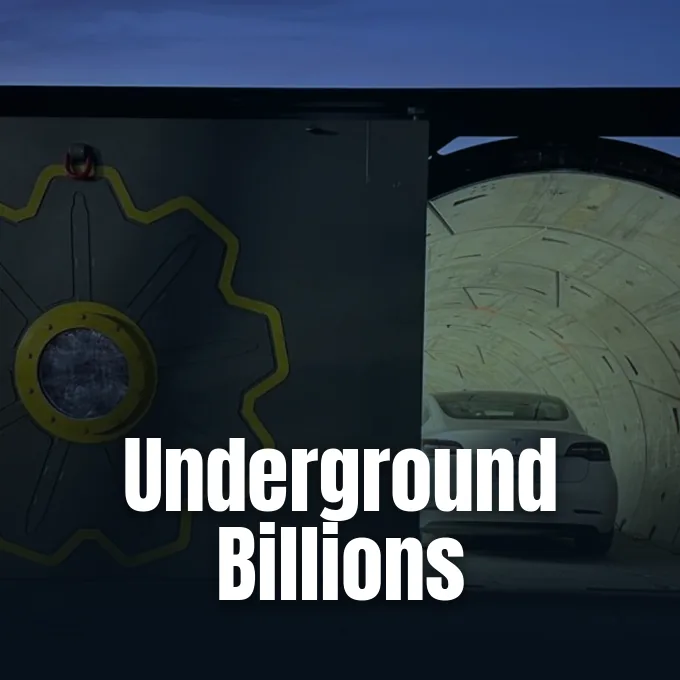
Engineering distinctions separate a preliminary tunnel shuttle from the full theoretical Hyperloop concept Musk originally published in a 2013 white paper. A complete Hyperloop system requires continuous low-pressure steel tubes operating under near-vacuum conditions, allowing specialized passenger pods to glide on magnetic fields at speeds surpassing 600 mph across vast distances. In contrast, the Austin-to-San Antonio proposal relies on a modified Loop approach using concrete-lined tunnels where electric vehicles travel at highway-plus velocities without depressurization chambers. The Boring Company completed a short test tunnel in Bastrop, Texas, in 2022 to evaluate vacuum pump hardware and mechanical seals, building on earlier student pod competitions that ran from 2015 through 2019 on a one-mile SpaceX test track where a student prototype reached 288 mph [2].
The tunneling enterprise previously constructed seven research-and-development tunnels across three locations to refine excavation methods and automated machinery. In Hawthorne, California, a research track (a 1.14-mile research track) validated vehicle propulsion and guidance at speeds reaching 140 mph before portions were later integrated into local pedestrian connections. At the company’s Bastrop facilities, engineers demonstrated an innovative retrieval method that enabled tunnel boring equipment to surface without requiring traditional excavation pits or heavy industrial cranes. Another Bastrop bore tested continuous autonomous mining operations without requiring human workers inside the active subterranean chamber [2].
Tunneling efficiency hinges on the performance of the company’s proprietary Prufrock boring machines. The Boring Company claims these automated units are designed to mine one mile per week while lowering transportation tunnel costs below $5 million per mile. Achieving those internal benchmarks over an 80-mile intercity corridor represents an unprecedented mechanical challenge, especially following the shutdown of commercial startup Hyperloop One in late 2023. Realizing a functioning Boring Company Hyperloop network will require proving that low-cost tunneling can scale across complex geological strata without sacrificing structural safety [5].

Past Municipal Promises and Vegas Realities
The company’s sole operating commercial deployment remains the Las Vegas Convention Center Loop in Nevada. That system encompasses a 1.7-mile underground route where human drivers ferry convention attendees inside standard Tesla sedans and sport utility vehicles. Realities differ from promotional claims. While early promotional announcements promised automated pod travel at speeds exceeding 150 mph, vehicles in the Las Vegas tunnels typically operate at modest speeds (between 35 and 40 mph) during congested trade shows. The system proves that subterranean passenger shuttling can operate reliably, yet it functions at a scale vastly smaller than an 80-mile high-speed intercity corridor [5].
Several past municipal tunnel ventures collapsed before excavation ever commenced. In Chicago, The Boring Company won a high-profile 2018 municipal contract to construct an express transit loop connecting downtown to O’Hare International Airport, but city officials subsequently abandoned the plan. Similar proposals connecting Baltimore to Washington, D.C., a hyperloop between New York City and Washington, and a proposed beach connector in Fort Lauderdale all stalled amid regulatory delays and funding ambiguities. In Southern California, community lawsuits and environmental opposition forced the cancellation of proposed routes connecting Westside Los Angeles to Dodger Stadium [1].
Capital reserves received a substantial boost after the tunneling startup secured three billion dollars in international funding through an investment round led by the United Arab Emirates. That capital infusion provides substantial balance-sheet liquidity, yet financial resources alone cannot resolve municipal skepticism regarding unfulfilled schedules. Critics note that Musk frequently pairs dramatic infrastructure visions with optimistic timelines that later face quiet deferral or significant operational downsizing [4].

Permitting and Environmental Hurdles in Texas
Constructing an 80-mile subterranean transportation artery through Central Texas presents extraordinary geological and regulatory obstacles. Transportation analysts estimate that even if construction costs match the company’s ambitious projection of $50 million to $100 million per mile, the total capital expenditure would reach between $4 billion and $8 billion. The proposed alignment must traverse the Edwards Aquifer recharge zone, an ecologically sensitive karst formation that supplies vital drinking water to more than two million residents across the region. Excavating through subterranean limestone cavities without risking groundwater contamination demands unprecedented hydrological scrutiny and rigorous containment engineering [5].
Permitting requirements remain daunting. Local approvals remain absent. Securing right-of-way permissions across multiple county lines, municipal boundaries, and Union Pacific rail corridors will demand exhaustive intergovernmental cooperation [5].
Municipal leaders across Austin, San Marcos, New Braunfels, and San Antonio have adopted a wait-and-see posture, focusing current tax dollars on funded rail improvements and highway expansions. Rather than committing to speculative subterranean tubes, local transit planners continue evaluating conventional Amtrak upgrades and long-studied passenger rail alternatives championed by Lone Star Rail advocates. Without publicly disclosed financing models, environmental permits, or binding construction schedules, the proposed Boring Company Hyperloop remains an intriguing engineering concept awaiting its first real regulatory test in Texas [3].
- ONLINE NEWS Ha, A. (2026, September 20). Elon Musk’s latest Boring Company pitch involves a Hyperloop between Austin and San Antonio. TechCrunch. [Article Link]
- ONLINE NEWS Jack. (2026, September 20). Elon Musk says Boring Company is working on 200+ MPH Austin-to-San Antonio tunnel. WLT Report. [Article Link]
- ONLINE NEWS Williams, R. (2026, September 20). Musk says Boring Company is planning 200-mph Texas hyperloop. Seeking Alpha. [Article Link]
- ONLINE NEWS Tech Beat. (2026, September 20). Elon Musk pitches Austin to San Antonio Hyperloop under 30 minutes. Tech Beat. [Article Link]
- ONLINE NEWS AndroGuider Team. (2026, September 21). Elon Musk’s Boring Company pitches Austin to San Antonio Hyperloop tunnel. AndroGuider. [Article Link]


1 comment