




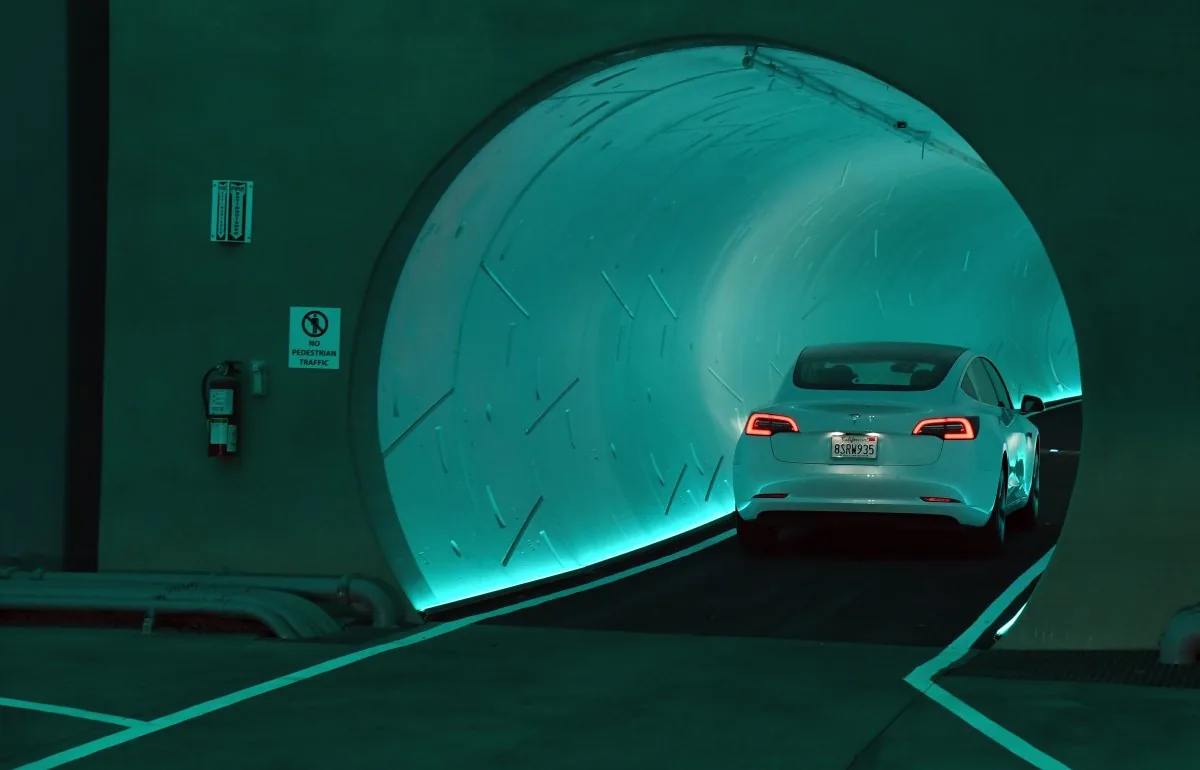
Inside a Boring Company tunnel in Las Vegas, passengers ride Tesla vehicles between stations serving casinos and the convention center. Elon Musk now has fresh money to take that underground transport model further. The Boring Company announced a $3 billion Series D funding round led by the United Arab Emirates, according to TechCrunch and Electrek. The deal values the business at $23 billion, while the company plans more than 150 kilometers of tunnels across the UAE. [1, 2]
Boring Company Tunnel Plans Get $3B
The UAE heads a round whose participants include Andreessen Horowitz, Sequoia Capital, Human Capital, Vy Capital and Valor Equity Partners, according to both reports published September 10. Electrek also names Temasek, Shamal Holding and Baron Capital. The valuation stands at roughly four times the approximately $5.7 billion figure from 2022. Investors have assigned the business a much higher price. That figure does not measure passenger revenue or establish whether operating tunnels make a profit. [1, 2]
Engineering teams will get some of the money. Electrek reports that the company intends to hire across engineering, operations and production, expand Loop projects and increase research into Prufrock (its tunnel-boring machinery). TechCrunch recalls a July Wall Street Journal report that the business was seeking as much as $4 billion. The completed round brings in $3 billion. Neither supplied report details how the company will divide that funding among construction sites, hiring and machine development. [1, 2]
Musk supplied the slogan: “Defeating traffic is the ultimate boss battle.” Electrek quotes him marking the investment with that line, while the largest construction commitment now points beyond the American city where the company carries passengers. The UAE will be a customer as well as the lead investor. [2]
Dubai Moves Toward a Pilot
Dubai already has a smaller project on the books. The company has won a 6.4-kilometer Dubai Loop pilot with four stations, and Electrek reports that construction should begin in late 2026. The planned network of more than 150 kilometers across the UAE comes on top of that pilot, according to its account. TechCrunch separately reports the broader distance commitment, attributing it to the company. Neither article supplies a completion date for the entire UAE network. [1, 2]
No UAE passenger tunnel has opened yet. [2]
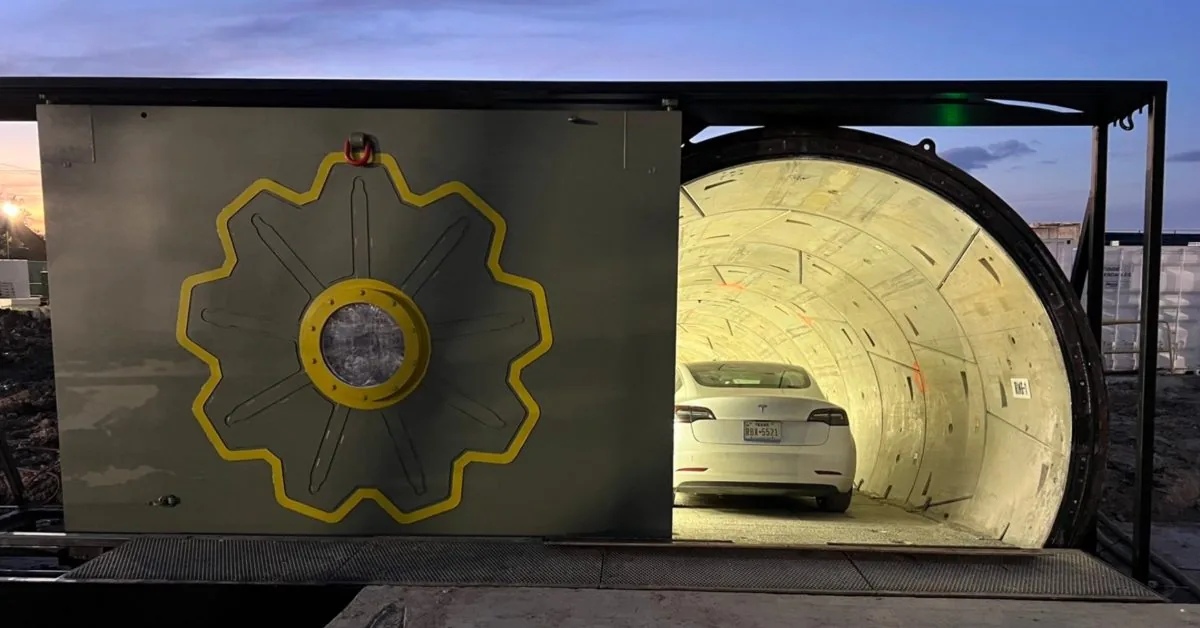
The company says precast production (making construction components before installation) is underway for the Dubai pilot, according to Electrek. Preparing components marks a stage in building the project; passengers still need a finished route and stations before they can ride. Can the pilot establish a working service before attention shifts to the much larger network? The immediate milestone remains the planned construction start later this year, with the national expansion still ahead. [2]
The UAE commitment gives the Boring Company tunnel expansion an investor directly interested in the proposed transport system. Las Vegas offers the closest operating comparison, although even there the approved network reaches far beyond the routes currently carrying passengers. Money raised, kilometers promised and stations opened describe different stages of that expansion. [1, 2]


What Runs Beneath Las Vegas?
The Boring Company moves passengers through its Loop system in Tesla cars, using underground routes to connect destinations such as hotel casinos and the Las Vegas convention center. TechCrunch describes a handful of operating tunnels. Electrek recalls riding Model Ys with human drivers in 2021 and says the service still broadly follows that arrangement, with more stations now available. The reports describe a car-based service; they do not establish that it has delivered the traffic relief Musk envisages. [1, 2]
Vegas Loop has carried more than four million passengers, Electrek reports. Clark County has authorized a network of 123 stations after approving another 19, but approval does not mean that every station has opened or that the full network carries riders. The company recently started boring its 14th Las Vegas tunnel, its 25th overall, according to the same account. Those totals include work under construction. They cannot establish how many completed passenger tunnels exist without further information about each route, its status and whether the count includes testing infrastructure. TechCrunch gives no exact operating total either, describing the routes collectively as a handful. [1, 2]
Passengers provide one measure of use. Traffic relief requires another. Electrek editor Fred Lambert argues that the company has not shown its system to be more useful than other mass transit options, leaving a question for the next Boring Company tunnel project: how much congestion does it remove? [2]
Nashville Tests the Next Machines
Nashville brings a different construction challenge. The Music City Loop project received its state permit on February 25, 2026, and tunneling began that day, according to Electrek. TechCrunch describes a planned underground route of 10 miles. Electrek identifies the work as the company’s first tunneling in hard rock, making Tennessee a further test of its machinery as it prepares to expand construction in the UAE. [1, 2]
By August, two Prufrock machines were mining at once in Nashville, Electrek reports, while a third machine was in final assembly in Texas. The new round includes money for further Prufrock research and development. Digging capacity is part of the expansion plan. Neither report gives a Nashville passenger-opening date or an independently verified construction-cost comparison that would establish how much cheaper the machinery makes a completed transport system. [2]
Lambert challenges the cost argument, too. He contends that much of the claimed saving comes from smaller tunnels and their capacity limits. His assessment is criticism, not a finding from a transport study supplied with the reporting. Questions about technological promises also run through PerEXP Teamworks’ coverage of Jacob Coxon’s departure from Anthropic and warning about the superintelligence race. Here, the immediate test is whether construction produces operating routes. [2]
Earlier Routes Never Reached Passengers
Chicago once had its own airport promise. In 2018, under Mayor Rahm Emanuel, the company proposed an O’Hare Express using 150-mph pods, with the business covering an estimated $1 billion bill. Electrek reports that it never secured financing or a signed contract and had died by the time Lori Lightfoot became mayor in 2019. The proposed Washington–Baltimore Loop also disappeared from the company’s website after receiving conditional permits from Maryland. [2]
Other cities encountered different obstacles. Electrek reports that Ontario, California’s proposed airport connector grew from an estimated $45 million toward $500 million, before the company withdrew over a third-party environmental review. In San Antonio, the transit authority selected the business for a nine-mile airport route in 2022, then said the company stopped answering emails; the deal ended in 2023. Electrek also describes stalled plans in Fort Lauderdale and Los Angeles projects that encountered opposition and permitting difficulties. [2]
The new Boring Company tunnel funding arrives against that construction history. Las Vegas remains the passenger operation, Nashville has machines working underground, and Dubai faces a planned late-2026 construction start. Investors have committed fresh capital at a much higher valuation. The next observable UAE milestone is whether the four-station pilot begins construction on schedule, followed by the still-undated step that matters to passengers: an opening day. [1, 2]
- ONLINE NEWS O’Kane, S. (2026, September 10). The Boring Company raises $3B in round led by UAE. TechCrunch. [Article Link]
- ONLINE NEWS Lambert, F. (2026, September 10). Elon Musk’s Boring Company raises $3B at $23B valuation, led by UAE. Electrek. [Article Link]
- ONLINE NEWS The Boring Company raises $3 billion to help put more Teslas in tunnels. (n.d.). InsideEVs. [Article Link]


