





Apple unveiled its first foldable smartphone this week, introducing iPhone Duo Split View on a 7.6-inch inner screen designed to run two active applications side by side. Can Apple’s new folding hardware match the flexible windowing long established on the iPad? Tim Hardwick at MacRumors and Michael Burkhardt at 9to5Mac report that while the device masters dual applications, Apple locks the interface into a fixed 50/50 partition. [1, 2]
iPhone Duo Split View Locks Divider
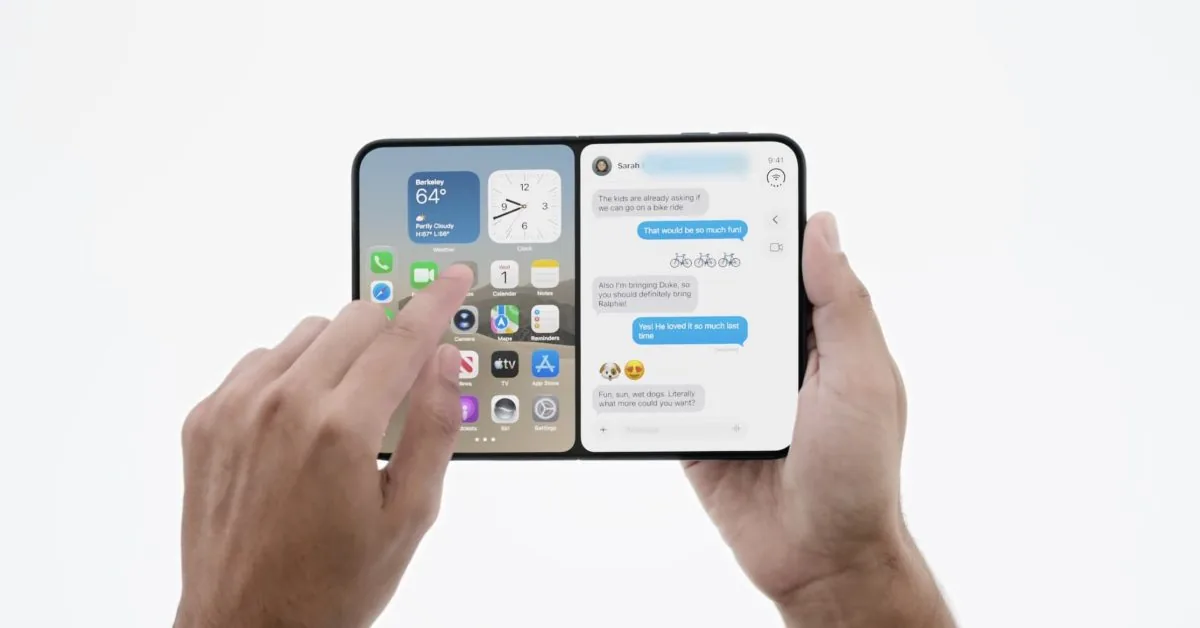
Apple highlights side-by-side windows and paired applications throughout its promotional campaign, but the marketing materials omit any mention of resizing those panels. Hardwick explains that users placing two applications side by side on the 7.6-inch foldable display cannot drag the central divider to rebalance screen space. [2] Neither application can expand. One never shrinks. The partition never shifts. [2]
That limitation stands in sharp contrast to tablet software, where Apple has supported resizable Split View (a multitasking display mode running two programs on one screen) in landscape orientation since iOS 9 arrived in 2015. On the iPad, dragging the separator lets an owner allocate a third or two-thirds of the screen to a chosen program. The iPhone Duo abandons that freedom. Japanese blogger g.O.R.i (@planetofgori) confirmed the restriction during hands-on testing on September 10, demonstrating that app dimensions remain fixed at a 1:1 ratio. [2]
Apple permits no manual divider adjustments between active mobile applications. Every side-by-side pairing opens in an identical 50/50 split across the inner display. [2]
Display Geometry Shapes the Boundary
Hardware dimensions supply the technical justification for Apple’s fixed division. Both the inner folding screen and the exterior cover screen share an identical 1:1.4 aspect ratio (the proportional relationship between display width and height). Because of that geometric symmetry, each half of the unfolded 7.6-inch panel works out to roughly the same size and shape as the outer phone screen. Placing the software divider directly on the central hinge gives each application an exact canvas that iPhone software already supports. Hardwick emphasizes that this symmetrical alignment provides developers with familiar proportions, eliminating the complex requirement to reconfigure software interfaces for unpredictable screen slices. [2]
Unrestricted boundary adjustment would introduce substantial complications for software creators. If Apple allowed owners to slide the divider freely, the interface would generate intermediate window geometries that do not match the exterior screen. Hardwick notes that supporting countless variable window widths would present a nightmare for third-party iOS developers. Engineers would need to redesign and test mobile layouts across an infinite spectrum of boundary positions. Apple chose structural consistency over resizing. Developers face no unpredictable canvases. [2]
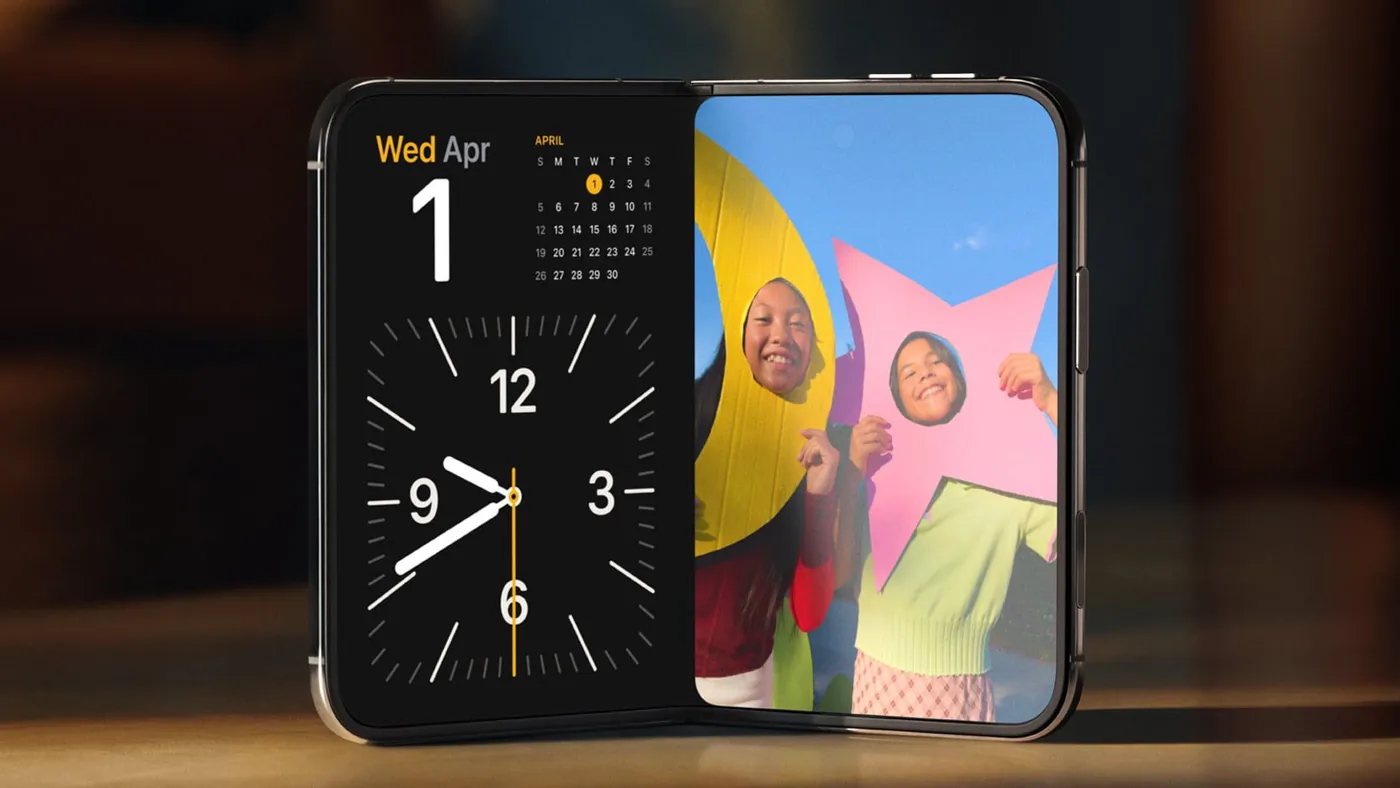
Apple created one noticeable exception to this rigid geometry in media playback. Company demonstration videos show that watching a film or television episode above another application in portrait mode shifts the partition. Under this configuration, Apple TV video content preserves its native widescreen aspect ratio rather than forcing a square crop. The secondary application underneath rises past the central fold to fill the leftover display area. The fold enforces an even split. Apart from this specific video playback accommodation, iPhone Duo Split View keeps every active multitasking session locked at a permanent halfway boundary across the display. [2]


Pairing Apps on Foldable Glass
The 7.6-inch folding screen delivers iPhone Duo Split View utility despite the absence of adjustable window edges. Owners can launch two separate instances of the same application, open two distinct programs in portrait or landscape orientations, and monitor active Messages conversations while reviewing web documents. [2] Swapping between active applications occurs instantly. Dual screen productivity functions smoothly. [2]
Burkhardt points to Apple’s home screen integration as a particularly refined software choice. On the iPhone Duo, an owner can pin one application to half of the display while retaining the complete home screen on the opposite half to select a second tool. System software also allows owners to save two open applications as an app pair. Saved app pairs return together with a single tap. Users can resume paired workspaces without manually recreating their split screen configurations. [1]
Apple’s announced release schedule establishes when customers can test these multitasking features directly. PerEXP Teamworks previously reported how the iPhone Duo could start at $2,000 when analyst Mark Gurman outlined Apple’s hardware roadmap. Hardwick confirms that pre-orders for the $1,999 device commence on Friday, October 16, with commercial retail availability opening on Friday, October 23. That significant price tag buys Apple’s first folding hardware and its structured dual app layout. [1, 2]
Contrasting the iPad Multitasking Route
While hardware limitations explain the fixed partition, the iPhone Duo’s software elegance highlights unresolved friction on the iPad. Burkhardt argues that multitasking on iPadOS has felt convoluted since Apple introduced iPadOS 26. That update committed tablet software to an aggressive windowing system (an interface framework organizing software into overlapping, movable panes). Under iPadOS 26, tablet owners face an uncompromising all-or-nothing proposition where they must either adopt complex floating windows or restrict their applications to isolated full-screen mode. [1]
Apple subsequently reintroduced traditional split screen and Slide Over (a secondary mobile window hovering above a primary app), but those tools remain tethered to the broader windowing architecture. Burkhardt questions that cumbersome philosophy. Managing floating windows proves effective when an iPad sits docked in a Magic Keyboard with trackpad input. Without keyboard accessories, touch navigation stumbles. Tablet windowing frustrates pure touchscreen navigation. [1]
The contrast appears sharpest when comparing the iPhone Duo to the iPad mini, a tablet with screen dimensions remarkably similar to Apple’s 7.6-inch folding phone. Despite sharing comparable display real estate, the iPad mini continues to shoulder the full weight of Apple’s desktop windowing interface. The iPhone Duo also introduces a capability completely absent on any iPad: running a split screen video side by side with an interactive app. Burkhardt emphasizes that this side-by-side video playback would be ideal on the iPad mini, where full desktop windowing feels especially overwhelming. [1]
Predictability Guides Foldable Software Choices
Could Apple adapt the iPhone Duo Split View streamlined multitasking principles for iPadOS in future updates? iPadOS remains iOS at its foundation. While not every interface element scales directly across hardware categories, transferring a simplified dual app mechanism to smaller tablets should not represent a massive engineering challenge. [1] Bringing the Duo’s home screen application selector to iPad mini would offer a straightforward alternative to floating panes. Apple has announced no plans to port the phone’s interface model to its tablet catalog. [1]
For now, owners coming to the iPhone Duo from iPads must navigate a learning curve shaped by intentional hardware constraints. Hardwick explains that users expecting the expansive divider freedom long established on iPadOS will need to temper their initial expectations when opening Apple’s new folding phone. [2] Fixed 50/50 geometry ensures that mobile software runs reliably without requiring third-party developers to reconstruct layout code. Reliable rendering takes priority over customization. The interface stays stable. [2]
Prospective buyers weighing the $1,999 starting price must decide whether equal split screens satisfy their mobile multitasking demands before pre-orders officially arrive on Friday, October 16. [1, 2] The iPhone Duo demonstrates that side-by-side applications, app pairing and simultaneous messaging can flourish on a 7.6-inch folding display without floating window clutter. [1, 2] Apple’s folding hardware enters retail stores on October 23, presenting a rigid yet elegant vision for mobile software productivity. [1, 2]
- ONLINE NEWS Burkhardt, M. (2026, September 12). Apple nailed iPhone Duo split screen, even as iPad multitasking feels convoluted. 9to5Mac. [Article Link]
- ONLINE NEWS Hardwick, T. (2026, September 11). iPhone Duo Can Do Split View, But Not Like Your iPad. MacRumors. [Article Link]


1 comment