




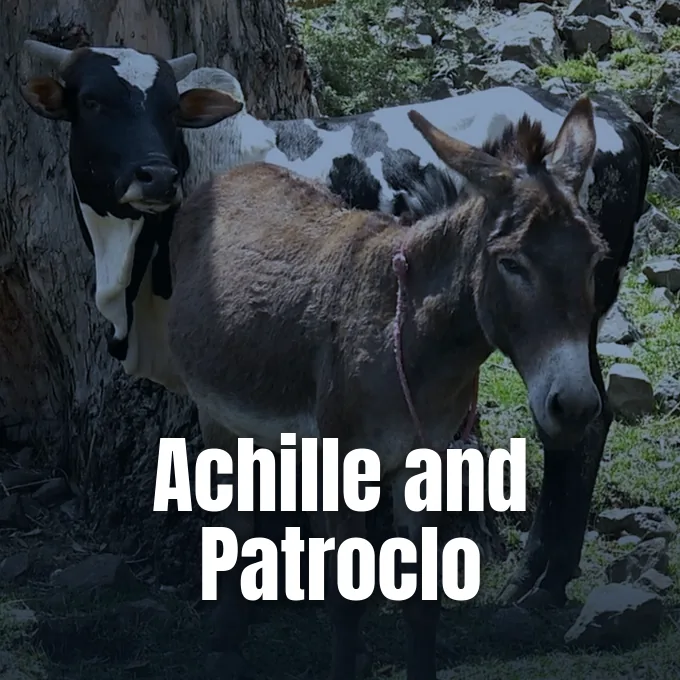
While observing wild gelada monkeys on the high plateau of Ethiopia, field biologists recorded an unusual partnership involving an adult bull called Achille and Patroclo, a male donkey [1]. The two animals engaged in regular mounting and reciprocal grooming, staying together despite having open access to potential mates of their own species [2]. Their sustained attachment, reported by Elisabetta Palagi and colleagues from the University of Pisa in Current Biology, challenges old assumptions that animal mating instincts exist solely for procreation [1]. Observations showed that bull and donkey interactions on the Ethiopian plateau reflected a selective socio-sexual bond built on daily social preference rather than random pasture contact [2].
Fieldwork Uncovers Bull and Donkey Pair
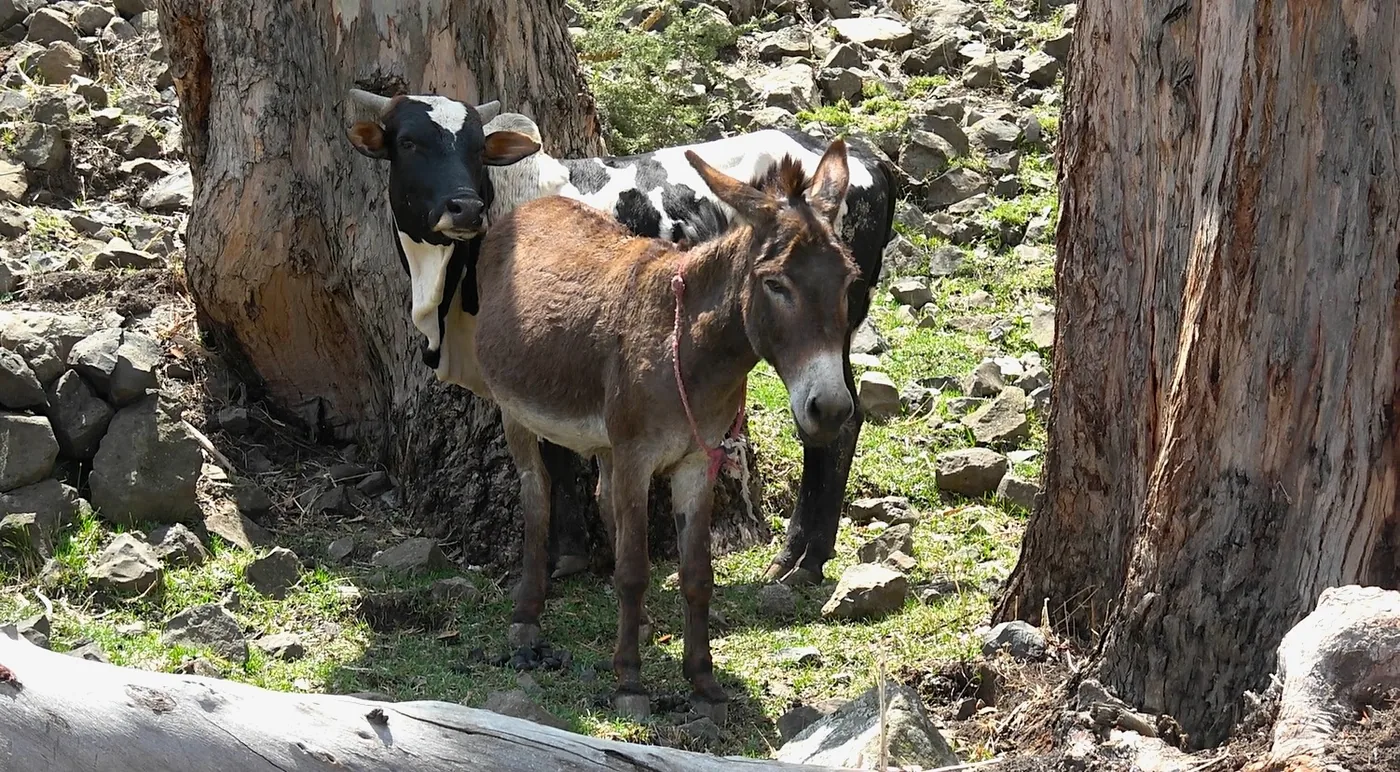
Researchers from the Università di Pisa encountered the pair by chance during a primate expedition in Ethiopia, where co-authors André da Cruz and Martina Francesconi had traveled to the high Simien plateau to track wild gelada monkeys. Near the monkey study site, da Cruz noticed Achille and Patroclo grazing side by side in a communal field [2]. Achille was a young bull, while Patroclo was a mature male donkey. Both animals belonged to different local farmers. Nights brought separation [1]. The owners housed them in separate pens, yet the pair reunited every morning when released into the open pastures [2].
What intrigued the research team was the selectivity of their bond [2]. Achille and Patroclo shared the Ethiopian plateau with dozens of other grazing livestock, including fertile cows, breeding bulls, jennies, and several male donkeys [1]. Neither animal lacked mating partners of its own species [2]. The two stayed close. Instead of wandering off with cattle or donkey herds, Achille and Patroclo fed side by side for hours. “Both animals had access to other potential partners, including individuals of their own species and of both sexes,” Elisabetta Palagi said. “Yet they repeatedly sought each other out [1].” André da Cruz said that this clear preference proved the association was purposeful [2].
Detailed Observations on the Plateau
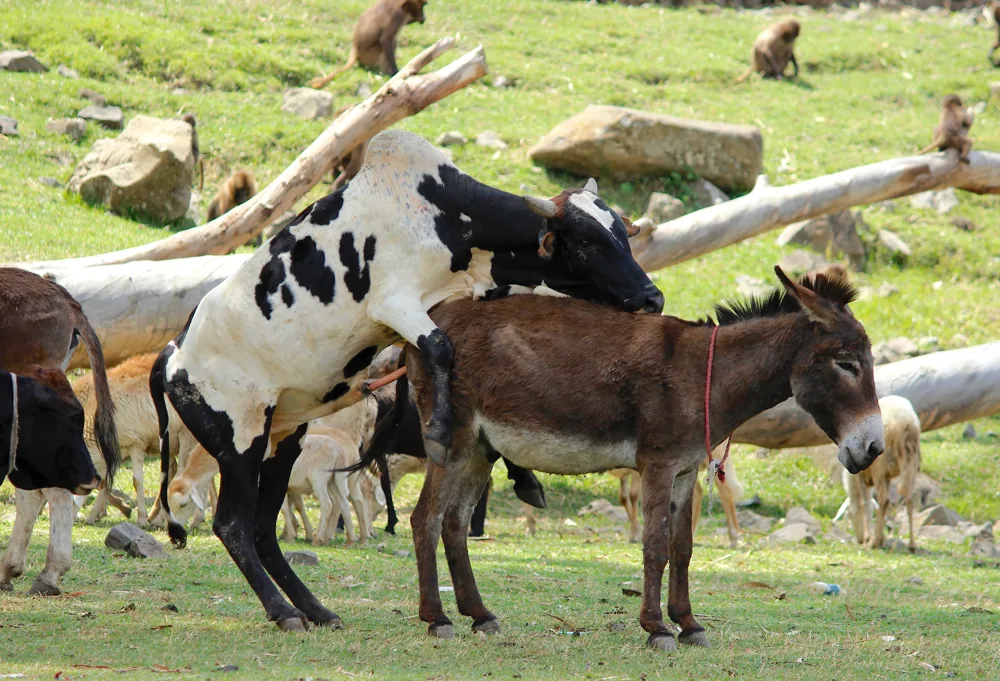
The Pisa research team began systematic behavioral monitoring to log every encounter between the two subjects, recording 51 mountings between Achille and Patroclo across a two-week period from March 6 to March 19 [2]. Out of those 51 events, exactly 34 resulted in intromission with penile penetration. The data showed that mounting was a daily constant rather than a brief anomaly [1]. Field logs showed consistent cooperation [2].
To determine whether Achille mounted any donkey in the pasture, the scientists watched his reactions to other herd animals [1]. During the study window, Achille attempted to mount a different male donkey in the field on only two occasions [2]. That other donkey reacted with defensive fury, flattening its ears and darting away to evade contact [1]. Patroclo showed no fear. When Achille approached, Patroclo presented his hindquarters to the bull and playfully nipped at Achille to sustain their contact [2].
Patroclo never kicked Achille or fled when the bull moved in. Both animals stayed relaxed throughout each mounting episode, cooperating in ways rarely seen outside conspecific courtship [1]. Patroclo offered no resistance. The absence of defensive agitation showed that Patroclo was a willing and receptive partner in their daily routine on the Ethiopian grassland [2].
Why Did the Association Turn Sexual?
The sexual dimension of their relationship served social affiliation rather than mere reproductive drive. Biologists studying same-sex sexual behavior, commonly known as SSSB, have cataloged such interactions in over 1,000 animal species ranging from nematodes to penguins and cattle [2]. ScienceAlert science editor Fiona MacDonald, who fact-checked initial reports on the Pisa study with reporter Peter Dockrill, pointed to evidence that SSSB operates as a social mechanism for group cohesion [1]. In group-living animals, non-reproductive mating helps lower tension, establish mutual alliances, and reaffirm interpersonal safety [2]. Achille and Patroclo expressed those same evolutionary mechanisms across a wide species divide [1].
Sustained cross-species intimacy remains exceptionally rare in biological records, making the Ethiopian bond between bull and donkey unique. While isolated interspecies mountings occur in confinement, a multi-week association between grazing domestic animals is almost unknown [1]. Popular Science writer Laura Baisas covered the findings with study co-author Martina Francesconi. “We believe the key finding is not simply that a bull mounted a male donkey,” Francesconi said. “It is that this unusual sexual behavior was part of a broader, selective social relationship.” Francesconi said that the lack of other mates could not explain their bond, as both animals had abundant mating choices [2].


Affiliative Acts Between Bull and Donkey
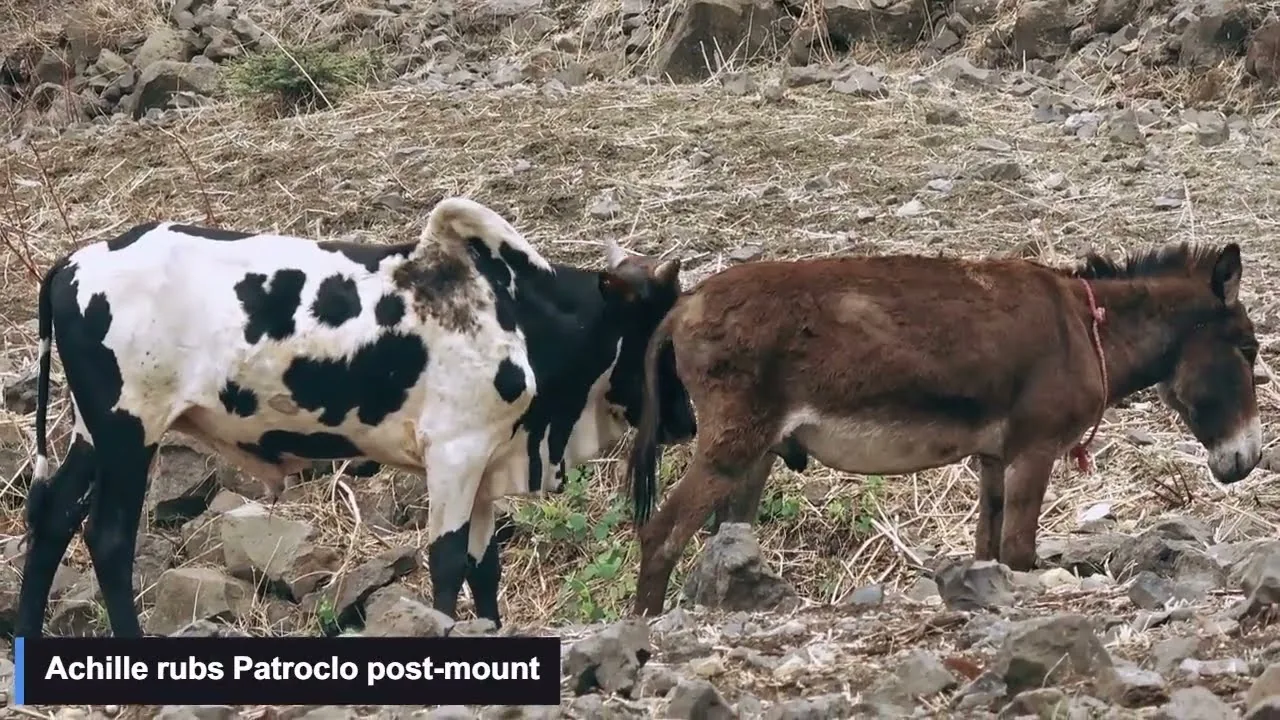
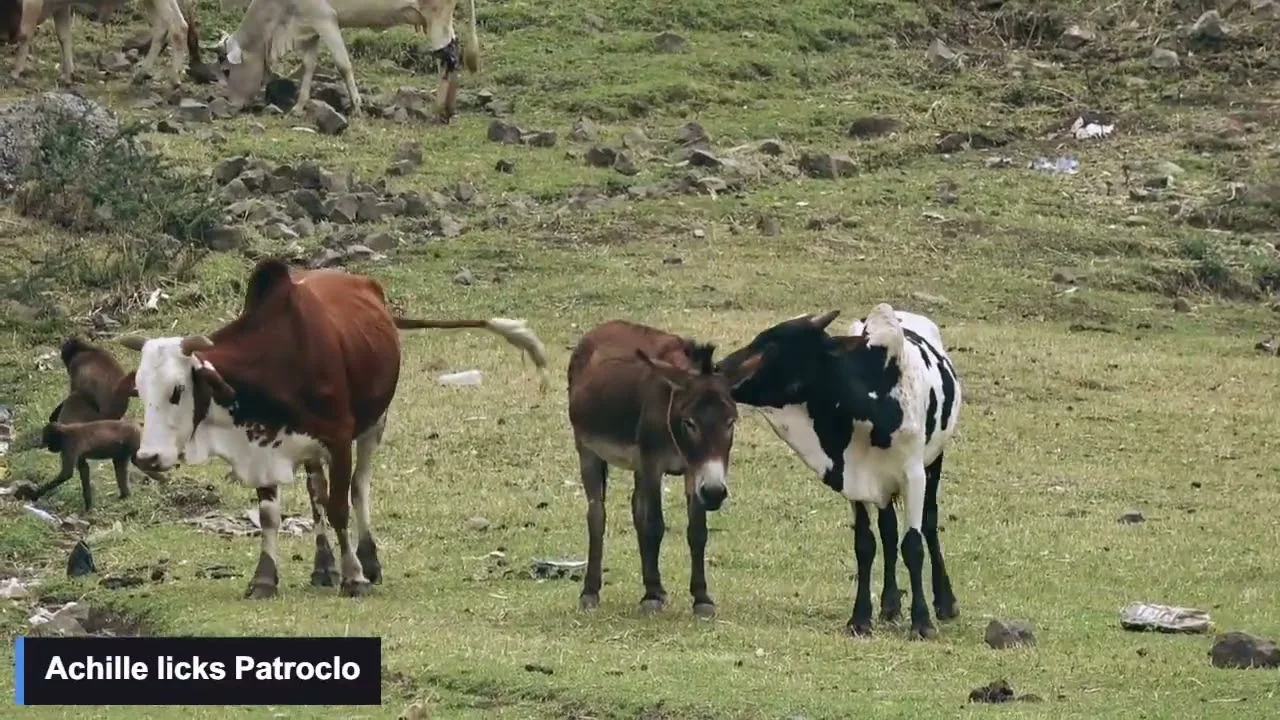
Beyond copulatory mounting, Achille and Patroclo spent hours exchanging gentle affiliative grooming in the Ethiopian sun [1]. Field observers logged mutual muzzle rubbing, head licking, and gentle nuzzling during long resting spells [2]. Strikingly, these post-mounting interactions occurred far more frequently than preliminary foreplay. In typical livestock mating, pre-copulatory nudging prepares partners for mounting. Here, the pair lingered together after mounting ceased, grooming one another for extended periods. Affection outlasted sex [1].
In their study published in Current Biology, the researchers explained that post-mounting grooming served as an index of mutual relationship security. “Although interpreting this behavior is challenging, the interactions observed between Achille and Patroclo, embedded in repeated, reciprocal, and mutual affiliative interactions, may also function as a signal of relationship quality,” the team wrote. This protective attachment surfaced clearly on an afternoon when Achille approached another donkey to mount it. Patroclo moved in directly to interrupt the encounter. Achille immediately broke away from the third animal and returned to Patroclo, licking Patroclo on the neck and shoulder [1].
Social Functions Beyond Reproduction
The field findings provide compelling evidence that sexual expression in mammals performs social duties separate from biological reproduction. In primate colonies, same-sex mounting is a well-known tool for conflict resolution and social stability. For example, male macaques mount one another following troop disputes to pacify rivals and cement political alliances. Long-term primatology data shows that male macaques forming strong social bonds through SSSB actually enjoy higher reproductive success over their lifetimes, suggesting that same-sex mounting can deliver substantial evolutionary advantages. While cattle and donkeys possess distinct herd structures, similar neurochemical rewards and social incentives may encourage cross-species bonding in mixed pastures [2].
Elisabetta Palagi cautioned that scientists should avoid viewing animal behavior through narrow human categories. “Nature does not always respect the boundaries we draw around it,” Palagi said. “Animal behavior is not a picture painted in black and white: It uses the whole palette, with all the colors of the rainbow [1].” Palagi added that ethologists want to explore how social bonds shape sexual acts and how behavioral flexibility lets animals navigate changing social settings. Achille and Patroclo showed how domestic animals adapt their emotional repertoires when granted freedom in communal pastures [2].
Studying how different species interact in communal pastures could transform livestock behavioral science [2]. When farm animals graze without human interference, their natural social inclinations flourish [1]. Achille and Patroclo proved that domestic animals can forge selective cross-species partnerships based on mutual care and sexual expression [2].
Unanswered Questions for Future Research
The ultimate fate of the partnership between Achille and Patroclo remains unresolved. Shortly after André da Cruz and the Pisa team completed their March observations, local farmers moved the bull and donkey to separate pastures located miles apart across the high Ethiopian plateau. The move ended their daily contact. Because the two were separated by seasonal farming needs, the researchers could not track whether their mutual attachment would endure into subsequent years. Palagi and da Cruz hope to revisit the Ethiopian site during upcoming field seasons to see whether Achille and Patroclo reconnect if reunited in the pasture [1].
The case illustrates how much rich animal behavior goes unnoticed in agricultural communities. Palagi said that unusual behaviors often remain dismissed as folklore simply because field scientists rarely have the opportunity to record them systematically. The findings in Current Biology reveal that sustained observation can uncover complex social lives in working farm animals [1]. By documenting Achille and Patroclo in Ethiopia, the Pisa researchers provided a rare window into the social diversity of animal relationships [2].
- ONLINE NEWS Dockrill, P. (2026, November 2). Scientists Witness a Mysterious Sexual Bond Between a Bull And a Male Donkey. ScienceAlert. [Article Link]
- ONLINE NEWS Baisas, L. (2026, November 2). A bull and a male donkey’s sexual relationship turns heads. Popular Science. [Article Link]
APA 7: PerEXP Teamworks. (2026, November 3). Biologists Document Rare Bond Between Bull and Donkey. PerEXP Teamworks. https://perexpteamworks.com/en/bull-and-donkey-socio-sexual-bond/


