





Political leaders and environmental advocates often change their vocabulary to convey the risks of a heating world, but recent psychological research shows that familiar words work best for public communication. When communicators adopt urgent phrases, they hope to inspire civic engagement among citizens. Yet experimental data gathered across the United States shows that plain phrasing is far more effective. A national survey led by researchers Wändi Bruine de Bruin and Gale Sinatra at the University of Southern California found that climate change terminology familiar to the public generates more concern than crisis slogans, offering clear guidance for scientists and civic leaders [1].
Climate Change Terminology in National Polls
Psychologists Wändi Bruine de Bruin, L. Kruke, Gale Sinatra, and N. Schwarz examined how American citizens interpret competing environmental labels during public discussions about planetary warming and national policy options. Working through the USC Dornsife College of Letters, Arts and Sciences, the team surveyed a nationally representative sample of 5,137 Americans to compare public reactions to five specific phrases. Participants were randomly assigned to evaluate “climate change,” “global warming,” “climate crisis,” “climate emergency,” or “climate justice.” The researchers published their experiment in Climatic Change, measuring how familiar each term felt, how much personal concern it produced, and whether it altered personal willingness to support climate-friendly policies or reduce red meat consumption [1].
The survey findings challenged common assumptions held by political communicators in Washington and London. Overall, participants rated “climate change” and “global warming” as the most familiar and most concerning of all five options. In contrast, the phrase “climate justice” ranked lowest on familiarity, concern, and policy support. Familiar terms generated the strongest public response [1].
Ratings for “climate crisis” and “climate emergency” fell in between those two extremes, failing to produce higher urgency than traditional names among surveyed adults. Willingness to support climate-friendly policies or eat less red meat showed few differences across most terms, but both measures dipped to their lowest levels when participants evaluated “climate justice.” Bruine de Bruin said that lower public familiarity likely contributed to this weaker response, because unfamiliar terms struggle to build personal connections with readers [1].
Why Crisis Labels Stumble
Public figures have increasingly turned to alarming words to prompt rapid action on environmental risks. At the 2026 United Nations climate summit, COP31, Secretary-General António Guterres and other international delegates used phrases like “climate emergency” to emphasize severe planetary risks facing low-income communities. Similar shifts occurred in journalism. In 2019, the British newspaper The Guardian updated its editorial style guide to favor “climate crisis” and “climate emergency” instead of older descriptions. The British paper made that change in 2019. Editors wanted to convey urgency to readers who might view climate shifts as distant, hoping that stronger nouns would awaken public concern across the United Kingdom and global audiences [6].
Does urgent language actually persuade skeptical audiences? An exploratory study by researchers L. Jaskulsky and R. Besel examined how 225 participants responded to four environmental labels in the journal Applied Environmental Education & Communication. The 2013 experiment tested 225 adults. Their findings revealed that “climate crisis” performed worst among all evaluated options [4].
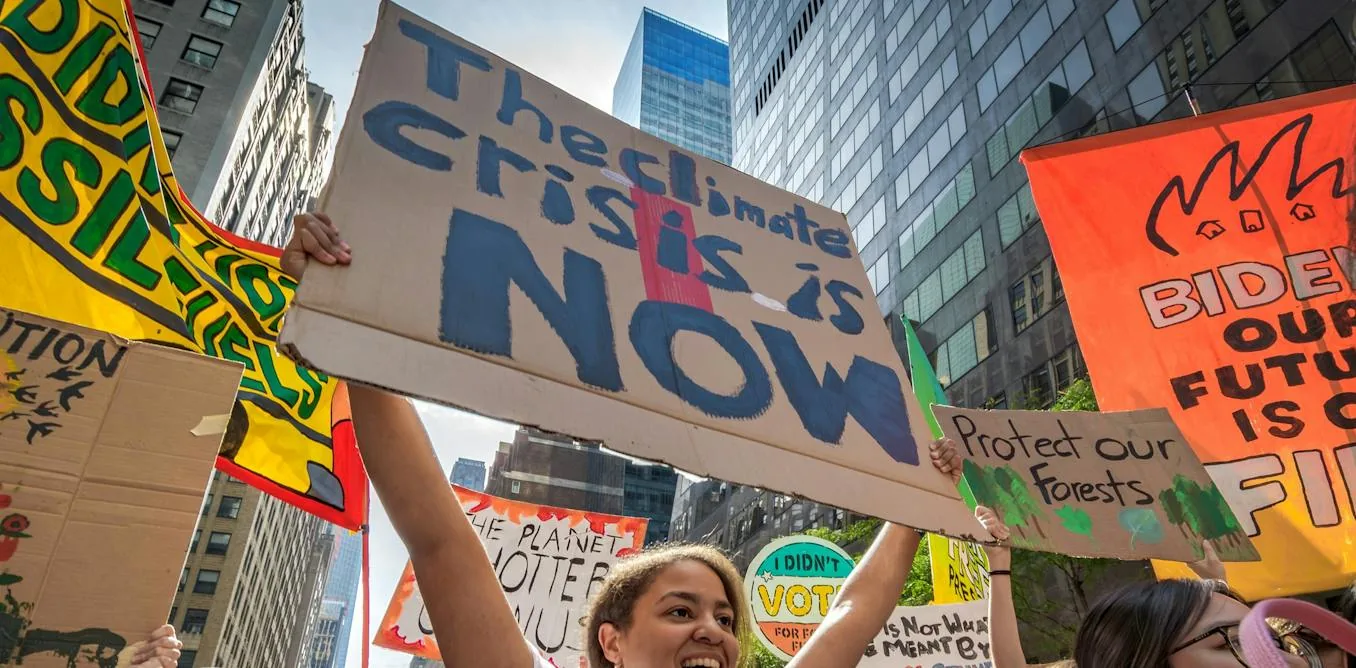
Surprisingly, the crisis label led to observable backlash effects, including increased disbelief and reduced concern, while “climatic disruption” performed best in statistically significant measures reported by Jaskulsky and Besel [4]. When language sounds exaggerated, readers may dismiss the underlying message or feel manipulated by advocates. Sinatra said that alternative terms do not guarantee greater commitment, even if they become common in speeches. Keeping descriptions grounded in plain reality prevents skepticism and helps maintain trust between scientists and the American public [6].
Partisan Divides Fade Over Time
Political alignment has long shaped environmental discourse in the United States, but partisan gaps regarding basic terminology have shifted over the past two decades of opinion polling among registered voters. In earlier research, Democrats tended to prefer “global warming,” associating it with human activity that heats the planet [1]. Meanwhile, Republican strategist Frank Luntz, an adviser to the George W. Bush administration, famously encouraged conservatives to use “climate change” because it sounded less threatening. Frank Luntz promoted that phrasing. Historical surveys analyzed by J. P. Schuldt, P. K. Enns, and N. Schwarz in the Journal of Environmental Psychology reflected this divide, showing Democrats viewed global warming as more serious, while Republicans viewed climate change as more serious [5].
Recent research indicates that those historical partisan differences have faded away across the United States. In the national survey of 5,137 Americans, response patterns were consistent across Republicans, Democrats, and political independents. Participants from all backgrounds expressed greater familiarity and concern when presented with “climate change” or “global warming.” Partisan groups shared common ground on basic terms [1].

The one term that suffered consistent pushback across party lines was “climate justice,” which ranked lowest among all surveyed groups. Environmental advocates often use the phrase to draw attention to planetary warming as a human rights issue, pointing out that poorer communities suffer the heaviest impacts despite contributing the fewest emissions. Ratings for climate justice fell lowest. Without broad public familiarity with the phrase, moral arguments fail to persuade American voters who do not yet grasp the underlying terminology [1].

Simplifying Climate Change Terminology for Everyday Readers
Beyond debates over broad slogans, scientists face persistent hurdles when communicating scientific concepts to non-specialists. In a study published in Climatic Change, researchers Wändi Bruine de Bruin, L. Rabinovich, K. Weber, and M. Dean examined public understanding of scientific vocabulary. Their interviews revealed that participants felt climate experts were routinely talking over their heads during public discussions. Readers struggled with specialized phrases such as “adaptation,” “mitigation,” “sustainability,” and “carbon-dioxide removal,” expressing a clear desire for simpler descriptions because complicated jargon creates an unnecessary barrier to public comprehension [2].
These communication obstacles led Sinatra and Bruine de Bruin to publish a quick guide to climate jargon through The Conversation and AOL. They urged researchers to replace academic phrases with common speech. When evaluating climate change terminology, precision should not come at the expense of clarity. Simpler words helped American readers grasp core concepts [6].
Lessons From Nature Loss Research
Similar linguistic patterns appear in related fields of environmental science, particularly where biodiversity research meets public outreach programs. In a 2026 study published in npj Biodiversity, a research team led by Wändi Bruine de Bruin and M. Dean investigated public responses to vocabulary surrounding ecological decline. The randomized survey experiment involved 7,338 U.S. adults who evaluated six candidate terms either alone or accompanied by photographs and explanations of plants and animals. The biodiversity survey tested 7,338 adults. Evaluated labels included “biodiversity loss,” “nature loss,” and “extinction of plants and animals,” as well as crisis variants like “biodiversity crisis,” “nature crisis,” and “extinction crisis” [3].
Just as with climate research, technical framing produced the weakest connection with audiences across the United States. The terms “biodiversity loss” and “biodiversity crisis” received the lowest ratings of familiarity, concern, perceived urgency, and conservation support. In contrast, the plain phrase “extinction of plants and animals” generated the highest ratings across all categories. Participants favored the extinction phrasing [3].
When researchers provided brief explanations with animal photographs, “nature loss” performed almost as well as the extinction phrase, while crisis wording had little to no measurable effect on participants. These terminology effects were strongest among political independents, who responded favorably to plain language but turned away from abstract crisis labels. When communication emphasizes relatable concepts like disappearing species, American citizens grasp the severity without feeling alienated by academic rhetoric [3].
Everyday Words Guide Action
The overarching takeaway from this body of psychological research is that effective environmental communication relies on clarity instead of alarmism. Psychologists emphasize that trying to force urgency through dramatic language can backfire, reducing credibility and weakening public resolve among citizens. Overheated rhetoric like “climate emergency” does not convince skeptical audiences, nor does it increase willingness to adopt climate-friendly habits among supporters. Sticking to familiar, well-understood climate change terminology gives citizens a stable reference point to evaluate scientific findings, while using “global warming” for rising temperatures and “climate change” for broader weather shifts maintains necessary accuracy [6].
Communicators can achieve better engagement by matching their vocabulary to the specific physical phenomena being discussed in news reports. Using global warming for rising temperatures and climate change for shifting weather patterns provides clear accuracy. Bruine de Bruin said that public familiarity is a powerful asset that science communicators should cultivate instead of discarding it. Familiar words allow audiences to focus on real solutions [1].
As global environmental discussions continue at international gatherings like COP31, the temptation to invent newer, more urgent slogans will persist among world leaders. However, years of empirical testing across thousands of American citizens demonstrate that old words remain the most reliable tools for building public understanding and supporting informed democratic decisions. Communicators who want Americans to care about planetary warming do not need a fresh set of buzzwords. They simply need to call it climate change [6].
- ACADEMIC JOURNAL Bruine de Bruin, W., Kruke, L., Sinatra, G. M., & Schwarz, N. (2024). Should we change the term we use for “climate change”? Evidence from a national U.S. terminology experiment. Climatic Change, 177(8). [Article Link]
- ACADEMIC JOURNAL Bruine de Bruin, W., Rabinovich, L., Weber, K., Babboni, M., Dean, M., & Ignon, L. (2021). Public understanding of climate change terminology. Climatic Change, 167(3-4). [Article Link]
- ACADEMIC JOURNAL Bruine de Bruin, W., Dean, M., Monder, C., Agsten, A., Cortobius, M., Silvera Seamans, G., Spaull, R., & Tenggardjaja, K. (2026). Public responses to biodiversity loss terminology and crisis framing. npj Biodiversity, 5(1). [Article Link]
- ACADEMIC JOURNAL Jaskulsky, L., & Besel, R. (2013). Words That (Don’t) Matter: An Exploratory Study of Four Climate Change Names in Environmental Discourse. Applied Environmental Education & Communication, 12(1), 38-45. [Article Link]
- ACADEMIC JOURNAL Schuldt, J. P., Enns, P. K., Konrath, S., & Schwarz, N. (2020). Shifting views on “global warming” and “climate change” in the United States. Journal of Environmental Psychology, 69, 101414. [Article Link]
- ONLINE NEWS Sinatra, G., & Bruine de Bruin, W. (2026). To get Americans to care about climate change, just call it climate change. The Conversation. [Article Link]
- ONLINE NEWS Bruine de Bruin, W., & Sinatra, G. (2026). To get Americans to care about climate change, just call it climate change. AOL.com. [Article Link]
APA 7: PerEXP Teamworks. (2026, November 14). Climate Change Terminology Shapes Public Concern in U.S. Studies. PerEXP Teamworks. https://perexpteamworks.com/en/climate-change-terminology-shapes-public-concern/


