





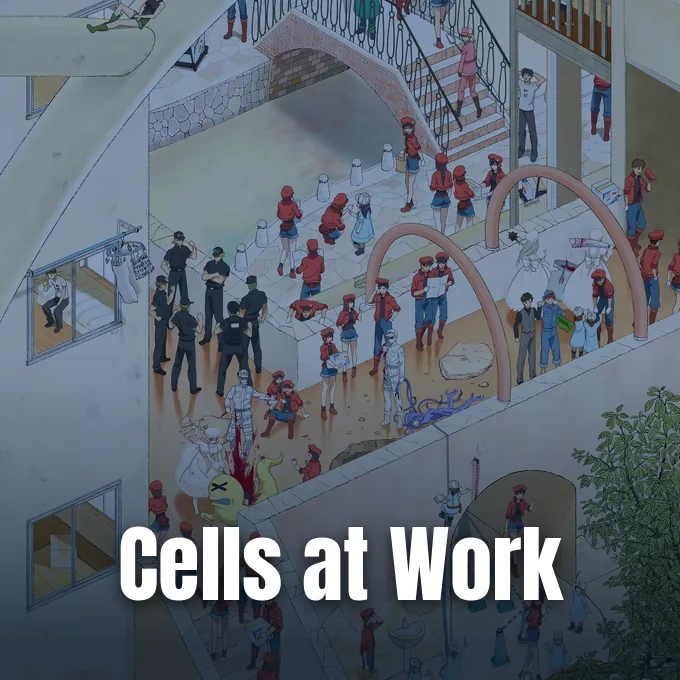
Akane Shimizu created a hit manga and anime series that gives a true look at human body science, turning cell defense and blood flow into fun animated tales. While anime uses cute traits and bold fights, the cellular actions follow real immunology. The body holds about 37.2 trillion cells working all day and night through blood routes, lymph nodes, and organ walls [3]. Checking how cells at work accurate science models real human defense shows that the anime matches medical facts with high precision.
- How Cells at Work Accurate Depictions Begin
- Neutrophil Tactics in First Line Pathogen Defense
- How Macrophages Clear Cellular Debris
- Why Killer T Cells Need Dendritic Activation
- Platelet Clotting at Vascular Wound Sites
- How Cells at Work Accurate Science Models Circulation
- Cancer Cell Division and Checkpoint Controls
- Where Cells at Work Accurate Framing Meets Classroom Study
How Cells at Work Accurate Depictions Begin
Akane Shimizu started publishing the manga series Cells at Work! in January 2015 inside Kodansha’s Monthly Shōnen Sirius magazine [2]. David Production adapted the print chapters into a television anime directed by Kenichi Suzuki, with script writer Yuuko Kakihara and animator Takahiko Yoshida [3]. The manga sold 1.5 million copies in print [2]. Evaluating how cells at work accurate storytelling operates shows that each creative scene rests upon real immune science [1].
In the Japanese version named Hataraku Saibō, the human frame acts like a busy city where billions of cellular citizens labor each day [1]. Classical cell theory set forth by Robert Hooke and Rudolf Virchow proved that all living body tissue grows from preexisting cells that split in two through an orderly cycle of division [10]. Shimizu built on that rule by giving neat uniforms to red blood cells, platelets, and white blood cells (such as leukocytes) [1]. Animators Kenta Mimuro and Keiko Tamaki designed cell gear, while Kenichiro Suehiro made the music at MAYUKO [3]. Voice stars Kana Hanazawa and Tomoaki Maeno lead the Japanese cast as a red blood cell and a white neutrophil [2]. Viewers follow real body routes while watching cellular guards face enemy germs.
Rather than making up magic spells, the plot uses real body crises like scrapes, pollen sneezes, and food bugs [1]. When surface skin tears, outside germs rush into tissue like raiders, forcing blood guards to mount a fast defense [2]. While Kodansha also published the Cells at Work dental spinoff to teach oral care, the main television series covers whole-body defense against deadly bacterial invaders that threaten life. Director Kenichi Suzuki checked medical books so that cell clashes matched true microscopic events [1, 3]. Blood cells do not carry steel daggers, but their jobs fit real hematology.
Neutrophil Tactics in First Line Pathogen Defense
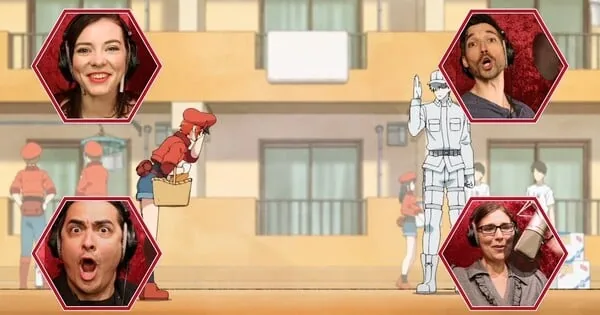
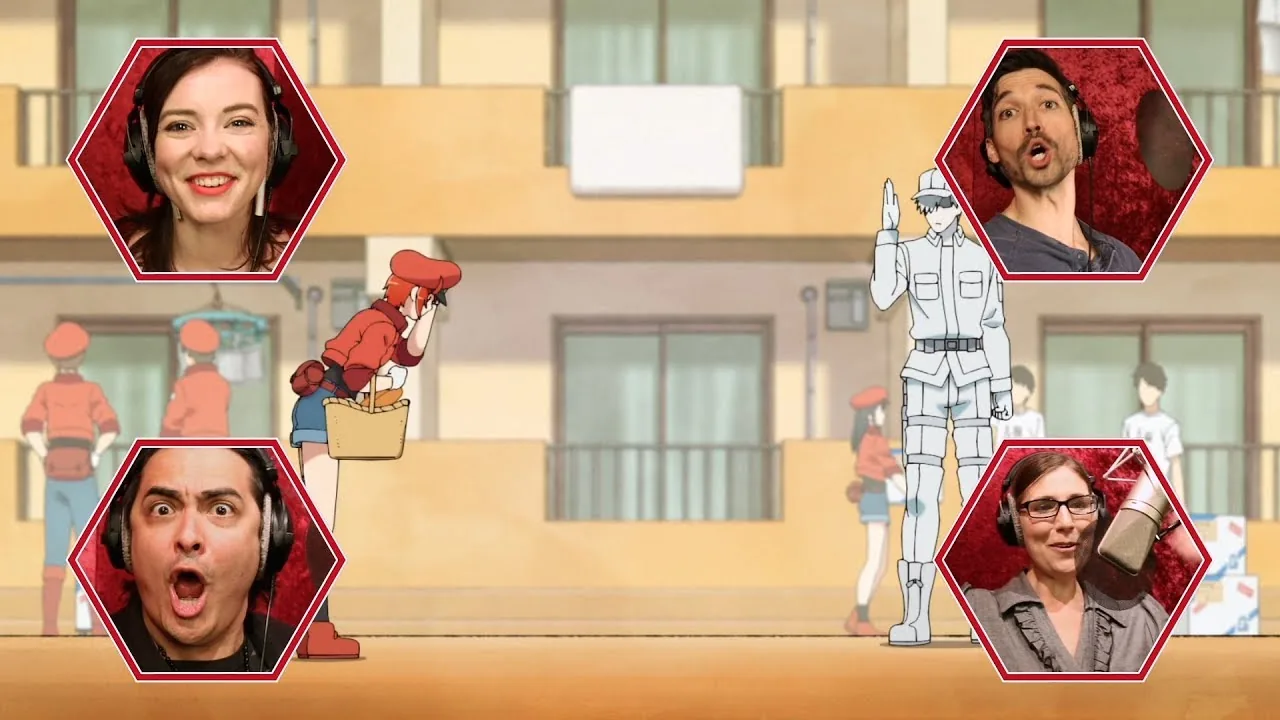
White blood cells known as neutrophils serve as the body’s first guards whenever bad germs break through skin walls [1]. In the anime, this cellular class appears through the hero U-1146, named White Blood Cell Neutrophil, who hunts down germs with grim focus. Billy Kametz voices this character in the English dub, while Tomoaki Maeno plays him in Japanese [3]. Human neutrophils make up most circulating white cells, patrolling blood paths to sense chemical cries from hurt tissue [1]. U-1146 shows this fast run whenever skin gets cut.
When bacterial antigens appear during a puncture injury, neutrophils squeeze through endothelial junctions in capillary walls through extravasation to reach the infection site without causing permanent structural damage to surrounding tissue [2]. In the anime, U-1146 slashes invading Streptococcus pneumoniae germs with his knife. U-1146 never hesitates during combat. In human tissue, these cells destroy bacteria using reactive oxygen species and digestive enzymes [1]. They also cast extracellular nets of chromatin fibers that trap passing microbes, fighting so hard that each white cell dies within days to protect surrounding body organs [2].
Fans often ask why neutrophil characters wear all-white suits from their hats down to their boots. This artistic choice reflects real histology, as unstained neutrophils look clear under optical microscopes (unlike pigmented red erythrocytes) [1]. Dyes with neutral pH stain them pale pink, separating them from pink eosinophils and dark basophils. This pale hue gives an accurate visual cue.
How Macrophages Clear Cellular Debris
While neutrophils fight early germ attacks, Macrophage characters carry out deep tissue cleaning and defense [1]. Voiced by Laura Post in English and Kikuko Inoue in Japanese, Macrophage looks like a gentle maid in a frilly apron who swings big cleavers and blunt hammers [3]. In living tissue, macrophages are large eaters that swallow dead red cells, cell waste, and beaten germs to keep body areas clean [1].
The show adds a neat biological fact by giving Macrophage two very different looks based on where she works. While flowing inside blood tubes, these white cells wear yellow hazmat suits and call themselves monocytes. Once they leave the bloodstream and move into soft flesh, they take off these suits to show their maid dresses as mature macrophages. This shift matches human hematology with great precision because circulating blood monocytes must migrate across capillary walls and enter connective tissues before differentiating into mature macrophages capable of sustained phagocytic cleanup. Japanese actor Wakana Matsumoto played this role in the live-action movie adaptation [1].
Past their cleanup work, macrophages help start adaptive immunity by showing eaten germ bits to helper lymphocytes (CD4+ T cells). After melting caught microbes inside acid bags called phagolysosomes, macrophages set peptide tags on their cell surface through major histocompatibility complex molecules [1]. This display alerts master cells in nearby lymph nodes that a bad bug needs a custom antibody attack. The anime shows this link by having maid-dressed macrophages bring written battle logs to lymphoid war rooms [3]. Their sunny smiles during fierce clashes reflect their calm, endless work in tissue upkeep.
Why Killer T Cells Need Dendritic Activation
Adaptive immune defense requires strict regulation across lymphoid organs because uncontrolled cytotoxic attacks could cause severe tissue destruction throughout healthy body systems [1]. Helper T Cell commands this branch. Voice actor Ray Chase plays this commander, sending orders to field fighters from his desk. Under his command, Robbie Daymond voices Killer T Cell as an aggressive fighter who destroys virus-infected host cells, while young Naive T Cells wait nervously because they lack activation signals [1, 3].
Signal power comes from Dendritic Cell, shown as a green-clad courier who works in a call hub shaped like a tree [1]. Nobuhiko Okamoto voices him in Japanese, while Griffin Burns takes the role in English [3]. In the anime, Dendritic Cell inspires scared Naive T Cells by showing them funny photos of their commanders, turning them into buff Effector T Cells [1]. In real lymph nodes, dendritic cells carry out this activation through chemical costimulation, showing foreign antigens alongside cytokines to spark cell growth. Naive cells stay asleep without this push [7].
Immunologists Jurgens, Popović, and Wolkers reported in the European Journal of Immunology that resting T cells control protein output through post-transcriptional controls to stay ready for fast activation. Resting T cells hold messenger RNA transcripts that allow prompt synthesis of granzymes and perforins upon meeting enemy antigens. Once dendritic signals fire, cytotoxic T cells release these toxic packets to trigger cell suicide in infected cells before viruses spread [7]. The dramatic physical transformation of Naive T Cells in the show reflects this rapid molecular transition, showing how cells at work accurate storytelling translates complex post-transcriptional preparedness into accessible visual action.

Platelet Clotting at Vascular Wound Sites
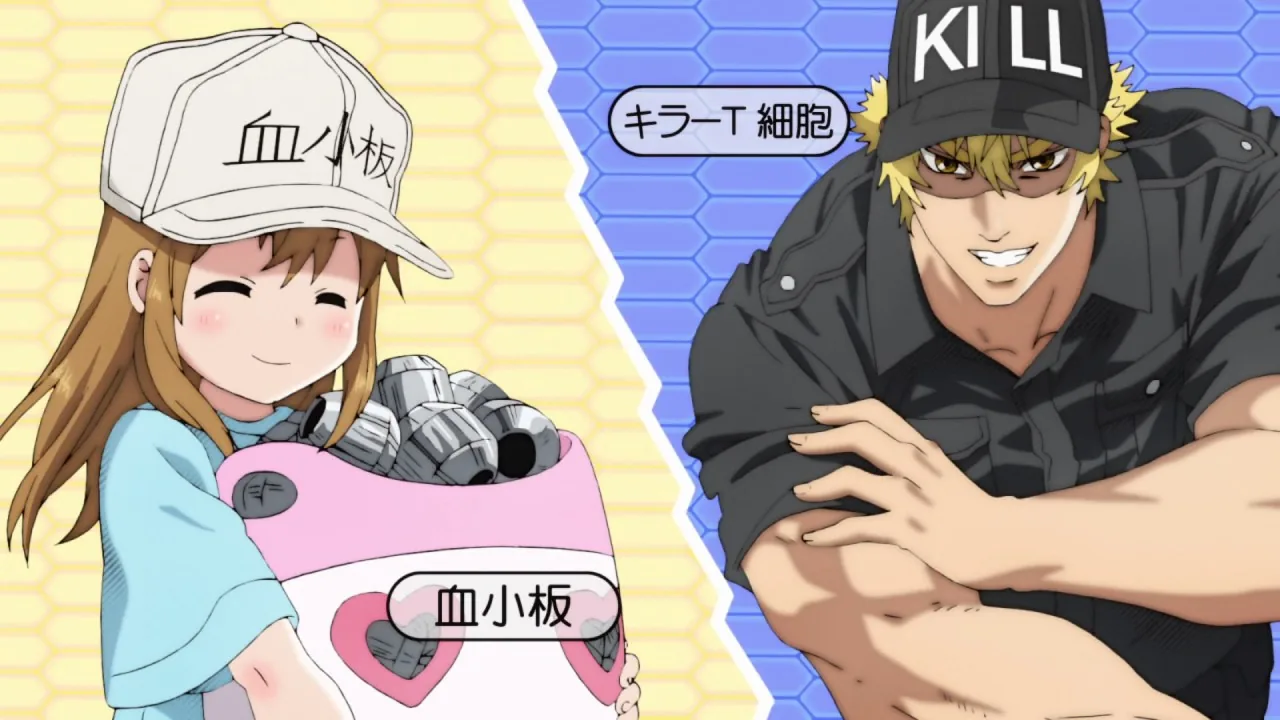
Among the most famous figures in the series are the Platelets, shown as sweet nursery children dressed in blue shirts and boots. Maria Naganawa voices the team leader in Japanese, and Xanthe Huynh plays her in English, while child actor Maika Pugh took the part on film [1, 3]. These small builders carry tiny shovels, safety nets, and warning whistles [3]. Their cute sizes mirror cell biology with direct truth. Real blood platelets (thrombocytes) are tiny cell pieces pinched off from giant bone marrow megakaryocytes, measuring only two to three micrometers across [1]. Because they are far smaller than red or white cells, drawing them as kids gives an accurate size scale.
When an abrasion cuts open surface skin, the platelet crew runs to the break to stop dangerous blood loss. In living human tissue, vascular damage exposes subendothelial collagen fibers to circulating blood, prompting nearby platelets to adhere firmly, change their spherical shape, and release chemical messengers that recruit additional thrombocytes. In the anime, the tiny crew ropes off the hole and spreads large nets across the gap. These nets stand for fibrin fibers, sticky protein ropes created by the clotting cascade that catch passing cells to form a solid plug [1]. The team labor seen on screen matches medical facts of wound healing.
Can tiny cell bits really fix a hole without spoken orders? In living blood tubes, platelets bind through surface glycoprotein hooks and local chemical trails rather than human words [1]. Once fibrin strands lock tight, caught red cells dry into a scab, letting skin cells regrow through normal cell division [10]. The anime turns clotting into easy visual construction.
How Cells at Work Accurate Science Models Circulation
The anime builds its daily journey around the hard work of red blood cell AE3803, voiced by Kana Hanazawa in Japanese and Cherami Leigh in English [2, 3]. Mei Nagano played this clumsy courier in the live-action movie. Wearing a bright red jacket, AE3803 wheels handcarts full of oxygen crates from lung depots to distant body tissues. Along her routes, she wanders through an endless maze of vascular roads, often losing her path in winding capillary beds [1].
Her poor sense of direction highlights a real bodily truth, as the human blood loop spans thousands of miles of tiny vessels [5]. Red blood cells must bend their flexible biconcave disk shapes to squeeze through narrow peripheral capillaries that frequently measure smaller in diameter than the resting blood cells themselves [1]. A study by Cortese-Krott and coauthors in the journal Blood showed that human red cells also hold endothelial nitric oxide synthase activity. This enzyme turns L-arginine into nitric oxide, helping ease vessel tightness and steer local blood flow during work shifts. While the anime shows AE3803 simply pushing boxes, her contact with vessel walls mirrors how red cells help guide blood vessel tone during circulation [8]. Blood flow is an active chemical loop rather than passive water pipes.
Educational tests prove that this blood flow model works well in school. In a 2025 study in Journal of Mangifera Edu, researchers Syadella, Ahmad, Hizqiyah, and Gurnita tested tenth-grade students at SMA Pasundan 2 in Bandung. Pupils who watched Cells at Work! videos raised their test scores from 56 to 83 on circulatory system topics. The study proved that animated scenes helped students understand heart chambers, lung loops, and gas trades [5]. These findings confirm that cells at work accurate modeling gives genuine classroom value.
Cancer Cell Division and Checkpoint Controls
Dark themes of body illness appear in the story of Cancer Cell, played by Akira Ishida in Japanese, Khoi Dao in English, and singer Fukase on screen [1]. Unlike outside bacterial or viral raiders, Cancer Cell began as an ordinary body cell because no biological system achieves 100% replication accuracy during billions of divisions [9]. In the anime, he mourns his sad fate, asking why mutant cells face death from immune guards [1].
This plot reflects the biological truth that tumors arise from somatic mutations in our own DNA. Healthy cell division requires tight molecular checks to stop flawed cells from growing in body tissue. The 2001 Nobel Prize in Physiology or Medicine was awarded to Leland Hartwell, Paul Nurse, and Tim Hunt for discovering key cell cycle regulators. Hartwell introduced the concept of cell cycle checkpoints and identified cell division cycle genes in yeast at the Fred Hutchinson Cancer Research Center in Seattle, while Nurse cloned cyclin-dependent kinases (CDKs) at the Imperial Cancer Research Fund in London and Hunt found cyclins that degrade at each division. Together, cyclins and CDKs act like engines and gearboxes to pause replication if DNA damage appears [9, 11]. When tumor suppressor genes fail and checkpoints break down, mutant cells multiply without end [9].
NK Cell patrols peripheral tissues. Voiced by Morgan Berry and Toa Yukinari, this natural killer cell uses a sharp machete to execute rogue cells before dangerous tumor masses can take root inside host organs [1, 3]. Natural killer cells recognize abnormal surface markers on mutated cells to trigger rapid cell death [7]. By contrasting Normal Cell division with Cancer Cell growth, the series illustrates cell cycle breakdown with remarkable scientific fidelity, showing why checkpoint surveillance remains vital to human survival [1, 9].
Where Cells at Work Accurate Framing Meets Classroom Study
Researchers have tested how Cells at Work! aids biology learning across varied schools. In a 2021 study in ULTIMART Jurnal Komunikasi Visual, writers Cintya, Mansoor, and Ahmad mapped the educational reach of the franchise across manga, picture books, and spinoffs. Their report showed that spinoff comics help readers learn focused medical topics, such as gut bacteria in Bacteria at Work by Haruyuki Yoshida [1, 6].
The success of the original series led Kodansha to create more medical spinoffs, including Cells at Work! Code Black by Shigemitsu Harada and Issei Hatsuyoshi, which shows body damage from smoking and heavy drinking [1]. PerEXP Teamworks reviewed this branch in its report on the Cells at Work dental spinoff manga, showing how mouth bacteria attack teeth and cause gum swelling. English dub director Christian La Monte and theme writer Kayli Mills helped bring this educational world to Western fans through the song “Mission! Health Comes First” sung by Cherami Leigh and Robbie Daymond [3, 4]. Each version pairs real anatomical facts with fun character drama.
Does creative anthropomorphism distort scientific understanding? While biological cells do not possess conscious emotions, clothing, or spoken dialogue, their represented behaviors reflect genuine biochemical interactions with striking fidelity [1]. The anime’s depictions of phagocytosis, antigen presentation, platelet clotting, and capillary gas exchange match modern medical curricula closely [5]. By giving human faces to microscopic defenders, Shimizu created an educational bridge that demystifies human physiology for audiences worldwide [3]. Evaluating cells at work accurate storytelling proves that rigorous biological science and compelling television animation can coexist in educational harmony across diverse classroom settings [1, 5].
- WEBSITE Wikipedia contributors. (2026). Cells at Work! Wikipedia, The Free Encyclopedia. [Article Link]
- ONLINE NEWS Anime News Network. (2018). Cells at Work! TV anime stars Tomoaki Maeno, Kana Hanazawa. [Article Link]
- ONLINE NEWS Sherman, J. (2019). Aniplex of America reveals Cells at Work! anime’s English dub cast, BD release. Anime News Network. [Article Link]
- ONLINE NEWS Aguda, P. (2019). Cells at Work! heading to BD with English dub, English opening shown. Operation Rainfall. [Article Link]
- ACADEMIC JOURNAL Syadella, F., Ahmad, I., Hizqiyah, I. Y. N., & Gurnita, G. (2025). The cells at work animation improves students’ analytical skills in learning the circulatory system. Journal of Mangifera Edu, 10(1), 23-31. [Article Link]
- ACADEMIC JOURNAL Cintya, H. A. B., Mansoor, A. Z., & Ahmad, H. A. (2021). Cells at Work: Media integration mapping. ULTIMART Jurnal Komunikasi Visual, 14(1), 89-106. [Article Link]
- ACADEMIC JOURNAL Jurgens, A. P., Popović, B., & Wolkers, M. C. (2021). T cells at work: How post-transcriptional mechanisms control T cell homeostasis and activation. European Journal of Immunology, 51(9), 2178-2187. [Article Link]
- ACADEMIC JOURNAL Cortese-Krott, M. M., Rodriguez-Mateos, A., Sansone, R., Kuhnle, G., Thasian-Sivarajah, S., Krenz, T., Horn, P., Krisp, C., Wolters, D. A., Heiß, C., Kröncke, K., Hogg, N., Feelisch, M., & Kelm, M. (2012). Human red blood cells at work: Identification and visualization of erythrocytic eNOS activity in health and disease. Blood, 120(20), 4229-4237. [Article Link]
- PRESS RELEASE Nobel Prize Outreach. (2001). The Nobel Prize in Physiology or Medicine 2001: Leland H. Hartwell, R. Timothy Hunt, Paul M. Nurse. NobelPrize.org. [Article Link]
- WEBSITE Davidsecko. (2006). The cell cycle: A universal cellular division program. The Science Creative Quarterly. [Article Link]
- WEBSITE Wikipedia contributors. (2026). Cell cycle. Wikipedia, The Free Encyclopedia. [Article Link]
- ACADEMIC JOURNAL Schmidt, M., Schüler, S. C., Hüttner, S. S., Eyß, B. v., & Maltzahn, J. v. (2019). Adult stem cells at work: Regenerating skeletal muscle. Cellular and Molecular Life Sciences, 76(13), 2559-2570. [Article Link]


