






NASA’s SAGE III ISS payload continues to serve as an anchor instrument for observing the vertical chemistry of Earth’s atmosphere from low orbit. Formally known as the Stratospheric Aerosol and Gas Experiment III, the instrument measures how trace gases and airborne particulates interact across the upper troposphere and stratosphere. How do researchers ensure that continuous satellite records remain accurate across decades of climatic shifts? The answer depends on rigorous multi-instrument cross-validation, and the ninth annual science team meeting at NASA Langley Research Center confirmed new data milestones across international research groups [1].
- What Role Do Aerosols Play in the Upper Atmosphere?
- How Does SAGE III ISS Track Particles After Dark?
- SAGE III NASA Validates Atmospheric Data Across Global Satellite Fleets
- Calibrating Stratospheric Sensors Against Volcanic Plumes and Severe Wildfires
- How SAGE III/ISS Algorithms Improve Climate Modeling for Future Orbiters
- Upgrading Public Access and Mission Operations Aboard the Space Station
What Role Do Aerosols Play in the Upper Atmosphere?
Aerosols in the upper atmosphere regulate Earth’s climate by scattering incoming solar radiation, altering cloud microphysics, and catalyzing chemical reactions that govern the ozone layer [6].
These microscopic solid particles and liquid droplets originate from natural sources such as volcanic eruptions and intense biomass burning, as well as human industrial emissions. Once lofted into the stratosphere, aerosol particles can persist for multiple years because the stable air lack precipitation to wash them out [6]. The vertical distribution of these particulates determines whether they produce local heating or surface cooling [3]. Research teams led by NASA Langley Research Center track both particle abundance and size distributions to distinguish background conditions from dramatic natural disturbances [1].
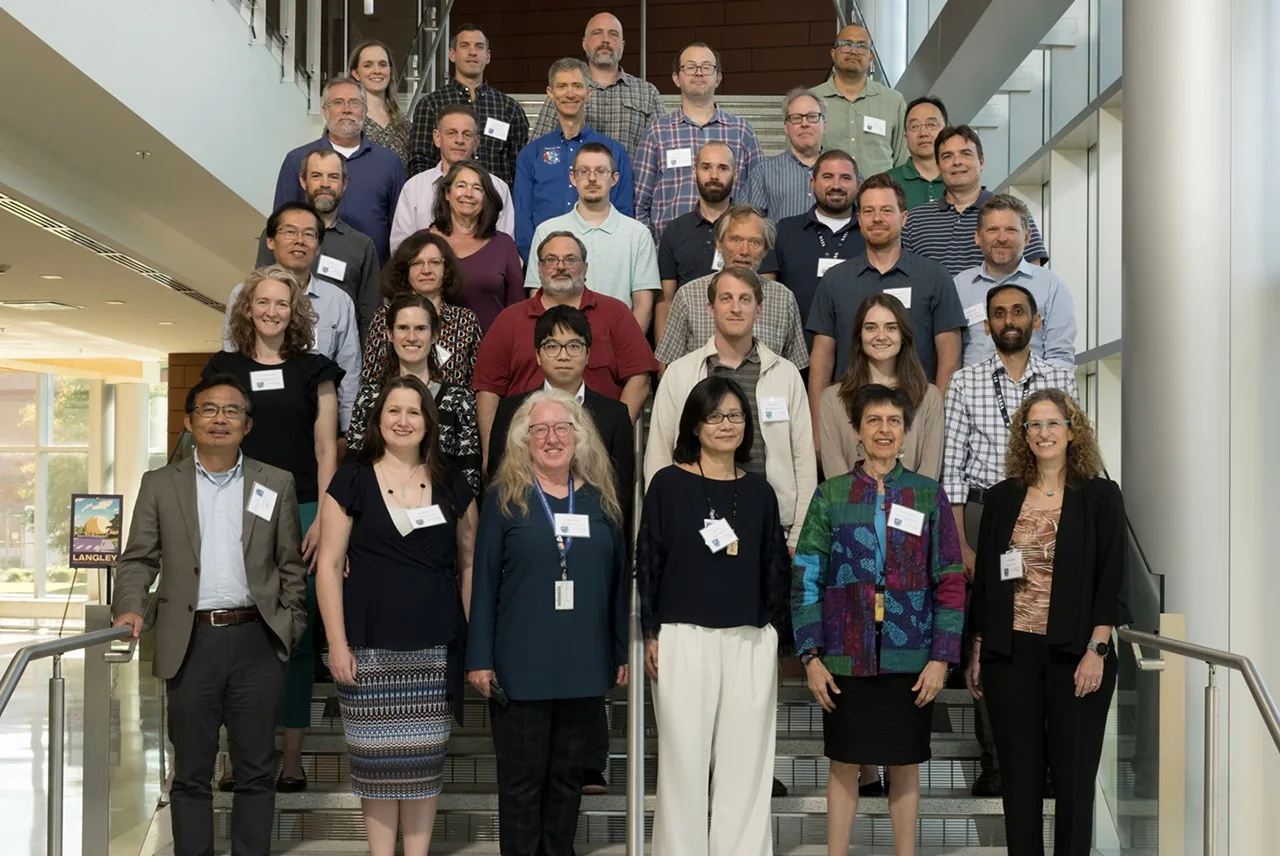
Vertically resolved aerosol profiles are critical because tiny variations in layer altitude dramatically shift radiative forcing across hemispheric weather patterns [1]. When smoke or sulfur enters the stratosphere, it alters chemical balances by providing reactive surfaces that accelerate catalytic ozone depletion [2]. At the ninth annual science team meeting held August 19–20, 2026, in Hampton, Virginia, approximately 60 scientists and engineers reviewed observations confirming that multi-wavelength extinction measurements provide indispensable constraints for global climate simulations. The meeting hosted roughly 60 specialists. International collaborators from the University of Saskatchewan and the Royal Belgian Institute for Space Aeronomy demonstrated that consistent long-term extinction records remain vital for detecting whether global aerosol trends reflect baseline changes or transient volcanic spikes [1].
How Does SAGE III ISS Track Particles After Dark?
The SAGE III ISS payload observes nocturnal particles by tracking sunlight reflected from the Moon through the atmospheric limb rather than relying strictly on direct solar occultation [1]. While solar occultation offers high signal-to-noise ratios during orbital sunrises and sunsets, lunar occultation extends coverage across the dark hemisphere [6]. SAGE III launched in February 2017. By measuring moonlight attenuation as the lunar disk slips behind Earth’s edge, scientists gather extinction profiles across latitudes that solar events cannot sample during specific orbital phases [4].
Developing this nighttime aerosol product presented formidable mathematical hurdles because the lunar surface features non-uniform brightness across craters and maria. To overcome surface albedo variations, University of Iowa researchers Xi Chen and Science Team Leader Jun Wang engineered a specialized local normalization method. Their processing algorithm derives atmospheric transmission directly from signals detected within each discrete lunar event. Initial comparisons between these lunar retrievals and collocated solar measurements confirmed close agreement, demonstrating that lunar events reliably capture stratospheric transmission [2].
This computational breakthrough expands available data coverage by about 10% to 15%, illuminating nighttime stratospheric dynamics following major volcanic eruptions and wildfires [4]. The science team announced that these lunar aerosol products will formally augment standard solar products, providing researchers with unprecedented temporal continuity across both illuminated and darkened limbs of the planet [1]. These nocturnal observations ensure that sudden nighttime aerosol injections do not escape satellite surveillance before morning light [6].
SAGE III NASA Validates Atmospheric Data Across Global Satellite Fleets
Long-term climate analysis requires reconciling observations across disparate spaceborne platforms, and SAGE III NASA measurements serve as the primary validation anchor for global atmospheric datasets [1]. Orbiting aboard the International Space Station, the spectrometer provides high vertical resolution profiles that ground-based networks and polar-orbiting satellites use to evaluate instrument drift [6]. The payload passed 70,000 successful occultations [2].
At the 2025 science team meeting, Dr. Sean Davis from NOAA’s Chemical Sciences Laboratory confirmed that SAGE data is fully incorporated into the Stratospheric Water and OzOne Satellite Homogenized (SWOOSH) dataset. SWOOSH tracks decadal composition shifts and provides essential inputs for climate models evaluating carbon dioxide radiative forcing, such as ongoing studies led by Brian Soden at the University of Miami. SAGE observations have become increasingly vital because the Aura Microwave Limb Sounder (MLS) instrument reduced its water vapor operations to approximately one week per month due to hardware electronics aging. Aura MLS reduced observations in 2025. SAGE III ISS and the Canadian SCISAT Atmospheric Chemistry Experiment Fourier Transform Spectrometer (ACE-FTS) now serve as primary anchors for stratospheric moisture trends [4].
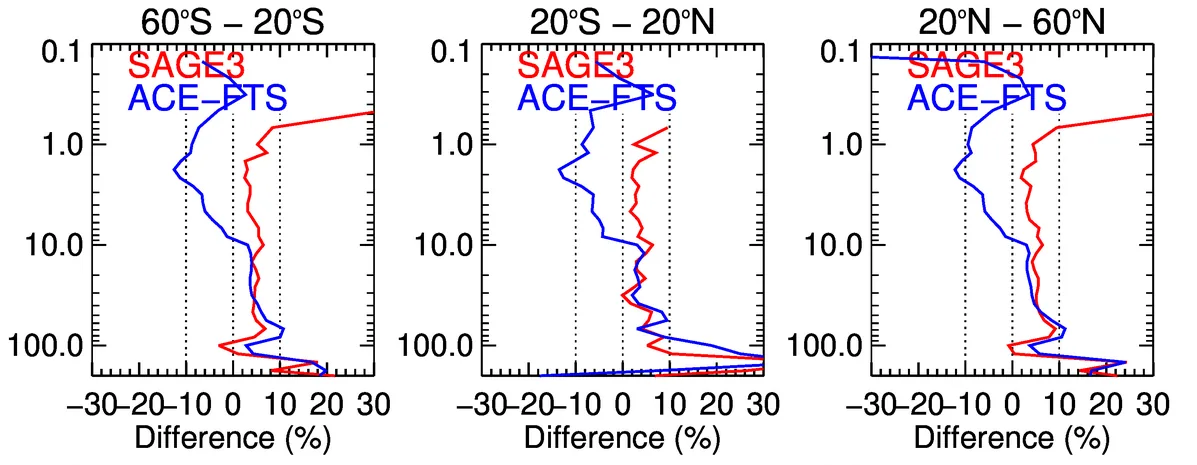
Parallel validation work by Dr. H.J. Ray Wang of Georgia Tech integrated SAGE measurements into the Global OZone Chemistry And Related trace gas Data records (GOZCARD), which stretches back to 1979 for ozone and 1991 for water vapor. Wang reported that SAGE III and Aura MLS agree within 5% from the upper stratosphere down to the tropopause, confirming exceptional baseline consistency. While ACE-FTS displays a dry bias of about 10% above 10 millibars and a 5% wet bias below that altitude, SAGE retrievals remain remarkably stable across intermediate pressure levels. These comparative records demonstrate the necessity of multi-satellite calibration for sustaining reliable climate records [4].

Calibrating Stratospheric Sensors Against Volcanic Plumes and Severe Wildfires
Major environmental upheavals provide real-world stress tests that reveal how satellite sensors perform under extreme particulate loading [6]. The Hunga eruption injected massive aerosols. When the Hunga submarine volcano erupted violently in early 2022, it injected immense plumes of water vapor and sulfur into the southern stratosphere, challenging standard optical retrieval assumptions. Two years prior, the 2020 Australian wildfires generated unprecedented smoke columns that penetrated the lower stratosphere through pyrocumulonimbus activity [1].
These massive injections exposed algorithmic vulnerabilities in other orbiting suites, notably the Ozone Mapping and Profiler Suite Limb Profiler (OMPS-LP). Research by N. Richards at Goddard Space Flight Center and Mary Cate McKee at NASA Langley revealed that post-2022 OMPS-LP lower stratospheric ozone data exhibited substantial positive biases caused by unflagged volcanic aerosol contamination. In contrast, SAGE III ISS ozone retrievals proved largely immune to Hunga aerosol interference because multi-channel extinction fitting accurately decoupled gas absorption from particle scattering. Similar rigorous observational standards also guide NASA ROSES funding opportunities for hydrosphere research, where precise airborne data calibration protects multi-decade environmental records against measurement distortion [4].

Complementary analyses by Adam Pastorek and Peter Bernath from Old Dominion University examined sulfate aerosol chemistry by pairing Canadian SCISAT infrared spectra with SAGE optical extinction. By tracking sulfur dioxide destruction and sulfuric acid formation, their team derived empirical formulas for volcanic plume composition using bimodal size distributions. Meanwhile, Sara Lu from the State University of New York at Albany utilized Naval Research Laboratory inventories to analyze multi-year radiative impacts from pyrocumulonimbus events [2]. These collaborative case studies confirm that SAGE datasets remain crucial for evaluating atmospheric disturbance models [6].
How SAGE III/ISS Algorithms Improve Climate Modeling for Future Orbiters
Data processing refinements spearheaded by the science computing facility at NASA Langley ensure that historical observations continuously gain scientific fidelity. In April 2025, the project released Version 6.0 (V6) standard products, which resolved a longstanding low bias in aerosol extinction near 600 nanometers by updating underlying ozone absorption cross sections. Data releases began in April 2025. Lead Thermal and Chief Engineer Robbie Manion explained that V6 also recovered hundreds of atmospheric profiles previously blocked by solar activity, improving downstream particle size distribution products [2].
Building upon these improvements, the team is preparing expedited data products for release during calendar year 2026, followed by comprehensive Version 6.1 standard products planned for 2027. Version 6.1 arrives in CY27 [1]. These updated algorithms directly enhance the Global Space-based Stratospheric Aerosol Climatology (GloSSAC), supported by Mahesh Kovilakam, Larry Thomason, and Travis Knepp under NASA funding [5]. Particle-size information retrieved by SAGE III ISS has also become fundamental for tuning limb-profiling retrieval models on other active instruments, including OMPS-LP and OSIRIS [1].

Future spaceborne missions now in formulation will inherit these algorithmic foundations. Lyatt Jaeglé from the University of Washington presented the concept for the Stratosphere Troposphere Response using Infrared Vertically-resolved light Explorer (STRIVE), a Phase A concept study producing 400,000 daily profiles with 1-kilometer vertical resolution. Simultaneously, Björn-Martin Sinnhuber of the Karlsruhe Institute of Technology outlined the European Space Agency’s candidate mission CAIRT, which plans limb tomography between 5 and 115 kilometers [2]. Both future systems rely on SAGE baseline records to calibrate next-generation infrared and radiometer sensors [7].
Upgrading Public Access and Mission Operations Aboard the Space Station
Maintaining continuous orbital operations on a crewed outpost requires active engineering vigilance. Mission Operations Engineer Jamie Nehrir reported that the instrument suffered no contamination when an external coolant leak occurred from the Russian Nauka module on October 9, 2023. Nauka leaked externally in October 2023. However, operations teams are closely managing degradation in the Disturbance Monitoring Package (DMP) lasers on the y- and z-axes, coordinating across Langley engineering divisions to prevent pointing disturbances from corrupting solar tracking [2].
Following the 2023 Earth Science Senior Review, NASA Headquarters approved continued operations through 2026, granting partial overguide funding to support community validation efforts and online visualization tools. Project Scientist David Flittner characterized recent milestones as an era of operational growth despite necessary staffing reorganizations. Expanding open data access remains central to the mission’s ethos, reflecting principles shared by open science frameworks under the Artemis Accords that ensure global researchers can freely inspect observational data [2]. Ground Systems Manager Jim Farmer and Data Scientist Andrew Peterson maintain user-access portals allowing atmospheric chemists worldwide to download verified extinction profiles [3].
With international partnerships expanding and advanced lunar occultation algorithms entering operational service, SAGE III ISS continues to reinforce the foundation of global atmospheric science. Validating subtle climate feedback loops over multidecadal timescales ultimately requires uncompromised vertical precision, and researchers worldwide are integrating these orbital datasets directly into future satellite architectures. The upcoming release of Version 6.1 in 2027 will test whether next-generation retrievals can completely eliminate residual calibration uncertainties across the upper atmosphere [1].
- PRESS RELEASE McMahon, A. (2026). SAGE III/ISS science team meeting highlights advancements in aerosol products and strong global partnerships in atmospheric research. NASA Science. [Article Link]
- REPORT Marosy, M., & Earth Observer Staff. (2025). Summary of the 2024 SAGE III/ISS meeting. NASA Science. [Article Link]
- WEBSITE National Aeronautics and Space Administration. (2025). SAGE: Stratospheric Aerosol and Gas Experiment. NASA Langley Research Center. [Article Link]
- PRESS RELEASE McMahon, A. (2025). Successful eighth annual science team meeting. NASA Langley Research Center. [Article Link]
- CONFERENCE PAPER Kovilakam, M., Thomason, L., Knepp, T., Bourassa, A., & Rieger, L. (2025). The role of SAGE III/ISS and other global space-based aerosol measurements in advancing and sustaining GloSSAC. NASA Technical Reports Server. [Article Link]
- ONLINE NEWS UNDERCODE NEWS. (2026). NASA’s SAGE III/ISS mission advances atmospheric science with new aerosol products and global research collaboration. [Article Link]
- ONLINE NEWS ScienceX News. (2025). Summary of the 2024 SAGE III/ISS meeting. [Article Link]
APA 7: PerEXP Teamworks. (2026). NASA SAGE III ISS Expands Global Atmospheric Science. PerEXP Teamworks.


