






Once Human rolled out its largest free expansion, Isles of Abyss, on PlayStation 5, sending players into uncharted waters across five oceanic zones. The survival shooter leaves dry ground behind to pit players against a living ocean entity that shifts the core gameplay toward open water survival and naval combat [1]. PocketGamer reported that the update is also available for players on other platforms who want to explore the new nautical tech tree [2]. The console release brings custom sea fortresses, underwater ruin dives, and multi-stage boss battles to the PlayStation Store at no extra cost [1].
The Living Ocean
Writing on PlayStation.Blog, developer Vincent Tao said the team designed the sea to feel like a conscious threat rather than a passive blue backdrop. In Isles of Abyss, the ocean acts as a massive entity called The Sunken Lord. Tao said that the water surface serves as the creature’s physical body, with spectral ghost ships dubbed “Voyagers” and ominous lighthouses called “The Tower” functioning as its dark organs. Voyagers drift through thick mist. The sea constantly watches players, reacting to their presence and feeding on their fear as they navigate open water [1].
Environmental hazards on the open waves shift constantly. Tao said squads face suffocating mists, violent black tides, and fierce storms that rain temporal fire straight from the sky, forcing crews to steer cautiously through burning squalls. The sea reacts to player actions. Hostility escalates as vessels venture further away from safe shores. To clear these anomalies, crews must track area threats to colossal towers anchored in deep water before confronting The Sunken Lord [1].
PocketGamer writer Iwan Morris said that despite the eerie underwater setting, Once Human keeps core combat on the deck. Players don’t have to stay submerged while sailing. Morris said that keeping naval action above the waves gives crews room to breathe while managing ship systems and fending off surrounding hazards [2].
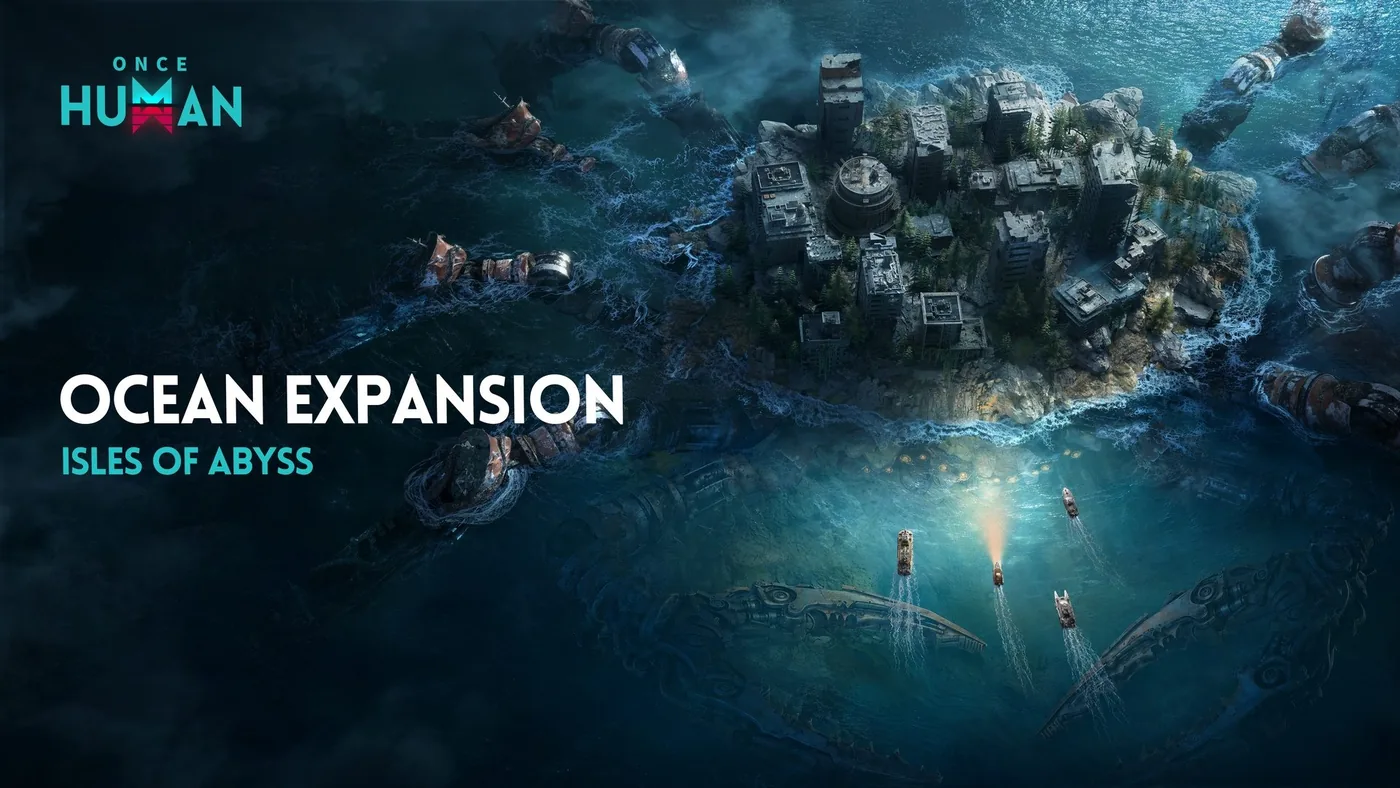
Building Mobile Sea Fortresses
Survival on a hostile ocean begins with modest tools. Every player begins on a raft. A basic raft won’t cut it for long against deep-sea predators. Tao said a ship serves as a forward base, workshop, heavy artillery platform, and primary survival tool. It’s a floating home [1].
Morris reported that players unlock improved hulls by advancing along a nautical tech tree, moving steadily from simple sailcraft up to ironclad battleships equipped with heavy cannons [2]. The crafting system accommodates wildly divergent design styles without restricting structural layouts. Builders can assemble a classic wooden pirate vessel lined with heavy broadside cannons, build an industrial drilling rig, design a sleek sci-fi carrier, or shape an abstract floating bastion that withstands heavy monster strikes. Tactical ship design determines whether a crew survives harsh storms or sinks into the dark abyss. Friends can link their custom ships together into organized fleets, coordinating distinct ship designs to tackle different hazards as they sail through uncharted waters [1].
Fleet coordination changes maritime defense. Varied vessel layouts allow players to divide responsibilities, with some boats focusing on heavy naval bombardment while companion craft carry supply stores and repair benches. This cooperative dynamic helps survival groups conquer turbulent ocean sectors that would quickly crush a lone voyager sailing without backup [1].
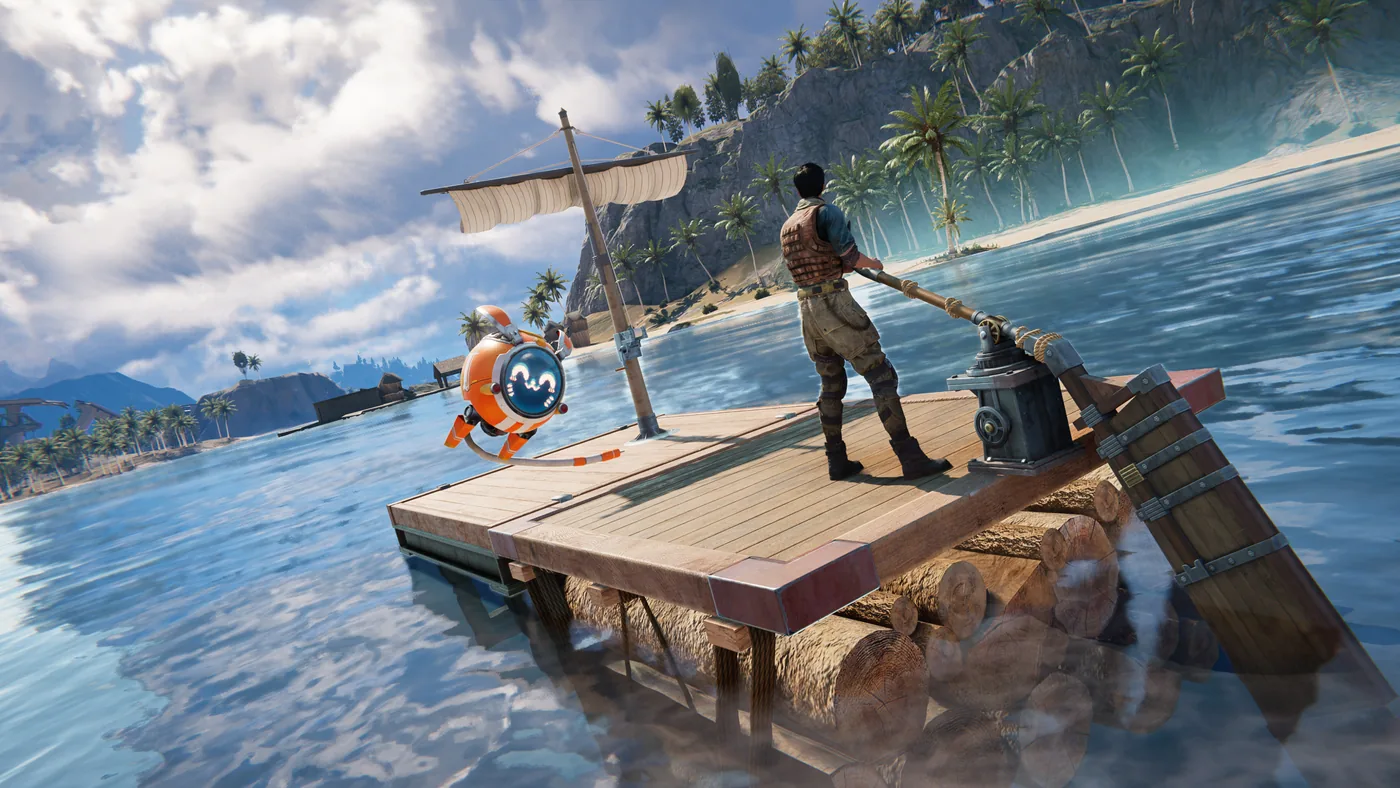


Land and Sea Progression
The expansion establishes a mutually feeding progression cycle connecting dry islands and open waters. Players wake up on an isolated starter island, but the path forward stays open. Tao said that after departing the first shore, explorers can chart a course through the remaining four oceanic regions in whatever order matches their group’s survival strategy [1].
Supplies demand constant travel. Timber, stone, and metals salvaged from island outposts provide the raw materials needed to build ship artillery, reinforce hull armor, and forge ammunition. In return, sailing through hazardous deep-sea waters yields rare compounds that improve terrestrial weapons and crafting benches back on shore. Neither environment functions in isolation, encouraging crews to balance coastal gathering with long naval voyages [1].
Underwater zones offer separate adventures beneath the waves. Explorers swim through submerged ruins to recover forgotten relics, harvest glowing ocean plants, and hunt exotic marine predators for specialized materials. Ongoing console support mirrors updates seen across other major multiplayer releases, such as the Saros: Zenith update on PS5. These diving expeditions make underwater salvage a rewarding path toward higher tier gear [1].
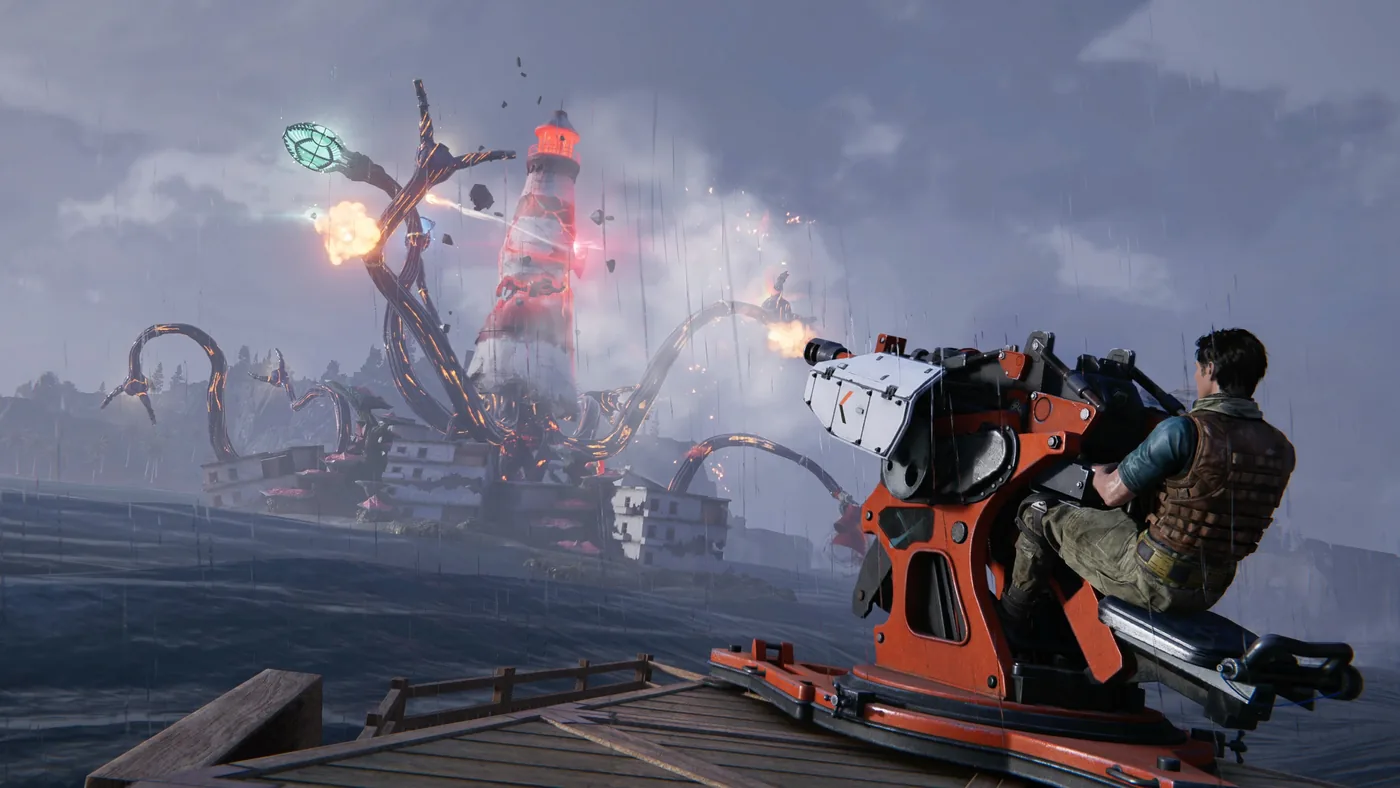
Isles of Abyss Boss Encounter Phases
Server progression in Isles of Abyss unfolds in three organized phases, as reported by Morris. The opening phase introduces the Towers of Calamity, massive biomechanical lighthouses that corrupt each ocean region. Toppling these towers needs teamwork from the entire server, demanding that multiple squads combine their firepower to smash regional bastions before deeper maritime routes open up [2].
Phase two raises the stakes by spawning roaming boss monsters and volatile Corruption Zones over the sea. Crews sailing through these contaminated sectors must defend vessel hulls while repelling hostile aquatic mutations. In the third phase, combat culminates in a climactic showdown against The Sunken Lord, a tough four-player co-op raid targeting an island-sized monstrosity that demands heavy cannon batteries and sharp evasive steering. Four players join the raid. Morris described the confrontation as an enormous encounter that forces squads to synchronize their attacks while dodging lunging tentacles and area blasts [2].
The release arrives during a busy week for ocean-themed video games, with Morris citing the iOS debut of Death in the Water 2 and new showcases for Disney Dreamlight Valley‘s Keepsake Sea expansion. In addition, the developers confirmed tie-in events planned around the 2027 Green Game Jam to support environmental ocean awareness. These collaborative events give players fresh community goals to pursue beyond standard boss hunts [2].
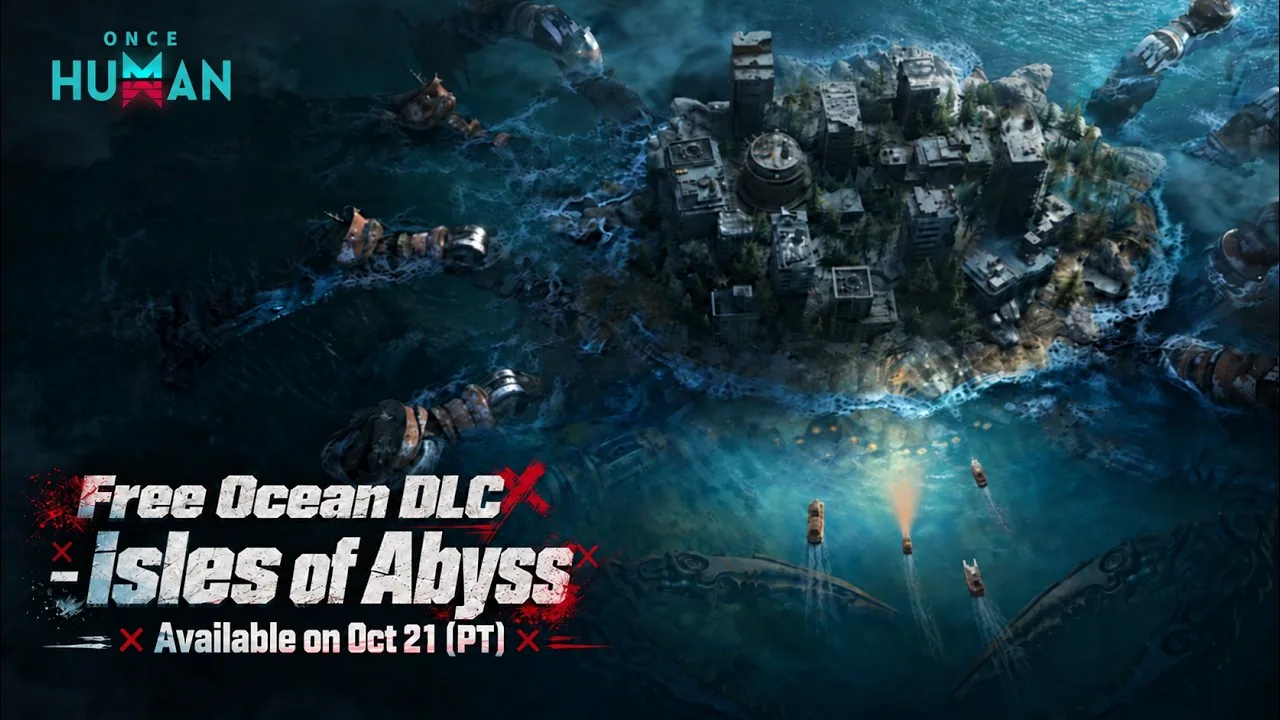
Isles of Abyss on PlayStation 5
The PS5 edition integrates console hardware features to make oceanic travel feel vivid and tactile. Vincent Tao said the DualSense wireless controller uses detailed haptic feedback to channel the low, rumbling pulse of the Sunken Lord straight into the player’s hands. Helming a warship conveys the steady rhythm of crashing swells, howling gale storms, and jarring hull impacts when enemy shells strike the deck [1].
Adaptive triggers supply mechanical resistance whenever players squeeze the trigger to fire heavy naval guns or launch grappling lines toward rival ships. The console’s fast solid-state drive also preserves gameplay flow. Quick SSD streaming enables fluid transitions between overland exploration, ship wheel navigation, and deep underwater diving without forcing players to endure loading screens [1].
The expansion costs nothing on the PlayStation Store. Vincent Tao confirmed that anyone with the base game can download the ocean package without an entry fee, gaining immediate access to modular battleships, five hazardous oceanic zones, and multi-stage boss encounters. Once Human delivers the full naval experience to PS5 owners today [1].
- ONLINE NEWS Vincent Tao (2026, October 21). Once Human’s Isles of Abyss Expansion Launches on PS5 Tomorrow. PlayStation.Blog. [Article Link]
- ONLINE NEWS Iwan Morris (2026, October 22). Once Human Lets You Take to the Seas in Its Isles of Abyss Update, Out Now. PocketGamer. [Article Link]


