



Meta Ray-Ban features expanded into heads-up display tools and cameraless audio hardware when Meta chief executive Mark Zuckerberg opened Meta Connect 2026 in Menlo Park [4]. The presentation introduced turn-by-turn transit directions, voice-driven calling avatars, and third-generation smart glasses coupled with a lighter Ray-Ban Meta Audio line [2]. Hardware orders opened immediately across the United States and Canada, setting retail availability in European stores for October 13 [1].
Meta Ray-Ban Features Bring Heads-Up Navigation
Heads-up navigation forms the central pillar of the display upgrades, projecting turn-by-turn cycling routes and real-time public transit departure schedules directly into the wearer’s field of vision as commuters navigate busy metropolitan transit corridors. Riders can keep mobile devices stowed in pockets while tracking connections across Canadian and United States transit hubs. Pedestrian directions also depart from rigid street announcements. Rather than commanding a turn at Third Street, on-board visual sensors instruct wearers to turn left at the yellow house. These Meta Ray-Ban features turn optical frames into ambient navigation screens [1].
Productivity tools expand the software ecosystem through an interactive calendar application where wearers inspect attendee rosters, accept invitations, and join scheduled virtual meetings directly from the frames without ever pulling a smartphone from their pockets. Incoming alerts appear across lenses via mirrored notifications, allowing wearers to review messages while controlling active app channels. Real-time social updates arrive through curated Threads Community Feeds, letting wearers monitor discussions without touching a phone. Meta also distributes Explore, establishing a central storefront where users browse specialized tools for education, travel, and interactive gaming [1].
International distribution accelerates across five European and Commonwealth markets. London and Toronto opened sales. Vancouver joined retail launch events immediately following the keynote presentation [1]. Technology reporter Ben Schoon confirmed online ordering went live across the United States at an unchanged price of $799 [5]. Pre-orders in France, Italy, and Germany begin ahead of regional store availability scheduled for October 13 across Paris, Milan, Rome, Frankfurt, Hamburg, and Munich. Prescription optical lenses arrive simultaneously through Essilor Luxottica Optical retail stores in Italy and France [1].

Hologram Avatars and Spatial Dolby Atmos Audio
Video calls conducted through smart glasses have traditionally forced participants to stare at a forward-facing camera feed, leaving the caller invisible to family and colleagues. The new Hologram feature bridges this physical absence by generating a photorealistic digital likeness of the wearer’s face during WhatsApp video calls. Setup requires a brief self-capture video recorded inside the companion smartphone application. Operating without outward-facing cameras during calls, software algorithms infer emotional inflection and lip sync exclusively from speech rhythm and acoustic cadence. Early Access begins rolling out to United States WhatsApp users later this autumn [1].
Media capture adds spatial acoustic recording. Meta AI glasses represent the first consumer wearable hardware capable of capturing video with embedded Dolby Atmos surround sound, pairing 360-degree acoustic fidelity with hands-free video recording across outdoor gatherings and fast-paced sporting environments [2]. Visual recording continues to rely on a 12-megapixel ultrawide sensor capable of shooting 3K resolution footage [3]. A dynamic photo capture feature shoots rapid bursts so wearers can select the cleanest frame from spontaneous group gatherings [6]. Internal storage matches 32GB [3]. Capturing spatial media shows how Meta Ray-Ban features evolve beyond smartphone accessories [2].
Voice clarity relies on an upgraded acoustic framework built around a six-microphone array, replacing the five-microphone setup found on second-generation frames [3]. The extra microphones eliminate more than 90% of ambient background noise during windy strolls or bustling transit commutes, ensuring speech recognition engines interpret voice prompts accurately [2]. TechRadar reviewer David Nield noted that acoustic tests indicate speaker loudness and bass response remain identical to the previous generation at 76.1 dB(C). Hardware engineers preserved open-ear audio drivers to keep listeners attentive to ambient traffic hazards [3].


Ray-Ban Meta Features Expand to Cameraless Audio
Rising scrutiny surrounding public surveillance and clandestine photography prompted Meta to introduce the Ray-Ban Meta Audio line. The hardware removes cameras entirely to eliminate social discomfort in sensitive environments like locker rooms and classrooms [4]. Each pair weighs 43 grams. Eyewear retail partners like Essilor Luxottica engineered the chassis using flexible overextension hinges, adjustable temple tips, and swappable nose pads to accommodate prolonged daily use across diverse face shapes without generating uncomfortable pressure points. The resulting ultralight frame profile sits comfortably across all-day listening sessions [2].
Battery life expands significantly due to the absence of camera image processing pipelines, allowing the Audio frames to deliver up to 12 hours of continuous playback supported by an extra 48 hours stored inside the portable charging case. Styling options encompass 23 distinct frame and lens combinations divided between retro Clubmaster wire silhouettes and rectangular Burbank frames [2]. Pre-orders opened at $349 with retail shipments launching on October 13. Tom’s Guide reporter Scott Younker noted the price surprised reviewers, given that camera-equipped Gen 2 frames remain available at $379 and first-generation models sell for $224 [7].
Controlling the cameraless specs mirrors the interaction model established on camera-equipped models. Wearers adjust volume by swiping the right temple arm, prompt the digital assistant with a ‘Hey Meta’ wake phrase, or press a physical button to trigger voice queries. This pure audio interface reflects a broader commercial shift, contrasting with alternative designs like RayNeo iO smart glasses that similarly eliminated optical sensors to emphasize acoustic AI interactions. These acoustic Meta Ray-Ban features deliver hands-free voice assistance without optical recording hardware [7].

Gen 3 Frames Add Aviator Styling and Accessibility
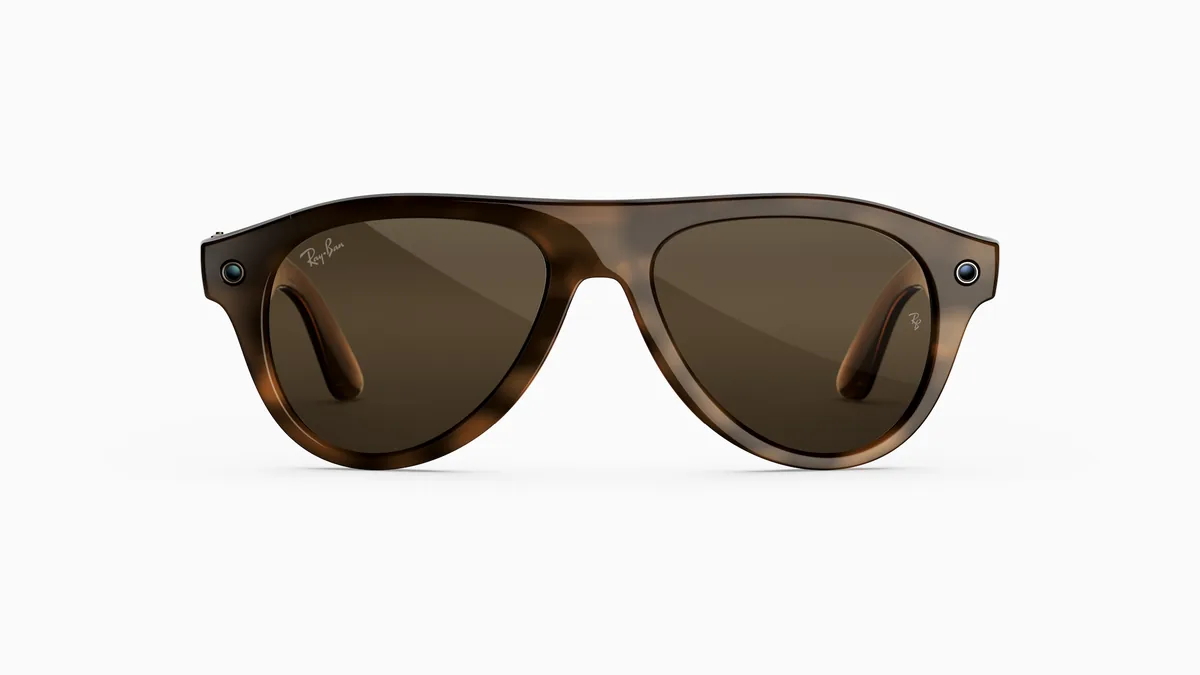
The flagship Ray-Ban Meta Gen 3 line refreshes exterior styling across 27 lens and frame combinations, including Black and Havana finishes [3]. Celebrating nine decades of the classic Aviator silhouette, Meta introduced a vintage-tinted edition alongside the cat-eye Zena frame [2]. Pricing begins at $449. Costs reach £409 in the United Kingdom and AU$679 in Australia, with specialized vintage Aviator editions reaching $579 [3, 4]. Standard Wayfarer frames carry over [3].
Internal cells support nine hours of active runtime, gaining one hour over Gen 2 hardware. The case supplies 50 extra hours. Fast charging restores 50% capacity in two minutes. A new physical action button on the frame maps instant shortcuts to Meta AI, live language translation, or preferred contacts [3]. Meta is also adding Hearing Enhancement to isolate speech for mild-to-moderate hearing loss. The hearing feature costs a one-time $149.99 fee or comes bundled within Meta One subscriptions [6].
Meta also expanded its self-branded eyewear portfolio to offer accessible pricing tiers. The entry-level Meta Adventurer frame arrives on October 23 for $249 with black frames and a plug-in case [2]. Upgraded Gen 3 Capri and Nova styles start at $299 [4]. TechRadar writer Hamish Hector highlighted how celebrity partnerships broadened with an Ivory Starfire edition by Kylie Jenner for $399, followed by a collaboration with music icon and White Lotus star LISA. The LISA collection offers Moonlit Sky and Eclipse frames starting at $339 [2, 3]. Each pair includes a collectible blind-box charm featuring one of twelve pet dog figurines [3]. Expanding across accessible price tiers, Meta Ray-Ban features reach a broader audience [2].
Privacy Backlash Meets On-Device Silicon Safeguards
Public backlash over face-mounted recording hardware intensified across the United States and Europe throughout the summer, with critics questioning cameras disguised as ordinary eyewear. Reporting from the Snapdragon Summit, Tom’s Guide managing editor Jason England pressed Qualcomm senior vice president Ziad Asghar on public privacy anxiety, prompting the executive to defend face-mounted cameras by comparing them to early smartphone adoption in public spaces. Yet consumer advocates argue that raising a smartphone provides an overt social signal, whereas recording from sunglasses remains inherently covert [8].
Qualcomm developed silicon safeguards to process camera streams on-device via neural processing units. The chip-level technology detects bystander faces and censors biometric features locally before video frames ever reach remote cloud servers for multimodal artificial intelligence processing. However, device makers decide whether to activate on-device obfuscation pipelines. Meta relies instead on an exterior recording LED to notify bystanders. External indicator lights remain vulnerable [8].
Mark Zuckerberg teased another device called the Muse Charm for holiday release. The clip-on wearable acts as a fast interface to conversational artificial intelligence [4].
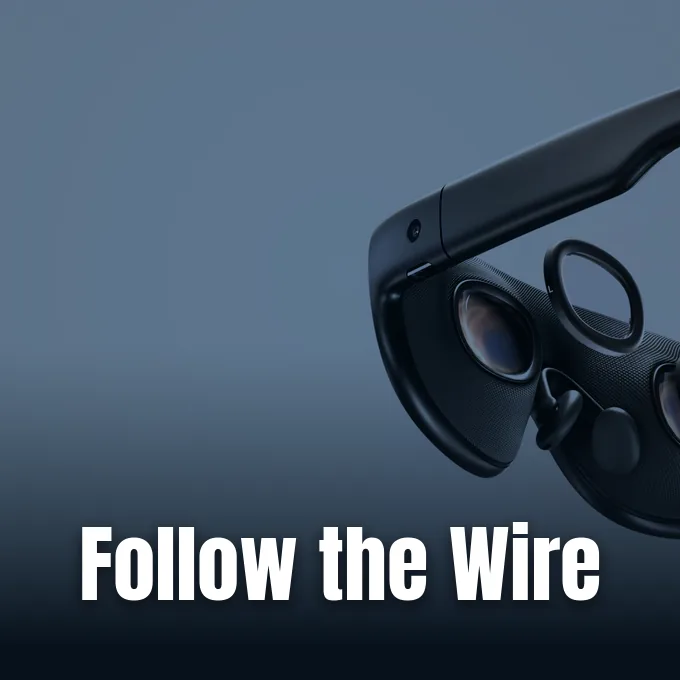
Long-term spatial hardware diverged from traditional frames with the reveal of Meta VR Glasses, a mixed-reality headset five times lighter than the existing Meta Quest 3. Rather than requiring rigid headbands, the goggles rest on the nose while twin 5K micro-OLED panels render 2412 by 2288 pixels for each eye to provide sharp mixed-reality environments powered by a compact compute puck. The compute puck powers everything. The debut follows reports where a slim Meta headset surfaced in reported firmware leaks before official staging during the Connect keynote presentation. WIRED reporter Boone Ashworth tested the hardware at Meta Connect, noting the mixed-reality goggles will ship in spring 2027 for $1,300 [4].
- PRESS RELEASE Meta Newsroom. (2026, September 23). New features for Meta Ray-Ban Display. Meta. [Article Link]
- PRESS RELEASE Meta Newsroom. (2026, September 23). Introducing Ray-Ban Meta Audio and more AI glasses styles. Meta. [Article Link]
- ONLINE NEWS Nield, D. (2026, September 24). Here’s how the Meta Ray-Ban Gen 3 smart glasses stack up against the Meta Ray-Ban Gen 2: all the specs compared. TechRadar. [Article Link]
- ONLINE NEWS Ashworth, B. (2026, September 23). Meta’s answer to the ‘Meta creep’? Camera-free smart glasses. WIRED. [Article Link]
- ONLINE NEWS Schoon, B. (2026, September 23). Meta launches audio-only glasses and Gen 3 Ray-Ban with slimmer designs. 9to5Google. [Article Link]
- ONLINE NEWS Younker, S. (2026, September 23). Ray-Ban Meta (gen 3) smart glasses — lots more styles, longer battery life, but same privacy controls. Tom’s Guide. [Article Link]
- ONLINE NEWS Younker, S. (2026, September 23). Ray-Ban Meta Audio hands-on — an attempt to allay privacy concerns. Tom’s Guide. [Article Link]
- ONLINE NEWS England, J. (2026, September 23). ‘It’s just because it’s a new form factor’: Qualcomm’s XR SVP defends smart glasses against privacy panic ahead of Ray-Ban Meta Gen 3. Tom’s Guide. [Article Link]


