



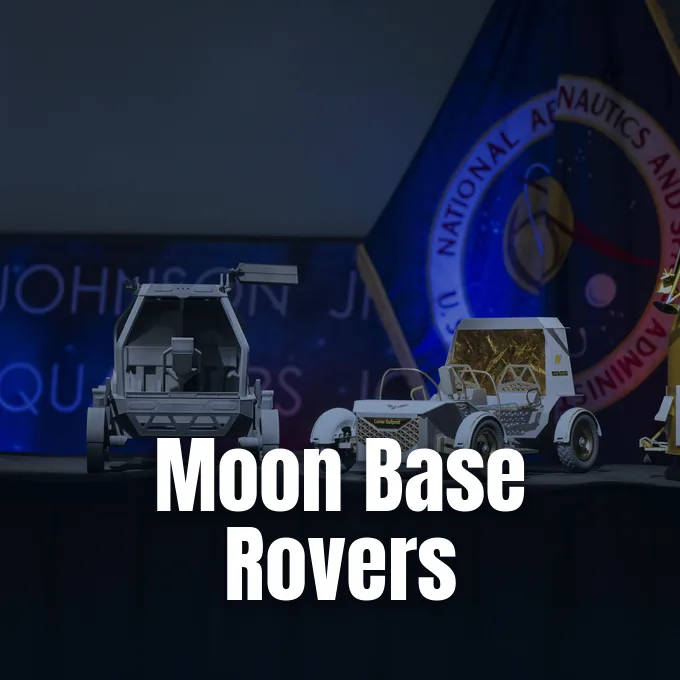
NASA is moving forward with development of commercial Moon Base rovers to carry astronauts and conduct robotic surveys at the lunar South Pole ahead of planned Artemis landing missions. Surface vehicles will serve as the backbone for early outpost construction by hauling heavy gear, charting steep terrain, and searching for volatile ice hidden inside permanently shadowed polar craters. “Lunar rovers are central to our surface mobility strategy,” said Robert Pickle, director of the Surface Mobility Office within the agency’s Moon Base Program. Flight data from these uncrewed test drives will shape future life-support gear and transport vehicles needed for long stays on the Moon [1].
Testing Moon Base Rovers for Harsh Polar Conditions
How can robotic vehicles survive the extreme cold of dark polar craters without freezing their drivetrains? Lunar nights last two weeks without sunlight. Engineers must design rovers that can run smoothly when dipping into shadowy hollows where lunar ground temperatures drop to minus 334°F (minus 203°C) during polar traverses. Field trials help verify that wheel motors keep turning in deep cold before astronauts arrive [1].
During uncrewed periods, the rovers will drive up to 3.7 miles a day under remote guidance from ground teams located on Earth. Remote operators on Earth will send navigation commands to these vehicles through lunar ground stations as the machines traverse uncharted terrain. These automated treks will produce high-resolution maps of rocky ridges and craters so astronauts can steer clear of deep drops and sharp boulders during future Artemis moonwalks. Each vehicle can carry up to 176 pounds (80 kilograms) of geology tools and rock samples and can travel up to six miles (10 kilometers) on a single battery charge. Field crews will rely heavily on these vehicles for extended geological sorties across the Moon South Pole. That payload capacity lets astronauts collect up to 80 kilograms of varied rock samples around wide stretches of polar terrain [1].
Astrolab Develops the CLV-1 Rover
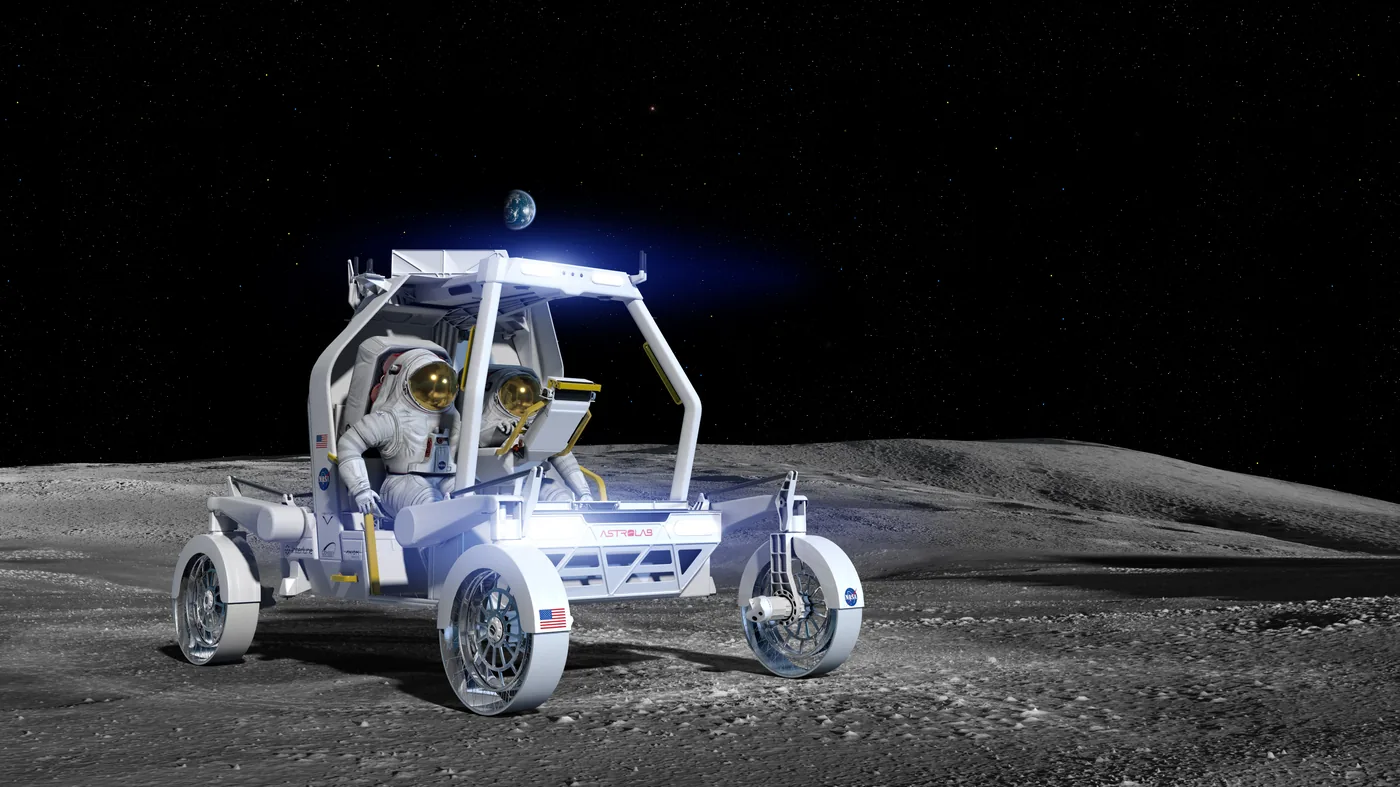
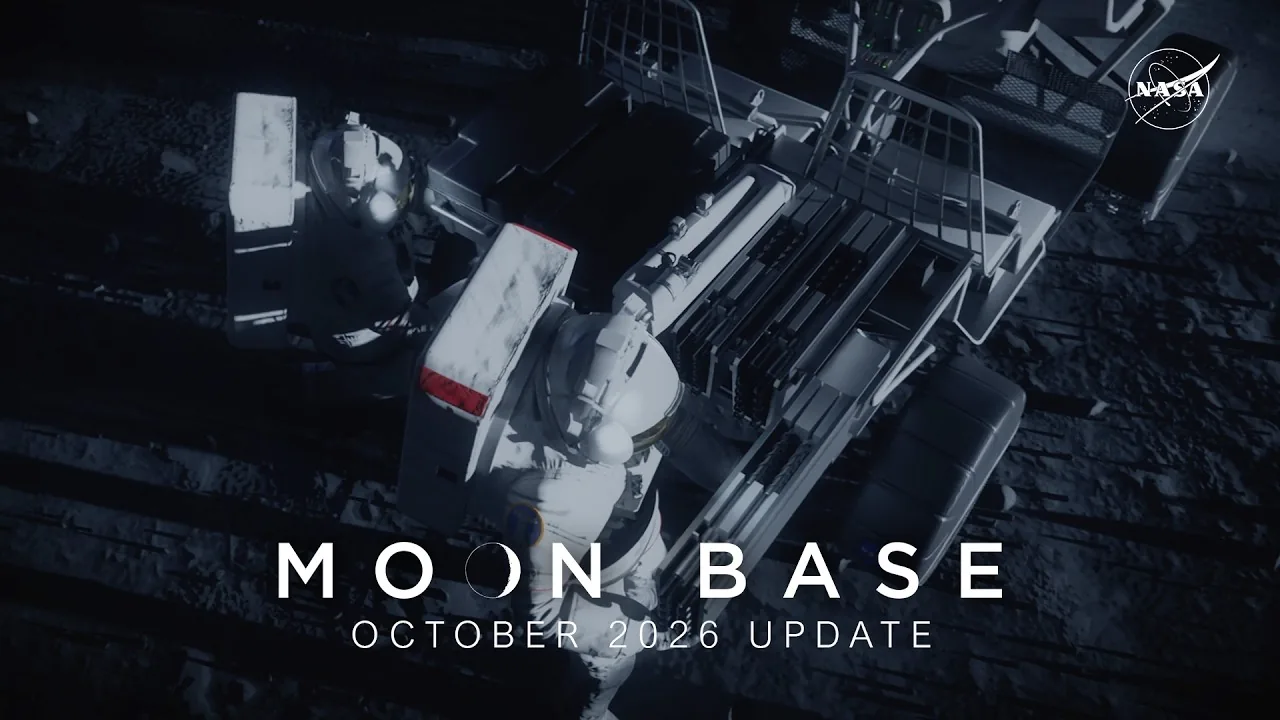
Astrolab is building a crewed rover known as the Crewed Lunar Vehicle 1, or CLV-1, based on its flexible vehicle platform. Axiom Space evaluated the crew cabin. The company recently delivered a full-scale mockup of the vehicle to Axiom Space so suited astronauts could climb aboard and evaluate the cockpit layout under realistic mission conditions. During these cabin evaluations, test astronauts wore mockup spacesuits to check display screens, hand controllers, and seating comfort. Astronauts found that the layout gave them clear sightlines over the dashboard during simulated driving tasks [1].
Astrolab secured $219 million in development funds. Announced during a briefing at NASA Headquarters in Washington, the award tasks the company with delivering an LTV capable of traveling over 6 mph and weighing about 2,000 pounds in its stowed flight setup [2]. Astrobotic’s Griffin lander will carry more than 1,100 pounds of cargo, including the robotic FLIP rover, during Moon Base II. The small scout platform will evaluate identical airless tires, radios, and camera arrays directly on the lunar surface before Astrolab engineers ship flexible wheel prototypes to NASA’s Glenn Research Center in Cleveland [1].
Lunar Outpost Builds the Pegasus Rover
Lunar Outpost is developing its own crewed vehicle, named Pegasus, as an evolution of its earlier Eagle rover concept. Lunar Outpost chose a spring mesh wheel design. The company built two early mockups and recently delivered a third static unit to NASA’s Johnson Space Center in Houston so astronauts could test the controls in pressurized suits. Astronauts wore pressurized spacesuits during these cabin tests to evaluate how easily a driver could reach primary switches and steer the vehicle. Usability feedback from these Houston trials helps engineers adjust the hand controls and seat restraints for suited drivers [1].
Lunar Outpost received $220 million for Pegasus. Drawing on Apollo heritage, this crewed vehicle can operate on the surface for up to a year as it reaches speeds above 9 mph through either manual crew steering, autonomous navigation, or remote commands sent from Earth [2]. In 2025, the firm’s robotic MAPP rover operated at the Moon South Pole, testing autonomous thermal controls and navigation cameras before a second unit launches in early 2027 to verify updated sensor packages. Engineers are also evaluating spring mesh tires at NASA Glenn to measure traction on simulated regolith [1].

Lunar Terrain Vehicle Delivery Flights
Building the fleet of crewed Moon Base rovers, known formally as LTVs, requires Lunar Outpost to finish preliminary design reviews in October, but Astrolab completes review milestones by late December. Flight units ship directly to NASA at the end of 2027. These parallel task orders give the space agency two competitive mobility options rather than forcing mission planners to rely on a single private contractor for polar operations [1].
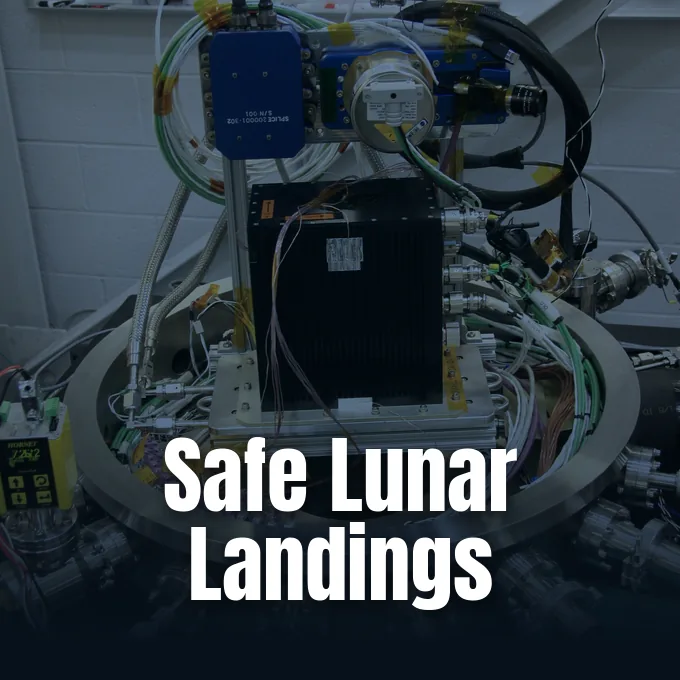
Blue Origin provides heavy cargo landing services. Blue Origin secured the CX-2 delivery task order under the CLPS 1.0 indefinite-delivery framework, earning $188 million with a potential $280.4 million extension to fly the rovers to the lunar surface by 2028 [2]. Independent industry reports confirmed that these commercial transport contracts support deploying heavy surface equipment ahead of crewed landings [3]. Engineering teams also examine descent data to support safe lunar landings across boulder-strewn crater rims. Blue Origin plans to touch down near the Shackleton Connecting Ridge, using optical sensors and thruster data to navigate the steep, shadowy terrain surrounding the lunar South Pole [2].
Robotic Water Prospecting Missions
Before astronauts take the wheel, robotic scouts will explore the rugged terrain and search for useful resources. Shadowed crater floors never receive direct sunlight. NASA’s VIPER rover is scheduled to launch in 2027 to explore permanently shadowed craters near the lunar South Pole in search of buried water ice. Delivered by a Blue Moon Mark 1 lander, the rover will travel more than 18 miles (30 kilometers) to measure ground temperatures and map sub-surface volatiles. VIPER operations will run out of NASA’s Ames Research Center in Silicon Valley as the completed rover undergoes final checkout at Johnson Space Center [1].
Earlier robotic missions will test key instruments under the agency’s Payloads and Research Investigations on the Surface of the Moon initiative. Intuitive Machines will fly the Lunar Vertex investigation suite aboard its Nova-C Trinity lander to study lunar swirls during Moon Base III. International partners are contributing scientific payloads to these flights, including instruments from the European Space Agency and the Korea Astronomy and Space Science Institute [5]. In addition, the Jet Propulsion Laboratory is developing the MoonFall project, which will deploy four hopping drones built with Firefly Aerospace to survey steep crater slopes in 2028. These small robotic scouts will hop over rough terrain to snap close-up images before surviving for several months on the surface [2].
Lander Awards for the 2032 Outpost
NASA committed nearly $600 million in commercial awards to dispatch four uncrewed landers to the Moon in 2028, expanding delivery capacity for future scientific instruments, heavy equipment, and surface mobility systems. Astrobotic received $279.9 million for two flights, Firefly Aerospace earned $144.2 million, and Intuitive Machines captured $148.3 million for single landing missions. “We want to try with different vendors, different places of the moon, and make sure that most of the missions have a very high likelihood of success,” said Moon Base Program Manager Carlos García-Galán [4].
The agency hopes to complete 21 lunar landings between now and 2029, testing surface infrastructure and surveying resources before building an enduring outpost with a human presence on the Moon by 2032. Recent launch pad damage at Launch Complex 36 following a New Glenn rocket test anomaly may challenge near-term timelines, but Blue Origin hopes to restore the launch facility before year’s end [4]. NASA Administrator Jared Isaacman also stated that planners are considering sending an engineering rover named Promise to join the lunar fleet. Agency leaders framed this push as part of a Golden Age of planetary exploration, using reliable Moon Base rovers to anchor lunar habitation and build operational experience for eventual crewed voyages to Mars [1].
- PRESS RELEASE Ugalde, V. (2026, October 20). NASA Provides Progress Update on Moon Base Rovers. National Aeronautics and Space Administration. [Article Link]
- PRESS RELEASE Shaw, E. (2026, May 26). NASA Provides Update on Moon Base Rovers, Landers, Missions. National Aeronautics and Space Administration. [Article Link]
- ONLINE NEWS Aurora You. (2026, October 20). NASA Provides Progress Update on Moon Base Rovers. Aurora You. [Article Link]
- ONLINE NEWS Cappabianca, C., & Leone, A. (2026, June 30). NASA gives updates on moon base missions. Spectrum News 13. [Article Link]
- PRESS RELEASE LegiStorm. (2026, September 8). NASA Provides Update on Moon Base Rovers, Landers, Missions. LegiStorm. [Article Link]
APA 7: PerEXP Teamworks. (2026, October 21). NASA Tests Moon Base Rovers to Expand Artemis Surface Mobility. PerEXP Teamworks. https://perexpteamworks.com/en/moon-base-rovers-nasa-artemis/


