




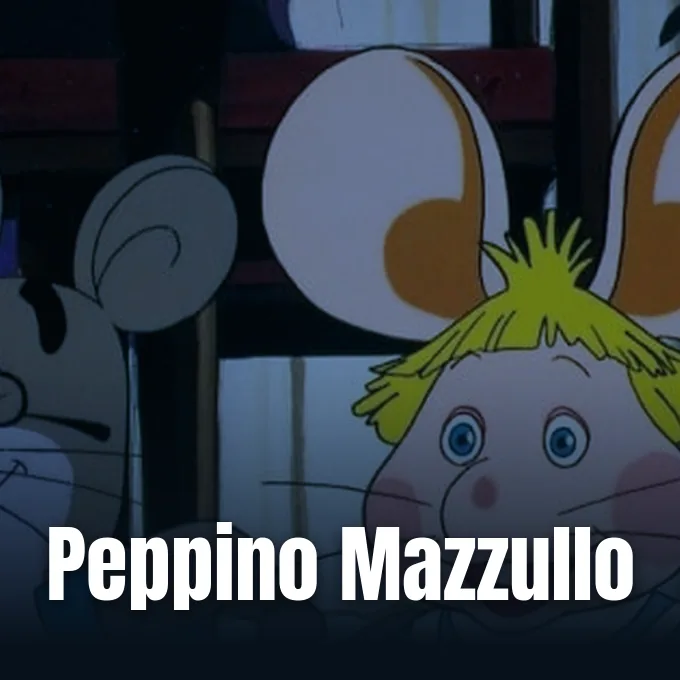
Can a single voice animate a cultural phenomenon across four separate decades? Peppino Mazzullo, the celebrated Topo Gigio voice actor who gave life to the beloved puppet mouse created by Maria Perego, died on Wednesday at his home in Santo Stefano di Briga, Italy, at the age of 100. Anime News Network confirmed that the Italian performer concluded a historic entertainment career spanning landmark American television appearances and international anime broadcasts [1].
Topo Gigio Voice Actor Leaves Century-Long Legacy
Mazzullo passed away quietly at his private residence in Santo Stefano di Briga on Wednesday. He was 100. Local cultural circles and international animation historians recognized the moment as the conclusion of a century-long life devoted entirely to voice craft, stage pedagogy, and vocal artistry. As the primary Topo Gigio voice actor, Mazzullo spent decades developing a distinctive falsetto delivery that transformed Maria Perego’s small puppet mouse into an instantly identifiable global figure [1].
Maria Perego created the puppet mouse Topo Gigio to charm television audiences across Italy. Mazzullo provided the vital voice. Maria Perego designed the visual identity, but Mazzullo established the vocal soul that allowed audiences to forget the underlying puppetry. The actor maintained that characterization across decades of public appearances, proving that thoughtful voice performance could elevate a puppet into a national institution [1].
Few voice actors maintain custody of a single iconic persona across forty consecutive years of evolving broadcast media. Mazzullo voiced the character until 2006. That longevity ensured multiple generations of viewers grew up hearing the exact same vocal mannerisms whenever Topo Gigio greeted television hosts or sang bedtime serenades. His sustained involvement created unprecedented continuity, anchoring Italian children’s programming through changing studio eras until he formally stepped away from commercial voice work [1].
International Stardom on The Ed Sullivan Show
Beyond his domestic acclaim across Italy, Mazzullo achieved widespread transatlantic visibility when Topo Gigio debuted on American variety television. Mazzullo and Topo Gigio made regular appearances on The Ed Sullivan Show starting in 1962. Working as the dedicated Topo Gigio voice actor before a live American studio audience required impeccable comic synchronization. The small puppet mouse would climb out onto host Ed Sullivan’s desk, engaging the famous presenter in humorous dialogue that charmed millions of households each Sunday evening [1].
The Sunday variety broadcast transformed the Italian puppet into an overnight global sensation. Sullivan developed genuine on-screen rapport with the puppet mouse, concluding sketches with affectionate farewells that entered popular lexicon. Mazzullo’s expressive vocal inflections bridged language barriers effortlessly, allowing international viewers of all ages to connect emotionally with the miniature character. The exposure rapidly unlocked major broadcast markets across Latin America, North America, and Europe, establishing Topo Gigio as an enduring international cultural ambassador rather than a temporary regional novelty [1].
During the nineteen-sixties, the puppet drama gained worldwide popularity that few European children’s properties had ever achieved. Perego’s puppet conquered global television. Maria Perego’s creation required constant technical coordination between hidden puppeteers and Mazzullo’s live microphone work. Mazzullo brought an unmistakable tenderness to the role, ensuring that the character never felt abrasive or overly chaotic. That delicate balance made Topo Gigio a fixture of mid-century global television, paving the way for eventual animated adaptations decades later [1].


Voice of Topo Gigio in Anime Adaptations
When the franchise transitioned into television animation in 1988, Mazzullo returned as the central voice of Topo Gigio for both the Italian and Spanish dubs of Topo Gigio and its companion series Yumemiru Topo Gigio [1]. Production studio Nippon Animation partnered with Asahi Broadcasting producers Shoji Sato and Shinji Nabeshima, retooling the 1960s puppet icon with a creative science-fiction premise. In this animated storyline, Topo Gigio serves as a space-rocket pilot from twenty-fourth-century Earth, where mice live as equals with humanity. After unexpected landing craft trouble forces a dramatic crash-landing in a Catalina Town scrapyard four hundred years in the past, the stranded mouse hero receives crucial shelter from the ancestor of his future companion Arnor. The stranded mouse moves into an old apartment and befriends a girl named Gina [2].
The animated production brought together high-caliber anime directors Noboru Ishiguro and Shigeo Koshi to helm the weekly episodes. The writing staff featured scripts by Ishiguro, Tomoo Tadanoki, Rino Wada, Yoshio Aimoto, Takashi Hayashi, and Sugiyama Taku. Susumu Shiraume handled character designs, adapting Maria Perego’s puppet proportions into expressive two-dimensional animation. Composer Noboyoshi Koshibe provided the musical score, while art director Shuichi Ishibashi and art setting designer Shohei Kawamoto crafted the vintage apartment backgrounds [2].
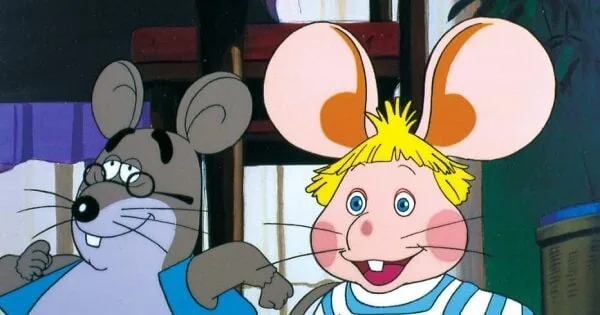
While veteran voice actor Ryusei Nakao voiced Gigio in the original Japanese broadcast, Mazzullo’s Italian and Spanish dubs preserved his signature intonation for Western viewers [1]. Singer Satoko Yamano voiced Gina and performed the show’s theme songs, ‘Tango Chu Chu’ and ‘Yumemiru Topo Gigio’, accompanied by the vocal group Koorogi ’73. The production’s rich Japanese ensemble included Toshiko Fujita as Amelia, Hisako Kyoda as Knop, Yuko Mizutani as Mimi, and Daisuke Gori as Megalo [2]. Mazzullo ensured European and Latin American audiences experienced the exact personality they cherished [1].
Founding the Piccolissimo Teatro di Messina Academy
Mazzullo brought his commercial acting career to a deliberate close after decades of steady performance. He retired from acting. The veteran Topo Gigio voice actor stepped away from active commercial broadcasting in 2006. Instead of retreating from creative life, he turned his energy toward developing educational opportunities for young theatrical performers. He founded the Piccolissimo Teatro di Messina theater academy in Messina, establishing an intimate training ground where aspiring regional actors could study speech technique and stagecraft [1].
He taught acting there. At the Piccolissimo Teatro di Messina, Mazzullo trained students following his 2006 retirement [1].
Mazzullo viewed dramatic education as an essential civic responsibility, pouring his extensive vocal experience into classroom instruction rather than pursuing commercial vanity projects. His transition from global broadcasting to regional mentorship underscored a lifelong commitment to dramatic discipline. International performance communities have experienced repeated losses of foundational talent this year, echoing tributes shared when Japanese actor and narrator Leo Morimoto passed away at 83 after decades in broadcasting. Similarly, anime fans recently reflected on generational vocal legacies following reports that American voice actor Mike McFarland passed away at 56. Mazzullo’s pedagogical work ensured his practical wisdom remained vibrant on stage long after his final radio and television broadcasts [1].
Enduring Resonance of Maria Perego’s Creation
Mazzullo’s centenary milestone reflects an era when character performers could build lifelong associations with a singular creative work. As the definitive Topo Gigio voice actor, he helped Maria Perego‘s puppet evolve from a novel Italian television concept into a beloved household figure across continents. The character’s oversized ears, shy mannerisms, and gentle humor resonated because Mazzullo provided genuine heart behind the microphone. Rather than relying on cartoonish exaggerations, his vocal approach treated the puppet mouse as an earnest participant in human conversations [1].
That artistic consistency bridged mid-century variety television and modern animation. When Nippon Animation brought the character to Japanese screens in 1988 under directors Noboru Ishiguro and Shigeo Koshi, the production preserved the whimsical core established by Perego and Mazzullo. Even as the story introduced spaceships, time slips, and comic antagonists like Megalo and Kurt, the central appeal rested on the mouse’s timeless charm [2]. Mazzullo’s parallel Spanish and Italian dub performances proved that the character’s warmth translated across completely different storytelling formats [1].
Mazzullo leaves behind an international body of work that spans live variety milestones, landmark anime dubbing, and decades of regional theater leadership in Messina. The centenarian actor demonstrated that vocal artistry can give inanimate creations an authentic soul capable of outlasting individual broadcast eras. Today, Maria Perego’s puppet mouse remains a cornerstone of Italian cultural heritage, preserved in archival broadcasts, international animated episodes, and the memories of millions who learned to dream with Topo Gigio [1].
- ONLINE NEWS Anime News Network. (2026, October 1). Topo Gigio’s voice actor Peppino Mazzullo dies. [Article Link]
- WEBSITE Nippon Animation. (2026, October 2). Topo Gigio work introduction. [Article Link]


