





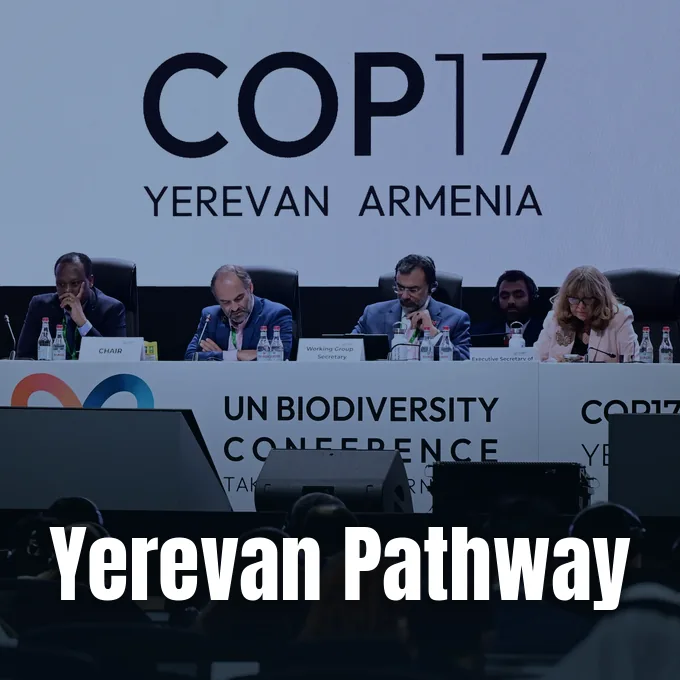
More than 100 countries approved the Yerevan Pathway at the COP17 biodiversity conference in Armenia after marathon talks ran through the night, setting shared priorities to protect nature before 2030. Delegations gathered in Yerevan to review progress under the Kunming-Montreal Global Biodiversity Framework and address shortfalls in conservation funding. The closing plenary concluded on October 31, 2026, when delegates agreed on steps to turn global pledges into measurable results [1].
Marathon Talks Yield Yerevan Pathway
Negotiations began on October 19 and were set to close on Friday, October 30, but unresolved disputes over finance pushed proceedings into Saturday morning. Envoys worked through roughly 12 hours of overnight negotiations before convening for the final plenary session in Armenia’s capital to approve the framework [1].
COP17 President Hambardzum Matevosyan, who serves as Armenia’s environment minister, banged the gavel to adopt decisions on the first global review and resource mobilization as delegates applauded the final package. “I think we’ve achieved more than we could have expected in terms of the diversity of the agenda items, in terms of the importance of those items for many countries and parties, and in terms of the items that were anticipated for a long time that have managed to be approved and adopted,” Matevosyan said. Astrid Schomaker, executive secretary of the Convention on Biological Diversity, said governments faced up to gaps identified in the global review and must now follow the pathway toward 2030 [1].
The Yerevan Pathway outlines clear steps to speed up biodiversity protection between 2026 and 2030. Developed through the global review process, it focuses on stronger national plans, better monitoring, increased funding, technology transfer, and capacity-building. It calls for whole-of-government coordination and urges meaningful participation from Indigenous Peoples, local communities, women, and young people [1].
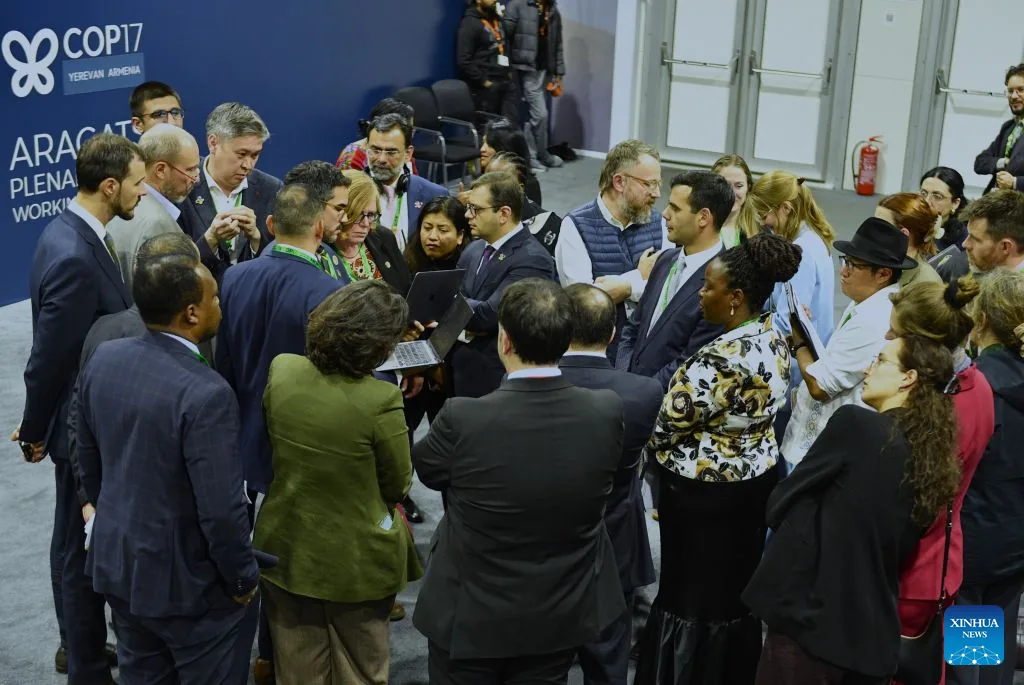
Outcomes From the COP17 Biodiversity Conference
Countries adopted the Kunming-Montreal Global Biodiversity Framework in 2022 with 23 targets to reverse nature loss by 2030. Before talks opened in Yerevan, UN Secretary-General António Guterres released the State of Biodiversity Action report. The assessment showed that nearly 90% of countries have set national biodiversity targets, but fewer than half of those targets are on track to meet the 2030 deadline [4].
During the first week of negotiations in Yerevan, parties approved 14 decisions under the Convention on Biological Diversity, the Cartagena Protocol on Biosafety, and the Nagoya Protocol. The texts covered invasive alien species, biosafety standards, and gender equality. Delegates at the COP17 biodiversity conference welcomed these early agreements as evidence of cooperation. Schomaker described the decisions as an encouraging step, but said success will be measured by the real difference they make for nature and people. Governments must now translate these agreements into verifiable field actions before the next global biodiversity assessment [4].
With four years remaining before 2030, discussions shifted from making pledges to tracking concrete results. Governments reviewed the 23 targets to evaluate which agreed policies have produced measurable gains on the ground. Ministers said international declarations only matter if countries enforce conservation rules at home [3].
Closing the Conservation Finance Gap
Finance debates at the COP17 biodiversity conference centered on bridging the massive divide between public conservation budgets and destructive spending. Friends of the Earth International installed a large mural of an elephant herd near the main hallway to symbolize entrenched financial flows that drive nature destruction. An Lambrechts of Greenpeace International cited the UNEP State of Finance for Nature 2026 report during a media briefing. “It is astounding that the global economy is spending only $1 on nature protection for each $30 that it spends on nature destruction,” Lambrechts said [2].
Funding shortfalls mirror findings in WWF International’s Living Planet report, which recorded that wild vertebrate populations dropped by an average of 73% between 1970 and 2022. The authors linked this decline to climate change, agriculture, and money flowing to harmful industries. Under Target 18 of the 2022 framework, the 196 parties pledged to slash $500 billion each year from subsidies that harm nature. Unsustainable fishing and industrial farming drive significant biodiversity loss. Governments agreed that reforming public budgets is necessary if ecosystems are to recover before the decade ends [2].
Financial support for harmful activities is still high at $7.3 trillion in the global economy [2]. Industrial logging in Papua New Guinea’s New Ireland province illustrates commercial practices that degrade habitats. Developing countries argued that conservation targets can’t succeed without dependable funding for local communities [1].


Host Priorities at CBD COP17
Hosting the conference gave Armenia an opportunity to raise its international environmental profile. Although Armenia covers only 6.7% of the Caucasus region, it holds roughly 60% of the region’s biodiversity across its mountains and valleys. Matevosyan said protecting this natural wealth needs firm national investment [3].
In Armenia, water management and the preservation of Lake Sevan are urgent environmental priorities for government agencies and local communities. Inside the negotiation hall, a life-size sculpture of a Caucasian leopard created by a local artist for UNDP stood as a reminder of endangered species. Matevosyan announced during the conference that camera traps had recently spotted a live leopard in the Gndasar Community Conservation Area. This sighting was only the second recorded in the area since 2025, offering tangible proof that local habitat protection efforts can help rare predators survive in the southern Caucasus [4].
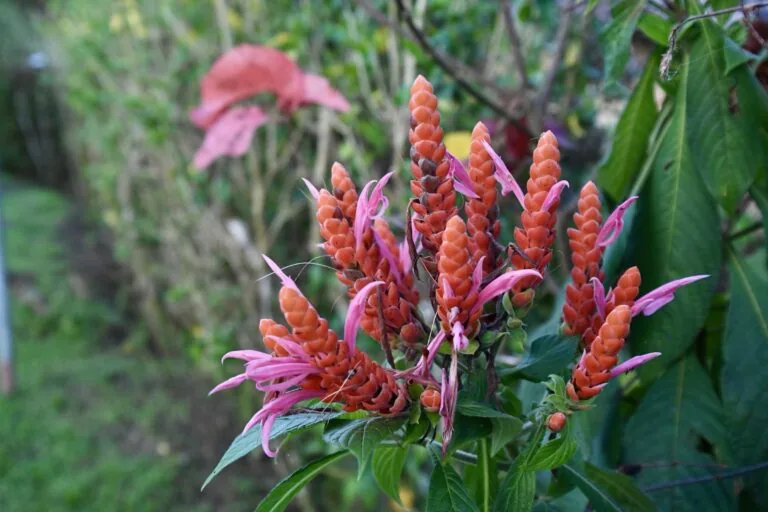
Armenia selected the Yerevan Blue Butterfly, known as Polyommatus eriwanensis, as the official symbol of the summit. The butterfly is an endemic species that lives in Yerevan and surrounding valleys, found nowhere else on Earth. Organizers noted that the emblem reflects how biodiversity is local before it becomes global, while the 23 colors of the conference identity match the 23 targets of the Kunming-Montreal framework [6].
Biosphere Reserves and Genetic Monitoring
UNESCO presented field evidence in Yerevan on practical conservation models. Within the World Network of Biosphere Reserves, which spans 797 sites in 145 countries, monitored wildlife populations have stayed stable since 1970. This stability contrasts with the 73% drop in vertebrate numbers documented in unprotected habitats worldwide [5].
To track marine life more accurately, UNESCO presented its Environmental DNA Expeditions conducted in World Heritage marine sites. The project is the world’s first global effort to collect environmental DNA through citizen science, enabling researchers to detect ocean biodiversity and evaluate climate impacts without capturing wild animals. The initiative has so far engaged 250 citizen scientists, some as young as 6, in 19 countries, identifying more than 4,000 marine species. Supported by local site authorities and guided by a scientific advisory board, the ongoing expeditions show how simple water sampling can yield reliable genetic records for conservation planning. The genetic data helps site managers detect rare species early and adjust local protection measures before populations suffer heavy losses [5].
Science works best when paired with customary governance and local knowledge systems. UNESCO representatives argued in Yerevan that protecting habitats needs respect for cultural traditions and working with Indigenous communities. When local residents hold the tools and authority to manage their own lands, conservation programs produce lasting ecological stability [5].
Next Steps Leading to COP18
Outside the closed negotiating rooms, the conference provided spaces for public participation. The official Blue Zone hosted government negotiations, while the public Green Zone engaged civil society, businesses, and youth through exhibitions and solution workshops. Parallel events in the Global Biodiversity Framework Pavilion allowed Indigenous groups and researchers to share solutions with delegates [4].
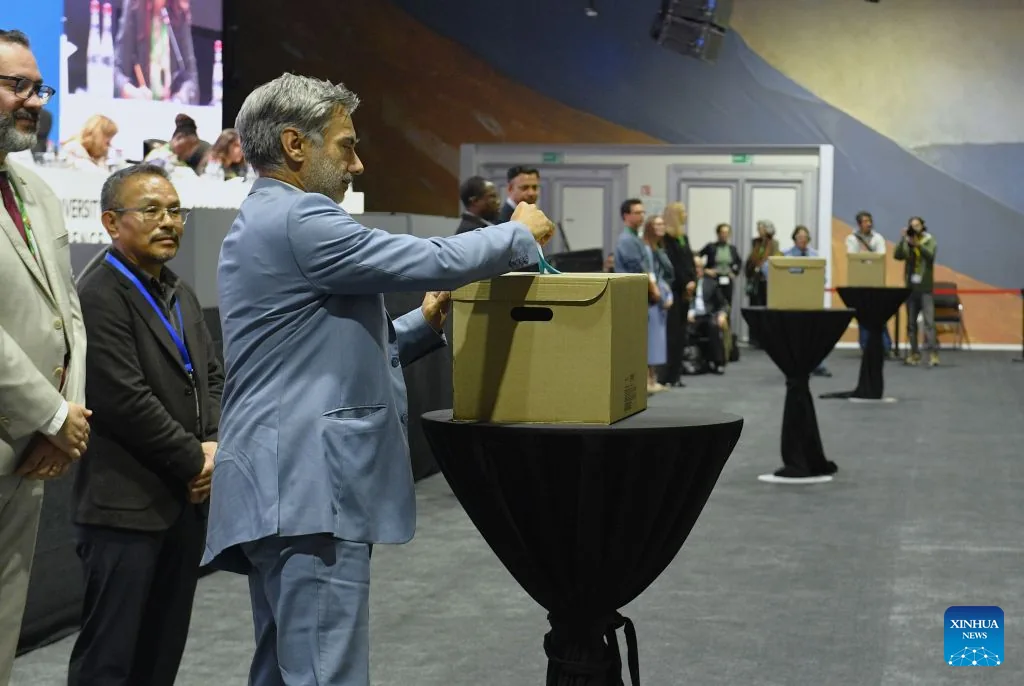
During the final plenary on Saturday, delegates voted on future summit locations. Representatives cast their ballots to elect Quito, the capital of Ecuador, as the host city for COP18 in 2028 [1]. Prior to the main conference, world leaders had also met in Armenia for a high-level summit, adopting the Yerevan Declaration to call for urgent implementation and increased funding before the 2030 target deadline [4].
As the COP17 biodiversity conference drew to an end in Yerevan, governments agreed on implementation priorities to steer biodiversity action leading up to 2030. The 196 parties to the framework now have four years to close the finance gap, curb harmful subsidies, and ensure that national biodiversity plans yield verifiable results before they reconvene in Quito. Turning the Yerevan Pathway into enforceable national legislation, reformed agricultural subsidies, and verified funding transfers is the central task for international conservation [1].
- ONLINE NEWS Xinhua. (2026, October 31). COP17’s marathon talks yield Yerevan Pathway to speed up biodiversity action. [Article Link]
- ONLINE NEWS Mongabay. (2026, October). Leaders grapple with finance and harmful subsidies at UN’s COP17 biodiversity conference. [Article Link]
- ONLINE NEWS Horizon Weekly. (2026, October 27). COP17 High-Level Talks in Yerevan Focus on Biodiversity Financing and Concrete Action. [Article Link]
- WEBSITE Convention on Biological Diversity. (2026, October 18). Spotlight on Yerevan: Announcements from the 2026 UN Biodiversity Conference. [Article Link]
- WEBSITE UNESCO. (2026, September 29). COP17 – Biodiversity. [Article Link]
- WEBSITE Republic of Armenia Ministry of Environment. (2026, September 29). About COP17 • COP-17 Yerevan. [Article Link]
APA 7: PerEXP Teamworks. (2026, November 1). COP17 Delegates Adopt Yerevan Pathway at Armenia Summit. PerEXP Teamworks. https://perexpteamworks.com/en/cop17-biodiversity-conference-yerevan-pathway/


