





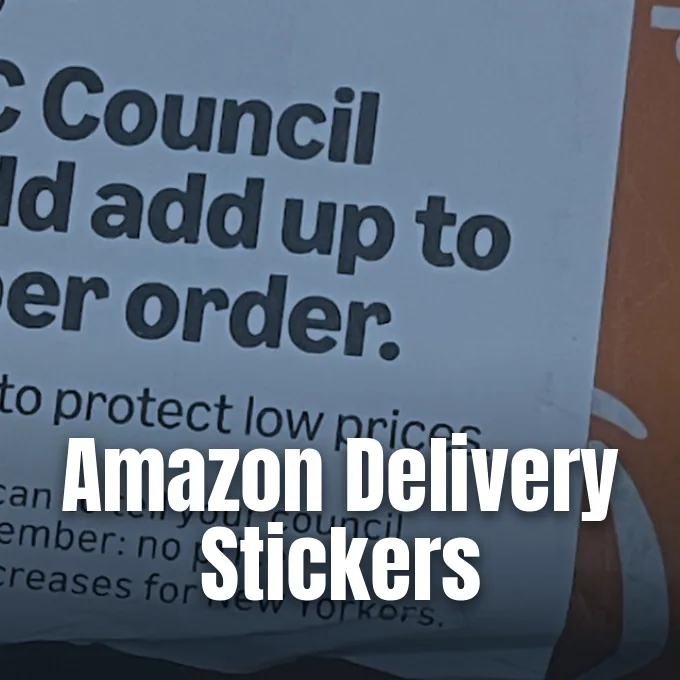
Amazon is placing warning stickers on customer delivery packages in New York City to build opposition against a pending municipal labor bill. Shoppers receiving orders found bright labels warning that local rules could drive up delivery costs. The campaign targets Introduction 0518-2026, known as the Delivery Protection Act, which seeks to restructure last-mile logistics by ending the use of independent delivery contracts [1].
Delivery Protection Act Mandates
Under the proposed municipal measure, introduced formally as Introduction 0518-2026 and cited as Intro 518, retail companies operating distribution facilities in New York City must directly hire third-party delivery contractors who transport parcels to residential doorsteps [1]. FedEx faces the same municipal mandate. City hubs can no longer dispatch independent contractor fleets.
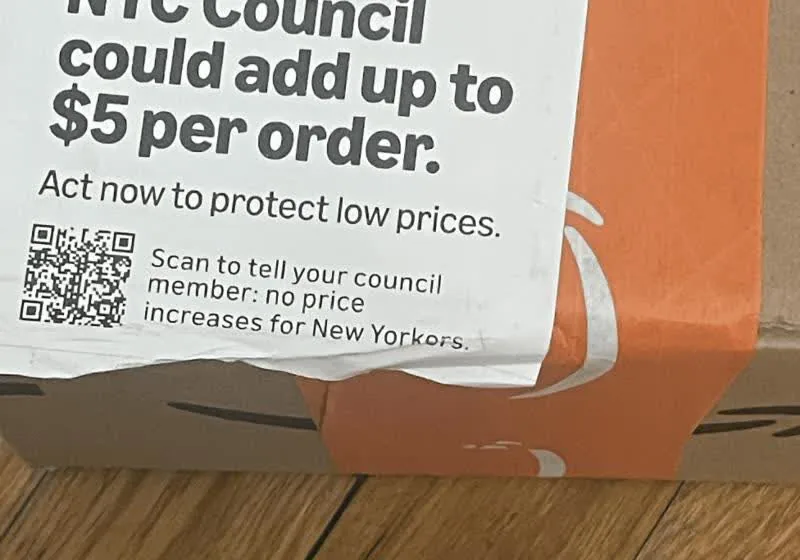
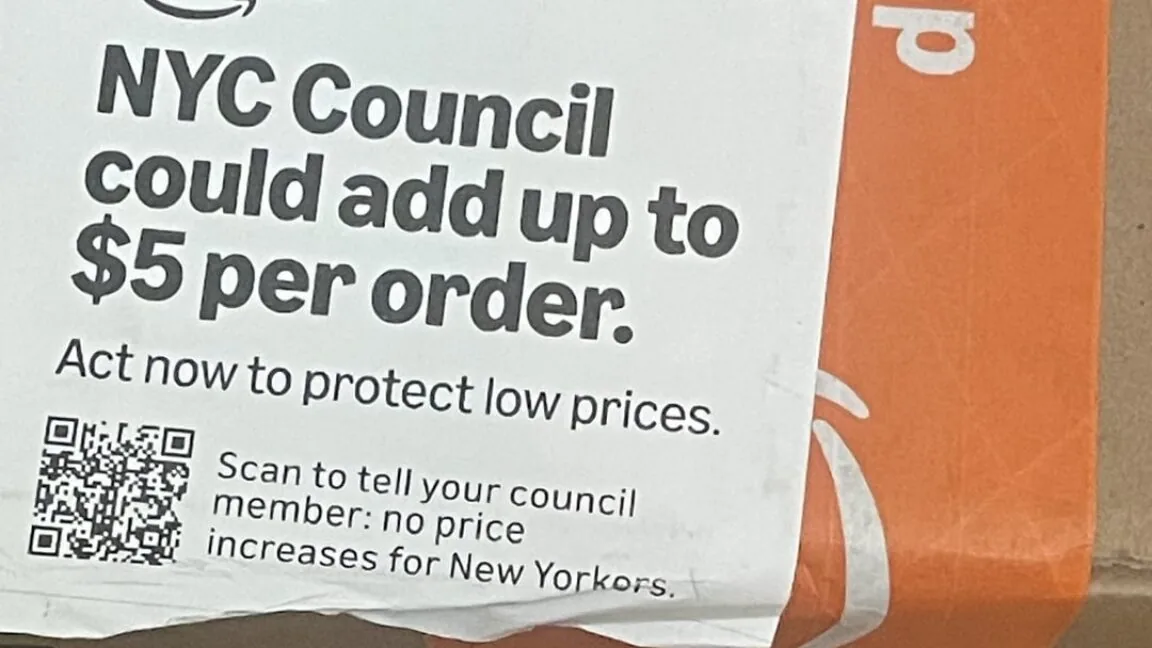
To push back against the bill, Amazon printed warning labels and began sticking them onto customer cartons before dispatch from city fulfillment centers. The sticker features a bold warning: “NYC Council could add up to $5 per order. Act now to protect low prices.” Beside that text, the label carries a scannable QR code that directs smartphone users to a webpage where they can quickly send pre-written emails to their respective city council representatives. The sticker asks each recipient to “Scan to tell your council member: no increases for New Yorkers.” By placing political appeals onto shipping materials, the company connects its opposition campaign directly to household deliveries [1].
Shoppers spotted the packaging quickly. On Reddit, members of the Amazon Prime community shared pictures showing the warning stickers on doorstep parcels [2]. The images circulated on community discussion boards throughout the weekend, drawing public attention to how parcel boxes were being deployed for municipal political lobbying.
Doorstep Sticker Warnings
The sticker campaign brings a political dispute straight to consumer doorsteps. While company lobbying usually happens through trade groups, advertising, or legislative hearings, putting messages on boxes turns parcel deliveries into lobbying fliers. Amazon warns that adding delivery contractors to its direct payroll will increase operational overhead. It estimates the rule could add $5 per order [1].
When shoppers scan the QR code on the box, they are taken to an online contact tool that identifies their local representative based on their residential address and generates a pre-formatted protest message. Residents send objections in seconds. Amazon relies on independent delivery service partners to move packages from sorting hubs to apartment buildings, office towers, and private residences. If city lawmakers approve the measure, the retailer will have to change that network to follow direct employment rules, which it claims could force an extra fee on everyday orders [1].
Delivery drivers in New York City work under third-party contractor firms rather than holding direct employee contracts with Amazon. Supporters of the bill say direct employment provides workers with better job stability, fair pay, and formal workplace protections. Amazon argues the rule will raise shipping expenses and harm consumers [1].

Amazon Contractor History
Amazon built its retail and logistics empire over three decades by combining proprietary software with outside supplier networks. Jeff Bezos set up the business as Cadabra on July 5, 1994, after moving from New York City to Bellevue, Washington. Bezos picked Seattle because computer engineers worked at Microsoft and graduated from the University of Washington, while a major book distribution warehouse operated nearby in Roseburg, Oregon, winning out over Portland and Boulder, Colorado [3]. In November 1994, Bezos renamed the firm Amazon after the world’s largest river to mirror his wide retail goals. The retailer went public in 1997.
The storefront opened on July 16, 1995, initially buying books from publishers and wholesalers before moving into music and video sales. It expanded to the United Kingdom and Germany in 1998, adding software and consumer electronics in 1999. When selling electronics or running sales events, like offering discounted digital photo frames for Black Friday, the company relies on efficient delivery routing to keep fulfillment costs low. Low shipping expenses keep prices competitive.
Outside supplier agreements allowed the business to scale rapidly without buying all merchandise upfront. In 2000, American toy chain Toys “R” Us signed a ten-year contract paying Amazon $50 million annually plus a cut of sales, establishing an exclusive sales arrangement on the e-commerce platform [3]. The deal validated external vendor integration.
Retail Contractor Disputes
External commercial partnerships also brought significant legal friction as the retailer expanded its marketplace operations. In 2004, Toys “R” Us sued Amazon in court, claiming that the online platform let competing third-party sellers offer toys in breach of their contract. In 2006, a court ruled in favor of Toys “R” Us, ending the agreement and awarding the toy chain $51 million in damages. Amazon entered a similar e-commerce partnership with Borders in 2001, but Borders pulled out of the arrangement in 2007 [3].
Contracting practices later spread to parcel shipping. Rather than hiring drivers directly, shipping companies rely on independent delivery partners to finish the last mile. This setup gives carriers staffing flexibility during busy weeks, but Amazon itself has faced public scrutiny over warehouse working conditions and anti-union efforts across its logistics centers [3].
Labor advocates argue that third-party drivers take on vehicle maintenance and fuel expenses while major platforms dictate delivery schedules. Similar policy tensions affect other corporate operations, where local communities voice community pushback over data center projects despite corporate investment pledges. In New York City, council members pushing the labor bill want delivery drivers brought onto company payrolls to establish consistent wage standards and employee protections [1].
Delivery Protection Act in City Logistics
By 2026, Amazon stood as the world’s largest online retailer and the largest company worldwide by revenue, having surpassed Walmart outside China in 2021 with over 200 million global Prime members. Beyond its retail storefront, the conglomerate manages cloud computing via Amazon Web Services (AWS), autonomous vehicles through Zoox, satellite internet with Kuiper Systems, smart home devices via Ring, and physical groceries through Whole Foods Market. It also produces Kindle e-readers, Echo smart speakers, and Fire TV streaming products. In the United States, where Similarweb measures that 86.11% of site traffic originates, the company operates as the second-largest private employer [3].
Because New York City is a dense commercial hub, municipal labor rules carry wide financial implications. Under the Delivery Protection Act, delivery companies can’t keep drivers as third-party contractors if they operate last-mile hubs in the city. Amazon and FedEx would need to take on direct employment obligations, which Amazon says could add up to $5 per order [1].
Placing warning stickers on delivery boxes is an unusual step in local policy battles. Instead of relying only on lobbying visits or public statements, the company turns everyday customer packages into campaign material to reach voters directly at their homes. Whether Introduction 0518-2026 passes or gets amended by the City Council, the debate illustrates how local governments are challenging the independent contractor logistics that support modern urban e-commerce delivery [1].
- ONLINE NEWS Ars Technica. (2026). Amazon fights Delivery Protection Act by putting stickers on its packages. [Article Link]
- ONLINE NEWS TechSpot. (2026). Amazon starts putting $5 delivery price hike warnings on packages in fight against NYC labor bill. [Article Link]
- WEBSITE Wikipedia. (2026). Amazon (company). [Article Link]


