






The Nintendo Switch works by combining a portable tablet with a television docking cradle to support both mobile and living room play. Powered by a custom Nvidia Tegra processor based on GeForce graphics architecture, the console shifts its clock speeds depending on whether it draws energy from an onboard battery or a power outlet. Detachable Joy-Con controllers deliver modular physical inputs and motion tracking [1, 8]. Players switch between handheld gaming and a television display without stopping their game [8].
The Hybrid Hardware Concept
Nintendo began planning the new console around 2012. Wii U sales stalled in retail markets. The older console sold only 13.56 million units, falling far behind the 101.63 million units achieved by the Wii [5, 7]. Former Nintendo of America president Reggie Fils-Aimé called the upcoming project a “make or break product” that had to succeed because Nintendo focuses solely on video games [5]. Company leaders Satoru Iwata, Tatsumi Kimishima, Genyo Takeda, and Shigeru Miyamoto crafted a fresh strategy that combined mobile gaming with home console experiences [8].
General producer Yoshiaki Koizumi guided development with younger designers who wanted a device tailored to modern lifestyle habits. Western gamers often played alone at home, but Japanese consumers gathered in social groups to enjoy portable titles outside. Rather than entering a computational arms race against the Sony PlayStation 4 or Microsoft Xbox One, Nintendo embraced Gunpei Yokoi’s philosophy of lateral thinking with seasoned technology. Koizumi said that Nintendo selected established components to help outside partners like Capcom, Electronic Arts, and Ubisoft port software easily, choosing to balance silicon power against thermal limits and battery life [2, 8]. The engineering team tested five hardware prototypes before choosing a final design [8].
Hardware designers built three distinct play modes into the portable tablet. Gamers attach Joy-Con units to the screen for handheld gaming, prop the screen on a table using the rear kickstand, or slide the machine into a television dock [7, 8]. Nintendo revealed the hardware on October 20, 2016, dropping the NX codename [1, 8]. Fils-Aimé said that the machine gave players total freedom to play anywhere [1].

How the Nintendo Switch Scales Clock Speeds
A custom Nvidia Tegra system on a chip sits inside the console [1]. Typical home consoles pull wall power continuously. The Nintendo Switch, by contrast, must run within the fixed power budget of a handheld shell [2, 11]. Koizumi said that raw graphics performance matters far less to Nintendo than the core system concept and battery longevity [2].
The system firmware runs two separate performance profiles to regulate energy consumption. In portable play, the graphics processing unit downclocks to conserve battery reserves and reduce thermal emissions [2, 7]. When placed inside the dock, the console detects direct AC electricity from the USB-C adapter and raises processor clock frequencies, supplying the extra rendering bandwidth needed to output sharp graphics onto high-definition television screens [7, 8, 11]. Handheld play prioritizes battery endurance, but docked mode boosts visual fidelity [2]. Koizumi said that balancing power consumption against graphical throughput was the hardest design challenge facing the hardware team [8]. Circuits adjust voltage automatically to keep temperatures safe in both play styles [2].
Clock scaling occurs in real time through dynamic clock scaling without interrupting active software. Lifting the console from the cradle during active play prompts the software to reconfigure rendering within a single second [8]. By avoiding overly demanding silicon, Nintendo gave partners like Bethesda and Square Enix a reliable platform that ran engines smoothly in handheld and docked states [1, 2].
The Switch Console in Docked Mode
The Switch Dock serves as a stationary connector linking the portable tablet to home entertainment centers without relying on secondary graphics chips, extra processor cores, or shared RAM pools [1, 8]. The cradle functions solely as an interface hub. When players seat the console into the dock, a USB-C interface at the base engages the connection, routing digital video to the television and supplying electrical current to charge the battery at the same time [7, 8]. Docking takes just one second. Gamers shift from personal mobile sessions to living room multiplayer without pause [7, 8].
Wall power frees the Tegra chip from battery conservation limits, enabling output up to 1080p video at 60 frames per second on compatible high-definition television sets. Portable play defaults to 720p. Docked mode provides the electrical headroom required for enhanced resolution and stable framerates, letting multiple people connect separate Joy-Con or Pro Controller pads to compete on a single screen [1, 2, 7, 8].

Docking established a flexible foundation that shaped hardware development for years, carrying directly into the Switch 2 when Nintendo launched the successor console on June 5, 2025 [8, 9]. The newer dock supports 4K visuals [9]. Readers exploring variable refresh rate support in Ocarina of Time on Switch 2 can observe how docked television performance advanced across nine years of continuous platform engineering.
Joy-Con Controller Input Architecture
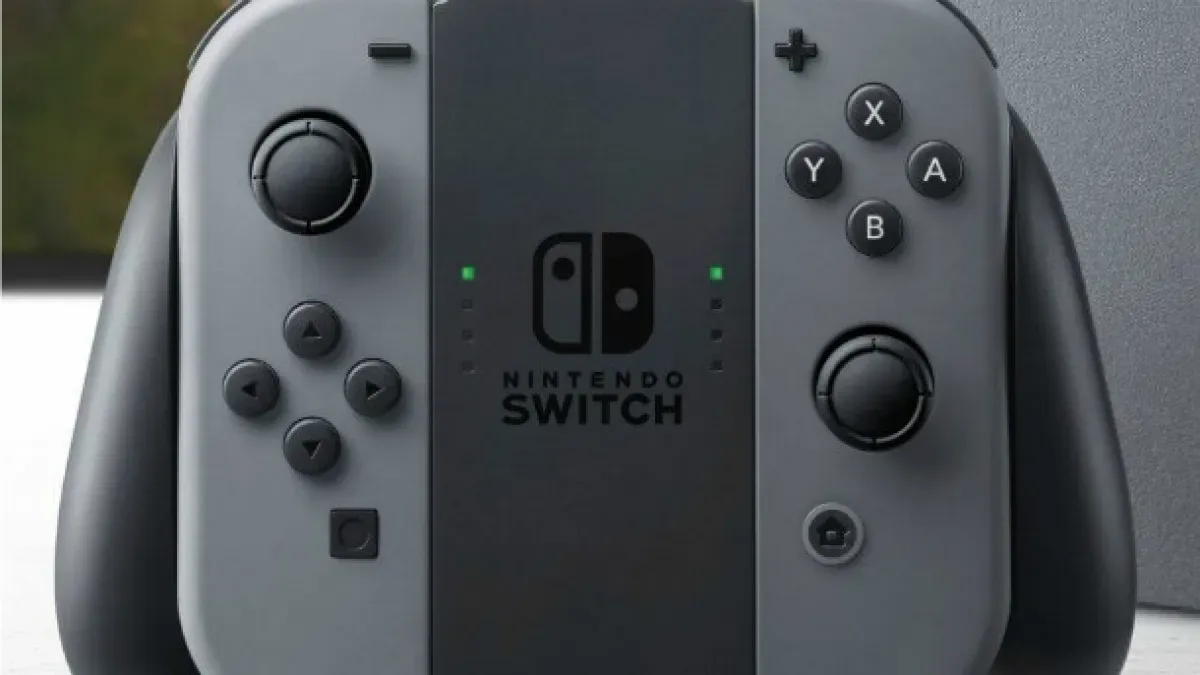
Input handling relies on two detachable Joy-Con controllers mounted on metal side rails [1]. Each controller houses an analog thumbstick, four face buttons, shoulder triggers, and an internal lithium battery [8]. Nintendo director Shinya Takahashi called each Joy-Con a “mass of sensors” built to house sophisticated control mechanisms [4].
Shigeru Miyamoto explained that feedback from players of Wii Sports and Wii Fit inspired Nintendo to shrink controllers so they could be held loosely in hands or strapped to legs [4]. Inside each Joy-Con, embedded gyroscopes and accelerometers track three-dimensional movement and angular rotation [10, 13]. Linear resonant actuators deliver HD rumble, producing precise vibrations that simulate subtle physical events like shaking ice cubes in a glass. The right controller also carries an infrared motion camera that detects the shape, distance, and motion of nearby objects without sensor bars [7, 8]. The optical reader detects hand gestures in party games like 1-2-Switch. Motion challenges allow head-to-head duels without watching the television screen [7]. The left Joy-Con features a square capture button to take screenshots during play [8].


Thermal Dissipation in Portable Play
Housing gaming hardware inside a thin tablet creates major thermal challenges [2, 11]. When the Tegra processor renders demanding three-dimensional games, its silicon generates thermal energy that must escape before the plastic casing becomes uncomfortable to touch. Engineering teardowns published in Engineering & Technology revealed that Nintendo installed a copper heat pipe, thermal compound, and aluminum shielding to conduct heat away from the processor core. The copper pipe carries heat toward an active exhaust channel rather than allowing warmth to accumulate near the lithium battery or LCD panel [11]. Koizumi noted that thermal concerns guided clock speed limits, since high temperatures would degrade battery health over time [2].
Active cooling relies on a custom centrifugal cooling fan positioned at the top of the chassis. Vents along the lower rear pull cool air inside, directing airflow across motherboard components and copper radiator fins before venting out the top edge. Thermal sensors track internal temperatures and adjust fan speed to balance noise with cooling needs [11].
Thermal management works with power controls to protect battery life [2]. The internal battery lasts between 2.5 and 6.5 hours depending on gameplay intensity. Graphically rich adventures like The Legend of Zelda: Breath of the Wild drain power much faster than simple two-dimensional titles [7, 11]. Players recharge the tablet using standard USB-C chargers or mobile power banks [7].
Game Cartridges and Flash Storage
Nintendo chose solid-state ROM cartridges instead of optical discs for physical games [1, 8]. Optical disc drives require spinning motors, laser lenses, and anti-shock mechanisms that take up space and drain mobile batteries. Solid-state game cards contain no moving parts, resisting drop damage while supplying fast read speeds directly to system RAM [8, 11].
The system uses soldered NAND flash memory to store the operating system, downloaded titles, and game save files [8, 12]. Digital forensic research published in Forensic Science International Digital Investigation showed that the console partitions personal identification information, network histories, and connected display records into distinct memory sectors. Forensic investigators built automated modules for the Autopsy software suite to extract and inspect this NAND data safely [12]. A microSD slot beneath the kickstand expands digital storage. Game downloads save to removable memory cards, but progress files stay on internal flash storage [8]. Isolating data prevents corrupt cards from damaging player progress [12].

Digital purchases download through Nintendo eShop, providing instant access to software from independent studios and major publishers like Capcom and Square Enix [1, 8]. Certain demanding games originally arrived via cloud streaming, but releases like the native Switch 2 edition of Resident Evil 2 showed how subsequent hardware runs complex graphics engines locally [8, 9]. Cartridges and digital downloads gave consumers flexible options for building game libraries [8].
System Software Maintenance
Nintendo engineered a lightweight proprietary microkernel to run the system. By stripping away extraneous background processes, the operating system dedicates almost all processor cycles and memory bandwidth to active games [2, 8]. The home menu includes an instant sleep feature. Tapping the power button pauses the game and puts the device into low-power sleep mode within two seconds [8, 14].
Firmware maintenance arrives over the internet to resolve operational bugs and improve interface stability. Owners check their installed build or trigger updates manually in the System Settings menu. On September 30, 2026, Nintendo rolled out system version 23.0.1 to eliminate software startup delays and sluggish response times that users experienced in the previous release. If an update encounters problems, holding the power button for three seconds opens power options to restart the console. Firmware updates also refresh Joy-Con controller code, maintaining wireless Bluetooth stability and low input latency [8, 14].
Online connectivity also powers the Nintendo Switch Online subscription service, which launched in 2018 to support multiplayer matchmaking and cloud game backups [6, 7]. The base membership grants access to over 70 games from the NES, more than 60 titles from the SNES, and classics from the Game Boy. Subscribers to the Expansion Pack unlock Nintendo 64 and Game Boy Advance titles, while smartphone owners access the Nintendo Music streaming app [6].
How the Nintendo Switch Ecosystem Scaled
The console debuted globally on March 3, 2017, priced at $299.99 in North America and 29,980 yen in Japan under president Tatsumi Kimishima [7, 8]. Financial analysts like Atul Goyal of Jefferies initially expressed caution regarding the price point, but consumers responded enthusiastically. Lifetime sales climbed to 155.37 million units by late 2025 [7, 15]. This figure surpassed the older Nintendo DS record of 154.02 million sales, securing its rank as Nintendo’s highest-selling hardware line. By 2025, over 129 million active users played on the platform annually. Nintendo proved that a hybrid system could retain audience engagement over many years without mid-cycle hardware replacements [8, 15].
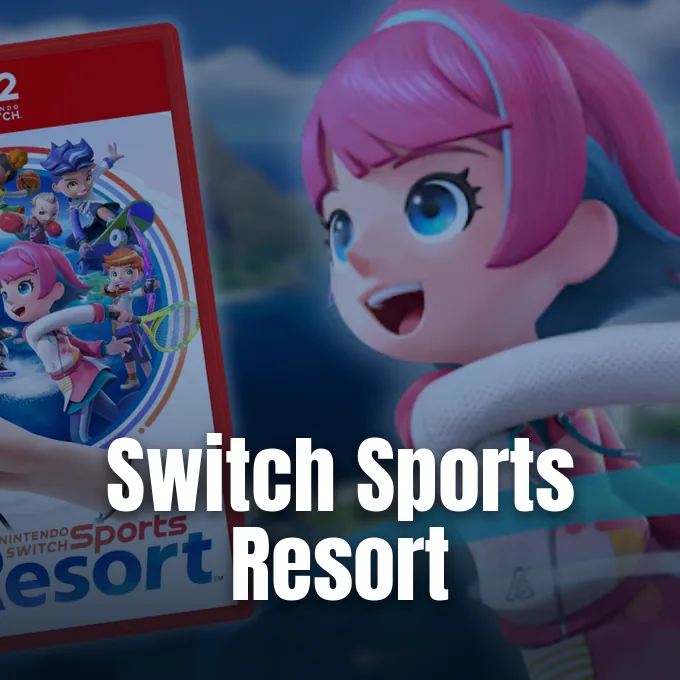
Software sales fueled this hardware expansion across different player groups [8]. Family titles like Nintendo Switch Sports, directed by Yoshikazu Yamashita, sold over 18.32 million copies by March 2026. As gamers reviewed review scores for Nintendo Switch Sports Resort on successor hardware, the original game sustained active local and online communities [10]. Hardware revisions like the Switch Lite in 2019 and the OLED model in 2021 offered alternative form factors [8].
Over 146 million console owners formed an enormous audience bridge to Nintendo’s next platform [8, 9]. Backward compatibility remained essential. When company president Shuntaro Furukawa launched the Switch 2 in June 2025, engineers Kouichi Kawamoto, Takuhiro Dohta, and Tetsuya Sasaki preserved support for existing digital and physical software libraries [9, 15]. The 2017 architecture proved that modular hardware and dynamic clocks could successfully unite portable and television gaming [2, 8].
- ONLINE NEWS Souppouris, A. (2016). ‘Switch’ is Nintendo’s next game console. Engadget. [Article Link]
- ONLINE NEWS Reeves, B. (2017). The Switch’s architect on why Nintendo’s consoles are different. Game Informer. [Article Link]
- ONLINE NEWS Nunneley-Jackson, S. (2017). Switch reveal will feature English voiceover, “in-depth” look at games coming via Treehouse Live. VG247. [Article Link]
- ONLINE NEWS McAloon, A. (2018). The Nintendo Switch, Joy-Cons, and even Labo are the result of Wii-era feedback. Game Developer. [Article Link]
- ONLINE NEWS Nunneley-Jackson, S. (2021). Reggie: Switch was a “make or break product” for Nintendo that “luckily was a hit”. VG247. [Article Link]
- ONLINE NEWS Dassanayake, D. (2024). All Nintendo Switch Online games available to play right now. Eurogamer.net. [Article Link]
- ONLINE NEWS Roy Choudhury, S. (2017). Nintendo Switch to launch globally on March 3, to cost $300 in the US. CNBC. [Article Link]
- WEBSITE Wikipedia contributors. (n.d.). Nintendo Switch. Wikipedia, The Free Encyclopedia. [Article Link]
- WEBSITE Wikipedia contributors. (n.d.). Nintendo Switch 2. Wikipedia, The Free Encyclopedia. [Article Link]
- WEBSITE Wikipedia contributors. (n.d.). Nintendo Switch Sports. Wikipedia, The Free Encyclopedia. [Article Link]
- ACADEMIC JOURNAL Dempsey, P. (2017). The teardown: Nintendo Switch gaming system. Engineering & Technology, 12(4), 82–83. [Article Link]
- ACADEMIC JOURNAL Barr-Smith, F., Farrant, T., Leonard-Lagarde, B., Rigby, D., Rigby, S., & Sibley-Calder, F. (2021). Dead man’s switch: Forensic autopsy of the Nintendo Switch. Forensic Science International: Digital Investigation, 36, Article 301110. [Article Link]
- ACADEMIC JOURNAL Cuesta-Gómez, A., Martín-Díaz, P., Sánchez-Herrera-Baeza, P., Martínez-Medina, A., Ortiz-Comino, C., & Cano-de-la-Cuerda, R. (2022). Nintendo Switch Joy-Cons’ infrared motion camera sensor for training manual dexterity in people with multiple sclerosis: A randomized controlled trial. Journal of Clinical Medicine, 11(12), Article 3261. [Article Link]
- WEBSITE Nintendo of America Inc. (2026). Nintendo Switch system update information. Nintendo Support. [Article Link]
- ONLINE NEWS Phillips, T. (2026). Switch becomes Nintendo’s best-selling hardware ever, while Switch 2 has already outsold Wii U’s lifetime total. IGN. [Article Link]


