




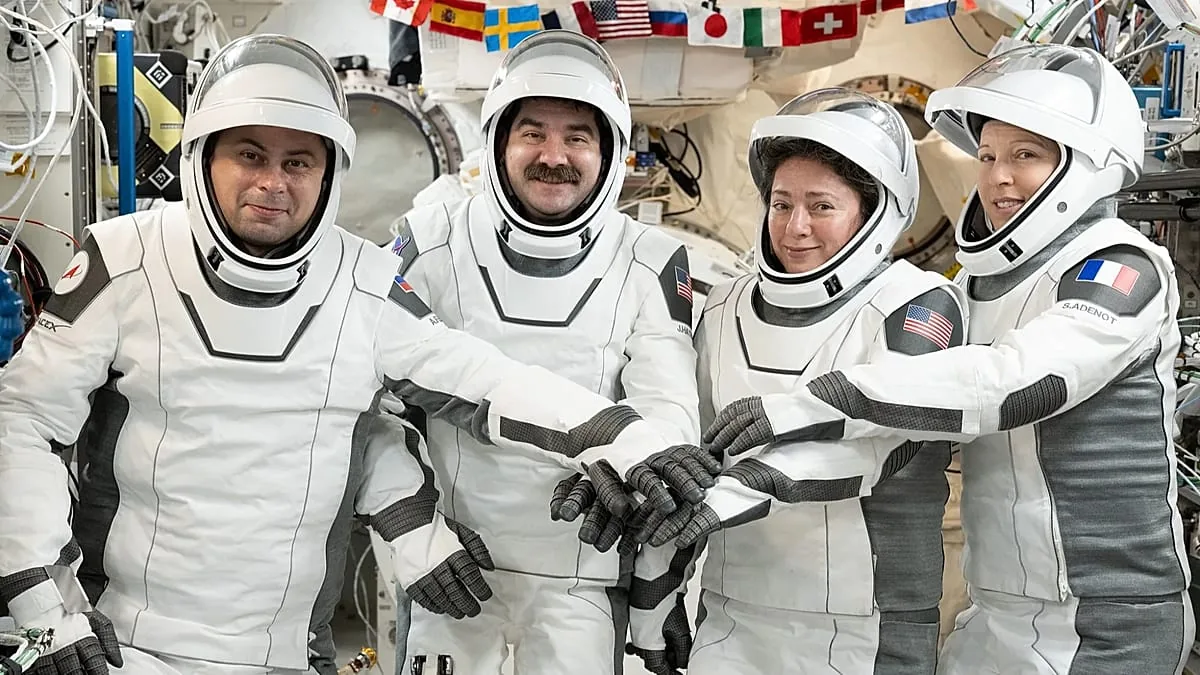
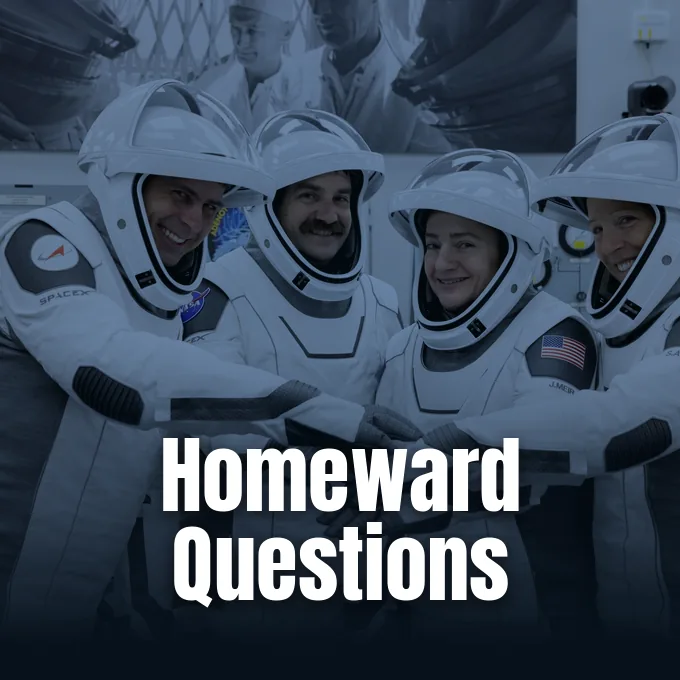
European Space Agency member states welcomed ESA astronaut Sophie Adenot back to Europe on 10 October 2026 after her first orbital mission aboard the International Space Station set a new European flight endurance record. Four astronauts shared the return flight. Flying aboard the SpaceX Dragon spacecraft for Crew-12, Adenot concluded nearly eight months of microgravity research alongside American crewmates Jessica Meir and Jack Hathaway and Russian cosmonaut Andrei Fedyaev [1, 3]. Medical transport teams flew her to Germany to begin rehabilitation at the European Astronaut Centre [1, 2].
How Do ESA Astronauts Get to the ISS?
ESA astronauts travel to the International Space Station aboard crew vehicles like the SpaceX Dragon, launching from Cape Canaveral in Florida. Sophie Adenot began her orbital journey on 13 February 2026 when Crew-12 lifted off from the Florida coast, carrying Meir, Hathaway, and Fedyaev toward an orbital docking [1, 3]. They joined Expedition 74 and Expedition 75 [1].
Earlier operational plans outlined during the NASA SpaceX Crew-12 return briefing coordinated the schedule for undocking and recovery across recovery teams. They spent nearly eight months living and working 400 kilometres above Earth, conducting research in the European Columbus laboratory module while station crew members circled Earth every ninety minutes [1, 2]. Speaking to reporters after touching down, the 44-year-old French astronaut recalled how the perspective from orbit changed her view of borders [2, 5].
Adenot explained that looking down from 400 kilometres away showed “no divisions, no borders” but “just a precious planet that we all share” [2, 5]. Crew-12 worked together across national boundaries. The return journey began when their Dragon capsule undocked on 7 October at 12:05 GMT, starting a 27 hours and 29 minutes trip back through the atmosphere toward the landing zone [1].
How Astronaut Sophie Adenot Surpassed Previous Orbital Records
By logging 237 days, 5 hours and 18 minutes in orbit, Sophie Adenot established a new benchmark for European spaceflight. The flight exceeded prior milestones. Her εpsilon mission exceeded the previous European record held by Italian astronaut Luca Parmitano by more than 35 days, having surpassed his flight duration through continuous orbital operations. Parmitano had spent 201 days in orbit during his Beyond mission in 2019–2020 [1, 3].
Adenot is the eleventh French astronaut in history and only the second French woman to cross the Karman line, reaching space thirty years after Claudie Haigneré completed her pioneering flight [3]. Crew-12 also established an endurance record for SpaceX Dragon capsules by remaining in flight longer than the 235 days logged by Crew-8 during its earlier orbital mission. European space leaders pointed to these flight achievements as evidence of Europe’s growing role in space exploration [1].
“We are delighted to welcome back our ESA astronaut Sophie Adenot who embodied our values through her successful mission,” said Josef Aschbacher, ESA’s Director General. Aschbacher explained that her flight comes as European leaders prepare for the Intermediate Ministerial Council Meeting in Rome in December, where member states will discuss exploration budgets. Ministers will gather in Rome. “Our ambition is clear: Europe must secure a role in exploration commensurate with its political and economic weight,” Aschbacher said when discussing future European space plans [1, 4].
Spacewalk Milestones for ESA Astronaut Sophie Adenot
Beyond logging record flight days, Sophie Adenot became the first French woman to step outside into the vacuum of space during an extravehicular activity (EVA) [1, 3]. Only one European woman walked earlier. Across the history of European human spaceflight, only Samantha Cristoforetti had previously conducted a spacewalk as a European woman, making Adenot the second European female astronaut to work outside an orbital complex. Adenot carried out three spacewalks in 14 days, working outside the pressurized modules on 18 August, 25 August, and 1 September [1, 3]. Three excursions spanned two weeks. During these excursions, she performed station upkeep and prepared exterior trusses for hardware upgrades while spending a total of 19 hours and 42 minutes floating outside [1].
Working in a spacesuit presents physical challenges because every movement requires pushing against suit joints while floating in microgravity [2]. Daniel Neuenschwander, ESA Director of Human and Robotic Exploration, praised her quick progress through mission assignments after she completed the European and French payload program aboard the International Space Station. “Sophie was the first of her class to be assigned to a mission, embarking on a fast-track journey she brilliantly completed,” Neuenschwander said. He explained that missions like εpsilon help build the technical experience and institutional knowledge required as Europe pursues future space exploration initiatives [1].

European Science and Technology Payloads in Orbit
During her eight months aboard the orbital outpost, Adenot dedicated long working hours to a scientific research program. She spent around 218 hours working on 35 European payloads spanning health research, materials science, biology, fluid physics, radiation physics, and fundamental science. In addition to laboratory studies, she logged about 25 hours performing maintenance and system upgrades inside Columbus, Europe’s microgravity research facility [1].
She completed every εpsilon experiment proposed by the French space agency CNES, alongside all ESA experiments assigned to her flight roster, observing physical reactions that cannot be tested on Earth. Microgravity enables novel materials research. Technology testing formed another key part of her orbital agenda, focusing on systems designed for exploration missions beyond low Earth orbit. Adenot helped test systems including in-orbit metal 3D printing and the new European exercise device E4D [1].
While earlier flight records evaluated astronaut exercise routines aboard the ISS, Adenot evaluated how E4D could support daily physical conditioning for crews on long spaceflights. Crews exercise every single day. Over the course of Expedition 74 and Expedition 75, she supported commercial research payloads and carried out science tasks for international space station partners. Teams at the Columbus Control Centre (Col-CC) and User Support and Operations Centres (USOCs) monitored each payload run from Europe [1].
Public Outreach and STEM Engagement Across Europe
In addition to laboratory duties, Adenot used her free time in orbit to share science directly with the public. Social channels carried orbital dispatches. She posted regular updates about daily life aboard the station and shared views of Earth with more than 1.1 million followers across public social media platforms. Her online posts generated over 403 million views throughout the εpsilon mission [1].
A regular feature of her communication was the Sunday Morning Science series, where she used weightlessness to explain fundamental physics and chemistry concepts to young audiences across Europe. These orbital demonstrations showed floating water spheres and surface tension dynamics in microgravity environments in ways impossible in standard science classrooms on the ground. Educational outreach reached into European schools through cooperative programs run with national agencies [1].
Adenot inspired more than 290 000 students through the CNES Chloriss educational experiment, which was carried out in about 4,000 classrooms. School children grew plant seeds. Pupils took part in ESA’s AstroPi challenge, school poetry contests, and direct amateur radio contacts through the ARISS program aboard the station. Adenot joined more than 40 live broadcast events connecting with schools, museums, scientific institutions, and journalists around the world. Representatives from ESA said these educational initiatives help spark student interest in aerospace engineering careers [1].
Physical Recovery Program for Sophie Adenot
The return to Earth brought a sharp change from floating in orbit to feeling the full pull of planetary gravity [2]. The SpaceX Dragon capsule carrying Crew-12 splashed down on Thursday, 8 October at 15:34 GMT (5:35 p.m. French time) in the Pacific Ocean off the coast of San Diego, California [1, 3]. Ocean swells tossed the capsule for 25 minutes before recovery teams could lift the crew onto the recovery ship [2]. Helicopters ferried crewmembers ashore [1, 3]. Adenot recalled that when commandos pulled her from the craft, she told them: “Send me back to space, please! It was much easier up there” [2]. After medical checks on the recovery ship, helicopters flew the crew to Naval Air Station North Island before a NASA plane carried them to Ellington Field in Houston [1, 3].
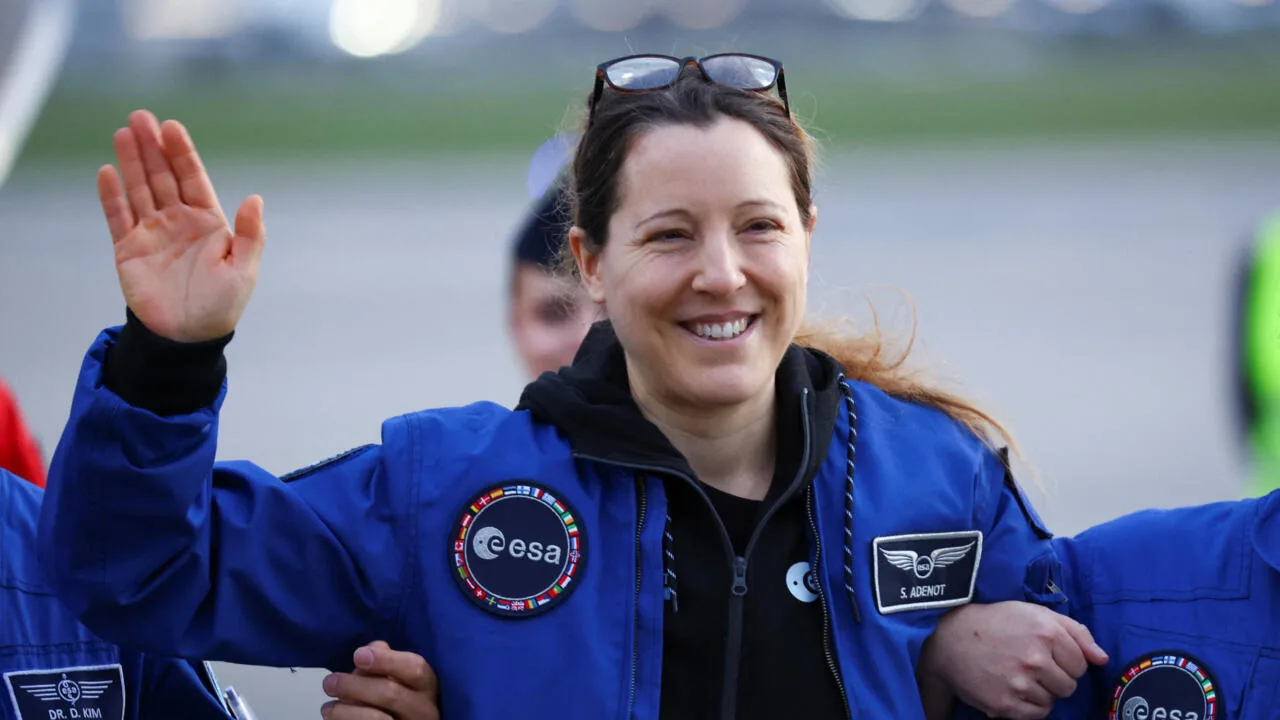
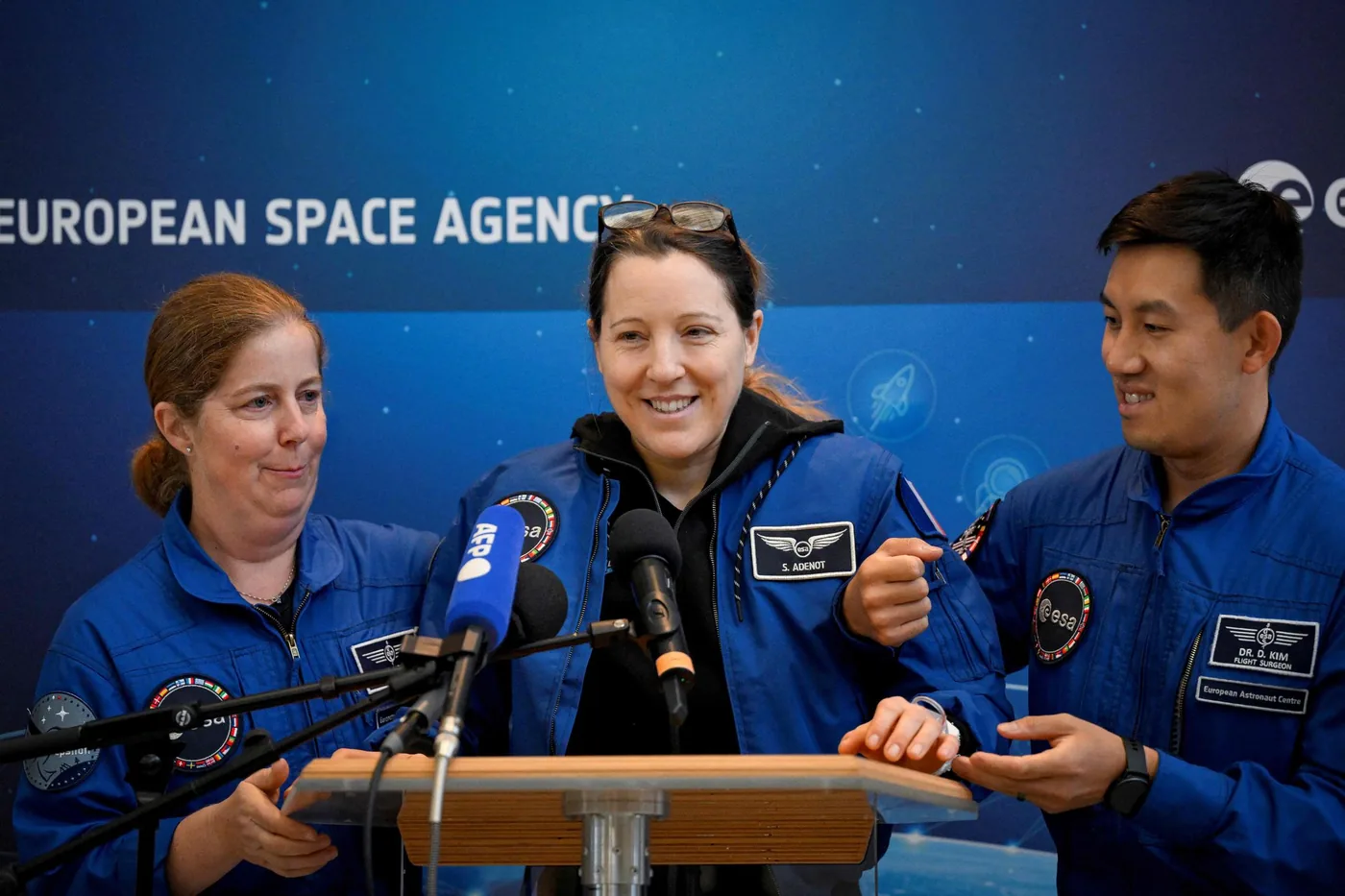
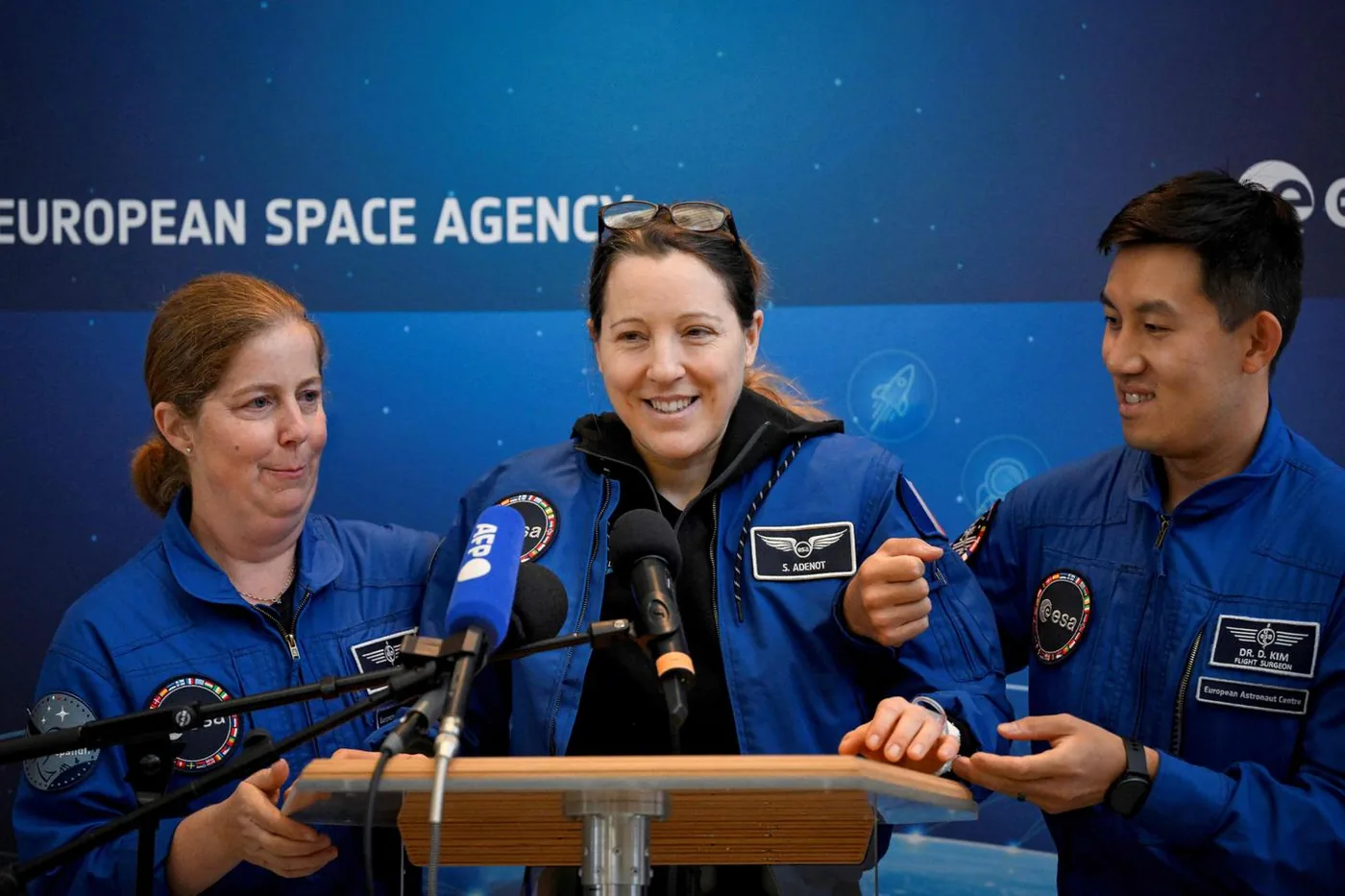
On 9 October, Adenot boarded a French Air and Space Force Airbus A330 MRTT Phénix to return to Europe, landing in Cologne at 04:21 GMT on 10 October. Colleagues welcomed her at EAC [1]. Stepping onto the tarmac, the astronaut looked visibly tired and was assisted by two ESA physicians as she walked toward the reception building. Weightlessness causes bodily changes such as bone loss, muscle wasting, cardiovascular deconditioning, and visual shifts [2, 5]. “It’s a cocktail of astonishing emotions, it’s incredible. It’s great to be back on Earth, but it also comes with its share of challenges, especially physiological ones,” Adenot said during a press conference in Cologne [2]. She is now spending two to three weeks at :envihab, a German Aerospace Center (DLR) facility next to EAC, working with DLR and ESA specialists on rehabilitation [1]. Adenot described her eight months in space as an experience with “all human emotions, from the most joyful to the hardest” [2, 5].
- PRESS RELEASE European Space Agency. (2026, October 10). ESA astronaut Sophie Adenot returns from her first mission to the International Space Station. [Article Link]
- ONLINE NEWS France 24. (2026, October 10). ‘All human emotions’: French astronaut Sophie Adenot returns to Earth. [Article Link]
- ONLINE NEWS Paponaud, E. (2026, October 8). Astronaut Sophie Adenot returns to Earth after record space mission. Euronews. [Article Link]
- ONLINE NEWS Mirage News. (2026, October 10). ESA astronaut Sophie Adenot returns from first ISS mission. [Article Link]
- ONLINE NEWS Le Monde. (2026, October 10). French astronaut Sophie Adenot went through ‘all human emotions’ during eight-month mission. [Article Link]
APA 7: TWs Editor. (2026, October 11). How ESA Astronaut Sophie Adenot Completed Her Record ISS Mission. PerEXP Teamworks. https://perexpteamworks.com/en/esa-astronaut-sophie-adenot-returns/


