





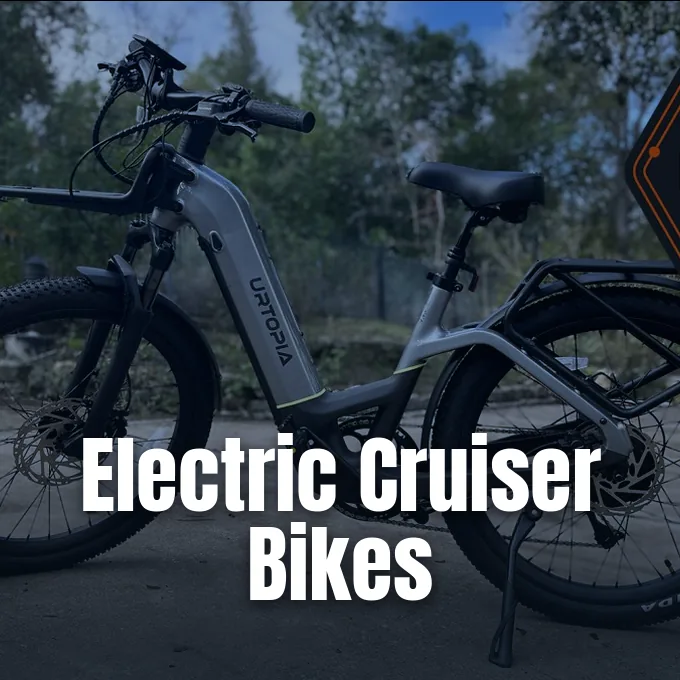
Classic cruiser bicycles once prioritized relaxed geometry over brisk travel, favoring upright posture and sweeping handlebars along flat coastal paths. That profile shifted as manufacturers introduced high-capacity batteries and responsive hub motors to utility cycling. Today, electric cruiser bikes merge ergonomic comfort with commuter power, letting riders tackle steep Texas hills without sacrificing the upright seating posture that keeps neck and shoulder strain low during extended trips. While testing the Urtopia Carbon Atom in Austin, Texas, Kristin Shaw recorded speeds reaching 28 mph on suburban roads once ridden by Lance Armstrong [1].
Ergonomics of Cruiser E-Bikes
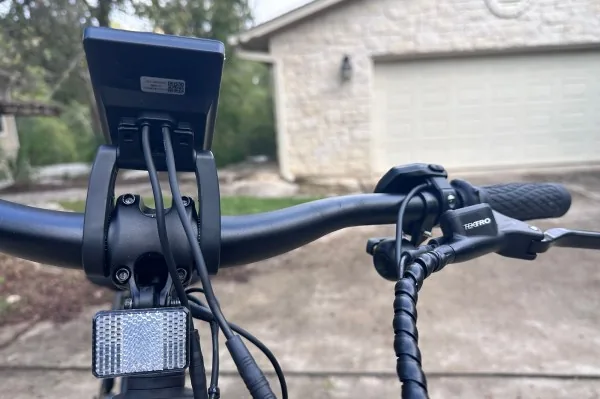
Cruiser geometry splits into two design categories. In Electric Bike Report, reviewer John S Bozick said classic beach cruisers draw styling cues from 1950s and 1960s automobiles, pairing soft colors and aluminum trim with wide, swept-back handlebars that mimic the posture of pushing a wheelbarrow. Dutch-style city cruisers adopt sleeker frames with handlebars that place the hands closer together in front of the body [2]. Both layouts position the torso upright like sitting in an armchair, contrasting with dropped racing handlebars.
Upright seating reduces muscle fatigue along the lumbar spine during routine commutes. In road evaluations of the Lectric XPress2 ST, John S Bozick logged extended test routes and reported zero strain in the neck and shoulders [2]. Kristin Shaw rode the Urtopia Carbon Atom for Popular Science around Austin, Texas, and praised its wide saddle during grocery trips between local shops and neighborhood homes [1]. A comfortable seat and an adjustable stem let cyclists fine-tune handlebar reach on cruiser e-bikes without mechanic tools.
Frame Geometry for Daily Riding
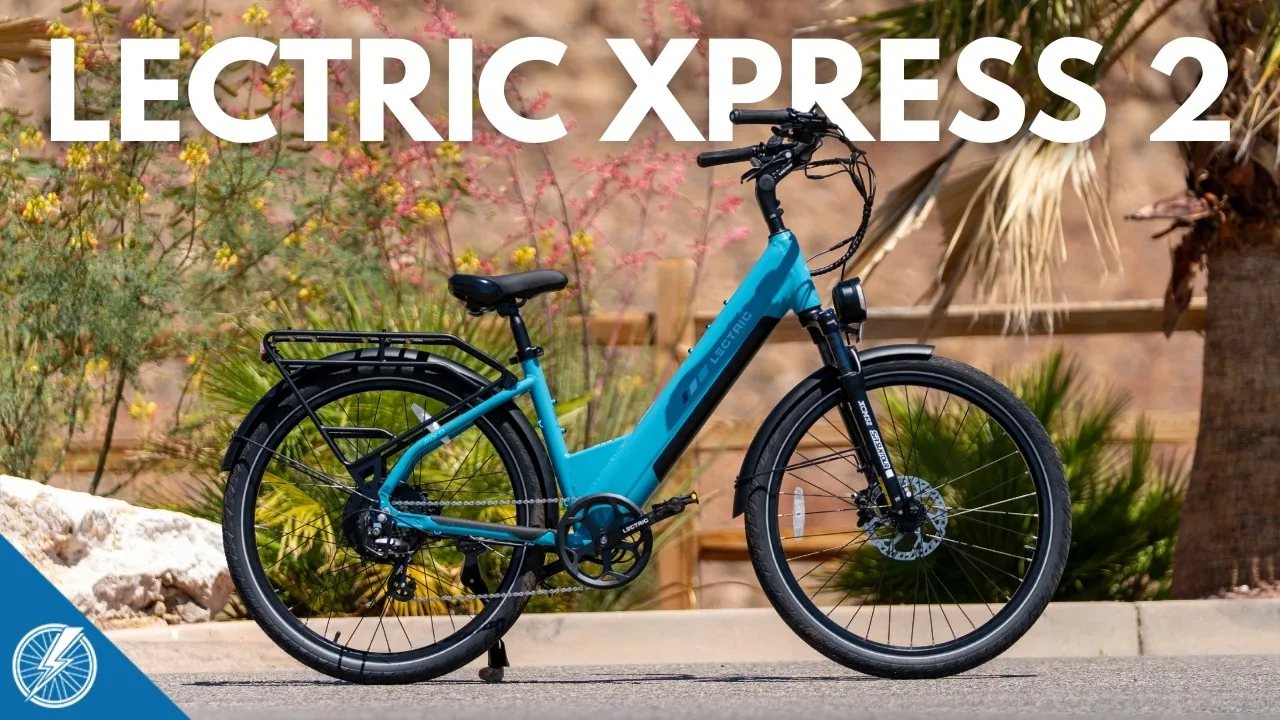
Step-through frames form the core of practical commuter cruiser design. Rather than forcing riders to swing a leg over a tall top tube, step-through tubing dips low to simplify mounting and dismounting. Electric cruiser bikes give riders an upright alternative to dropped road bars. The Lectric XPress2 ST uses a V-shaped frame that creates an 18.5-inch standover height, while the Velotric Breeze 1 lowers its standover clearance down to 15 inches [2]. That low clearance prevents clumsy dismounts at Austin traffic lights when carrying heavy cargo on an attached rear rack.
Frame materials balance build strength against total carrying weight. The Urtopia Carbon Atom incorporates Toray T1000 carbon fiber, a lightweight composite commonly chosen for Tour de France racing bicycles. The bare frame weighs 58 pounds. Adding fenders, racks, and lights brings total equipped weight to 62 pounds, though lifting the LG battery pack out drops the frame to 50 pounds [1]. That 62-pound total compares well with aluminum builds like the 54-pound Heybike Venus and the 50-pound Velotric Breeze 1 [2]. Shaw nearly tipped over on an Austin hill, but said the step-through frame let her hop off safely to avoid road rash [1].
Sizing options also shape rider comfort and road handling. Urtopia produces the Carbon Atom in a single frame size built for riders between 5 feet 3 inches and 5 feet 11 inches tall [1]. Lectric sells both high-step and step-thru frames to match rider heights, pairing the step-thru model with curved handlebars [2]. Correct sizing helps cyclists place their feet flat on the asphalt when pausing at Texas road junctions.
Torque Sensors Versus Cadence Systems
Motor assistance depends on pedal sensor design. Simple cadence sensors act like binary switches that detect crank revolutions and supply a fixed burst of motor assist, whereas torque sensors measure actual downward foot pressure at the pedals to scale motor support in proportion to pedaling effort. Shaw said the Urtopia motor delivered instant acceleration the moment her feet pushed down during Austin hill climbs [1]. The response feels intuitive.
Recent cruiser releases give cyclists the option to toggle between sensor modes depending on route hills and rider fatigue. Velotric introduced a SensorSwap function on the Discover 3, letting cyclists choose torque mode for fitness workouts or switch to cadence mode for effortless coastal cruising. The Lectric XPress2 ST puts similar mode switching inside its color TFT display menu, giving users control over assist sensitivity and throttle behavior. Heybike took another path with the Venus, running torque and cadence sensors at the same time to maintain smooth motor power across five assist levels [2].


Motor Output and Measured Range
Suburban hill climbing needs strong motor torque and smooth power delivery. Electric cruiser bikes often feature a 750W rear hub motor. On the Urtopia Carbon Atom, that 750W rear hub drive generates 90Nm of torque and reaches a peak output of 1,250W when climbing steep Austin roadways [1]. The Heybike Venus also uses a 750W motor that peaks at 1,100W, while the Lectric XPress2 ST motor stays whisper-quiet at lower assist levels. Shimano eight-speed gear systems on the Urtopia and Lectric models let cyclists maintain an efficient pedaling tempo over rolling roads [1, 2].
Battery storage sets the practical travel perimeter between wall charges. Urtopia equips the Carbon Atom with an 835Wh removable battery built with LG 21700 lithium-ion cells, reaching up to 93 miles of range in Eco mode with an 180-pound test rider on flat roads [1]. Velotric supplies a 730-Wh pack on the Discover 3 and a 627-Wh battery on the Breeze 1 to handle multiday commuting [2]. A 48V 4.5A fast charger replenishes the Urtopia pack in about four hours, but Shaw said the pack is awkward to pull out from the frame cavity [1].
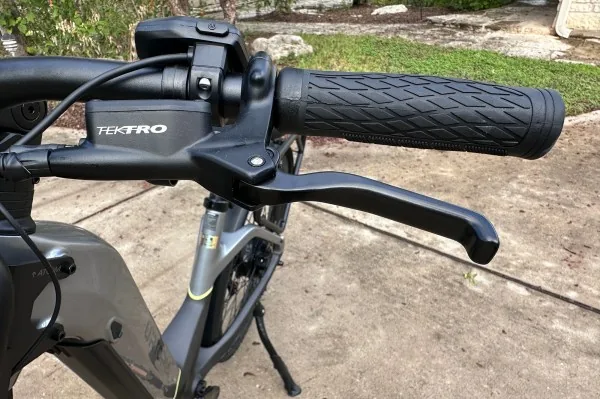
Displays and security locks provide practical peace of mind. The Urtopia Carbon Atom features a 3.5-inch color LCD display and a double-click Throttle Safety Lock that prevents accidental motor starts at pedestrian crossings [1]. On the Lectric XPress2 ST, the battery charge meter reads in 10% jumps, which Bozick said makes remaining range harder to calculate toward the end of long rides [2]. Clear digital monitoring keeps commuters informed before embarking on lengthy trips.
Suspension Setup and Utility Gear
Pavement cracks and gravel require good damping to keep cruising comfortable. The Urtopia Carbon Atom pairs an 80mm suspension fork with a 30mm suspension seatpost and 26-by-2.4-inch tires to soak up Texas road bumps [1]. Lectric upgraded the XPress2 ST with an SR Suntour front suspension fork, whereas the Heybike Venus uses a rigid fork that gives crisp steering but less vibration damping [2]. Tektro hydraulic disc brakes on the Carbon Atom use a 203mm front rotor and a 180mm rear rotor for strong, predictable stopping [1].
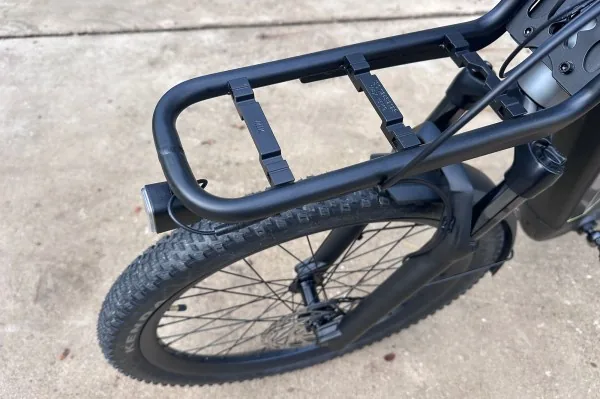
Cargo carrying makes cruiser electric bikes a genuine substitute for car travel on short errand runs. The Velotric Discover 3 provides a 440-pound payload capacity and an MIK-compatible rear rack, exceeding the cargo rating of several full cargo bikes. Lectric includes a 60-pound cargo rack with the XPress2 ST, while Urtopia supplies a sturdy rear rack and an optional $99 front carrier [1, 2]. Shaw used the Urtopia rear rack to carry dinner takeout and groceries home along Austin roads without breaking a sweat [1].
Built-in lights and electrical certifications improve commuter safety near motor vehicle traffic. The Carbon Atom includes a 100-lux front headlight and rear lights with brake signals and turn indicators [1]. Velotric and Lectric also integrate turn signals and brake lights into their frames, earning UL 2849 safety certifications and IPX6 water ratings [2]. Certified electrical systems protect lithium cells from rainwater during wet morning commutes.
What Distinguishes Modern Electric Cruiser Bikes?
Cyclist interest in versatile transit has widened the role of casual cruiser bikes. In Popular Science, Shaw said modern builds hit an appealing middle ground for riders who want one bike for grocery errands, commutes, and weekend cruises. Thumb throttles give riders a motor boost up to 20 mph when they prefer not to pedal [1]. How do these design choices affect everyday cycling on city streets?
Price tags reflect divergent engineering priorities across the market. The carbon-fiber Urtopia Carbon Atom sells for $2,499, but aluminum models from Lectric and Velotric provide strong performance at lower prices [1, 2]. Lectric equips the XPress2 ST with Star Union hydraulic brakes and SR Suntour forks, while Velotric adds Apple Find My tracking and cruise control to the Discover 3 [2]. By joining upright seating with strong motors and large batteries, electric cruiser bikes deliver everyday utility without sacrificing relaxed riding comfort.
- ONLINE NEWS Shaw, K. (2026, November 28). I took this comfortable e-bike around town, and it’s a terrific all-around cruiser. Popular Science. [Article Link]
- ONLINE NEWS Bozick, J. S. (2026, July 14). Best Cruiser Electric Bikes of 2026: 13 Comfortable Rides. Electric Bike Report. [Article Link]
APA 7: PerEXP Teamworks. (2026, November 29). Electric Cruiser Bikes Pair Relaxed Riding with Commuter Utility. PerEXP Teamworks. https://perexpteamworks.com/en/electric-cruiser-bikes-commuter-utility/


