





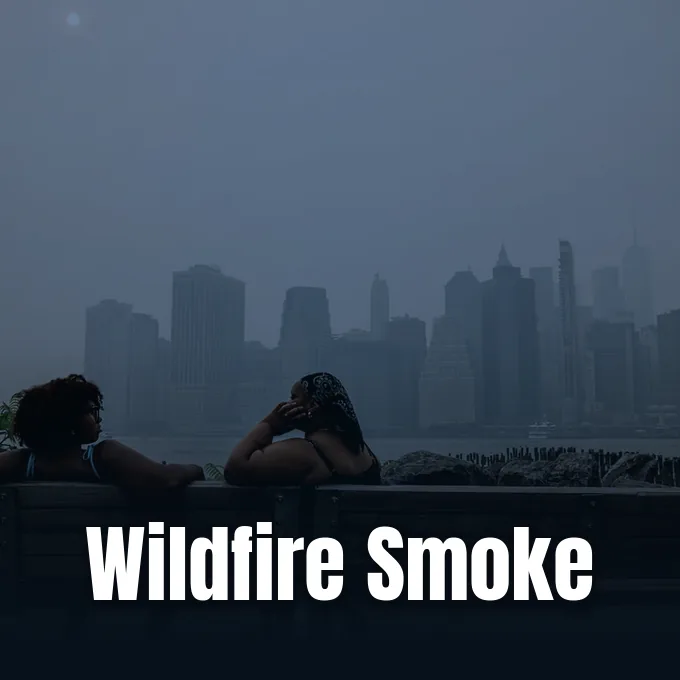
How does wildfire smoke transform as it drifts thousands of kilometers from burning forests into densely populated metropolitan centers? When large blazes consume trees and dry brush, moving plumes do not remain chemically static. Instead, they undergo photochemical reactions that alter their toxicity, light absorption, and aerosol structure before mixing into urban air. While earlier research documented how global emissions from extreme forest fires elevate carbon output, atmospheric chemists now track how airborne plumes synthesize new secondary pollutants downwind. Solar radiation and ambient oxidants transform raw emissions into complex chemical mixtures that threaten public health over vast geographic distances [1].
- Why Is Wildfire Smoke Toxic?
- Chemical Differences Between Flaming and Smoldering Fires
- Sunlight and Radicals Transform Aged Wildfire Smoke
- Why Wildfire Smoke Is a Health Concern for Distant Cities
- Hundreds of Blazes Shutter Public Schools in Manaus
- Atmospheric Drift and Plumes That Reach the Stratosphere
Why Is Wildfire Smoke Toxic?
Wildfire smoke is toxic because it contains a complex mixture of combustion gases, fine particulate matter, and reactive chemical compounds that inflame respiratory tissues and enter the human bloodstream. As trees and grasses burn, they release carbon dioxide and carbon monoxide as their main combustion products, but the heat also generates large volumes of lung-irritating volatile organic compounds (VOCs) and nitrogen oxides (NOx). Field measurements have also identified hazardous polyaromatic hydrocarbons (PAHs), organic acids, and heavy metals within drifting plumes. These airborne poisons do not stay confined near the flames. They spread over downwind airsheds, forcing local populations to inhale microscopic soot particles that irritate lung airways and worsen cardiovascular conditions [1].
The chemical makeup of a plume depends on the specific vegetation burning on the ground and the local combustion temperature. Specks of solid soot known as black carbon enter the sky alongside aerosol droplets that carry varied organic molecules. When these carbonaceous particles are fresh, many organic droplets absorb solar radiation, leading atmospheric scientists to classify them as brown carbon. As fresh plumes rise into the air column, solid carbon cores provide airborne surfaces where volatile molecules condense and accumulate, creating layered aerosol structures that penetrate deep into alveolar sacs when inhaled by nearby residents [1].
Chemical Differences Between Flaming and Smoldering Fires
Understanding the health and climate risks of drifting smoke leads researchers to analyze how fire behaves at its source. Some fires burn hot and fast, generating visible flames that reflect relatively complete combustion and produce hot, buoyant gases that loft soot high into the upper atmosphere. Other fires burn cool and low, smoldering through damp organic matter and releasing thick, white clouds that stay closer to the ground surface. Because this less efficient smoldering combustion burns fuel incompletely, it expels enormous quantities of aerosol particles and unburned organic vapors into the air [1].
At the landscape scale of a wildfire, both flaming and smoldering conditions take place together in different parts of the fire line. Both combustion modes occur together. The resulting plume combines buoyant gases with smoldering emissions, creating an intricate blend of reactive chemicals that evolves as flames advance through timber. Tyler McIntosh, a doctoral researcher who studies wildfires with the Cooperative Institute for Research in Environmental Sciences at the University of Colorado Boulder, observed that historical land management has changed fuel loads. “We’re in a fire deficit,” McIntosh explained, pointing out that decades of fire suppression have altered landscape dynamics. “We’ve had a lot less fire on the landscape than we theoretically should have over recent history,” McIntosh said, noting that accumulated fuels now sustain larger fires once ignition occurs [1].

Sunlight and Radicals Transform Aged Wildfire Smoke
As a plume billows away from active flames, atmospheric oxygen and solar radiation begin to chemically transform aged wildfire smoke. When the smoke cloud thins out and disperses into open skies, its volatile organic compounds and nitrogen oxides are bathed in direct sunlight, triggering rapid photochemical reactions that synthesize ground-level ozone. Ozone is a caustic oxidant that inflames human airway linings and damages plant tissues, yet it is rarely produced by the fire itself. Instead, ozone forms during atmospheric transit, meaning that populations located far downwind encounter higher ozone concentrations than communities situated near the burn perimeter [1].
At the same time, atmospheric hydroxyl radicals attack the sunlit organic gases traveling within the plume. These reactive radicals break molecular bonds, add functional groups, and transform lightweight organic vapors into heavier molecules that condense into secondary organic aerosols (SOAs). As transformed gases condense onto pre-existing black and brown carbon surfaces, the optical and chemical traits of the particles shift. Sunlight gradually bleaches the light-absorbing molecules embedded in organic droplets. Dark particles lighten aloft. Suspended aerosols remain aloft for days [1].
These photochemical alterations mean that aged smoke poses distinct risks compared to fresh emissions collected near the burn scar. The production of secondary organic aerosols increases the total particle mass carried by the plume, while ozone generation adds an aggressive chemical irritant to the haze. Downwind air quality models must account for these ongoing chemical reactions rather than treating smoke as an inert cloud of soot [1].


Why Wildfire Smoke Is a Health Concern for Distant Cities
Wildfire smoke is a health concern for distant cities because aging plumes deliver elevated levels of ground-level ozone and microscopic secondary aerosols into metropolitan areas with dense human populations. For a few days during the summer, millions of people living far from wilderness areas in the United States experienced hazy skies when smoke from uncontrolled blazes in Ontario drifted over the international border. Urban residents who live hundreds of miles away from burning forests often assume that distant smoke has diluted to safe levels. That assumption is mistaken. The chemical synthesis of secondary organic aerosols keeps particulate concentrations hazardous [1].
When aging smoke plumes descend into city air basins, their chemical components interact with urban emissions from motor vehicles and industrial facilities. Airborne particulate matter penetrates residential buildings, degrading indoor air quality and creating sustained hazards for vulnerable groups such as children, older adults, and individuals with asthma. In addition, fine aerosols scatter solar radiation and reduce surface visibility, disrupting daily transportation and commercial operations in affected metropolitan centers. Public health agencies urge caution during hazy days [1].
Hundreds of Blazes Shutter Public Schools in Manaus
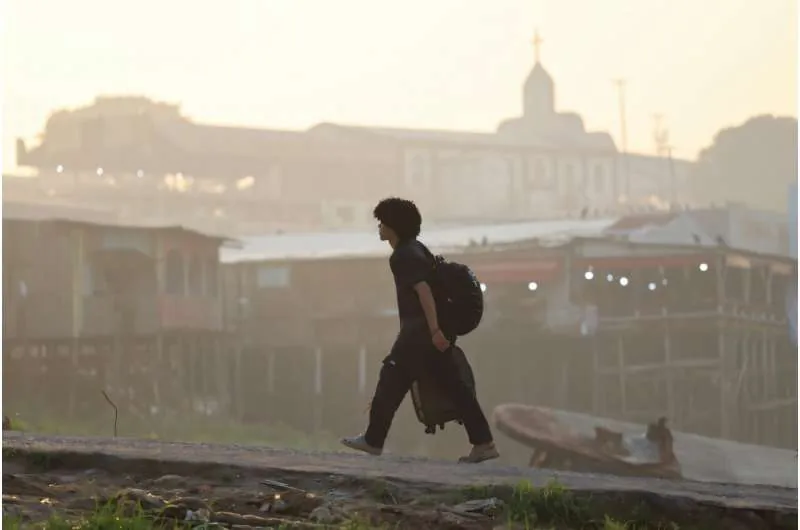
Severe urban consequences emerged in northern Brazil when classrooms shut down across Manaus, a metropolitan center of 2.3 million residents engulfed by thick smoke from surrounding forest blazes. Municipal authorities suspended classes on Friday to safeguard students and educators as heavy plumes blanketed city streets. In an official statement, the city government explained that the emergency closures were ordered “to protect the health, safety and well-being of students and education professionals”. No reopening date was set [2].
Air quality deteriorated sharply in Manaus as wildfires proliferated under severe drought conditions. Monitoring data compiled by Brazil’s National Institute for Space Research (INPE) detected over 3,700 fire hotspots in Amazonas during September, an incidence nearly four times higher than the previous year. On a single Wednesday, monitoring sensors detected more than 749 fires burning in the surrounding region, filling urban neighborhoods with dense particulate matter. The crisis coincided with extreme heat, as local temperatures in Manaus reached 40°C (104°F) on Thursday, prompting medical authorities to warn residents against outdoor physical exercise [2].

For local residents, the combination of intense heat and pervasive smoke created distress. “Both the smoke and the heat really contribute to breathing problems … it is distressing,” Erlan de Santos, 55, a public-sector worker in Manaus, told AFP on Thursday. Manaus had already endured several days blanketed in smoke during the previous month, highlighting the vulnerability of Amazonian urban centers during dry periods. These recurring pollution emergencies illustrate how climate extremes across the Amazon basin translate wilderness fires into civic disruptions for millions of city dwellers [2].
Atmospheric Drift and Plumes That Reach the Stratosphere
The environmental fate of smoke from wildfires depends on prevailing meteorological patterns and the convective energy of the blaze. Wind patterns determine plume drift. Strong surface winds can push dense smoke clouds into metropolitan centers or steer them out over the ocean, where marine boundary layers gradually dilute their particulate concentrations. Conversely, widespread rainfall can scrub pollutants from the atmosphere, depositing dissolved organic acids and suspended soot onto surface soils and waterways. Rain washes the air clean [1].
When blazes burn with intense convective heat, their plumes can punch past the troposphere and inject aerosols into the lower stratosphere. Within that stable, dry atmospheric layer, pollutants linger for months, altering local radiative balance and drifting over continents. Recent meteorological research into wildfire pyrocumulonimbus clouds reaching the stratosphere shows how high-energy storms transport aerosols far above typical weather systems [1]. In the Amazon, where tropical rainforests store enormous reserves of terrestrial carbon, recurring fires driven by El Niño warming in the equatorial Pacific Ocean threaten forest stability and release carbon reservoirs that worsen global climate shifts. The Amazon stores vast carbon reserves [2].
- ONLINE NEWS Samuels, F. (2026, October 9). Wildfire smoke evolves as it drifts from wilderness to city. Chemical & Engineering News. [Article Link]
- ONLINE NEWS Zinin, A. (2026, October 10). Wildfire smoke shuts schools in Amazon’s biggest city. Phys.org. [Article Link]
APA 7: PerEXP Teamworks. (2026). Why Wildfire Smoke Turns More Toxic as It Drifts.


