





Microsoft business strategy manager Brandon Stirrup sparked an industry debate after claiming that internal teams already rely heavily on generative software to build games. Stirrup published a series of posts on X over the weekend of October 18, asserting that hundreds of staff members use the technology daily and that gaming leaders are merely pretending otherwise. The public comments ignited fresh scrutiny over Xbox AI development and workplace automation. Stirrup deleted his social media account less than twenty-four hours later as community pushback mounted [3].
Weekend Posts on Xbox AI Development
Stirrup waded directly into the public debate by challenging how major publishers present their production workflows to players. He argued on his personal account that game studios hide their adoption of automated tools out of fear of public backlash, insisting that transparency should replace industry secrecy. “Gaming is the only industry where leaders are afraid to talk about AI,” Stirrup wrote during his posting spree. He added that he was prepared to accept personal consequences for breaking corporate silence on the matter. “I’m happy to take the hit if it means hundreds at Xbox can stop pretending that they’re not using AI,” Stirrup said [2].
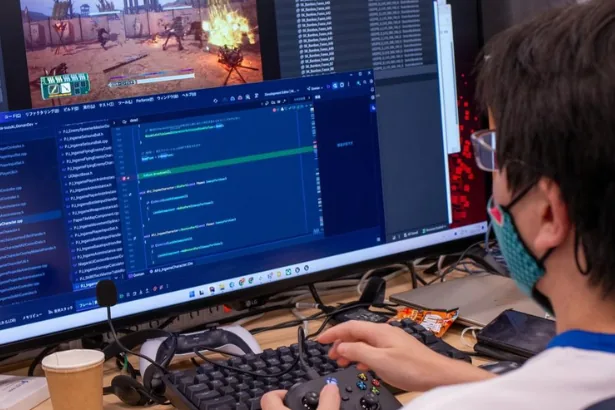
Stirrup had never designed a video game before. To test the technology, he spent three hours of active work over two days building a simple soccer project in Unreal Engine using Model Context Protocol (MCP) tooling [5].
The strategy manager called his soccer simulation “bad but improvable,” but he used the experiment to draw sweeping conclusions about the commercial future of game development. Stirrup argued that smaller teams could soon ship large games with minimal engineering staff, warning that studios resisting automated pipelines “should not be in the business of being a business.” He also posted that anyone could now build tailored games from simple prompts. “Look, if I’m fired tomorrow it will be because I told you the truth that nobody wants you to know,” Stirrup said [3].

Account Deletion and Official Silence
The aggressive tone of the posts quickly drew pushback from video game players and professional software engineers online. Within less than twenty-four hours of posting his thread, Brandon Stirrup deleted his X account to halt incoming replies. Sources speaking to PC Gamer reported that Stirrup took down his profile because he feared getting fired over the viral controversy.
Despite the deletion, social media users preserved screenshots of the entire thread and shared them across X and Bluesky. Stirrup’s public LinkedIn profile listed him as a Senior Business Strategy Manager at Microsoft with an AI-related company certification, detailing how automated tools supported his daily duties. Microsoft leadership didn’t issue an official response after the posts surfaced. The company offered no formal statement, confirmation, or denial regarding Stirrup’s claims about studio practices. Stirrup didn’t return to the platform, leaving archived records as the primary evidence of his claims [2].
Industry commentators at Windows Central and Pure Xbox noted that personal comments from a single employee don’t establish company policy. A business manager building a weekend prototype doesn’t prove that game studios face top-down quotas for generative code [4].
Xbox AI Development Amid Workforce Cuts
The controversy surrounding Xbox AI development arrived after Microsoft executives spent months assuring players that automated systems wouldn’t replace creative staff. When Asha Sharma took over as Microsoft Gaming CEO in February following Phil Spencer’s retirement, she addressed public skepticism directly. Sharma had previously managed product teams inside Microsoft’s CoreAI division. “We will not chase short-term efficiency or flood our ecosystem with soulless AI slop,” Sharma said at the time [3].
Chief content officer Matt Booty reinforced that position during an interview with Windows Central, saying Microsoft had issued no top-down directive requiring studios to adopt generative tools. Booty stated that experimentation remained an optional choice for individual creative teams. However, that public messaging clashed with deep staffing reductions just five months later. In July, Xbox eliminated roughly 3,200 jobs, cutting about a fifth of its total workforce and impacting staff at Bethesda Game Studios, ZeniMax Online, id Software, and Obsidian [3].
Labor representatives reacted sharply to the cuts. The Communications Workers of America (CWA) filed an unfair labor practice charge against Microsoft on July 15, accusing the company of failing to bargain and making unilateral contract changes. On August 18, more than 800 CWA-represented workers rallied across nine cities in the United States and Canada to protest the layoffs [3].

Industry Adoption and Developer Pushback
The tension inside Microsoft reflects a sharp divide throughout the global gaming market. According to the 2026 GDC State of the Game Industry survey of more than 2,300 professionals, 52% now view generative AI as a negative force in game development. That negative sentiment has nearly tripled from 18% recorded two years prior, with only 7% viewing the technology favorably. Yet the same survey revealed that 36% of developers already use machine learning utilities in their day-to-day work, showing that practical adoption continues to climb even as professional skepticism deepens [3].
Several commercial publishers have moved ahead with public deployment. Activision disclosed using generated assets for Call of Duty: Black Ops 6 and Warzone, while Ubisoft tested automated tools for Far Cry 7 following a €1.3 billion operating loss. Epic Games CEO Tim Sweeney has publicly championed automated creation tools on social platforms.
Meanwhile, a CESA survey finding Japanese game developers using generative tools showed rising experimental adoption overseas. But independent creators have established strict boundaries against synthetic content. Studios such as Finji, developer ConcernedApe of Stardew Valley, and Strange Scaffold have rejected generative content to safeguard human craft. Players have also organized boycotts, backing browser extensions that highlight Steam AI disclosures and supporting titles with AI-free badges [1].

Prototype Demos Versus Commercial Production
Stirrup’s weekend project highlights both the appeal and the technical limits of vibe coding. Describing desired software in natural language lets a creator assemble a prototype in hours without deep programming knowledge. But a prototype differs fundamentally from a finished commercial release. Technical commentators at Windows Central pointed out that machine-generated code can be poorly structured and difficult to maintain over extended development cycles [5].
Shipping a finished console game demands rigorous performance optimization, memory management, network synchronization, and accessibility accommodations across diverse hardware configurations. None of those engineering requirements can be solved through simple prompts alone. While automated utilities can assist with routine syntax debugging or repetitive asset formatting, they can’t replace experienced engineers. Recent incidents, such as temporary placeholder art appearing in Crimson Desert or controversial synthetic voice performances in The Finals, demonstrate how unvetted assets create legal and reputational risks for studios [1].
Microsoft continues to explore the technology through initiatives like Xbox Labs, which researches automated modding and experimental development workflows. But the company faces a skeptical community that associates algorithmic efficiency with lower quality and studio downsizing. The future of Xbox AI development will depend on whether Microsoft can support working developers rather than treating their hard-won creative craft as an unnecessary expense [3].
- ONLINE NEWS Bea, R. (2026, October 31). Xbox manager says AI is already being used in game development. Engadget. [Article Link]
- ONLINE NEWS Parrish, A. (2026, October 20). Xbox Manager Says ‘Hundreds’ There Are Using AI Before Deleting Account. Kotaku. [Article Link]
- ONLINE NEWS Barr, D. (2026, November 1). Xbox Manager Says Studio Uses AI Widely Then Deletes His Account. Startup Fortune. [Article Link]
- ONLINE NEWS The Tech Marketer. (2026, October 19). Brandon Stirrup’s Xbox AI Comments Put Gaming’s AI Debate Back in the Spotlight. The Tech Marketer. [Article Link]
- ONLINE NEWS Edison, R. (2026, October 19). Xbox Manager Says AI Is Essential for Developers After Building a Game in Two Days. Yahoo Tech. [Article Link]
- WEBSITE FeedBagel. (2026). Xbox manager says AI is already being used in game development — full coverage. FeedBagel. [Article Link]


