






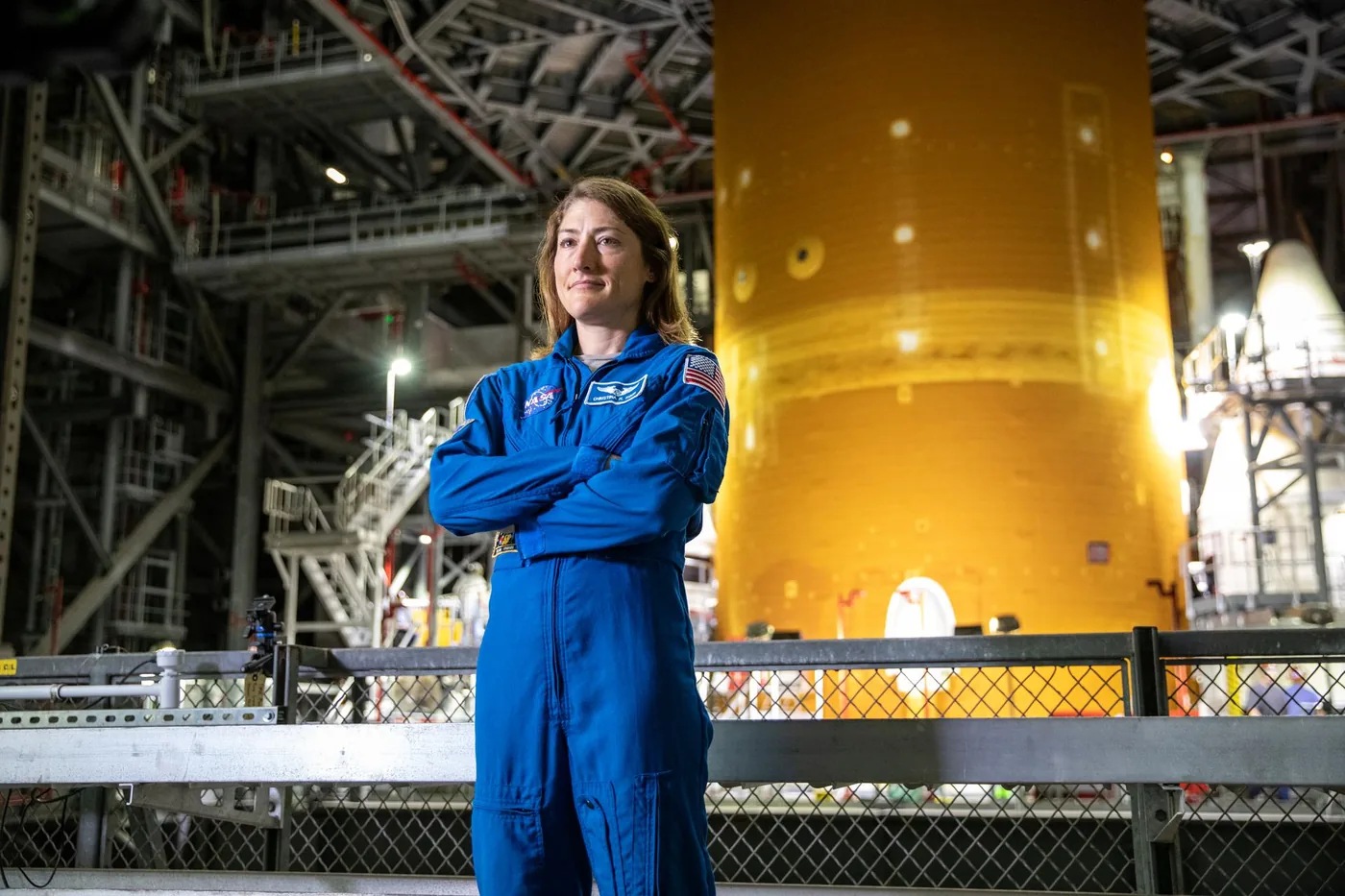
NASA has named veteran astronaut Christina Koch as the agency’s acting deputy chief engineer, placing one of human spaceflight’s most experienced explorers at the head of its technical programs. The change takes effect on Sunday, November 1, following the retirement of Katherine Van Hooser after more than 35 years of public service. With this transition, Koch steps away from flight assignments to guide mission readiness and flight safety for upcoming Moon and deep space initiatives [1].
What Role Will Astronaut Christina Koch Take On?
In her new post at NASA Headquarters in Washington, Christina Koch will help lead the engineering community and support flight readiness decisions. Her duties center on safety reviews and mission integrity for robotic and human flights alike. Under this reassignment, she moves into a management astronaut classification, which ends her eligibility for flight assignments so that she can focus on agency-wide engineering policy. The assignment begins on Sunday [1].
Leaders view her background as an asset for evaluating flight hardware and design risks. “Christina has seen NASA engineering from both sides of the equation: developing complex systems on the ground and trusting them with her life in space,” said NASA Administrator Jared Isaacman in release 26-088. Isaacman explained that her perspective will assist NASA as teams return to the lunar surface, construct the Moon Base, advance space nuclear power, and build capabilities for future journeys to Mars. Her microgravity experience guides decisions [1].
The office of the chief engineer oversees safety standards and risk management at NASA centers. Koch will work with NASA Associate Administrator and Chief Engineer Amit Kshatriya to evaluate readiness before major launches [1]. Kshatriya pointed out that her proven background on the ground and in orbit prepares her to maintain the high standards required for human exploration [3].
Katherine Van Hooser Concludes 35 Years of Service
The leadership transition follows the retirement of Katherine Van Hooser, who concludes more than 35 years of service on Wednesday, October 21. Van Hooser joined in 1991. Early work at Marshall Space Flight Center in Huntsville, Alabama, centered on turbomachinery, analyzing liquid rocket propellants under extreme combustion pressures. That foundation led to her role as chief engineer for the space shuttle main engine, directing propulsion engineering through the final 21 shuttle flights [1].
As NASA prepared for deep space missions, Van Hooser led the Liquid Engines Element for the Space Launch System as its inaugural chief engineer. In that role, she helped advance propulsion systems that power the agency’s Artemis Moon flights. She later served as Marshall’s chief engineer, supervising propulsion design and payload integration [1]. Her leadership bridged two eras [4].
Since 2023, Van Hooser has served as NASA’s deputy chief engineer, providing agency-wide oversight and maintaining continuity. Kshatriya recognized her contributions, stating that her guidance strengthened the engineering workforce through major organizational transitions. “Katherine has been an extraordinary leader throughout her career, bringing technical expertise, sound judgment, and an unwavering commitment to mission success to some of NASA’s most complex engineering challenges,” Kshatriya said [1].
How Christina Koch Built an Engineering Career
Christina Hammock Koch (pronunciation: “Cook”) was born in Grand Rapids, Michigan, and grew up in Jacksonville, North Carolina. Spending summers on her family’s farm in Michigan helped develop a strong work ethic and a passion for practical challenges. She attended high school at the North Carolina School of Science and Math in Durham and White Oak High School in Jacksonville before pursuing university studies. She lived in Livingston, Montana, when NASA selected her for the astronaut corps in 2013 [2].
Koch completed her undergraduate education at North Carolina State University in Raleigh, earning Bachelor of Science degrees in electrical engineering and physics. She remained at North Carolina State to earn a Master of Science degree in electrical engineering and also studied abroad at the University of Ghana. The university later awarded her an Honorary PhD in recognition of her contributions to space exploration. She studied abroad in Ghana [2].
Her career at NASA began when she joined the NASA Academy program in 2001 as a student researcher. She soon took a position as an electrical engineer at NASA Goddard Space Flight Center in Greenbelt, Maryland, where she developed scientific instruments for space missions. That role gave her early experience with flight hardware, cleanroom integration, and testing procedures before launch. In 2013, NASA selected her as one of eight candidates in the 21st astronaut class. Her candidate training concluded in 2015 [2].

Remote Polar Field Stations and Instrument Design
Before joining the astronaut corps, Koch worked as a field engineer in remote scientific outposts. She served as a Research Associate in the United States Antarctic Program, completing a yearlong deployment with a winter-over at Amundsen-Scott South Pole Station and spending a season at Palmer Station. Living through an Antarctic winter required practical competence under freezing conditions. While stationed at the South Pole, she took on safety duties by serving on Firefighting and Search and Rescue Teams. She served on rescue squads [2].
Her field deployments continued with work at Summit Station in Greenland, followed by research tours with the National Oceanic and Atmospheric Administration. For that agency, Koch served as a field engineer in Utqiagvik, Alaska, monitoring atmospheric baselines in the Arctic circle. She also served as Station Chief of the American Samoa Observatory in the South Pacific, overseeing environmental sampling and station upkeep. Her duties covered Arctic baselines [2].
Between polar seasons, Koch returned to space hardware development as an electrical engineer at the Johns Hopkins University Applied Physics Laboratory Space Department. At the laboratory, she contributed to space science instruments on major exploratory missions, including the Juno orbiter sent to Jupiter and the Van Allen Probes studying radiation belts. Her work on detectors and electronics earned recognition, including a nomination for Invention of the Year in 2009 [2]. This combination of laboratory instrument design and polar field maintenance gave her a rare perspective on how systems perform when repairs must be handled far from factory support [5].
How Christina Koch Connects Flight Experience to Design
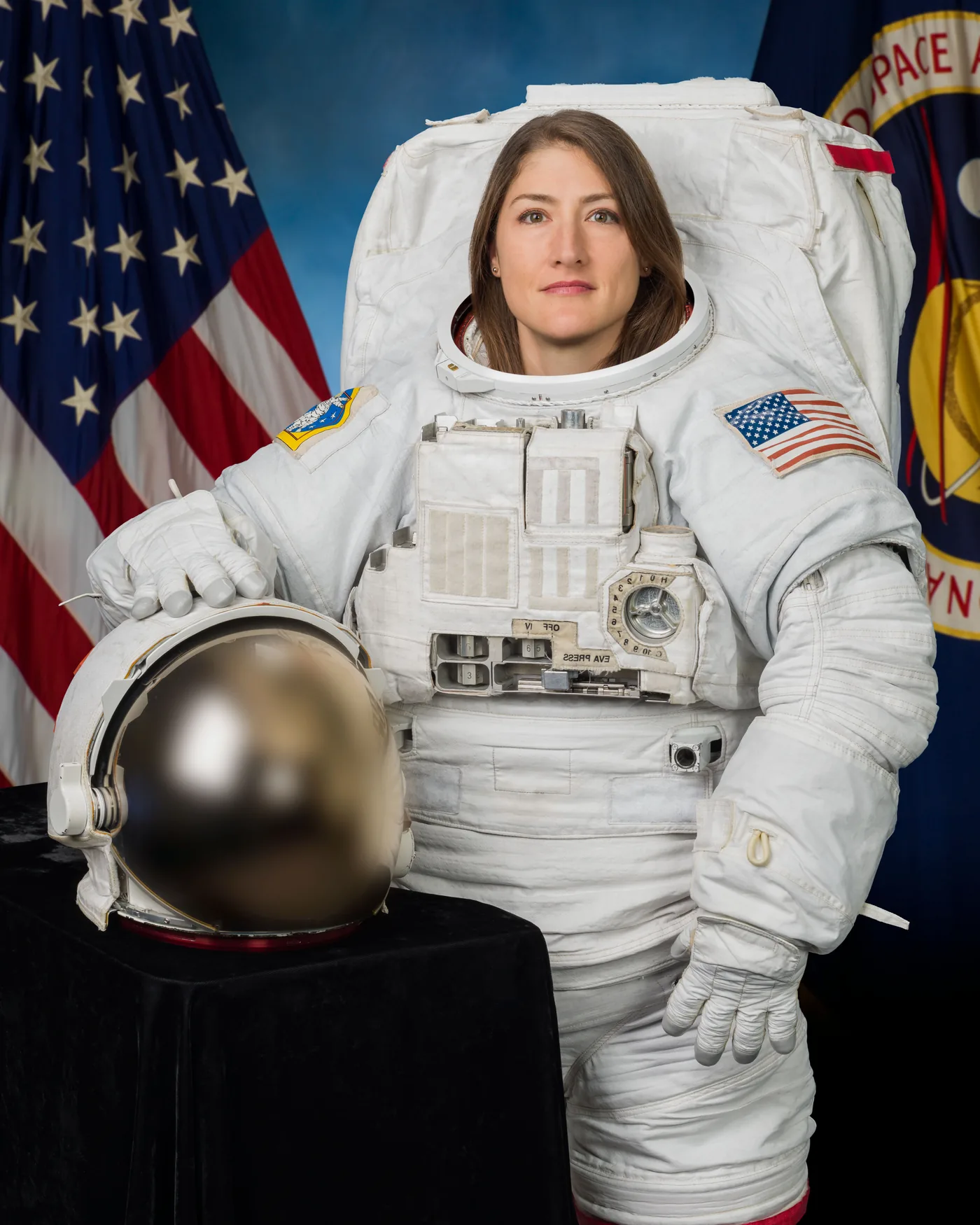
In 2018, NASA assigned Koch to her first long-duration mission aboard the International Space Station. She launched on March 14, 2019, from Baikonur Cosmodrome aboard Soyuz MS-12 with Roscosmos cosmonaut Alexey Ovchinin and NASA astronaut Nick Hague. Over eleven months, she served as flight engineer during Expeditions 59, 60, and 61, carrying out hundreds of science experiments. She returned to Earth on February 6, 2020, inside Soyuz MS-13 with cosmonaut Alexander Skvortsov and ESA astronaut Luca Parmitano, completing 328 consecutive days in space [2].
Her 328-day flight set the record for the longest single spaceflight by a woman, providing data on how long space stays affect human physiology. During that expedition, Koch completed six spacewalks, including the first three all-women spacewalks, spending a total of 42 hours and 15 minutes working outside the station. Her orbital tasks ranged from upgrading the Alpha Magnetic Spectrometer to growing protein crystals and evaluating 3D biological printers in zero gravity. She tested biological printers [2].
Back on Earth, Koch took on leadership positions inside the Astronaut Office at Johnson Space Center in Houston [1]. She served as Branch Chief of the Assigned Crew Branch and completed a rotation as Assistant for Technical Integration for the Center Director. These roles involved crew feedback, schedule management, and coordination across flight programs. Earlier outreach documented how Christina Koch shared her lunar journey with NFL fans, showing how astronauts translate flight experiences for broader audiences while maintaining engineering duties behind the scenes [2].
What New Architecture Lies Ahead for Deep Space?
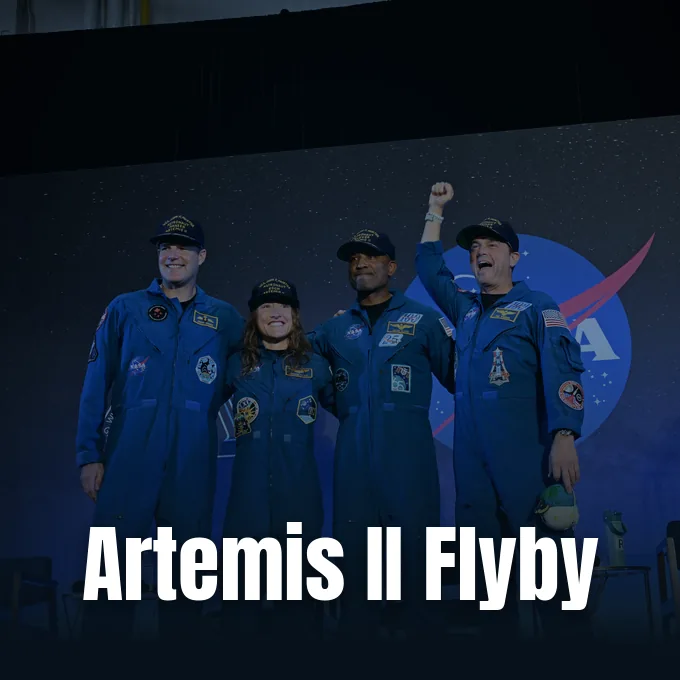
In April 2026, Koch flew as Mission Specialist I on Artemis II, humanity’s first astronaut flight circling lunar orbit in over five decades [1]. The mission lifted off on the Space Launch System rocket at 6:35 p.m. EDT on April 1 from Launch Pad 39B at Kennedy Space Center in Florida. Propelled by 8.8 million pounds of thrust, the rocket drove the Orion spacecraft into space with Reid Wiseman, Victor Glover, Christina Koch, and Canadian Space Agency astronaut Jeremy Hansen aboard. The crew completed a lunar flyby and splashed down off San Diego at 8:07 p.m. EDT on April 10, concluding a 10-day voyage that took them 252,756 miles from Earth and bringing her career total to 338 days in space. Four astronauts crewed the capsule [2].
That lunar experience directly informs her duties as acting deputy chief engineer. NASA is developing systems for Artemis surface missions, planning the Moon Base, advancing space nuclear power, and preparing architecture for Mars. Having flown inside Orion, Koch brings practical understanding to engineering reviews. Her blend of instrument development and flight experience provides the depth needed to evaluate mission readiness as deep space programs expand. Surface exploration presents new risks [1].
The transition comes during a period of expanding work in low Earth orbit and deep space [1]. The appointment comes shortly after the Artemis II crew gathered in Houston after their record lunar flyby to review mission data and share debrief findings. At the same time, orbital flights continue to expand after NASA awarded SpaceX additional station flights to keep research running aboard the orbiting outpost [2]. Under Koch’s engineering leadership, NASA aims to align safety requirements across centers, helping lessons learned in deep space guide every vehicle and habitat built for the future [1].
- PRESS RELEASE Dodson, G. Q. (2026, October 13). NASA names astronaut Christina Koch acting deputy chief engineer. NASA. [Article Link]
- WEBSITE Whitefield, R., & Dunn, A. (2015, November 27). Christina Koch. NASA. [Article Link]
- ONLINE NEWS Mirage News. (2026, October 13). NASA names Christina Koch acting deputy chief engineer. Mirage News. [Article Link]
- ONLINE NEWS PressBee. (2026, October 13). NASA names astronaut Christina Koch acting deputy chief engineer. PressBee. [Article Link]
- ONLINE NEWS La Primera en Línea. (2026, October 13). NASA names astronaut Christina Koch acting deputy chief engineer. La Primera en Línea. [Article Link]
APA 7: TWs Editor. (2026, October 14). Christina Koch Takes Helm as NASA Acting Deputy Chief Engineer. PerEXP Teamworks. https://perexpteamworks.com/en/christina-koch-deputy-chief-engineer/


