






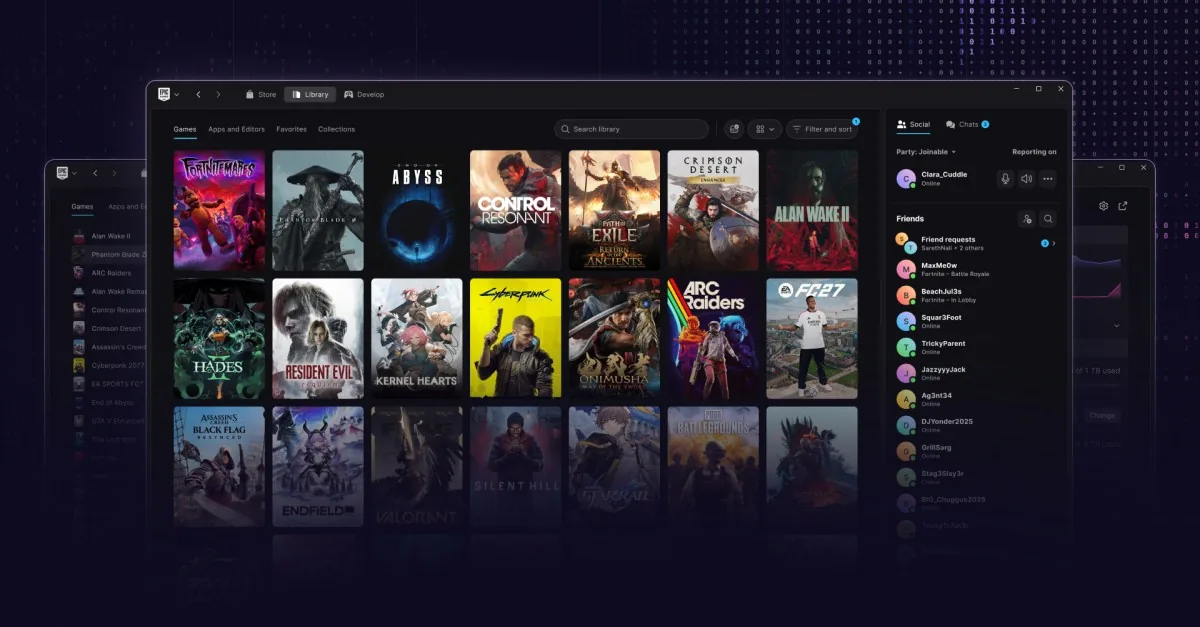
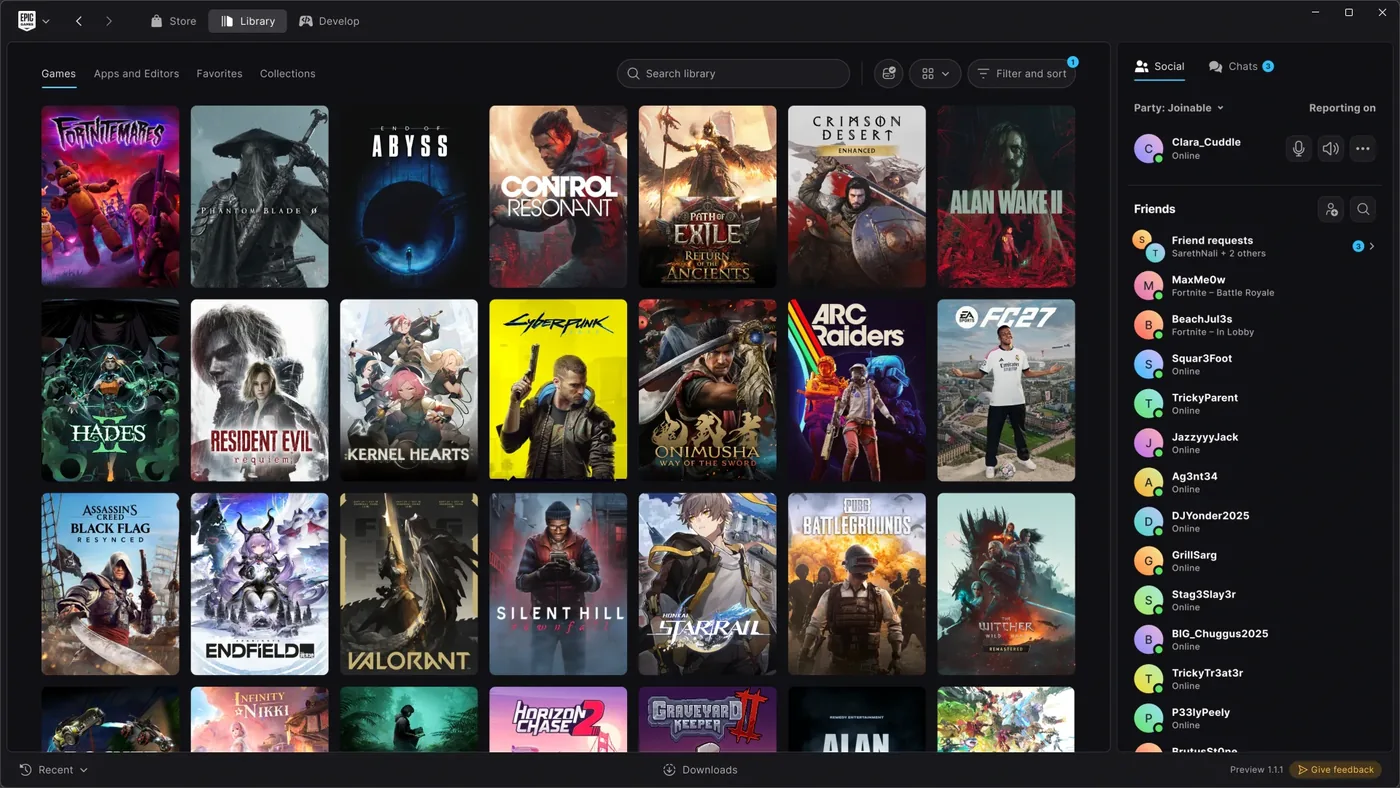
On October 14, 2026, Epic Games released an early build of its redesigned Epic Games Launcher, which was vibe coded with artificial intelligence. The desktop application gives PC players access to the Epic Games Store, friends lists, and personal gaming libraries. Reporting for Eurogamer, editor Kaan Serin explained that while the company pitched the update as a faster alternative to Valve Steam, studio leadership openly conceded that the experimental software release still contains active bugs [2].
Why Epic Games Launcher Swapped Hand-Written Code for AI
Epic Games announced online that it turned to generative AI prompts rather than manual coding to build its refreshed client. Reporting for Siliconera, Jenni Lada explained that the experiment aimed to make the client faster and lighter [1].
The studio opened its announcement with an informal admission of why it changed development tactics: “Programming is hard. So, instead of doing that, we vibe coded a new Epic Games Launcher that’s way faster and more responsive than the current one, and has a new look.” Studio leadership described the experimental software as an early test version, asking users to picture it as a speedboat rather than a luxury yacht because the build remains light on secondary features [1]. Speaking to Matt Purslow at IGN, Martin Keely, vice president and general manager of the Epic Games Store, said the company used artificial intelligence as an efficiency tool to help a small engineering team rewrite the entire foundation in less time [5].
Keely told Jay Peters at The Verge that his engineering group worked on this refresh for most of the year to test development speed. Developers didn’t ban manual code completely, relying instead on autonomous tools to rebuild core storefront systems and catch early software errors. That workflow lets engineers maintain a unified codebase for Windows, macOS, and Linux PCs [6].
Speedboat Versus Yacht in Startup Benchmarks
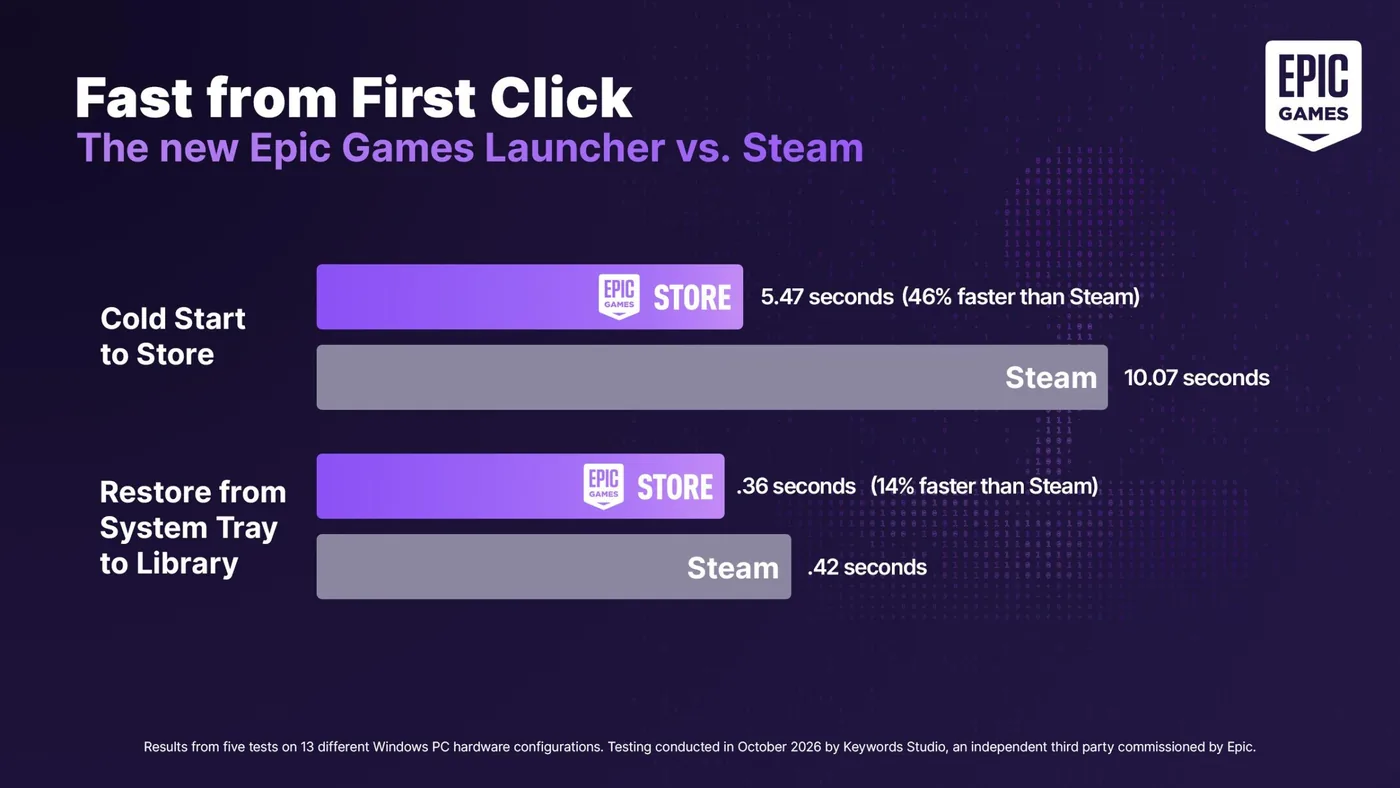
To support its performance claims, Epic Games released benchmark numbers comparing cold start times against the Valve Steam application. Independent testing commissioned by Epic Games and carried out by Keywords Studios evaluated 13 different PC configurations, averaging five test runs on each machine while excluding the three lowest-spec hardware setups. Writing for Wccftech Games, Alessio Palumbo reported that logs show the updated launcher loading the digital store in 5.47 seconds, compared to 10.07 seconds for Steam [3]. Those measurements make the preview build roughly 46 percent faster to boot than Valve Steam, representing an improvement of about 4.6 seconds during everyday system startups [4].
The benchmark report also examined how quickly each application restores from the Windows system tray back into the active game library. Published charts show the client returning from the tray in 0.36 seconds, whereas Steam completed that task in 0.42 seconds [3].
Austin Wood at GamesRadar observed that publicizing a 0.06-second margin looks amusing, but the broader gains in library loading feel far more meaningful during daily play [4]. Mark Warren at Rock Paper Shotgun also examined the announcement, noting that Epic Games claims game libraries now render up to 30 times faster than on the previous client build [3]. The company didn’t hide the rough edges that accompany an early software test, posting a candid message on social media: “Is this bad boy faster? Yes. Will it have some bugs? Yes. Do we want to hear about them? Hell yes.” Users who encounter broken menus can tap the feedback button inside the application to send crash reports straight to developers [2].


Rebuilding Easy Anti-Cheat for Linux and Fortnite
Beyond faster startup times, the preview introduces native Linux support for the very first time. The software runs natively on Ubuntu 22.04 LTS, Fedora Linux, and Debian Linux, giving open-source desktop owners an official setup path without third-party compatibility scripts [3].
Mac users also get native client support, although the preview build runs only on Apple Silicon systems. Because many titles on the store exist solely as Windows binaries, players still need compatibility translation software to play Windows games on Linux distributions [3]. The most significant milestone for open-source gaming enthusiasts is the planned debut of Fortnite on Linux machines. To help the battle royale title run under Linux security guidelines, Epic Games is rebuilding Easy Anti Cheat (EAC) in partnership with distribution maintainers. Kernel verification and anti-tamper protections have long formed the main barrier blocking competitive multiplayer games on Linux PCs, since anti-cheat drivers require deep trust agreements with operating system distributors [1].
Coverage on Blues News pointed out that once EAC meets security standards with a critical mass of maintainers, Epic Games will launch Fortnite on Linux through the updated desktop app. The studio promised to share these security improvements with outside game developers, allowing independent studios to bring their own multiplayer games to Linux users without creating custom anti-cheat tools [1]. That cooperative approach could expand native gaming options on Linux over the coming months.
Store Redesign Adds Cart and Library Tools
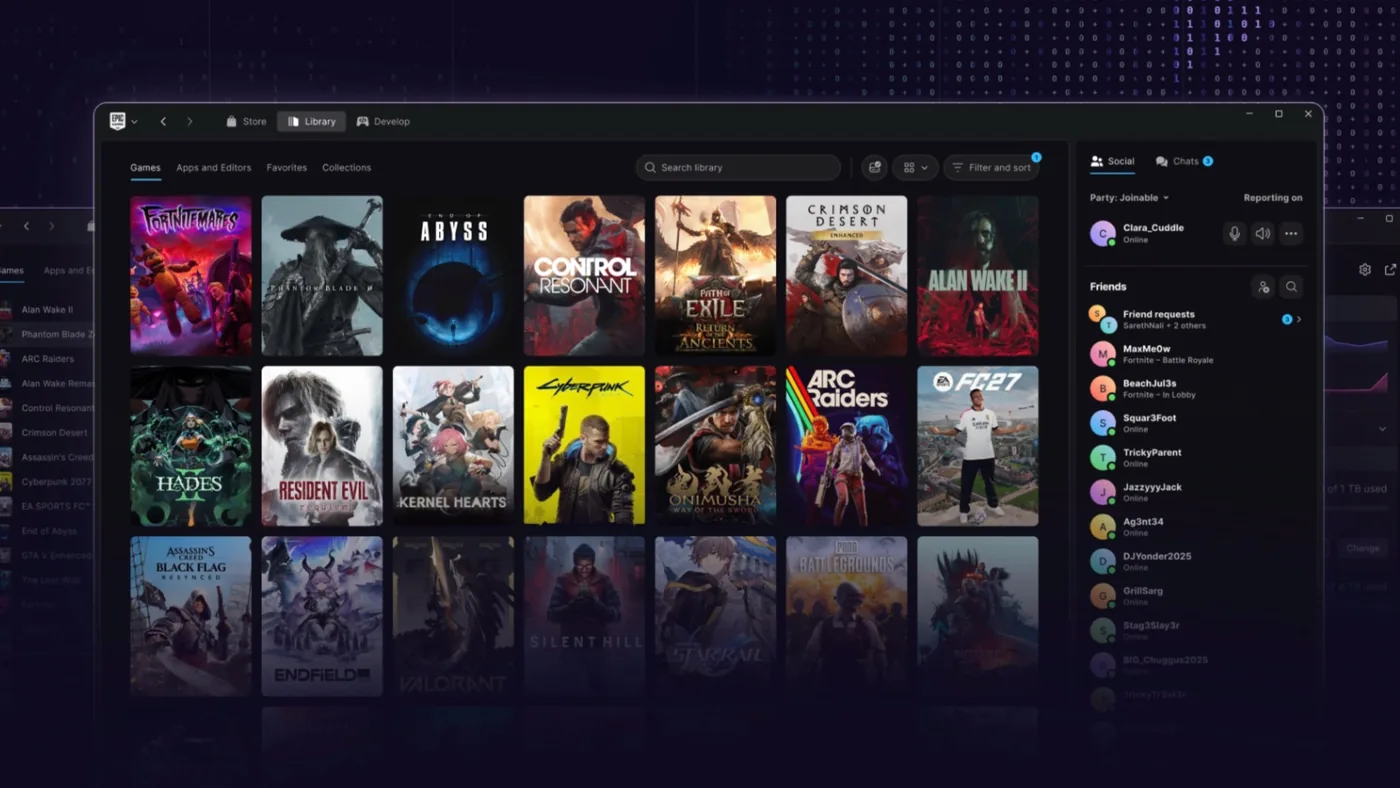
The refreshed interface updates several features that drew complaints in past editions of the Epic Games Store. Shoppers can now use a multi-item cart, connect external PC gaming accounts to view titles in a unified library, and monitor live read and write speeds in a download hub. Individual game pages show install dates, playtime statistics, and add-on lists, while search filters update immediately as a player types titles, genres, or platform tags [3]. Epic Games described the shopping cart as an advanced digital commerce tool, bringing the client in line with features that rival storefronts have offered for more than a decade [1].
Despite those additions, Epic Games warned that the preview lacks several established features and isn’t ready for competitive tournaments. The early test build omits advanced account settings, detailed cloud save management, and specific social overlay tools found in the main launcher [3].
Studio managers advised competitive players in Fortnite and Rocket League, as well as developers maintaining active live projects, to stay on the older client until the new software achieves feature parity [3]. Brian Sharon, senior communications manager at Epic Games, told Dylan Horetski at Dexerto that while minor bugs can appear in the client shell, underlying game sessions remain safe. “To be clear: once you’re in a game, you’re good to go,” Sharon said, explaining that background launcher glitches won’t disrupt casual or ranked matches [7]. He added that developer tools and creative applications also run without interruption during preview testing.
How the Epic Launcher Fits Sweeney’s Wider Studio Pivot
The launcher rewrite arrives amid a wider shift toward automated development across creative divisions at Epic Games. That transition began before the launcher preview went live and reflects executive interest in generative technology [6].
Earlier in the week, Bloomberg reporter Jason Schreier revealed that Epic Games directed developers on an unannounced Disney crossover shooter featuring Marvel and Star Wars characters to follow an AI-first workflow. Internal guidance cited by Schreier instructed staff to use Anthropic Claude to draft code and advised project leads that human developers should produce “no more hand-written code” on the delayed Disney title [2]. Epic Games Communications Director Jake Jones told Schreier that the studio embraces AI-accelerated workflows led by creative visionaries [1]. CEO Tim Sweeney defended the strategy online, stating that Epic Games has a huge pivot underway to retool studio teams for maximum AI acceleration. Sweeney wrote that the goal isn’t to build games with fewer staff, but to help developers build more content and bring automated workflows into Unreal Engine [4].
The technical push follows painful corporate restructuring, including more than 1,000 layoffs that Sweeney ordered earlier in the year after an unexpected slump in Fortnite engagement [4]. Steve Allison, who previously led the Epic Games Store, said in a past interview that the PC storefront needed to feel fast and snappy to win over players who grew up on Valve Steam. While Martin Keely says the vibe-coded launcher shows how small teams can rebuild core software quickly, Epic Games still faces a cultural challenge among PC players who view artificial intelligence code with skepticism. As the company tests whether prompt-driven engineering can fix its launcher performance, it enters industry debates surrounding AI-generated game assets and software development standards [5].
- ONLINE NEWS Lada, J. (2026, October 14). New Epic Games Launcher ‘vibe coded’ because ‘programming is hard’. Siliconera. [Article Link]
- ONLINE NEWS Serin, K. (2026, October 14). Epic throws shade at Steam and admits to vibe-coding the new Epic Games Launcher with AI. Eurogamer.net. [Article Link]
- ONLINE NEWS Palumbo, A. (2026, October 14). Epic Games’ new “vibe coded” launcher is now in preview, claims 1.8x faster startup than Steam and adds Linux support. Wccftech. [Article Link]
- ONLINE NEWS Wood, A. (2026, October 14). Epic’s bulletproof plan to outdo Steam: “We vibe coded the Epic Games Launcher”. GamesRadar+. [Article Link]
- ONLINE NEWS Purslow, M. (2026, October 14). ‘Programming is hard’ — Epic says it ‘vibe-coded’ the new version of its games launcher. IGN. [Article Link]
- ONLINE NEWS Peters, J. (2026, October 14). Epic’s new games launcher is ‘vibe coded’. The Verge. [Article Link]
- ONLINE NEWS Horetski, D. (2026, October 14). Epic Games says it vibe coded new launcher because “programming is hard”. Dexerto. [Article Link]


