





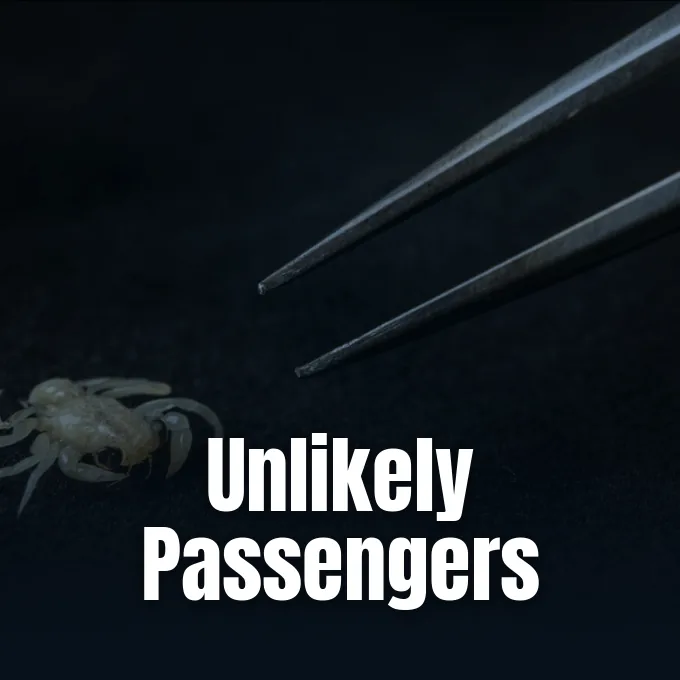
Tiny crabs on sea snakes have surprised researchers twice: first by appearing on the reptiles, then by turning out to belong to unexpected species. University of Florida marine herpetologist Joseph Pfaller encountered these hitchhiking crabs while studying yellow-bellied sea snakes (Hydrophis platurus) off Costa Rica. DNA analysis later linked the young passengers to coastal crabs whose adults inhabit trees and rocky shores, raising questions about whether an offshore ride helps them at all. [1, 2]
Crabs on Sea Snakes: First Clues
Joseph Pfaller was examining shed snake skin in 2012 when a small crab fell from one of the reptiles he had collected off Costa Rica’s Pacific coast. The crab changed his attention. He already knew that sea snakes could carry barnacles and other attached organisms, but a mobile crustacean was an unfamiliar passenger. Pfaller began watching for animals that might otherwise disappear from view while he concentrated on the snakes themselves. [2]
Sea snakes shed their outer skin, much as terrestrial snakes do. Their method differs. Without a hard surface against which to rub, they form loops and use friction between parts of their bodies to loosen the old layers. Pfaller described the result in a University of Florida profile quoted by Popular Science: “When you find a sea snake’s skin, it’s usually in a knot.” His interest in those discarded skins brought him close enough to notice the crab. [2]
Pfaller collected 371 snakes during the expedition. That is the number of snakes, not a count of crab passengers. [2]
Who Else Travels on Reptiles?
Marine biologists call organisms living on another animal’s surface epibionts (organisms that occupy a living surface). Sea turtles offer familiar examples: algae and barnacles can cling to their shells, while small crabs shelter in gaps between shell and body. Crabs in the genus Planes were already known as turtle passengers, giving Pfaller and his colleagues a plausible starting point for identifying the tiny animals they had found on snakes. [2]
Pfaller’s collection included more than crabs. Shrimps, snails and a clingfish also appeared among the snakes’ passengers, extending the observation beyond a single kind of crustacean and suggesting that close inspection could reveal a wider collection of associated animals. What had earlier observers missed? The researchers suggested that the snakes’ striking appearance and unusual behavior may have drawn attention away from their smaller companions. Popular Science presents that explanation as the team’s interpretation. [2]
Biologists also find overlooked animals through renewed field attention, a theme in PerEXP Teamworks’ coverage of an egg-laying mammal rediscovered after six decades. Here, however, the central task became identifying animals that Pfaller had already collected. Finding a passenger and naming it were separate stages.
Why Did Identification Take Years?
Pfaller preserved the specimens at the Florida Museum of Natural History, then shifted his research attention toward sea turtles. Roughly a decade passed before a conversation with University of Guam crustacean specialist Robert Lasley revived the collection’s prospects. Pfaller mentioned the presumed Planes crabs, and Lasley recognized a possible joke about the film Snakes on a Plane. The wordplay supplied an incentive to investigate, but the preserved animals supplied the evidence. Together, the researchers decided to test the identification with DNA sequencing rather than leave the original impression unexamined in a museum collection. University of Florida invertebrate researcher Soma Elefánti carried out the genetic work described in Popular Science’s account. [2]
Elefánti, Lasley, Gustav Paulay and Joseph B. Pfaller are the authors listed on the resulting paper, Planes on a Snake? On the Identities of Crab Larvae Rafting on Sea Snakes, in Ecology and Evolution. The study connects a field encounter to a later identification effort. Its title preserves the original suspicion, even though the genetic findings described in the news report took the researchers in another direction. [1, 2]


What Did the DNA Reveal?
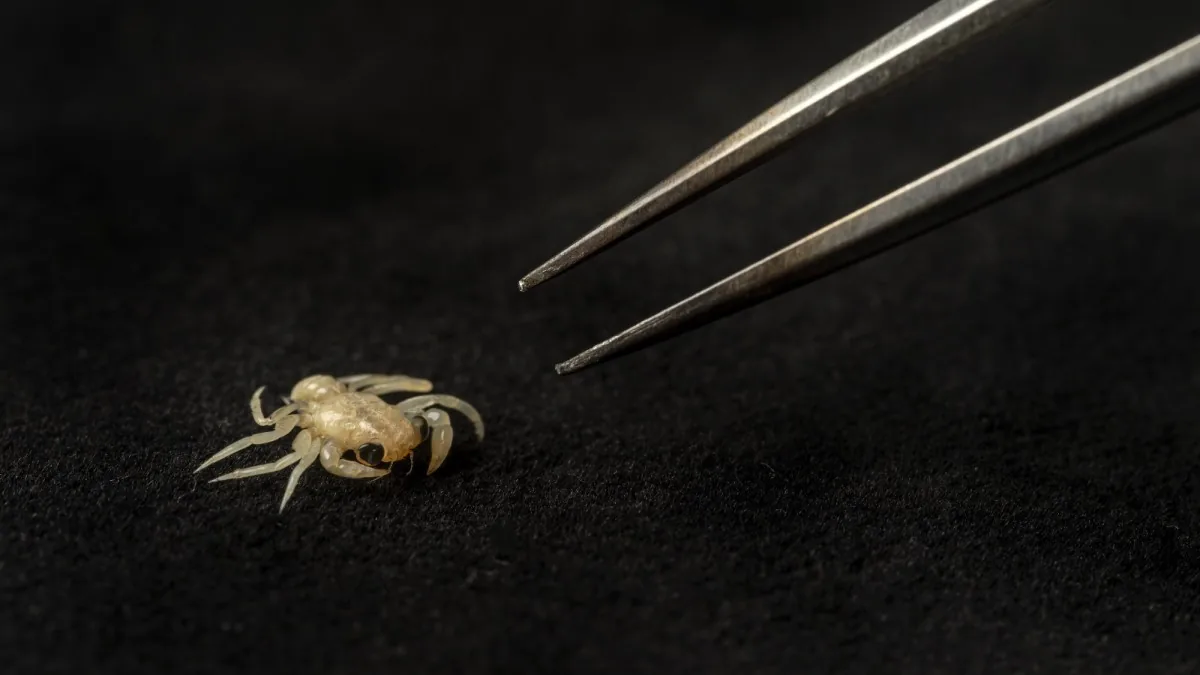
Elefánti’s results placed the sampled megalopae (a developmental stage between earlier larvae and juvenile crabs) outside the expected genus. Popular Science reports three species within Grapsidae, the same family that includes Planes, whose adults live on coastal trees and rocky shorelines in Costa Rica. The family connection survived; the genus identification changed. The report does not name those three species, so the available account supports a family-level explanation without a complete species list. [2]
Most of the crabs on sea snakes in Pfaller’s collection were at this transitional stage. They were still developing. A young specimen had initially looked like a member of the expected genus, but appearance alone did not settle the identity of the megalopae that the team subsequently examined genetically. Separating the initial visual impression from the sequencing results explains why the researchers could begin with a familiar kind of marine hitchhiker and end with unexpected coastal relatives. [2]
The researchers’ experience also gives museum specimens a practical role: stored material allowed a later question to reach beyond the original field expedition. PerEXP Teamworks’ account of a belemnite fossil revealing a Jurassic survivor offers another specimen-centered story, this time concerning an extinct marine animal.
How Might the Crabs Board?
Crabs release larvae into the water even when their adult lives center on land or the shoreline, according to the explanation in Popular Science. The researchers propose that some survivors reach the megalopa stage and begin seeking a surface on which to settle. They can swim. They can also climb, and those abilities could bring them into contact with a snake when currents gather drifting material near the coast. [2]
The team suggests that young crabs encountering snakes in coastal drift lines could attach to them before water movement carries the animals farther offshore. Boarding by chance remains a proposed mechanism. Crabs on sea snakes demonstrate an association, but that observation alone cannot reconstruct where each encounter occurred or establish that the passengers actively preferred reptiles over other available surfaces. The published news account describes a plausible sequence rather than a tracked journey from shore to open water. [2]
Does the Ride Help Them?
Lasley and Pfaller interpret the ride as potentially unfavorable for crabs whose adult habitats lie on the coast. A swimming surface can provide a place to cling while still carrying a young animal away from the environment it needs later. Attachment does not establish a survival benefit. Popular Science relays the researchers’ view that these passengers may have made a poor choice, but its account does not provide tracked outcomes for individual crabs. [2]
Researchers would need evidence of subsequent survival and return to suitable habitat to establish the consequences of these encounters. Where do the passengers eventually go? The observations of crabs on sea snakes leave that question open, as well as whether particular currents or locations make an accidental offshore trip more likely. Future work could follow the passengers beyond the moment of attachment and test the proposed route from coastal drift lines to open water.
- ACADEMIC JOURNAL Elefánti, S., Lasley, R., Paulay, G., & Pfaller, J. B. (2026). Planes on a snake? On the identities of crab larvae rafting on sea snakes. Ecology and Evolution, 16(6). [Article Link]
- ONLINE NEWS Paul, A. (2026, September 11). Tiny crabs discovered hitching rides on sea snakes. Popular Science. [Article Link]
APA 7: TWs Editor. (2026, September 12). Tiny crabs on sea snakes reveal an unexpected ocean ride. PerEXP Teamworks.


