






Can a massive role-playing finale balance unconstrained creative ambition with brutal hardware limits? Speaking at the Tokyo Game Show 2026, director Naoki Hamaguchi confirmed that Final Fantasy VII Revelation will push technical and gameplay boundaries far beyond its predecessors while fundamentally reimagining the pacing of the entire project [1]. The concluding chapter of the reimagined saga aims to address long-standing player feedback regarding open-world fatigue, minigame friction, and punishing trophy requirements. With the production demanding unprecedented disk space, Square Enix is preparing players for a project that reshapes the entire concluding arc [2].
Final Fantasy VII Revelation Storage and World Scope
In an interview with VGC, Hamaguchi clarified the staggering storage footprint required to install the concluding chapter, admitting that the production will occupy an extraordinary amount of drive space on modern hardware. “Things are still getting worked out, but it’s probably going to be around 200GB of game,” Hamaguchi admitted regarding the project’s digital scale (around 200 gigabytes). That immense footprint makes the title a meteor-sized presence on console drives, demanding substantial storage management from players. To accommodate this massive scope, physical releases will mandate a separate data download, a compromise detailed in our previous analysis of physical disc delivery and download requirements for the game. Hamaguchi emphasized that the development team needed to overcome existing hardware constraints rather than compromise their world design [2].
The sheer size of the game directly reflects changes to environmental progression. In Final Fantasy VII Remake, the narrative followed a tightly controlled, linear sequence. Final Fantasy VII Rebirth subsequently expanded into a broad open-world design, but received persistent critique from fans who felt overwhelmed by excessive checklist activities scattered across the map. For Final Fantasy VII Revelation, Hamaguchi noted that while the overall planetary scale remains vast, the development team completely redesigned environmental pacing to ensure exploration feels far more accessible for every style of player [1].
Scale requires discipline. Square Enix focused on accessibility, ensuring that the planet’s vast terrain no longer buries narrative momentum under superfluous chores [1].

Minigame Overhauls From Moogles to Expanded Piano
Minigames proved to be one of the most polarizing aspects across both previous installments. Hamaguchi acknowledged to Anime News Network interviewer Richard Eisenbeis that player preferences varied wildly depending on distinct playstyles, noting that action enthusiasts often resisted stepping away from combat to complete mandatory mini-games. Combat-oriented players frequently resented stepping away from fluid action battles to complete mandatory side activities. The Moogle House mini-game generated notable frustration, leading to substantial structural adjustments for Revelation. The iconic creatures (the beloved spherical companions) have officially resigned from their merchant occupations, reforming instead into an ambitious stage idol group that players assist through streamlined, accessible interactions [1].
While some activities were dialed back, others received massive expansions that contribute to the 200GB storage footprint. The celebrated piano minigame represents the most prominent example of this expansion. In the original 1997 release on disc two, players could perform the Final Fantasy VII Main Theme on the piano outside Tifa’s room to unlock her ultimate limit break, Final Heaven. Rebirth revamped the feature with realistic mechanics reminiscent of Ellie playing guitar in The Last of Us, yet offered modest materia rewards. In Revelation, Hamaguchi revealed that the piano minigame provides critical narrative revelations about Tifa, allowing dedicated musicians to uncover exclusive personal history [2].
Can optional musical diversions justify precious console memory? Deepening character bonds through tactile minigames remains a fundamental pillar of the remake philosophy. By attaching meaningful lore to musical performance, the studio ensures that non-combat diversion actively enriches the emotional resonance of the cast [2].

VR Combat Simulator and Platinum Trophy Adjustments
Trophy hunting in Rebirth became notorious for brutal difficulty spikes. Only 2.6% of PS5 players successfully unlocked the coveted platinum trophy. Eisenbeis highlighted that the bottleneck stemmed directly from the final three VR Combat Simulator boss gauntlets, which demanded flawless execution for nearly 30 minutes paired with heavy reliance on good fortune. Battle director Teruki Endo admitted regret over that punishing threshold, acknowledging that the team had fundamentally underestimated how many everyday fans would pursue complete mastery [1].
Hamaguchi confirmed that Final Fantasy VII Revelation will dramatically shift course regarding trophy accessibility, establishing design targets that allow a significantly larger proportion of dedicated enthusiasts to earn the top award without enduring unreasonable frustration. The director projected that 20% or more of the player base should be capable of securing the top accolade this time around (a dramatic jump from Rebirth). To achieve this without gutting mechanical depth, the brutal and legendary VR Combat Simulator is receiving redesigned encounter rules rather than purely diluted enemy statistics. In three-person party battles, players will face a strict tactical limitation: each character can only be deployed once per set of fights [1].
This single-use character restriction forces players to master the entire roster instead of leaning on a single overpowered team composition. Diverse party synergy becomes essential. Rather than enduring grueling endurance tests, players must rely on creative materia loadouts. The production team learned that combat challenges should deliver genuine excitement instead of exhausting frustration [1].

Zack Fair and Divergent Story Paths
Narrative direction remains the most scrutinized element of the trilogy. The overarching production has constantly balanced two powerful and opposing forces: honoring the beloved 1997 original storyline while empowering the main party to fight back against predetermined destiny and alter their collective future. Hamaguchi noted that the established fan base is deeply entrenched, making respect for the source material mandatory. The core narrative beats remain intact so that long-time enthusiasts recognize the story, yet subtle divergences continually invite players to imagine alternate outcomes [1].
Zack Fair serves as the primary conduit for this thematic duality. His presence expands significantly. Hamaguchi outlined two specific reasons for expanding Zack’s screen presence. First, Zack is indispensable to Cloud’s identity as a person, meaning newcomers who skipped Crisis Core require substantial narrative exposure to understand Cloud’s psychological foundation and his traumatic personal history. Second, Zack acts as a narrative shepherd who helps audiences grasp precisely where the remake timeline diverges from original events through playable sequences [1].
Deliberate ambiguity defined the climactic Aerith sequence at the conclusion of Rebirth. Fan debate continues. Addressing questions regarding whether Aerith could survive, Hamaguchi stated that the core narrative roadmap was determined long ago. For that defining scene, the developers chose a distinct trajectory from the 1997 release by utilizing contrasting camera angles, alternate character viewpoints, and fragmented perspectives that allow each player to arrive at their own emotional conclusion. By presenting fragmented visual evidence, Square Enix intentionally encouraged players to formulate their own conclusions rather than imposing a definitive interpretation [1].

Compilation Integration and Definitive Series Conclusion
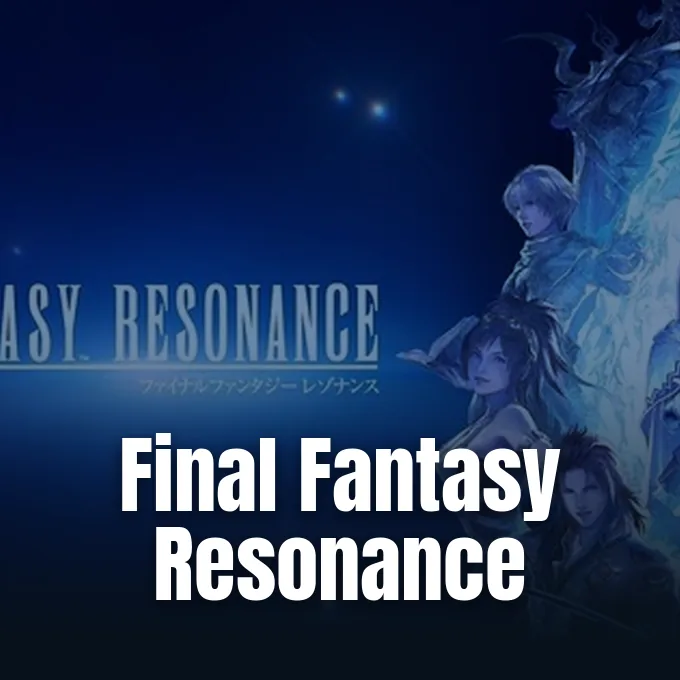
Revelation will not hold back material for prospective sequels. Hamaguchi affirmed that the upcoming release marks the absolute conclusion of the remake storyline, leaving nothing on the development table. The production team aims to avoid post-launch regret, committing every conceptual ambition to this climactic chapter. Furthermore, the project unites disparate threads from across the broader Compilation of Final Fantasy VII, building explicit connections to Advent Children, Before Crisis, Crisis Core, and Dirge of Cerberus. This comprehensive integration follows the foundation laid in Episode INTERmission, which first introduced Yuffie and Deepground soldiers. Concurrently, Square Enix unveiled Final Fantasy Resonance in a new TGS trailer, emphasizing their expansive presence across the showcase [1].
Post-launch content will mirror this standalone character focus. Expansions arrive later. Square Enix has announced dedicated Vincent and Sephiroth downloadable expansions for Revelation. Hamaguchi confirmed that these dedicated story chapters will function much like Yuffie’s standalone adventure in INTERmission, revealing unexplored character backgrounds without altering the definitive final resolution of Revelation (first introduced in INTERmission). Sephiroth himself will receive deeper narrative exploration, touching upon long-standing fan scrutiny regarding his subtle dialogue shifts and pronoun usage between ore and watashi at the Edge of Creation [1].
With its staggering 200GB requirements, overhauled minigames, and comprehensive lore integration, Final Fantasy VII Revelation seeks to deliver a conclusive end that honors three decades of legacy [2]. Cloud’s journey concludes. Whether this ambitious synthesis can satisfy both competitive trophy hunters and lifelong narrative purists will be determined when the final credits roll across screens [1].
- ONLINE NEWS Eisenbeis, R. (2026, September 19). Final Fantasy VII Revelation and beyond: An interview with director Naoki Hamaguchi. Anime News Network. [Article Link]
- ONLINE NEWS Parrish, A. (2026, September 18). Final Fantasy VII Revelation is gonna eat up 200 gigabytes of storage. Kotaku. [Article Link]


