






Flock Safety is facing resistance in cities nationwide as local councils and colleges discover that ending their vehicle plate tracking deals can prove remarkably difficult. When town boards vote to complete Flock contract cancellations, the Atlanta vendor has often left roadside devices running for weeks without answering letters. In Minnesota, the standoff led local police to pull power cords from street poles by hand to stop camera feeds. Similar disputes in Illinois and Ohio show that walking away from the company’s tracking grid brings fresh legal hurdles for city leaders [1].
Disconnecting Hardware in Minnesota
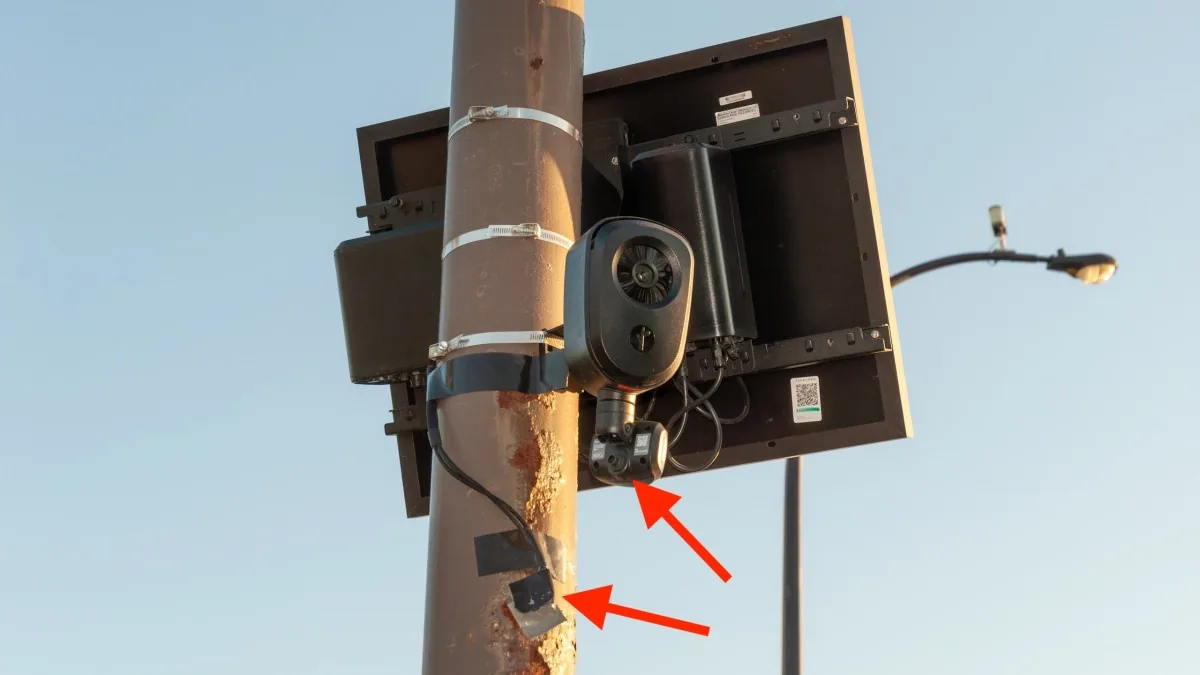
In Plymouth, Minnesota, the city council voted to end its plate reader grid at a public meeting on Sept. 22. The next morning, the police department shut down user accounts and sent a cancellation letter by email and US Mail after consulting with the City Attorney’s Office. Weeks passed without any reply from Flock Safety Corporate or its legal team, leaving the hardware running above city roads. Police Chief Eric Fadden decided local officers had to step in to protect residents. “After hearing nothing for more than a week, I directed our staff to disconnect the power cords from the cameras in order to be sure that they are not functioning or recording plates,” Fadden said, noting that local officers acted on their own authority when corporate communication stalled completely [3].
Unplugging the gear left cameras without power, but it did not settle the property fight. The Drive writer Joel Feder checked street posts in Plymouth and saw the cords hanging loose. Because Flock retains ownership, cities can’t take down cameras without risking steep replacement fees [3].
Roughly 20 miles away in Dayton, Minnesota, town leaders ran into an unapproved restart. Flock accepted Dayton’s exit notice and said removal could take up to 60 days. Yet on Sept. 17, 2026, the Dayton Police Department spotted a pending work order in the system. The city told Flock on Sept. 18 that all work was on hold, but workers plugged two cameras back in anyway. Flock spokesperson Andrew Smith told The Verge that the firm respects Plymouth’s choice and is working to take down the gear [1].
Terms Behind Flock Contract Cancellations
The friction in Minnesota stems from the business model behind modern traffic tracking. Flock Safety operates as a private firm valued at more than $8 billion, selling hardware subscriptions rather than outright equipment. Police agencies and local towns pay annual fees for software access, cloud storage, and roadside cameras. When a community ends service, it does not own the cameras on its poles. It must wait for vendor crews to take down the units, causing long delays in suburbs [5].
Contract rules give the vendor real leverage over public clients during disputes. Caroline Haskins reported at Wired that Flock retains strict property ownership over every camera it sets up in a city. Because city staff cannot take apart company gear under the terms of Flock contract cancellations, pulling power cords became the only quick step for local leaders [5].
Legal battles also erupt when elected boards clash with local sheriffs over signed deals. In July 2025, the Board of Lucas County Commissioners in Toledo, Ohio, voted 2–1 to buy 27 Flock cameras for $250,000 over four years. One member had doubts about camera misuse a week later, leading the board to vote to drop the deal. Sheriff Michael J. Navarre fought back, arguing the county had to honor the pact. “I cannot sit idly by and allow them to make decisions out of spite that negatively impact the safety of my deputies and the community they protect,” Navarre wrote. County prosecutor Julia R. Bates said the drop vote was void in September 2025 because the signed agreement was legally binding on the county government [5].



The Garbage Bag Standoff at Elgin
A similar clash played out in Illinois, where a college tried to break its pact over student safety worries. Elgin Community College hired Flock in April 2025 to put up six cameras. College President Peggy Heinrich thought the gear would “enhance the safety and security of students,” Lisa Kurian Philip reported in the Chicago Sun-Times. That view changed when Heinrich learned Flock let federal immigration agents tap into over 80,000 cameras nationwide. In September 2025, federal agents arrested a student near campus, alarming a school where over half the students are Latino [5].
Heinrich tried to end the deal “out of an abundance of caution for our students,” but Flock refused. College staff asked the vendor in October 2025 to take down the six cameras. Within a day, Flock said no, claiming the school had no legal right to end the pact early. In December, Heinrich offered to pay off the rest of the year-long deal, but Flock did not reply. Campus staff then tied garbage bags over the lenses with zip ties, but workers in unmarked vans came back often to cut the plastic off and keep the feed live [5].
The fight lasted until the pact ended in April 2026, when Flock at last took the units down. State records showed police in Illinois searched the Flock database over 4,000 times for immigration cases. When Elgin Community College covered its cameras, it put a spotlight on nine public campuses in Illinois using the network [5].

Why Flock Contract Cancellations Spread
Public records show that cities walk away from camera deals when audit logs reveal questionable tracking searches. A study by the Institute for Justice tracked 82 contract terminations across 28 states from August 2021 to May 2026, noting that exits follow clear paths. In Austin, Texas, a report from the City Auditor in May 2026 showed that between 10% and 20% of police plate searches lacked a case number or clear reason. Over 30 community groups rallied around the audit, leading the city manager to pull the renewal vote before the contract ended on June 30, 2025 [4].
Other towns ended deals through council votes or sudden factual disputes during open meetings. In San Marcos, Texas, the council tied 3–3 on renewal on Dec. 2, 2025, letting the pact lapse on Dec. 29 before crews took cameras down by Feb. 1, 2026. In Oshkosh, Wisconsin, the Common Council voted 7–0 on April 23, 2026, to scrap an approved pact within 24 hours after a Flock representative falsely denied that the system had heat-map tracking tools [4].
Stopping a contract does not always cut off police access to vehicle records. Even though Austin dropped its deal, public radio station KUT reported in February that two nearby towns shared their Flock database logins with Austin police. Similar gaps between local votes and broad surveillance grids prompted federal review, including the Ban Flock Act targeting federal cameras on public roads. City leaders now see that handling Flock contract cancellations requires tight rules on shared logins as well as hardware pickup [4, 5].
The Unresolved Hardware Dilemma
Public data tracked by watchdog Who Approved This shows four distinct ways local agencies end their vendor ties. Some councils vote to cancel, as Harrisonburg did in a 4–0 vote on July 28, 2026, giving staff seven days to shut the fixed grid down. Other towns let terms expire, as Salem, Massachusetts did on June 30, 2026, before moving to city-owned plate readers. In Los Angeles, the police department let a 138-camera deal lapse on its own, while Gig Harbor in Washington rejected an install in March 2025 before work began [4].
Suspensions form another path where cameras sit idle on poles while leaders review privacy rules. Olympia voted to suspend camera use on Dec. 2, 2025, and workers hooded the lenses while the contract ran to July 2026. Redmond, Washington, suspended 24 cameras by council vote while reviewing a contract that lasts into 2027 [4].
The standoffs in Minnesota and Illinois show that ending a camera deal leaves hard questions behind. Towns that drop the service must learn what happens to old license plate scans in the cloud. When the vendor ignores exit notices, local police face the task of pulling wires out of poles themselves, as reported by Daily Digest and Reason Magazine [1, 5].
- ONLINE NEWS O’Brien, T. (2026, November 1). Flock keeps ignoring requests to cancel its contracts. The Verge. [Article Link]
- ONLINE NEWS Daily Digest. (2026, November 1). Flock ignores contract cancellation requests as police chief disconnects cameras. Daily Digest. [Article Link]
- ONLINE NEWS Feder, J. (2026, October 23). My City Canceled Flock’s Contract. Flock Ignored It, So the Police Chief Unplugged the Cameras. The Drive. [Article Link]
- WEBSITE Who Approved This. (2026, July 15). How Cities End Flock Contracts. Who Approved This. [Article Link]
- ONLINE NEWS Lancaster, J. (2026, October 13). An Illinois college tried to cancel its Flock contract. Flock refused. Reason Magazine. [Article Link]


