





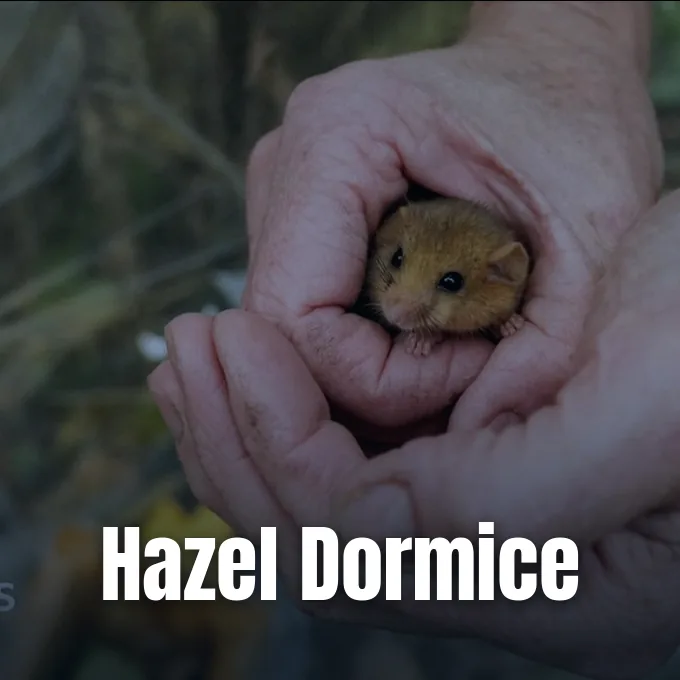
At Devon’s Killerton estate, National Trust rangers have found that hazel dormice continue to thrive in woodland habitats even as wider British numbers fall. BBC News reporter Britta Zeltmann reported that careful habitat work and a regular monitoring scheme have allowed the animals to flourish across the property. The conservation charity manages 100 survey boxes in the woods, tracking individual animals from April to October to assess health and survival [1]. While wild populations across the United Kingdom dropped by more than two thirds since 2000 because of habitat fragmentation, this Devon group stays stable and is actively expanding into fresh hedgerows [3]. Habitat monitoring shows that connected hedge networks and uncut bramble patches give the small mammals enough shelter and food to build sufficient reserves before entering winter dormancy [4].
Survey Records at Killerton
The National Trust started its annual dormouse monitoring project at Killerton in 2018. Killerton maintains 100 wooden survey boxes. Between April and October each year, National Trust rangers inspect these 100 nest boxes scattered through Devon woodlands to track how the shy, nocturnal rodents fare before cold weather arrives [1]. Each mouse is weighed and examined so staff can record growth and identify breeding adults [4]. Fi Hailstone, senior ranger for the National Trust at the Killerton estate, said that the local population has stayed fairly stable during six years of records [1].
Field surveys at Killerton confirm that young mice are not just holding on in existing woods, but moving outward along newly planted tree corridors into territory where they had not been seen before. Senior Ranger Fi Hailstone said National Trust rangers now spot hazel dormice in several boundary hedgerows on the Devon estate. The National Trust team credits this expansion to recent planting programmes that add fresh hedges and young trees between isolated tree stands [1]. Although newly planted trees take decades to reach full maturity, the saplings and surrounding brush offer immediate pathways for dispersing youngsters [3]. As Hailstone said, “We might be planting lots of woodland now, which is great, but we won’t see the effects of that for dormice for another 100 or so years. It’s really important to manage the woodlands that we already have in a positive way” [1].

Drivers of National Decline
National survey figures across the United Kingdom paint a grim picture for the species beyond protected sanctuaries [3]. Data gathered by the People’s Trust for Endangered Species reveals that British dormouse counts fell by more than two thirds after 2000 [1]. PTES researchers point to habitat fragmentation as the main driver behind this loss [3]. When hedgerows disappear and agricultural expansion shrinks woodlands into disconnected patches, dormice cannot safely travel along the tree canopy to find food, build summer nests, or locate breeding mates [1]. Shy arboreal rodents avoid open farmland [3].
Shifting climate patterns across Britain have made wild survival even harder for small mammals. Mild winter weather often wakes dormant animals before spring vegetation begins to sprout in English woodlands [1]. When temperatures rise unseasonably during early winter, dormice burn through their stored body fat without finding enough insects, buds, or seeds to replace the calories they have lost [3]. Hailstone said: “When we have warmer weather, it wakes them up and when we have wet springs, that affects their ability to forage when they do wake up” [1]. Prolonged spring rains keep the shy animals trapped in their nests while damp conditions spoil early food sources [5].
Can local landscape features shield vulnerable populations from wider losses? In southwestern England and across the wider South West, historic field boundaries still survive in greater numbers than in heavily farmed eastern counties [3]. Devon serves as a notable stronghold for hazel dormice because its ancient hedge banks link remnant woods together. Devon retains an ancient hedge network. BBC Devon reported that these living corridors allow isolated colonies to survive when surrounding landscapes become inhospitable [1].
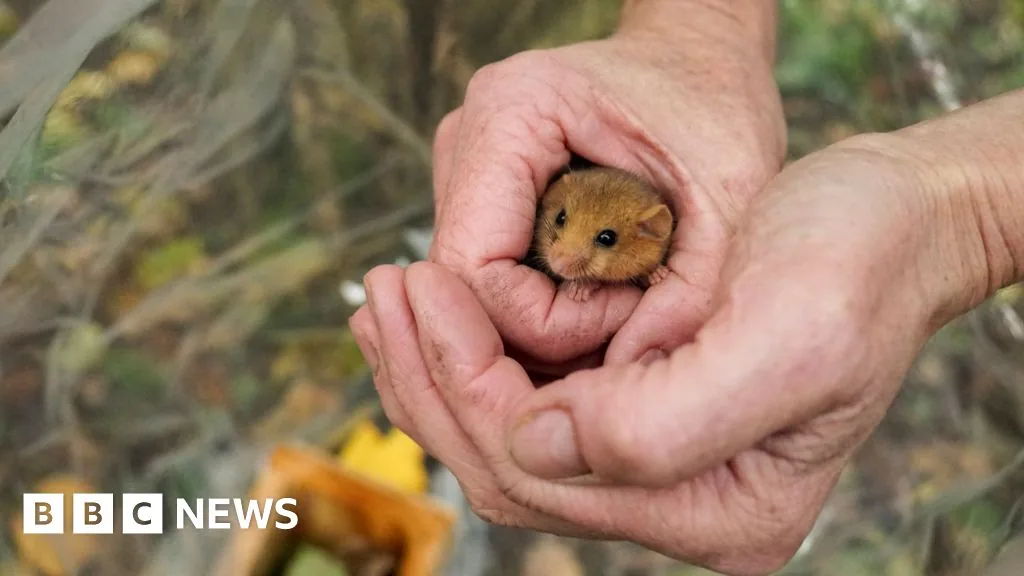
Bramble Scrub for Hazel Dormice
While home gardeners often pull up wild bramble as an unwelcome weed, the thorny shrub serves as an indispensable seasonal resource for hazel dormice in Devon throughout the summer months [1]. The plant flowers throughout late spring, offering nectar and pollen, and produces calorie-rich blackberries just as dormice must fatten up for winter [3]. Dense bramble thickets also create a protective barrier that keeps larger predators away from fragile nests. “They love bramble, and I know that bramble has a bit of a bad reputation with a lot of gardeners,” Hailstone said. “But bramble is the life source, really. It has flowers in the spring, it has berries on it. It’s also protective in terms of cover from other predators, so it’s a really great place for them to nest” [1].
Ecosystem managers at Killerton deliberately leave scrub along woodland margins rather than clearing brush into bare ground [1]. National Trust teams at Killerton know these messy thickets provide the varied food plants that mice need through changing seasons, from early hazel catkins and honeysuckle bark to high-energy autumn nuts that build vital fat layers [3]. Unbroken hedgerows allow young dormice to disperse between separate woodland parcels without touching bare soil [2]. By maintaining tangled brush, the Killerton estate in Devon preserves the complex vegetative layers that mimic an intact natural understorey [3].


Winter Weight and Hibernation
Autumn marks a critical transition period in Devon when hazel dormice must double their body mass to endure months of cold-weather dormancy. Healthy summer adults typically weigh around 15 grams to 20 grams, but they must accumulate enough fat to reach between 20g and 40g before entering deep winter hibernation. Summer adults weigh under 20 grams [1]. Cold weather triggers their metabolic slowdown once ambient temperatures fall below approximately 10°C (50°F). During this winter sleep, a dormouse curls into a tight ball, tucking its nose toward its feet and tail to minimise heat loss [3]. Heart rate and body temperature plunge to conserve precious fat reserves until spring returns [5].
Unlike their summer breeding nests high up in tree hollows or National Trust nest boxes, dormice spend the winter on the ground [3]. Wintering nests sit nestled beneath moss and decaying leaf litter on the woodland floor [1]. Hibernating near the damp ground keeps the animals in a stable, humid microclimate where sudden shifts in ambient winter weather cannot shock their suppressed physiological systems [3]. However, this terrestrial resting place leaves them vulnerable to rooting badgers, household pets, and human foot traffic across Killerton [1]. National Trust rangers at Killerton urge woodland visitors to stay on designated tracks and keep dogs on leads to protect slumbering mice [3].
Reintroduction at Bradgate Park
Killerton’s local success forms part of a wider national recovery strategy spearheaded by conservation charities across England. The People’s Trust for Endangered Species (PTES) launched its captive-bred reintroduction programme in 1993. Over the past three decades, PTES conservation teams have released 1,163 dormice into 27 carefully selected woodlands in 14 English counties to rebuild populations that had vanished during the twentieth century. These reintroductions aim to restore the species to northern and midland counties where ancient woodlands have been safely reconnected [3].
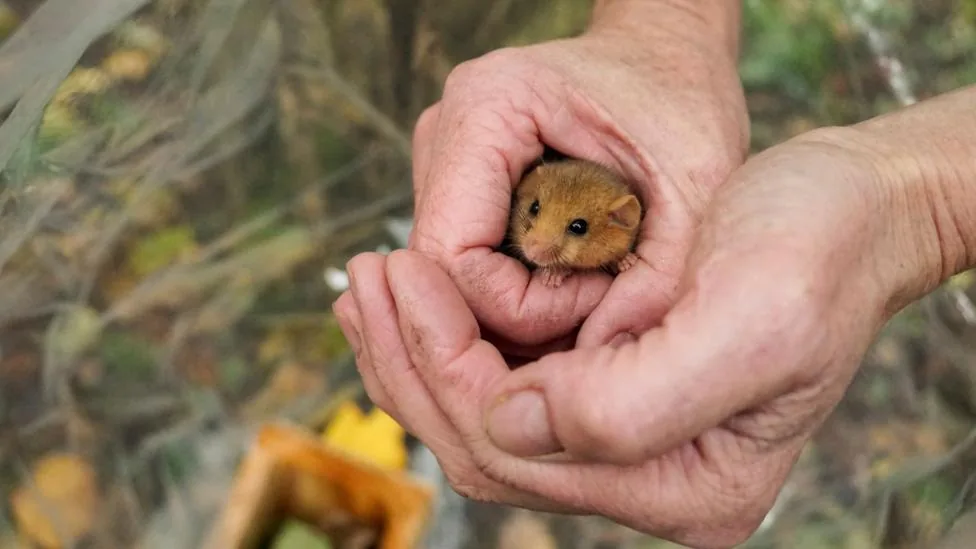
Recent projects show that captive-bred releases can establish thriving wild colonies when suitable woodland habitat is maintained. Bradgate Park received 21 dormice in 2025. At Bradgate Park in Leicestershire, conservationists released 21 animals in 2025 and followed with more than 40 additional hazel dormice in June 2026. Nest checks in October 2025 confirmed 46 occupied dormouse nests in the Bradgate Park estate. Field teams at Bradgate Park documented 11 young mice during August surveys and 15 more in September, proving that the introduced animals bred successfully during their very first summer in Leicestershire [3].
Survey data from the 2024–25 winter monitoring period offered further optimism for national recovery teams across Britain. Biologists at PTES estimated that 31% of dormice died over the winter, representing one of the lowest overwinter mortality rates recorded since the 1990–91 and 1994–95 survey cycles. Lower winter losses allow spring populations to bounce back faster in counties like Leicestershire and Devon, provided that breeding pairs find sufficient food during the crucial summer months [3].

Public Advice for Hazel Dormice
What should members of the public do if they discover a sleeping dormouse during cold weather? Members of the public who find a sleeping mouse during winter months are advised not to handle the creature, alerting animal welfare charities like the RSPCA or a local animal shelter instead. Wildlife authorities in Devon advise people never to handle a dormant animal with bare hands [1]. Picking up a torpid dormouse warms its body and triggers premature waking, wasting precious energy reserves that the animal desperately needs to survive until warmer spring weather arrives in Britain [3]. Instead, finders should contact the RSPCA immediately so trained specialists can assess its condition safely [1].
Long-term protection needs coordinated landscape management rather than isolated woodland reserves. Researchers and conservation leaders will gather on 14 November 2026 at the University of Reading for the 5th Hazel Dormouse Conference to share recent field findings and evaluate nationwide habitat strategies [3]. By connecting ancient woodlands with restored hedges and leaving bramble undergrowth intact, land managers can ensure that populations of hazel dormice at Killerton and across Devon continue to buck the national decline [1].
- ONLINE NEWS Zeltmann, B. (2026, November 8). Dormice ‘thrive’ at Killerton National Trust site in Devon. BBC News. [Article Link]
- ONLINE NEWS Zeltmann, B. (2026, November 8). Dormice ‘thrive’ at Killerton National Trust site in Devon. BBC News. [Article Link]
- ONLINE NEWS The UK Pulse. (2026, November 8). Dormice thrive at Devon National Trust site as UK populations decline. The UK Pulse. [Article Link]
- ONLINE NEWS Zeltmann, B. (2026, November 8). Dormice ‘thrive’ at National Trust site. Yahoo News Canada. [Article Link]
- ONLINE NEWS Zeltmann, B. (2026, November 8). Dormice ‘thrive’ at National Trust site. sauce.ai/news. [Article Link]
APA 7: PerEXP Teamworks. (2026, November 9). Killerton Estate Sees Hazel Dormice Thrive Amid UK Decline. PerEXP Teamworks. https://perexpteamworks.com/en/hazel-dormice-thrive-killerton/


