



Capcom and Legendary Pictures released their live-action Street Fighter movie in theaters on October 16, 2026, but the film stirred debate among longtime fans over character changes [1]. While general audiences gave the film warm marks on aggregate platforms, players voiced confusion over Mel Jarnson’s portrayal of British operative Cammy White [6]. It doesn’t present the disciplined soldier seen across Capcom’s arcade history, turning her into an erratic enforcer who flirts with allies and enemies alike. Instead, the new Street Fighter movie presents an unhinged persona that departs from game canon [1].
The Cammy Controversy
Cammy has been an anchor of the fighting game series since her debut in 1993’s Super Street Fighter II. In game lore, she began as one of M. Bison’s brainwashed “Dolls,” young women stripped of their memories to serve the villain’s Shadaloo syndicate. Much of her personal story in later games centered on escaping that mental control, breaking Bison’s hold, and fighting alongside allied operatives to reclaim her own identity. Her defining trait was always calm discipline and military focus, which made her a stark contrast to louder, flashier martial artists across the roster. Players loved that composure [1].
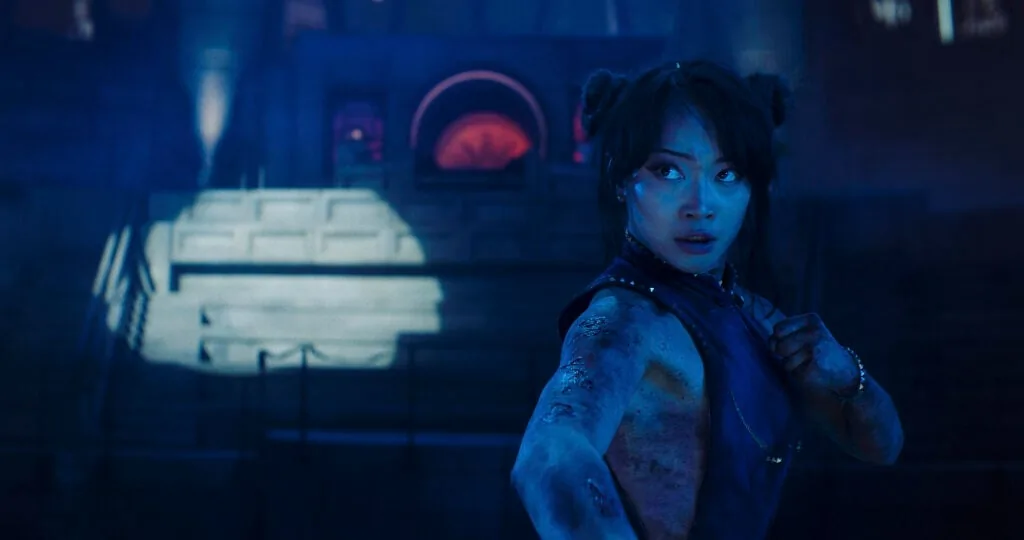
Longtime fans reacted with shock when Mel Jarnson took the screen. Jarnson, who played Nitara in the 2021 Mortal Kombat film, portrays Cammy as Bison’s trusted second-in-command. Rather than a grim captive fighting for freedom, she acts like a gleeful tormentor who struts through rooms, delivers unprovoked screams, and flirts openly with Chun-Li. Her behavior surprised crowds [1].
Online communities quickly pointed out that the character resembles Juri Han far more than classic Cammy, highlighting her sadistic grin and provocative dialogue. Juri, a sadistic fighter introduced in Street Fighter IV, despises Bison in game canon and couldn’t logically work under his command. Fans on Reddit said writers created a strange hybrid character just to inject unhinged villain energy into Shadaloo’s ranks. One fan wrote, “She looks like Cammy White, but under the hood is Juri Han,” summarizing the frustration felt across gaming forums. Another fan questioned why she screamed randomly while seated with Bison, arguing that the performance felt completely divorced from the cold composure that defined her arcade appearances [1].
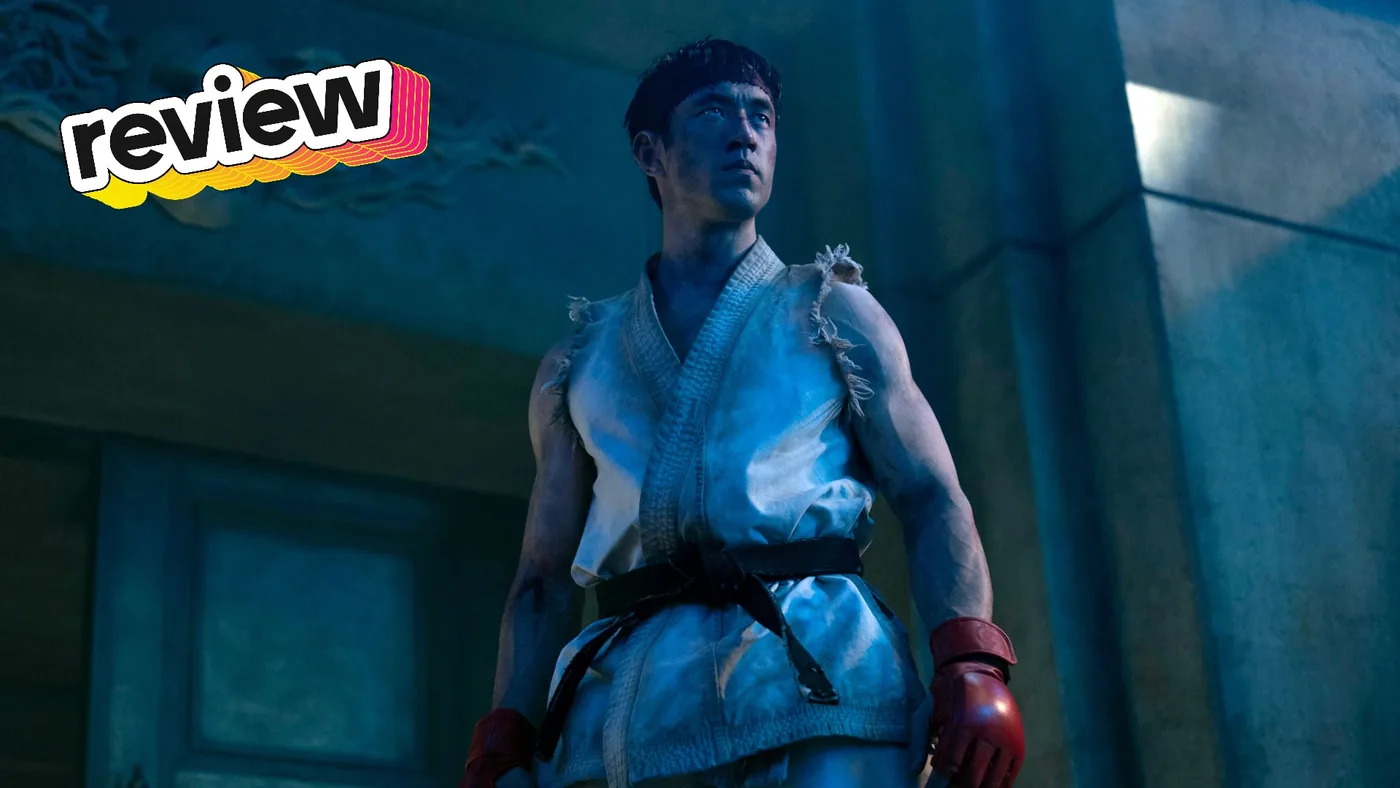
Why the Street Fighter Movie Alters Game Lore
Mel Jarnson said in an interview with FOX 11 Los Angeles that her character remains under Bison’s psychic control throughout the story, leaving room for a sequel to restore her familiar military persona. That detail hints that a future sequel could see Bison’s spell broken, letting Cammy return to the hardened soldier players know. For now, her wild demeanor stands as the biggest departure from the original games. Viewers noticed [1].
Director Kitao Sakurai, known for his work on The Eric Andre Show, built the main plot around Ken Masters and Ryu. Noah Centineo plays Ken, while Andrew Koji stars as Ryu, turning their old brotherhood into a rivalry fueled by bitter jealousy. Actor David Dastmalchian embraces B-movie camp as M. Bison, a despot scheming to siphon Ryu’s powers into himself [2, 6]. The filmmakers don’t treat the tournament as a solemn contest, choosing instead to lean into broad comedy that delights in chaotic absurdity [2]. Viewers who watched the Paramount Pictures live-action Street Fighter trailer already saw early signs of this irreverent direction, which prizes camp gags over traditional martial arts drama.
Other fighters appear in quick comedy bits throughout the new Street Fighter movie. Jason Momoa plays Blanka with loud abandon, while WWE performer Cody Rhodes shows up as Guile, sporting his iconic tall flattop hairstyle during chaotic barroom brawls [2]. Rapper 50 Cent plays Balrog, and comedian Eric André steps in as ring announcer Don Sauvage [6]. They brawl in bars [2].


Critical Reception and Camp Tone
Early reviews arrived with sharp disagreements among critics. On Rotten Tomatoes, the film opened at 41 percent before ticking up to 45 percent, earning a Rotten badge [4, 6]. Kenneth Shepard of Kotaku wrote that the movie plays like two different films stuck together, balancing martial arts comedy against confusing edits and disconnected scenes. Several fights happen off-screen [2].
Reviewers from other outlets offered conflicting verdicts. Jake Kleinman of Polygon praised Dastmalchian’s work as “a masterclass in B-movie camp,” but argued that Sakurai couldn’t manage the chaotic tone. Siddhant Adlakha of Variety said the heavy sound mix often drowned out lines of dialogue, making exchanges hard to hear. The Guardian critic Radheyan Simonpillai said Callina Liang’s Chun-Li spends much of her screen time mocking how silly Ken and Ryu sound whenever they try to speak like serious action stars. Meanwhile, Christian Zilko of IndieWire wrote that the film’s greatest virtue is that it never commits the sin of being boring [6].
William Bibbiani of TheWrap called the movie an anachronistic Frankenstein monster full of odd historical slips. Bibbiani pointed out that Ryu listens to “What’s Up” by 4 Non Blondes on a Walkman in 1987, six years before the song was released to the public. He also caught Ken’s manager boasting about a Taco Bell Gordita in 1993, five years before the menu item launched. Tom Jorgensen of IGN admitted the movie is “dumber than a box of rocks,” but said it delivers genuine martial arts fun when watched together with friends. Bill Bria of Slashfilm described it as watchable but emotionally hollow, noting that he had little desire to revisit the world [6].
Audience Scores Against Mortal Kombat
Ticket buyers responded with far more enthusiasm than reviewers. On Rotten Tomatoes, the audience Popcorn meter rose to 82 percent, and later hit 83 percent, demonstrating that ticket buyers embraced the loud action far more warmly than film reviewers [3, 4]. Scott Duwe of Destructoid said casual players mostly want to watch their favorite fighters trade special moves on the big screen, not sit through a solemn drama. Fans wanted fun [3].
That strong audience response puts Capcom’s movie into direct comparison with Mortal Kombat 2, which arrived in theaters on May 6, 2026. Box Office Mojo recorded that the rival sequel pulled in $129,570,110 worldwide from a production budget of $38,501,177. Mortal Kombat 2 holds a 63 percent critics score and an 86 percent Popcorn meter rating, giving it a slight edge over Capcom’s movie in early numbers. Andrew Highton of Insider Gaming said both fighting series are finally finding dependable box office footing after years of stumbling live-action experiments. It’s a turnaround [4].
Studios are learning that audiences respond when films embrace colorful gaming identity rather than stripping it away [3, 4]. Past gaming crossovers, such as the Apex Legends Street Fighter crossover, showed that fans welcome playful reinventions as long as the action stays energetic. While critics pick apart thin plotlines, moviegoers seem happy to pay for fast punches and loud special attacks that celebrate arcade roots without shame. It won’t win prestigious trophies, but it keeps seats filled [3].

Street Fighter Movie Easter Eggs Honor Arcade Roots
Beyond the debate over Cammy, the film packs in dozens of direct tributes to Capcom’s combat series. Jordan Farley of GamesRadar+ listed iconic attacks pulled straight from arcade cabinets, with several choreographed frame for frame. Ryu throws his Hadouken and Dragon Punch, Ken executes his Axe Kick and Hell Wheel, and E. Honda unleashes his rapid Hundred Hand Slap across the sauna mats. Moves look authentic [5].
The callbacks extend to famous battle stages across the series. Ken dismantles a car with his bare hands in an early training scene, recreating the classic bonus stage from Street Fighter II. Ryu trades blows with E. Honda inside the Kapukon Yu bathhouse, and an animated flashback shows Ryu defeating Sagat at the Ayutthaya Ruins in Thailand. David Dastmalchian’s Bison even borrows Raul Julia’s famous line from the 1994 live-action film, telling an adversary, “For me, it’s Tuesday”. Additional moves appear throughout the arena, including Zangief’s Russian Suplex, Balrog’s Crazy Rush, Guile’s Flash Kick, Blanka’s Electric Thunder, and Akuma’s Empyrean’s End [5].
Arcade history appears in smaller details throughout the background scenes. In the opening scene, Australian directors Danny and Michael Philippou recreate the classic two-man street fight from the Street Fighter II arcade attract sequence. Esports veterans Justin Wong and Maximilian Dood appear as prisoners locked in Bison’s underground jail during the Blanka and Ryu match. The movie doesn’t bother to please purists searching for solemn drama, but it delivers enough fan service to keep arcade veterans happily spotting hidden details on the big screen. Audiences can also hear the original themes for the first two games woven into the musical score [5].
- ONLINE NEWS Shepard, K. (2026, October 16). Who The Hell Was That In The Street Fighter Movie Because It Wasn’t Cammy. Kotaku. [Article Link]
- ONLINE NEWS Shepard, K. (2026, October 16). The Street Fighter Movie: The Kotaku Review. Kotaku. [Article Link]
- ONLINE NEWS Duwe, S. (2026, October 16). New Street Fighter movie has critics and fans split, but honestly, who’s surprised? Destructoid. [Article Link]
- ONLINE NEWS Highton, A. (2026, October 16). Street Fighter Reviews KO’d by Mortal Kombat 2 in Movie Battle. Insider Gaming. [Article Link]
- ONLINE NEWS Farley, J. (2026, October 16). Street Fighter movie Easter eggs: every special move, fighter and stage in the Capcom video game adaptation. GamesRadar+. [Article Link]
- ONLINE NEWS Gach, E. (2026, October 15). The New Street Fighter Movie Gets Savaged By Critics, But Not Everyone Hates It. Kotaku. [Article Link]


