




Can field tracking show how fast wild predators vanish from open grasslands? For the South African cheetah (Acinonyx jubatus jubatus), living beyond national park fences has turned northern rangelands into dangerous ground. A multi-year survey along the northern border counted only 83 mature adults in unprotected country [1].
South African Cheetah Range Outside Protected Parks
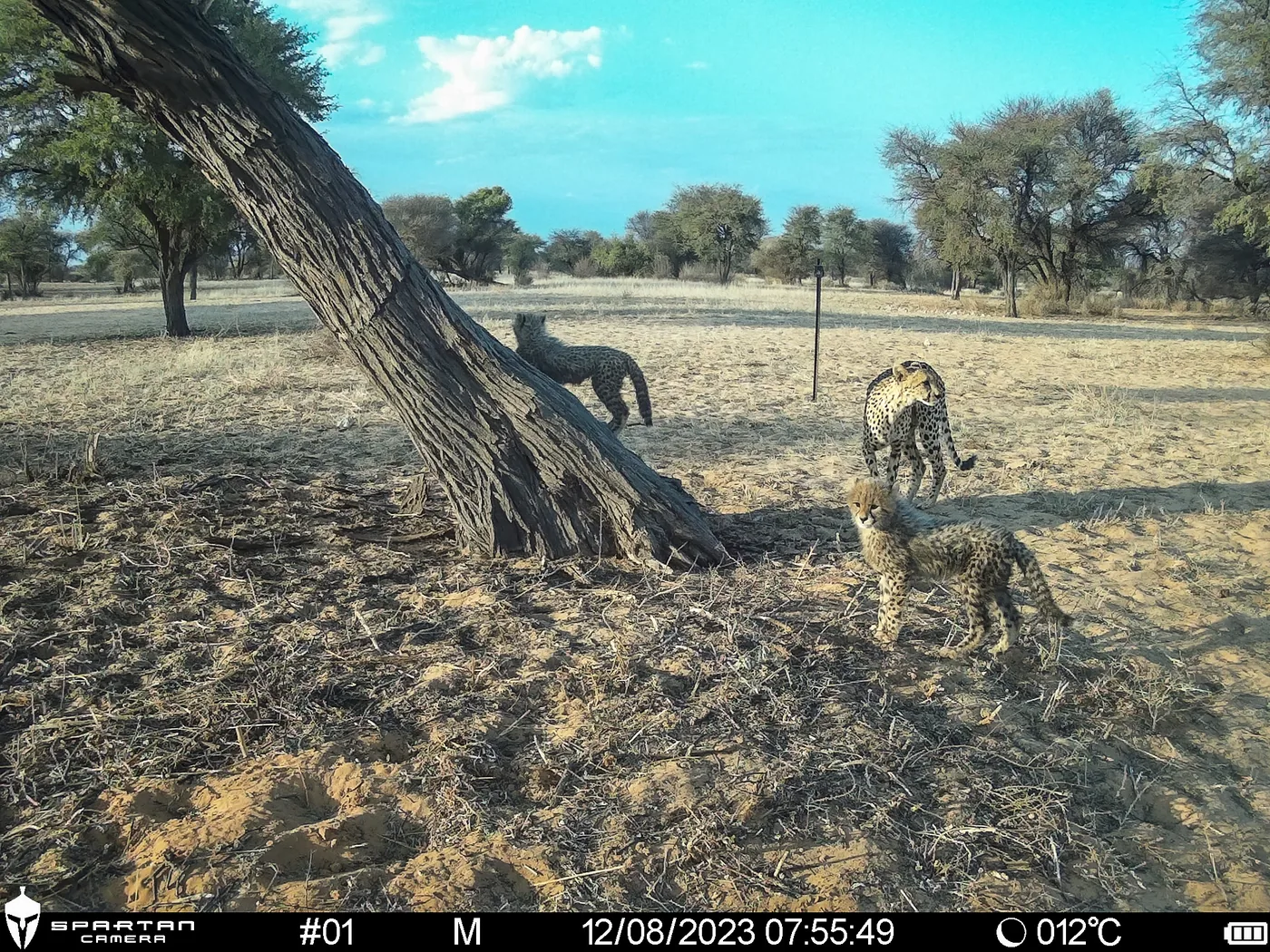
For more than three years, researchers mapped almost 100,000 square kilometers along South Africa’s northern frontier to track wild cats living outside national reserves. Ashia Cheetah Conservation, the Cheetah Outreach Trust and the University of Groningen gathered field evidence between 2022 and 2026. The joint team coordinated the Free-Roaming Cheetah Census using camera traps, satellite collars and scat sampling to build a reliable population record. Field teams set up camera stations near waterholes. Because roaming predators travel freely through unfenced border zones, researchers needed multiple tracking tools to separate resident hunters from transient animals. Their field observations confirmed that free-ranging predators now occupy less than half of the territory historically designated as suitable habitat by the International Union for Conservation of Nature, proving that official range maps overestimate actual distributions [1].
The northern survey recorded only 83 mature adults over 38,610 square miles of unprotected rangeland. That tally is roughly 70% lower than earlier model-based predictions had suggested for unprotected landscapes. Wild cub mortality reaches 90%. Ashia Cheetah Conservation director Marna Smit explained that mature adults form the critical breeding core for population replacement. “Finding fewer than 100 mature adults is an extremely strong indication of how dramatically smaller the population has become within South Africa over the years,” Smit said. Field biologist Deon Cilliers from the Cheetah Outreach Trust warned that losing mature breeders threatens the long-term survival of the entire northern population [1].
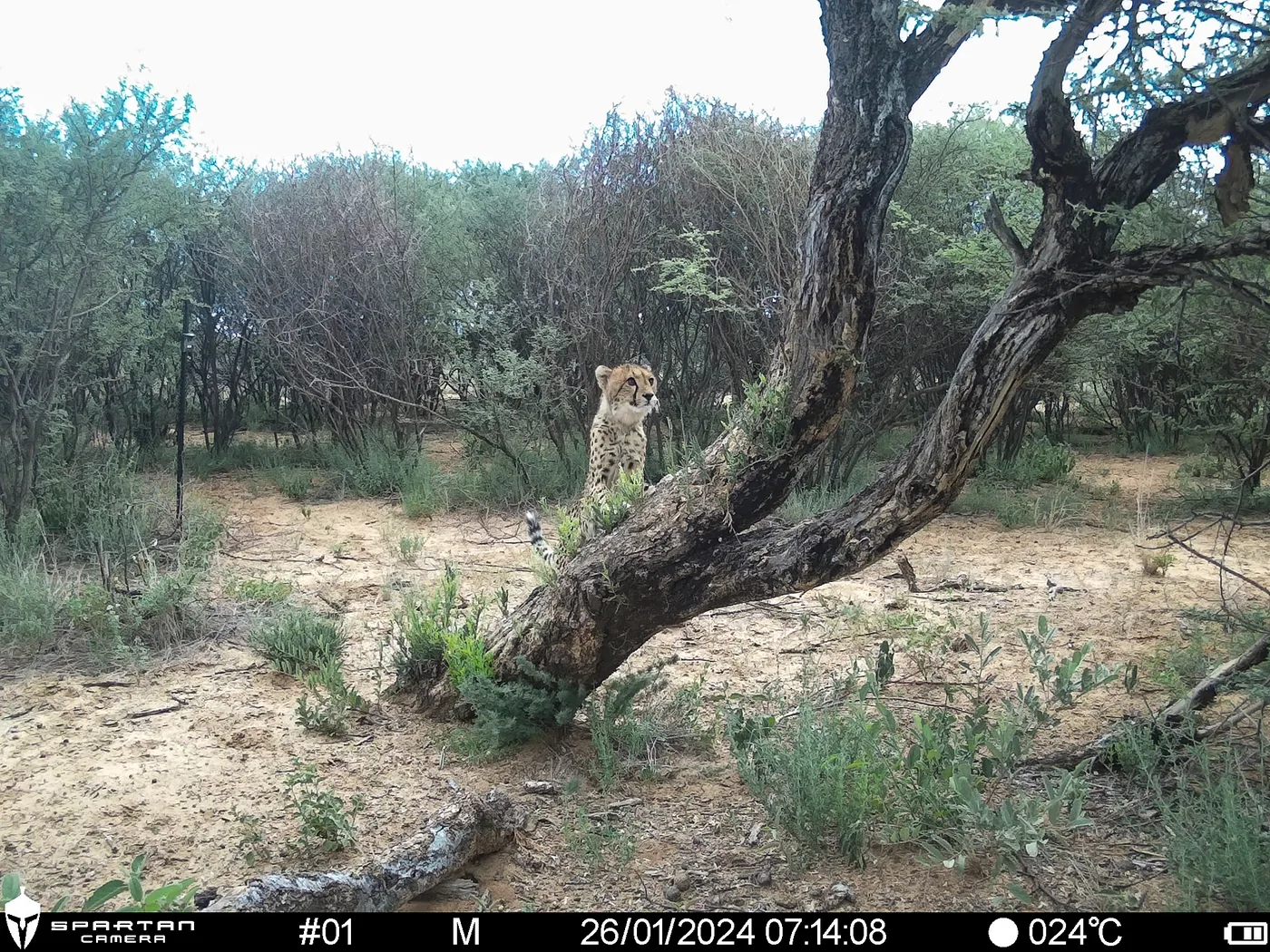
How Many Cheetahs in South Africa?
South Africa supports an estimated national wild population of roughly 1,409 cheetahs in varied habitats, but the number surviving outside fenced boundaries has dropped to fewer than 100 mature adults. Official wildlife assessments separate these animals into three wild management settings: large public parks, a managed metapopulation on fenced private reserves, and unprotected free-roaming groups. Kruger National Park holds about 412 cheetahs under SANBI assessments [2]. That park maintains 116 mature residents in other counts [4]. South African rangelands inside Kgalagadi Transfrontier Park support about 46 mature individuals [2].
Outside these large sanctuaries, the Endangered Wildlife Trust reports that only 656 mature wild cheetahs remain nationally when counting both free-roaming animals and reserve networks together [4]. At the same time, more than 600 captive cheetahs live in 68 facilities across eight provinces, kept mainly for tourist petting and live export trade. Captive animals cannot replace wild ecological roles. While wild dogs travel thousands of kilometers in packs to find mates, as PerEXP Teamworks documented in its report on African wild dog dispersal across long distances, the South African cheetah is a solitary hunter whose home range can exceed 3,000 square kilometers. Because solitary cats need such massive territories, fragmented ranches cannot sustain viable numbers without safe passage between hunting grounds [2].
What Do South African Cheetahs Eat?
Wild South African cheetahs feed predominantly on small and medium-sized antelope rather than farm livestock. Laboratory tests found zero livestock remains. Scat samples collected near census camera traps confirmed that the cats hunted wild game such as impala, springbok and duiker that move naturally through thorny brush country. Ranchers often blame wandering predators whenever a calf disappears from open pastures, but dietary studies prove that native antelopes supply their main food. Fear of economic loss triggers lethal retaliation before landowners investigate which carnivore actually attacked their herds [1].
Human persecution by ranchers constitutes the greatest cause of premature death for free-roaming felids outside parks. During the three-and-a-half-year census, around 20% of all identified cheetahs died, with landowner retaliation causing the vast majority of verified losses. Deon Cilliers said that non-lethal management tools like livestock guarding dogs and secure night kraals help farmers protect herds without shooting predators. “Cheetahs need large, connected landscapes to survive,” Smit said [1]. When bushmeat poaching thins out wild antelope herds, predators face greater starvation risks and wander closer to pastures, multiplying potential flashpoints. In areas where natural prey declines, hungry cats search wider zones and inadvertently cross active grazing paddocks [2].
Why Fenced Reserves Can Turn Into Genetic Sinks
Fenced private reserves have multiplied in South Africa, housing roughly 491 cheetahs in 66 enclosed properties by the end of 2021. Conservation agencies introduced this managed metapopulation network in 2009 to move animals between properties and protect genetic diversity. Translocations require careful genetic matching [2]. While the initiative expanded predator numbers behind fences, it produced surprising complications for surviving wild groups. Free-roaming cats often push through boundary fences or slip under farm gates to enter private game farms, drawn by plentiful game and permanent waterholes [1].
Once wild predators cross into enclosed game reserves, high predator-proof fences prevent them from ever walking back out into open rangelands. Marna Smit cautioned that these enclosed properties can turn into genetic sinks for free-roaming populations. The trapped animals contribute their genes to the reserve population, but their lineages are lost forever to wild gene flow in southern Africa [1]. Transporting cats between fenced properties also brings serious hazards. Official wildlife reviews state that capture-related stress and transfer injuries are the main cause of death within the managed metapopulation. When moving animals between reserves, veterinary teams must manage capture-related trauma and territorial disputes that occur during introductions into occupied habitat [2].
Habitat Loss and Rancher Persecution Drive Declines
Farming developments, road corridors and boundary fencing have cut South Africa’s northern cheetah population into two isolated groups. One pocket occupies the Northern Cape and western North West Province, while the second group survives in eastern North West and Limpopo Province. This divide stops natural breeding dispersal, raising inbreeding risks in both groups [1]. Worldwide, wild cheetahs occupy just 9% of their historic range, with 77% of surviving habitat located outside protected reserves, matching wider patterns seen in monitored wildlife population declines on multiple continents [3].
Low reproduction rates make it difficult for wild populations to recover from heavy human pressure. Wild female cheetahs successfully raise an average of only 1.7 cubs to adulthood, meaning small breeding groups cannot absorb steady losses. Litters struggle to replace fallen adults [3]. The species, described as Acinonyx jubatus by Schreber in 1775, diverged from pumas about 6.9 million years ago and developed semi-retractile claws for open sprints [4]. When landowners kill roaming adults in farmland, local density plummets quickly because litters cannot replace lost breeders in time. Because cheetahs rely on expansive hunting ranges with low population density, removing a single breeding adult destabilizes social dynamics across hundreds of square kilometers [1].
National Strategy and Regional Corridor Conservation
Safeguarding the South African cheetah needs reconnecting fragmented provincial lands through protected wildlife corridors [1]. Transboundary protected landscapes provide indispensable bridges for wide-ranging cats. The Greater Mapungubwe Transfrontier Conservation Area maintains open passages between South Africa and Botswana, while the Greater Limpopo Transfrontier Conservation Area connects Kruger National Park with southern Mozambique [4]. Biologists say that corridors allow animals to disperse naturally without expensive veterinary transport teams [1].
Researchers from Ashia Cheetah Conservation and the Cheetah Outreach Trust are urging the International Union for Conservation of Nature to update outdated range maps and reclassify South Africa’s free-roaming cheetah as Endangered. A single national conservation plan must unite government agencies, private landowners and reserve managers into a coordinated network [1]. Peter Knights of Wild Africa said that safeguarding open habitat and halting illegal capture are essential steps for the big cat [3]. Without coordinated protection in northern rangelands, South Africa could lose its last free-ranging cheetahs within a generation. Coordinated field action across public and private land offers the best hope for preserving these swift predators in their native southern African home [1].
- ONLINE NEWS Schneider, V. (2026, July 24). South Africa’s free-roaming cheetahs in steep decline, first national census finds. Focusing on Wildlife. [Article Link]
- WEBSITE SafariFind. (2026, July 26). Cheetah Conservation in South Africa (2026): Status and Action. SafariFind. [Article Link]
- WEBSITE Deane, M. (2025, December 4). Race to Save the Cheetah Accelerates. Wild Africa. [Article Link]
- REPORT Marnewick, K., Weise, F. J., Nicholson, S., Kerley, G. I. H., Selier, S. A. J., Sievert, O., & Moodley, Y. (2025). A conservation assessment of Acinonyx jubatus. In T. Patel, C. Smith, L. Roxburgh, J. M. da Silva, & D. Raimondo (Eds.), The Red List of Mammals of South Africa, Eswatini and Lesotho. South African National Biodiversity Institute and Endangered Wildlife Trust. [Article Link]
- ONLINE NEWS Mongabay. (2026, October). This is a South African cheetah, and it’s in trouble. Mongabay. [Article Link]
APA 7: TWs Editor. (2026, October 12). South African Cheetah Numbers Plummet Outside Protected Reserves. PerEXP Teamworks. https://perexpteamworks.com/en/south-african-cheetah-census-reveals-steep-decline/


